Writing for a Meaning and Understanding with Tembi Locke
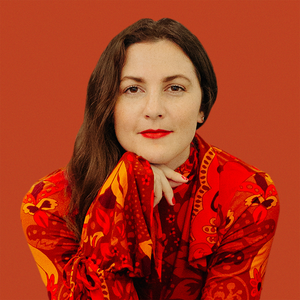
In this episode, CEO and Publisher Kristen McGuiness is joined by actress and author Tembi Locke to discuss Locke's new audiobook Someday, Now, her journey as an actor turned author turned screenwriter, and the importance of writing as though the house is on fire. This funny and honest episode is not one to miss!


Automatically Transcribed Transcript
From the ladies of Rise Literary, welcome to Write the Good Fight. Today's episode is with publisher and CEO, Kristen McGuiness and author, Tembi Locke. Tembi is a New York Times, bestselling author, screenwriter, TV producer, actor, and keynote speaker.
She co-created and executive produced the Netflix series From Scratch based on her memoir, which became a global hit, earned six NAACP Image Award nominations, and the prestigious Los Angeles Film Italy Award. Her memoir was also a Reese's Book Club pick and an instant bestseller. Tembi and her sister, Attica Locke, are currently under an overall development deal with Universal Television.
She has over 60 acting credits and recently appeared in Netflix's Never Have I Ever. A sought after speaker and podcast host, Tembi uses storytelling to inspire resilience, love, and community. And I'm so excited to have you here today, Tembi.
Thank you so much.
Oh, Kristen, I'm so excited for our conversation today. Thank you for inviting me to just dig in.
Yeah. Well, it's so funny because I remembered seeing you at the Grieftastic event last year, which is a fantastic event put on by Megan Jarvis Reardon. And you and I have so many points of contact that it was like we saw each other from the cross room and we were like, FIGHT!
The list of names of people who help us to intersect is quite long.
I know. It is. It is.
And I love that it's like kind of from all over the place. Like, there are some people who I meet where it's like, oh, well, like the Jen Pastiloff connector is like, okay, well, I know you because we're in the Gen, but I felt like I knew you from six different universes, that it was like, like, finally, the galaxies collided, so.
Yeah, we could do roll call. Shout out to all our friends.
All the friends. But I'm so thrilled to have you here. And also, I think you just have such a fantastic career as an author.
And I know you had a book also recently come out that wasn't on this list. So I would love to start with that, because I saw it's out on audiobook, and I want to know more.
Yes, so the book is Someday, Now, and it is an audiobook original. So it is a memoir. It is a fully immersive audio listening experience.
That is, it has connective tissue to my first book. So for those who have read from scratch or even watched the series, this is a next chapter story. But if you've never read that book or you've never seen that series, you can drop into this narrative, which is a look at an inflection point in my own life.
It was the summer before my daughter went off to college. And I was asking a lot of big questions, which is often what drives me to the page to begin to write, because I write for a meaning and for understanding. And it became this beautiful audiobook.
And so I wrote the manuscript, I recorded all of the sounds on location in both Los Angeles and in Sicily. And then I braided them together in this fully immersive listening experience. And people are calling it like, I've heard it called everything from like a radio play to like a, you know, kind of a eat, pray, love for moms to, you know, just like, it's really beautiful to see how listeners are engaging with the story.
And it's a conversation starter about really how we begin again and how we reimagine our lives forward.
I love that. And I have to ask, so technically, are you, did you record like on the streets? Is it like the sounds of Sicily behind you?
When I say I did the entire soundscape, yes, I walked around for the entire time that I was chronicling this experience, and I carried a handheld recorder with me. And I just captured sounds that spoke quite frankly to my heart. I did not really go with like a master sound list.
I write and I create, for better or for worse, from gut, from instinct, from intuition. I can't say that I, you know, I do not perfectly outline anything from the beginning. I sort of have a starting point.
I kind of know an ending point. And I allow the middle to form itself along the way. And so I just took this recorder with me, recorded all these sounds, over 200 of them.
And then I put it away and I wrote. And then I listened to those sounds again. And so, yeah, there's sounds of Vespas and the sea and goats and...
I love that. I am famously not a good audiobook listener. We produced a TEDx last year, and my opening line of the TEDx was like, I hate TED Talks, only because it's really hard for me to listen to disembodied voice.
It's not like... I mean, I love reading. Obviously, I'm not in this line of business without it.
But it's just really hard for me to engage when I just hear a flat voice talking at me. You know, like I just get into like my brain can't process. But I love that idea of like bringing in this sound of space of like really like using that as almost a descriptor to how you tell the story.
100%.
And I felt that intuitively that it would be a kind of a more than even a punctuation to the narrative. It was actually another portal into the narrative. And I wanted to, I wanted listening to be its own character.
And so when you talk about the flatness of an audiobook, that is actually the worst thing when you hear an audio book. You're like, totally. What is actually happening?
And it doesn't. And so for me, I think, and this is where you mentioned in briefly my bio is about, I come from a background of having been an actor. So the embodiment of something really deeply matters to me.
And I think in order to do an audio-only book, I had to embody it as fully and deeply and richly and lushly as I possibly could, because it felt to me like the only thing that felt creative to me and exciting to me. But also, I tried to put myself in the listener's position, who might never go to Sicily, who might not be a parent, who might never be, and be like, how do I reach them? And bring them into this world.
So it's a lot of world building.
Yeah.
And I hope that that comes through. I really hope that that comes through.
I can't wait to take a listen. I think that's such a beautiful way to tell a story. And I think it does connect though into From Scratch and your ability to bring in that time and space.
I mean, I would love to hear, were you always a writer as well as an actor, or did your experience of grief and losing your husband, did that prompt you to become a writer, or sort of chicken or egg which came first in your creativity?
You know, there's that saying, and I have said it before to others, and it has been said to me, that if you write, you are a writer. And so I want to unpack that a little bit because some people feel like, oh, if I'm not doing it professionally, then I'm not a writer, right? And I want to make the distinction, for me, yes, I was always writing.
I did not in any way think of myself as a professional writer. I did not have aspirations to be a professional writer. I felt like, oh, that's just something I do for me on the side.
As a child, I wrote a lot. I wrote lots and lots and lots of stories. And, you know, probably more than is we have time for on this podcast.
I think somewhere along the way, as happens in lives and in families, you know, I was the person in the family who was the actor and my sister, Attica Locke, who is an extremely accomplished novelist, was the writer. She was the writer, and quote, unquote, with the big W, writer, right? And I was the actor.
And so I just didn't even question that. Like, it was just like, okay, that's what she does. This is what I do.
No big deal. But I am over here journaling consistently. And so you kind of really went to the heart of the matter, which is to say that Sato, my late husband's first, his illness prompted me to really write with a different kind of intentionality.
And I was writing really for survival. I was writing then for creative survival. I was writing to make sense of being inside of a life as a caregiver, as a cancer caregiver for a decade.
And I end up in being a young mom. And I just, writing was the only place I could go to the blank page and sort of, you know, pour out all the, you know, sort of kaleidoscope of conflicting feelings and thoughts and emotions. I could put it there.
I could also artfully reach for something more beautiful and aspirational and creative for myself. And it was a bunch of journaling. And then after his passing, I continued to write.
And it was really three years after his passing that I first got the idea that perhaps all of that writing actually was the raw material for a book. And then it took another two years for me to get up the courage to actually endeavor to make it into a book. And so that's when, when I wrote from scratch, I was writing, I had a sign on my desk.
I had a like a little shed in the backyard, right? That I would just like move out to and I would write, or I'd write in my car. But at this little desk in the shed, I put a sign, a little postcard above the desk, and it was a message to myself.
And it said, write like the house is on fire. And I think I needed to message that to myself, to tell myself, this is urgent, do it now, don't waste time, just write. Just write like it is, it is, you know, it's like from Hamilton, right?
Like you're writing at a time, you know? And I just did. And I had that urgency to tell the story first to myself, then for my daughter, and then hopefully for readers.
Yeah. No, I love that. I mean, I love the, it is true.
When I first saw Hamilton and like that song, I was like, oh, I'm just gonna start listening to that song when I'm trying to write, because it is like that. But it is because you have to have that urgency to get, it's like that's what breaks through the doubt. It's like, it is, it's like, okay, when the house is on fire, you really don't have the time to think, am I good enough or is anybody going to want to read this?
You just have to get it out and it really doesn't matter what the end result is.
No, and it doesn't matter what it looks like. I had had years of quietly letting it unfold with no ambition, and no sort of end goal in mind, and I had done a decade of that. And so I think at that inflection point, when I became very clear, I think this is a book, and I think this is the way I want to do the book, then I had to, and it should probably speaks to my psyche that the image that I created was a house on fire.
I think in some ways, if I like lean into that a little bit more with distance and with hindsight, I probably was like trying to sort of like, from the ashes of what had been trying to build something up, and I needed to just go, just go, just go, just go, just go, because I was also reinventing myself. And I didn't know it. I wouldn't have dared to call it that at the time.
It wasn't that I was just like, well, I'm going to try this thing. And like, I don't know, but I'm going to keep trying this thing. And I think I really, really am someone who needs a sort of clarity of purpose when I'm trying something new, because there are too many things in life that will distract me.
Yeah.
Don't we?
Well, yeah, being a single mom and an actress and, you know, not to mention the internals, right? But the externals alone are, you know, it's what makes it so hard to write.
Yeah, the externals were for real. Like they were for real. And I knew that the book could evaporate as quickly as it came.
It could evaporate. And I knew that a little bit. I knew that in an embodied way, again, years in rehearsal and in theater and as an actor, I knew the ethereal nature of the creative process.
And I knew, like in rehearsal, you can find something incredibly magical. And like if you don't like seize on that moment and keep leaning into it and keep leaning into it, it will, you'll lose it and it'll go away. And so I tried to sort of bring some of that formative understanding of process to how I wrote.
I think it shows up so much in the book and you can feel that. I mean, I think memoir is such a special genre because it allows us to share our interiority, but also we curate it, right? And so I think I've always loved the title of your book because I've always felt like it was so meta to how you wrote it.
I always like, I feel like you're making the pasta, you know? But also as a writer, the craft of it too, it feels like you're, it's so raw and yet so beautiful and polished at the same time and you really hit that sweet spot.
That is the highest compliment, Kristen. Thank you so much. And coming from you, I deeply, deeply, deeply, deeply appreciate that.
And you're right. It was that again, that sense of like being really like loose and pure and raw, and then like putting structure around the raw, putting some structure around the raw. And it's that, you know, I will say yes, from scratch, the cooking metaphor for those who don't know it, my late husband was a chef.
And so that is in the title. But it also was me as a young widowed woman, you know, rebuilding my life from scratch. It was rebuilding my family from scratch.
It was trying to imagine a new relationship with my late husband kind of from scratch, because, you know, the psychic question at the core of that book is, can love endure? I mean, that's one of the central questions I was writing toward, and I do write toward questions, you know, like there's some question I cannot answer yet except to write about it. And that was one of the questions at the core of that book.
And so, yeah, I had many different titles. And what's so funny about titles is like, you just, you know, because you work in publishing, you coach, you know, and you kind of like, you know, I keep like a running list and like my computer or my phone of possible titles. And then one day you just are gobsmacked.
You're like, that's it. That's the thing. That's it.
That's it. And so I had the title. And then what's so funny is along the way, I don't think I've ever, maybe I haven't said this publicly, but like along the way, after the book is like through copy edits, we're like well on the road.
And the marketing team is like, we think the title needs a different title. And for a moment, actually, I have galleys of a book called Sicily, A Love Story.
That was the moment that the marketing team took over.
And, you know, I'll do deference to the marketing people. I love them. And, you know, I was a movie writer, and I was like, well, okay, if that's what they're saying, and they know the marketplace, and like, okay, so I was deferring to them.
Meanwhile, in my mind, I'm like, that is not a title. Like, I don't know what that says. I don't know what that was.
I don't know what that is. And I will, you know.
Like, it could be a coffee table book. Yeah, exactly, it's like Pictures of Sicily. Yeah.
Fast forward to, you know, in my story, to the Reese's Book Club of it all and the Hello Sunshine piece. And, you know, they were pretty clear that to go, you know, at that point, there was some like talk of like the option. And it was out of those mini conversations about that, that it was like, wait, that other title was really great.
Like, we could see that as in the adapted, in the adaptation space. And so I think then, you know, it kind of circled back to the original title. And I just share that for any author out there who has sat with your story, especially memoir, especially memoir, for years, you don't write a memoir, you don't get the idea for a memoir today, and it's done tomorrow, because there's so much life that has to happen, so much processing that has to happen, so much craft that has to happen.
So by the time you've sat with your narrative, your story, and you have a title, I'm kind of hard pressed to find, as my sister loves to say, a Johnny come lately marketing person who's going to be like, I think it should be called this.
And you're going to be like, oh, I'm so glad you know this thing better than I do. Oh, no, I mean, you know, and I think it is. I mean, it's also a note to authors, though, that are in the publishing experience, especially first time authors, because it's so easy to defer.
And not that there aren't times where you should. I mean, there are times where, you know, the publisher does know, and you have to like respect that they do this. But there are times where they are absolutely wrong.
And I mean, I had the same experience with my first book where I had this galley and it's the same, like the picture of my first book is like a woman laying in the grass and it's like just her legs and a pair of shoes. And it's a little bit like the red shoes, the ruby slippers. This is it.
So it was this image, which, you know, it wasn't, it still wasn't my favorite, but it was good enough. And actually I felt like I'm doing really well. But they had this and they had all these polaroids of men in the grass because it's a dating book.
But it actually looked like I had just murdered people and like I was collecting polaroids of them afterwards. Like it did not, it did not tell, it told a story. It told a very weird story.
Not my story. And literally, yeah, it looked like I was just keeping keepsakes from my serial killing. So, you know, and I pushed back and I was like, okay, like I'm willing and that's where right.
I'm like, I'm willing to do the lady in the grass, but like the polaroids got to go. And like, and I was a first time writer and it was scary, but it really does help you. I think, and I would love to talk about your experience in TV and film because I've been at those tables then too.
And I actually had the opposite experience where I didn't stand up for myself. And I think I ended up not getting a show because of it, you know? And so I think as an author, like what you learn from like the beginning of writing your story, of finding the agent, of getting the publisher, is really beginning to build your voice for your own self advocacy as a writer so that the larger that conversation gets, the more you're able to like continue to like drive your project forward and share your message in the way you want it to be shared.
So you don't end up with Sicily, a love story, right?
You have really beautifully said a real core truth in terms of, I mean, first year as a writer, especially a memoir, finding your voice on the page, right? So there's that sort of claiming space on a blank page, saying the story matters, my voice as a storyteller matters, I'm committing this to the page. That's the first sort of like owning it.
And then it becomes about the sharing of it and all the things you just said. But by the time, and I'm happy to talk about, you move into yet another space of storytelling, which has many more voices in the room, many more dynamics at play, many more competing interests at play. If you are in that space, because some writers choose to be like, yep, give me the check, go adapt it.
I want nothing to do with any of this. And that is a fair choice and I get it. And it is also the choice and it was my choice to be in the room, primarily because one, I had a background of 20 years in the business.
So I knew. And I also knew because of that background, the way a story will have to change to be on screen. And I know what can happen on set.
And how dialogue changes. And I was like, oh, if I'm giving my story, my, the literally like the most intimate and difficult challenging parts of not only my life, but my nuclear family over to a team, an external team to produce, I have to be a voice in that room. And that was really, you know, I want to credit one person that I have not, I don't think I've publicly credited, but Dana Calvo is a writer and she is a screenwriter and showrunner in Los Angeles.
Our kids went to the same nursery, they went to the same primary school. And we had, she, I always looked up Dana. I'm like, Dana knows to do all the things.
And we had, I told her I had this book coming out. She has a journalism background that she transferred into screenwriting. And we went out to lunch and she point blank said to me, adapt your own story, be in the room.
Nobody else, and she said it with such confidence, like she didn't blank and she like took a sip of her water. And she said it with such confidence that I instantly, I was like, oh, I guess I'm doing that. I see that now.
So that, that allowed me to be, advocate Tembi is actually gonna be in the room. And then I had to ask myself, what is my role in the room? Because I was going to be at that point, a junior, the most junior screenwriter in the room.
I was going to be, let's speak plainly, a first time screenwriter in the room, with seasoned professional screenwriters and a showrunner. Now, cut to the chases, my sister is the showrunner. So I've got a shortcut there, you know?
Yeah.
But along the way, I'm having to advocate internally with her, as my showrunner, not as my sister, to say what matters to me.
Which could be interesting too, like, you know, there's a little throw in a little compliment complication in there.
Yeah. No, I actually think this matters. And I know you know the story, like this moment matters.
And then there was time she was like, actually, trust me, we don't actually need that. We'll find it in another way. And I had to really just trust, which you have to trust to showrunner, period.
And so anyway, along the arc of that, I was advocating and learning to when to sit back and really listen, really listen to all the voices in the room to ask more questions than offer comments, because I was learning. But then when I chose to use my voice, know that what I'm about to say carries weight, because I haven't said a lot. But as the writer of the source material and as the person who lived this experience, when I do speak, it carries a certain kind of weight.
And I knew that I didn't want to wield that willy-nilly in Hollywood, because people will very quickly be like, oh my gosh, there's the writer again telling us the thing that we need to do. Oh, there's the writer, you know. And so I did a lot of listening and then really being strategic.
And I use that word, you know, in quotation marks, because I'm not always the most strategic person. I'm a deeply intuitive person. And so my intuition would just kick in and I'd be like, I think I gotta speak up on this one.
Like, I think I gotta say something on this one. And that really worked well. And that's not to say that I didn't question it.
I didn't quiver. I didn't get in my car and be like, did I say the right thing? Sometimes I have to come back and be like, I think I overstepped.
Can we find a different way in? And luckily I had a team of collaborators who were willing to kind of hold space for that, which I think is very critical. And that's not always the case.
Dare I say, it might be rare. But that advocating, really, really important. And by the way, then it goes all the way through the production, the writing room, the production, the post-production, which is really when a show comes together.
And then in the market, in the PR.
Yeah. I think it's so hard because when you are so close to it, you want to have so much voice, but then what you end up realizing is that it is, especially when you're new and you're in this room of seasoned folks, and I think that's true, right? It's true from when you go out to agents and feedback that you get, and even the process of that, of like understanding, especially if it's your first time doing it.
And obviously, it's different if somebody's produced six shows and has, you know, then they themselves are the expert in the room, right? But like when you're just beginning, and I share this a lot of times with new writers because there's this level of impatience that happens that I'm like, this is a slow process. All of this is a slow process.
And like all we can do is be patient in it and give people this space to respond and to get back to us and to take those notes and to make it stronger and to know that like, just as you said at the beginning, which I love, like it's not like you come up with the idea for a memoir and boom, it's done. Like there's also so much, and I'd love to hear from you how you manage this. Like there's so much psychologically that happens when you publish a memoir that a lot of people aren't prepared for, right?
They're like, they're like, oh, I want to get this story out there. And then all of a sudden they have to sell the book and they're like, oh my God, everybody's going to read my life story. And it's so easy to go hide under a rock.
I mean, there's so much postpartum depression in a book launch, you know, because you just, it's terrifying. It is like a newborn baby. You're like, no, I just want to spotle it and keep it in the room, you know, alone.
So how did you get over, you know, also the emotion, the grief, everything that, you know, was going to be part of sharing this story for you?
Oh my gosh, Kristen, this is so big. And I think, you know, I know you facilitate writing workshops and I know you coach with people. I do feel like there is the opportunity to actually do like a whole workshop on this, quite frankly, but that's like another whole, that's another whole discussion.
We'll wrap around on that then, Tembi.
Anyway, I will say, I want to go back to, before I answer the thing about like the sharing and all the different levels of processing that happen along the way, and these two thoughts will be connected. I want to go back to what you were saying about the advocacy and like getting notes and being in a, in a, in a, in a team effort to tell your story. So I think knowing when you begin to, when you endeavor to take all your writing and put it into a book with the goal of publishing, I always say, ask yourself, what is your why?
Why are you doing this? And then whatever that answer is for you, and it has to be your most heartfelt answer. And so I say, ask it of yourself many times over and over again.
And if these same answer keeps coming up, that is your why. And then when the notes come, and they will come at so many different levels, within your why, you can answer for yourself. So this is my why.
And here are the things that are what I call my personal non-negotiables. Meaning without these three, and often they're for me story points. Without these, let's say, three things, it's actually not the story.
Like we're not telling the story that I set out to tell. So I was always very clear, what are my non-negotiables? That if we veer from that, we've lost the thread.
And I tried to remember that in the editing process, when I was working one-on-one with Christine Pride, my editor for the book, I tried to think about that when we were marketing the book. What is my why? Why am I out here talking about this book?
Why? Why? Why?
Because it's hard. It's hard to go out here and talk about this book. Why am I doing this?
Why? What is my why? And then, of course, when it in the adaptation process and then, of course, when it's on platform, on Netflix and it's being shot out around the world.
And all of these things, all these feelings, as you say, and all of this processing is coming up for me, the individual. So I'm going to get to now the question that you asked, which is, how did I navigate the interior machinations of choosing to put a very vulnerable, intimate, life-changing experience on the page that includes my nuclear family, my chosen family? One of the first, so it is, it's in my why, it's in the thing.
I was very clear. Yes, I was writing while the house, because the house was on fire, but I was also saying there's an urgency to this story. And the urgency to this story, my purpose for telling it is that I think someone may read this one day somewhere, and it will make their path easier.
Because I have lived through the facts of this book, which line up in such a way as to be both specific to me, but highly universal to many people on the planet. And if it reaches a reader, and they are able to close this book at the end of it, and feel as though their life was changed in some way, or some perspective was changed, or they wanted to be like, okay, now I think I know how to navigate grief, or I think I have a better sense of what a cancer caregiver is going through, or oh, I have fracture with my family, and I want to try to have closeness, and what might that look like? So those were sort of my big questions.
So that when it got hard, and when I, Tembi, was like, oh my gosh, I feel so raw right now talking about this, I remembered and reminded myself this is not about, it is both of me and, yes, about the facts of my life, but on a bigger scale, it's about all of us. And that, I did not start there, I only got to that awareness somewhere around three quarters of the way through filming. So that's the big picture.
I also had therapy. I had a close group of friends, a very close group of friends. I had a, I have a creative mentor, you know, that I could bounce ideas off of.
So I did a lot of physical self care. When I say physical self care, I mean, I knew that I was going to have to relive all of the grief, both to write about it. And then I knew that in order to film it, I was going to have to watch it in costumes that were recreated from actual clothes I wore.
So that was going to take my psyche into a deep place. And I had to put a psychic bubble around myself and do a lot of energetic healing, biofield healing, cognitive therapy. I mean, I had to just do a lot of healing.
And so you don't do this lightly. You certainly don't do something like this casually. Or if you do, I think it's going to be very, very hard and you'll collapse really quickly.
I tried to be very transparent when I was struggling. I didn't try to hold that back. I tried to really listen to my body, particularly because one of the places that I found in my own life, I have a lot of grief that is lodged in different places in my body.
And so I really had to listen to my body for when things would come up. And I knew that, okay, that I need to listen to that. And that is telling me, take a pause, say no to this, or maybe ask for a little grace before you go do this.
So it was a very multi-layered process because it was writing it for the page, then it was sitting in a writer's room with six other people, retelling the story and morphing the story and adapting the story, and in some places, blowing it out, fictionalizing it a little bit here, but holding to the emotional truth. Then there's a group of actors and two directors and a whole set of producers and a crew of 200 people. At every level, the canvas is getting wider and bigger, and yet I'm still at the center of it, trying to hold the center.
I'm trying to hold the center of what is the single most organic and authentic truth of this one story that I do know intimately. So I could clearly, as you can guess, I could probably talk a nauseam about this, and I think it's something, quite frankly, I'm still trying to understand, because it was a very peculiar, you know, it was kind of lightning in a bottle. Like I won't strike twice and in that way, because how often are you going to write, like, the memoir about the big event that changed your life and then have that thing, it's just never going to happen again.
Right.
And even if it does happen again, it won't be the first time. So like, no matter, you know, not that, you know, I mean, there are people who do have it happen again, in fact, but when it happens the second time, it certainly doesn't have that same experience that it's going to hit. And I can't even imagine.
I mean, you were also, how old was your daughter when you were filming?
So my daughter, when we were filming, was early in high school. And, you know, I was like straddling.
Yeah, a teenage daughter.
Yeah, teenage daughter. I was also newly remarried. So in a blended family that we're trying to upstand, it was also in the height coming in the pan.
We're in the late stages of the pandemic and lockdown. So there are a lot of pressures coming to bear. I'm trying to show up for a teenage daughter who is a freshman in high school and now is thrown into lockdown.
I'm trying to be present for, you know, in a new marriage and in a blended family unit while telling a story every day, going to work to tell a story about a past timeline. Yeah. It includes my late husband.
Your late husband.
Yeah. I have characters who's like, you know, a sort of like on-screen version of my daughter.
Totally. You have Kerry Washington in your clothes.
It was banana pants. Banana pants. Let's be frank.
I know. It is one of those always like, be careful what you wish for, right?
It's next level.
Yeah. There's this great piece that Sarah Tream wrote years ago that I always remember because, you know, she was working on the affair at the time. I think it was her second season.
They had just won an Emmy. It was like the highlight of her life. She had a 10-month-old baby and her marriage was falling apart.
And it was this thing that on the outside, everybody was like, oh my God, like you're getting everything, every, you know, it's like for creatives, not that everybody wants their life story to become a TV show, right? But many writers dream of that moment, right? Like Hello Sunshine, all the Kerry Washington.
But then it's like, yeah, but like life is still life, you know? And there's so much that goes on behind the scenes of your greatest moments from the outside that are like incredibly emotionally, like hard and crippling and you know, and you have to do all the things to like move your way through that passage.
You do. And I think, you know, I can say now something that I don't think I knew then while we were filming and when I was in it, that I understand now having gone through the complete cycle of it, it's been on Netflix now today, actually as we record this, if there's a time stamp in the show, is the third anniversary of it launching, right? So I sit here three years after.
Yeah, so I sit with you today. I sit with you today three years after it launched into the world. And I can tell you that for any writer who, or anyone actually, just any of us in life, as we're going through, as you say, the highs of our lives, but also there's some quiet things that are very challenging, perhaps in the background that are not front-facing, that the world does not know.
What I can say now is that I really value stopping on a daily basis to clock something that is absolutely stunningly beautiful that is happening in this moment today. Because I need to tell my brain and remind my brain something beautiful is also happening in the presence of all of this difficulty. And so when we were filming, because you know, I mean, it's a Hollywood set, a 12,000 things go wrong.
There is a lot of, there's as much on-screen drama as there is off-screen drama.
Everybody's tired.
Yeah, everybody's tired, you're crazy, you're like, everything's insane, rewrites, sets don't work, people, things are going wrong. And so intuitively, again, back to intuition, I remember we'd be on set and something, I'd be like, I gotta step away from set, and I would like take my phone, and I would take a picture of something beautiful that I saw. And, you know, Jen Pastiloff talks about this, like, you know, hunting for the beautiful things, right?
And I think I was doing that unconsciously. And I think I share that because I want to remind us all, particularly the times in which we are currently living, that we have to roll hard and deep, and with great intentionality, toward the stuff that is beautiful, because there will be the difficulties happening in the background that nobody sees, or sometimes in the foreground. And yet, and yet, train ourselves, train ourselves to the best of our ability to look for the beauty.
So now I can go back, and like, when I go to my phone, and I go back to, like, the era of being on set, I have a collection of really beautiful images. Now, the, you know, beautiful images. And it is a reminder of there was beauty in all of that difficulty.
Yeah. And the quiet moments. I think that's the, like, you know, that is the piece when you're in this, like, whoa, like, life feels really big.
And yet it is, like, it's the quiet moments that, like, we send to us, that, like, remind us, it's like, you know, life is still life. And, you know, there's still, the tree is still there, and the bird is still sitting on the post, and the, you know, and, like, and even in the worst moments, right? Like, I remember once that my aunt passed away, and I remember going outside and hearing the wind chimes, and just being, like, like, the wind chimes always sing, you know, in both our great moments and our hardest moments, and, like, and it actually is what, like, makes all of it just feel okay, you know, no matter where we're at in the, in our nervous system deregulation, you know?
So.
Well, absolutely. And, you know, again, the nervous system regulation, you named it right there. I think that is something that writers of memoir don't understand or know when you start to write a memoir, how deregulating writing memoir can be.
And, you know, I had, you know, I was a first time writer doing it. I wasn't, you know, I clearly had my therapist, but I can look back and now I can see that some of the things I was attempting to do to, like, just get through writing the book and then going to pick my kid up from daycare, you know, and do all the things, is I was trying to regulate my nervous system, not only to just do the work of writing the book, but also because I was being, all my traumas were being reactivated. And I had to separate the past that I was writing about, and the present that I was living.
And so I created a tool for myself to be able to toggle between timelines. And it was really crucial for me.
I mean, I can't imagine having to negotiate all of those realities at once, right? The fictional reality, the actual reality. And I want to just, I want to move us to our final bit that we ask all of our writers to do, but I just love this quote from your website.
And I think it really, like, it just, it says exactly this of, I believe we can reclaim what has been lost. We can write a new story one day at a time, one word at a time. And I think that really is the beauty of being storytellers, right?
Is that it's really all about reclaiming and rewriting the story. And in that, getting to process it, but also have a new experience with it. I'm super excited to listen, though, to Someday, Now.
You might be the only audiobook I will have ever listened to, Tembi, so I will keep you posted.
That is a high honor. I just really, I don't know what. Go, you know, if it is for you, I always say, like, if it's for you, it's for you.
And if it's not, totally fine.
No, but I think I love that idea. I mean, we are working right now, you know, we are publishing house as well and we're publishing books. And we're really trying to figure out, like, how to make audio sticky, you know, because I do think it's like like anything.
It's so saturated. There are so many audio books and how do you really make it a more interesting experience than just flat voice reading words? Because that's not what reading is, right?
Reading is so much more of an integrated experience, like your imagination building these worlds in your head and how, you know, so I do feel like we actually lose some of that flavor in audio book. I mean, I love the idea of bringing in that real life a little bit more to, to really root, I think, somatically the storytelling of audio book.
So, well, I, it, you know, it's, it was a, it is a first of its kind audio book. No one certainly in memoir has ever done anything like this. And so I hope it does create that.
And I hope it opens the door for future creatives to like, take that and go even further with it and like, see what it, what it can be.
So exciting. So before we end, we ask all of our writers to give one writing tip to anyone listening. But we also have a very adorable jingle that our own Raya Whittington has produced.
Now it's time for just the tip.
The jingle is everything. The jingle is giving me holiday joy. It is giving me like, get your morning coffee.
It is giving me like, we can do all the things, people. Okay, writers, I'm going to drop a tip on you. It is something that will resonate, I hope, with memoirist in particular.
But I often tell people, write your scene, your point of view, you're the memoirist, you are the narrator and the protagonist. Then I want you to walk away from it. And I want you to come back to it a week later.
And I want you to do something we do in the theater. You switch parts and you write that exact same scene from the other person's perspective and then see what happens. It's a fun exercise.
Well, and I think it actually leads to such a different way to reconsider your story as you continue to write it, right? You're like, oh, wait, wait, I always have. I think it also really pulls it.
There can be an inherent narcissism in writing from first person, right? That's really hard to make space for the other characters in a book, especially in memoir. And so, and then we end up in a navel gazing memoir.
And I love that. I think it just really opens it up to like, these are your characters and honor all of their realities.
So you have to. It's one of the most valuable exercises in my theater training. And it makes the play rise.
Yeah, I love it. Well, Tembi, thank you so much. I feel like we could have talked forever.
So I'm so glad we got to do this. And I can't wait. Everybody who's listening Someday, Now is available on audio.
And obviously, from scratch is you can watch it, you can read it, you can do all the things. And where else can folks find you just to find out more?
tembilocke.com is my website. You can become a subscriber. I'm launching a new sub stack.
So hang tight. That's going to be there soon. And I have a podcast, Lifted.
So where I talk to female creatives and entrepreneurs, and we dig in for all the things that are aspirational and inspirational.
Wonderful. Well, and we'll be listening to that too. Thank you for this wonderful talk.
Thank you, Kristen.
Bye.
This has been Write the Good Fight brought to you by the ladies of Rise Literary. Thanks for tuning in. If you enjoyed today's episode, don't forget to rate us five stars, follow the show, and leave a comment.
We'd love to hear from you. Feel free to share this episode with friends, family, or anyone who might find it helpful or fun. Be sure to follow us on Instagram at Rise Literary to stay up to date with upcoming events, courses, insider info, behind the scenes fun, and so much more.
Or you can check us out at www.riseliterary.com. We appreciate you listening, and we hope to see you next week for another great episode. Until then, remember, it's your time to Write the Good Fight.
From Write the Good Fight: Writing for a Meaning and Understanding with Tembi Locke, Oct 23, 2025
This material may be protected by copyright.