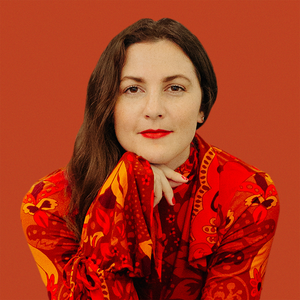
Girls, Gays, and Grief with Barri Leiner Grant
In this episode, Publisher & CEO Kristen McGuiness and CMO Lauren Porté Schwarzfeld are joined by Barri Leiner Grant to talk about the power of friendship, writing, and redefining grief through sharing the stories of loved ones.


Automatically Transcribed Transcript
From the ladies of Rise Literary, welcome to Write the Good Fight.
On today's episode, we have publisher and CEO, Kristen McGuiness and Chief Marketing Officer, Lauren Porté Schwarzfeld, joined by Barri Leiner Grant, a highly respected grief specialist, author, and the founder of the Memory Circle, a creative and healing space for remembrance and ritual. Barri is a sought after speaker, collaborator, and retreat guide, and is redefining how we talk about grief. She also happens to be one of my most favorite people, and I'm so excited that you are joining us today.
Welcome, Barri.
Oh, I'm so glad to be here.
Oh, we're so excited to have you. And I feel like it's been like, there are certain like friends of our life, friends of our business, that it's like when we finally get to have them on the podcast, it's like, yeah, you're here. So I was just saying to Lauren, the three of us had a very magical night back in May together in New York City, where we like shut down the Hotel Chelsea.
And I was telling Lauren, I was like, that is like, when I think back on like my last few years, I was truly like one of the best nights. Like it's like one of those like magic moment nights that like I'll always remember. It's like, it's like in a snow globe of fun.
Oh, it was like the whole thing got kind of like to hark around us and it was like the scene was us, like the light was on our little table. And yeah, I agree. It was very New York.
It was. Very Hotel Chelsea.
Otherwise known as the cafeteria.
I love the cafeteria.
So, I mean, I feel like there's a million things we could talk about. Let's talk about the first time we met. I think we met at the reading room at a writing thing that you were leading.
Yeah, and it was so sweet. It was upstairs in that cute little loft.
Yes.
And I was newer to town, and you don't know exactly who's coming because it's a no signing up thing. It's just like arrived.
Yeah.
And I was so happy to meet you. I knew of you. And I knew we lived close in my new town, but I was such a pleasure.
And to connect over writing was pretty cool.
Yeah, I think I knew of you also because I think a friend of mine was in one of your grief circles. And I feel like you moved to town, and immediately everyone was like, do you know Barri? Do you know Barri?
Do you know? And then I met you and I was like, oh, well now I know Barri. And we met and I was sort of like, oh, I think we're supposed to be best friends.
And then here we are.
And here we are. It's so hard to be the new girl at this age. It really is.
I was a reporter in Chicago forever. So when you're like a member of the media, you get to be on everybody's press list and invited to the opening of every envelope. And so when I made the switch to new work and new world, it was really unusual.
I started to become someone who people called on for grief, which was entirely different, but it sort of flipped that on its head. And then to be new entirely here in town and back in New York was like a whole new thing. It was like wearing a new hat, a new uniform and new friends at like an older age.
It's really strange and fabulous.
I love that. And how did your, I mean, because I don't know every detail of your experience. I mean, did you begin your grief work while you were in Chicago, or did you begin to really begin to build your grief community after the move?
No, in Chicago, I would say we're coming up on like almost official ten years of the memory circle and just three years back East. I did start there. It was more as a peer guide before I did any training at all, and it was mostly little on the side and came in the way of crafting workshops around the day before Mother's Day, having some kind of event for motherless daughters.
And that started a few whispers in the studio like, do you think you could ever have one for fill in the blank? And then I thought, if I'm going to really lean into this, then I should get my training on.
And what has that looked like as you've grown into the grief? I mean, it's interesting, right? Because I feel like ten years ago, people really weren't talking about grief.
And now it's become something that's like way more, it's like menopause. Like, you weren't allowed to talk about menopause. You weren't allowed to talk about being sad.
And now it's very trendy. Yeah. Last time we were joking about like in 2006, like nobody knew how to dress.
And like everybody just wore like weird, I was like, I dressed like Steven Tyler. I had like long scarves and like really tall boots. But I also was wearing like a three quarter inch Merino cardigan from J.
Crew. It was like, is she going to the office? And I feel like that was like the trends of that time.
Now the trend is to be going through menopause and like diving into your grief. But as you've been a part of that conversation, like how have you seen it grown and how has your work grown in that process too?
You know, in 1993, I lost my mom Ellen and it was sudden and she was the most important person in my world. And I just thought, how is it A, that the world is not stopping to give me a moment for this? I worked in fashion public relations at the time.
I owned my own agency and no one was talking about grief or grieving. I talked to a really well-respected, she's like a therapist extraordinaire about three years ago. And I said that statement and she said, my dear, I was most certainly in practice.
But I think unless you were really falling apart, not able to show up for your day-to-day life, there really wasn't the idea of what I call grief tending, where you would really show up for it and make space for it and make time for it, find a support circle. There just wasn't anything. And so I started to get curious, like what would it look like if I wanted to talk about this?
And so it was more in pushed corners and asking questions. And a lot of it came out of shame because I also did not have a mom. So there were a lot of questions that I wasn't quite sure, are these not having a mom questions, or are these because of my grief questions?
And the first bucket was really more true to me. It just felt very almost like immature, shameful, like shouldn't I know this? And then when I had moved to Chicago and redefined my, who am I here on the other side of no longer being a publicist, finding my way to reporting, and my grief showed up hard and heavy in becoming pregnant and realizing, oh shit, I am about to become a motherless mother.
And that's when she was missing, so outsized that I just, it needed help. And the conversation that I was having in a therapist office, half of it was, why are we not talking about this? So I always say, my favorite genre is quick tell the others.
That anything I learned about the really hard stuff, I just started to talk about. I was like, if there's not a door open for this, let's just open one. Like, why be a gatekeeper on something that we're all going to go through?
And again, because I didn't have my mom, I thought I'm going to have to talk about this out loud, whether it's in an article or on a podcast or just with the checkout person at the grocery, who as I'm checking out says, oh, my mom loved tomato soup. And I hear past tense, and there we are holding the whole line up, having a conversation about her mother loss, my mother loss. My heart became sort of a magnet for motherless daughters wherever I went.
And then the conversation became more commonplace. I wasn't afraid to talk about it anymore. I wasn't the sad girl in the corner.
People were like, so hopeful. Some of them say, also say, I'm a hope dealer. Like the minute you tell someone you work in the grief space, they're like, wah, wah.
But it really is much more on the other side of this, you get to choose how you meet it, and you get to examine sort of the new identity that you have. And that's been curious and creative, and it involved a lot of writing. I used to write about it for years, just in a diary or a journal, because there wasn't anywhere to put what I was feeling.
Yeah, I think it's, I mean, I think grief is, I mean, it's obviously deeply personal, and I feel like depending on what the loss is, right, the grief has all these different dimensions that show up and how we understand it. And yet there is this universality with loss that it just, grief has a very specific language.
Yeah, I cracked open Motherless Daughters by Hope Edelman, and in the pages of that book in 1994, the first I had ever seen anybody talking about what I was experiencing, it was like, there are my people. And that's the way I feel about memoir, that someone tells their story and you see yours. And I think that's the greatest gift of daring our stories, that it's very common, it's every day, but yet, there is no one way or right way to grieve, it's as universal and one of a kind as your person.
So it's not all the same, but there is a thread, I think, that runs through it. And the biggest one to me was just that too quiet, too quiet. When we tell our story, I think being seen, heard and witnessed is what everybody deserves in grief, bottom line, and that nobody should grieve alone.
It is not a solo sport.
Yeah, I love, you said something really interesting before we started recording about, what changed for you was when you started writing to your mom instead of writing about her.
Yeah, I think that was the most profound thing. In one of my trainings with Claire Bidwell-Smith, who's written like five of the most incredible books on grief. And I train with her and retreat with her, and she's a mentor extraordinaire.
And I was like somewhere around chapter six in her anxiety, the missing stage of grief. And one of the exercises is a guy who comes to her practice, and he is experiencing panic attacks. And he's so distraught because he has this relationship with this father that was really difficult, and the father dies, and now he thinks there is no repair, right?
And there is a profound grief in that, when you are waiting for some kind of relationship that you always wish and hoped would be, and it dies along with the loved one. And she says, write to him, write to him. She's talking to him about all the cells in our body really can continue to connect earthly otherwise, and also our nervous system.
And so she says, write to him. And I'm like, write to him. I've never written to my mother.
Like she had been gone decades by then. And I was like, I have never written to her. And it changed everything about the way that I crafted a continuing bond with her, how I brought her in to the everyday, how I talked to her and invited her into almost everything, like the minutiae, everything she was missing.
Just was able to write, I called them Hello Again Letters. And they started that day, but they also, like when I'm in a plane, they're really juicy. Like I am so grateful to kind of be up in the sky and look out the window where that like rides in line, just feels like forever.
Wherever that is, that to me is like where she lives. And now, sadly, where my dad is too, I wrote one to the both of them and I was like, they've been divorced for years. So I was like, hey, are you together?
Did you find each other?
I mean, what's going on up there? I want to know. But I write them and it really changed my relationship.
It changed from like the doldrums and down and sadness of her missing out on everything and everybody and sort of brought her into the conversation. And I use it a lot with folks in my workshop. Someone said they had never dreamed about their son.
And I said, have you ever written to him? Now she's a sub stack called Dear William. And it changed her grief too.
She writes to her son, William. And it's just these hello again letters are just like an invitation into the way that we live with loss, learn to live with loss, move forward, meaning making. It's just I think it's the only way that I could.
Then people talk to out loud to where they're wherever or the front seat in the car. A lot of people say they have all different ways of connecting. But I think memory making is the way forward.
And for me, that has always been with writing.
There's so much I want to say. I mean, I love so you're wearing a sweatshirt that says Hope Dealer, which I've seen before. I love it.
And yesterday, when we had coffee, I think you were wearing a Joan Didion sweatshirt. So I'll quote her and say, J Didi.
Yes, J Didi, I love that.
The patient saying of the best grief memoir that ever lived.
Yes. But there's that Joan Didion quote about how she writes to find out what she's feeling. And I think that there's something really, really powerful in this.
It's almost like using your imagination to move through grief and using these hello again letters to move through it in a really, in a really active way. I think the passive parts of grief can feel maybe a little bit stifling, a little bit like you're sort of suffocating in them. And writing, from what I've observed from how you work and, you know, in moving through it on my own, it feels the process of writing through it, of sort of uncovering how you're feeling, it feels very active.
It feels and really hopeful.
Yeah, and it literally is moving the energy through our body and then seeing it outside of ourself, whether it's in a journal or on a screen or in a beautiful book. I think that's the beauty, that we can make something of it, that we can make art of it, meaning of it. And also I say, even if you are not endgame looking to create something generative, I think when we sit down with anything that we've written, we allow ourself to sit down next to our grief.
So you can be your own story witness and you can, it's almost like, you know, in memoir, it's like the author of your story and the narrator of your story is different than the you of your story. And that's how I feel about that kind of a writing practice in grief that you get to sit down next to yourself and just sort of observe, but also see it outside of yourself and know that it can be moved and witnessed and crafted and something can be made of it. So I agree totally.
It's like active and it's a moving dialogue. You're continuing to have the conversation. Yeah.
And I think it's this piece where, I mean, I mean, I don't believe people just die and that's it, that there's no tendril left behind, right? So it's like however we activate that tendril, it brings the relationship back. And I mean, I know in 2021, I lost my uncle who was like a dad to me.
It wasn't, I always have to say like he wasn't just an uncle.
Tell me his name.
Uncle Vic. Actually one day. So my dream is that one day, we're hoping to have like our own bookstore and like workshop center, multiple ones around the country slash World Berry.
But there's one in Ojai that like is, I'm the heir apparent to this shop and there's this really big yard and I want to have like an Airstream that sells tea and flowers. And I want to call it Uncle Vic's because he was a florist and an amazing florist. And he was my gay uncle, but he was also like, you know, I didn't have a dad.
So my two, my mother's brother stepped in and they raised me. And they did like, I always say, like I ended up with like less fucked up men stuff than I should have. And it's my dad was in prison my whole childhood.
And like, I definitely, it was not, it was like poster child for like romantic asshole. And, but my uncles were these like really stand up guys that like came in, my dad. So my Uncle Vic and my Uncle Tom walked me down the aisle.
Like they did, you know, they took me to the father daughter dances. They did everything. My uncle did all the flowers for my wedding.
And then he died of COVID and a very like horrific COVID death where like no one expected, like he went into the hospital and we're like, oh, he's going to be fine. It was fall of 2021. He was double vaccinated, but he also had an disease that had like an underlying, like I guess like it didn't, I forget what it did, but it like suppressed the immune system and made you like really like immunocompromised for COVID.
And he ended up on a ventilator. And like within two weeks, he went from being fine to gone. And it was COVID, nobody could visit him.
No one got to say goodbye to him. It was one of those just really tragic, tragic deaths. And afterwards, I was like working with a shamanic like energy person who did a lot of like deep medium work.
And I immediately connected with him in such a powerful way that like I was in like a really like the most. And when my father died, it was actually a lot less grief because he hadn't been present. My dad was never around.
I grieved the man my whole life, but my uncle was like this really active parent. And then he was just gone so fast. And it was all that like post-death relationship that like took me through that.
Like it was this most, it was like a magical mystery tour. I mean, it was a little like being on acid for six months. I'll be honest.
Like there was a lot that was very intense from it that like I will never forget. But like it was also this like recognizing that like there was so much healing I got to do even after his departure, you know, because like we weren't done yet. And COVID cut our relationship.
Like it just cut it off. And like, again, that tendril, you know, it's like it's being in relationship with that, like that spirit that you still get to do the work with that spirit even after they're gone.
I don't think they're ever gone. I mean, that's where I've come to now. Of course, it's always better if they're right next to the dinner table.
Yeah, and you can like give them a kiss and hold their hand and yeah, and hug them. But that's a choice. We get to choose.
So there are some people who are, for all kinds of reasons, don't believe in mediumship. And I feel like I got on this great long arc of experimenting what it looks like to continue a relationship with my mother because I can't imagine a life that she's not a part of. And so from medicine journey to mediums and shamans, and it was like an appointment at a shaman where I got the idea for the memory circle.
I was so worried that my mother wouldn't know me if I was anything else but what I was when she died. So the story I told myself was, she'd be good and pissed, but also I think I was worried that I wouldn't be able to connect. Like she would no longer, I would no longer feel that pride in what she knew.
She had visited my PR agency, like she knew the people I worked with. She was just so much a part of it. And then at that appointment, she just said, yeah, all the things that you've done are in service of this.
The writing, the publicity, everything else has been in service of doing this. And then she was closing out the session and clearing the energy for whoever and whatever was coming next. And she's like, oh, wait, Ellen has one more thing to say.
Don't make it sad. And I feel like I most often, that was my greatest fear, be the sad girl in the room. And what I most often hear is anything but.
And that brings me so much joy. And I'm hopeful for others. Just like what you said, it's like, Uncle Vic's here.
Oh yeah.
He's here.
He's hanging. He's totally here. Yeah, no, we had a, I mean, what really brought me in was like the first thing that he said through this meeting.
And I had never done mediumship. I mean, my father passed. I had like a really spooky, the morning, I don't know, I'm just, I'm telling all my good stories, but we're here to chat about it.
I bring that on people.
Morning my father passed, I had a dream that a man had come to my bedside, sat on the edge of my bed, stroked my hair and said, all your dreams will come true because you have the talent, the humor and the energy to make them happen. And I woke up and I called my mother. I mean, it's so clear, cause I not only did it happen, but I literally called my mother, woke up, my mother was so freaked out.
She thought I was saying there was a man in my apartment. And I was like, no mom, it was like a vision. My mom is pretty like psychic.
She's a very normal woman, but she's had a lot of psychic things. So I can say things like that to her. And she was like, what?
And I was like, no, it was like a vision. Like somebody came here and they stroked my hair. And the clearest part was like the talent, the humor and the energy.
And like, if you said humor, that means you knew me, right? It wasn't like some weird, it was like felt so specific. And I was on my way to therapy.
I got dressed, I'm driving to therapy and I got the phone call that my father had passed away the night before. And I was like, oh my god, like he came to me, you know? But then when my uncle Vic died, the medium said that like, she was like, I don't know why, but he just keeps yelling at you to pick up the phone.
And the one thing I had this horrible regret because the six months prior to my uncle dying, I had been so busy that I wasn't calling him back. I was like super busy. And I wasn't calling him back.
And so, and she had no idea. And the like, if my uncle was Italian, he was very Sicilian, he totally would be yelling at me. Like, and, and then she was like, oh my God, he's like the coolest guy.
And then she was like, he's like the Fonz. And I was like, oh my God, because when my uncle was a teenager, they all called him the Fonz. Cause he was like the coolest guy.
Like, everybody wanted him to be like McElvech. And I was like, oh my God. So it was like these really like just beautiful.
And he shows up all the, like, years later, I was actually having this real moment. I was in Miami at the Standard. And who was there but Henry Winkler?
Like, I saw Henry Winkler like six times. So it was just one of those things where like, you know, like they're always there. They're always sending messages.
They're always in the passenger seat. Like, he's always yelling at me.
I mean, it also feels interesting that we're recording this today.
Yes, it's actually his, the date of his passing is coming up on Thursday. So he passed on October 30th. Yeah, four years ago.
Which is the day that this will be released. This is the day it will be released? I realized that as we started recording, and I was like, I feel like Vic's going to come up in this, and I feel like the episode is, in fact, going to be released on Thursday.
That's beautiful.
That's so beautiful.
And I think we need to tell Uncle Vic's stories because he mattered.
Yeah.
It's part of you. And when we continue to tell the stories of our loved ones, you know, my kids, I tell Grandma Ellen's stories. She was never a grandma, and my kids feel like they know her.
I think it's a gift. There are so many families that, like, sadly, I hear the person dies, and it's mostly generational. But because it is, you know, bad, they feel like, you know what?
We're going to put all the pictures away. We're never going to speak their name again. And it's so confusing, and mostly to children, that their grief experience is that.
So when they become adults, they're not certain how to experience loss. And so you are actually, with every Uncle Vic story, you're actually teaching your friends, family, and children how to grieve. We need to know, we need to have permission from someone who's trusted and safe, that we could tell the stories.
And it doesn't make me more sad when you remind me. It makes me happy to experience them living forward, even if it's in their favorite food, reading their favorite book, honoring them on their favorite day, honoring them on the day they pass. My friend always says it's like the least important day, the day she lost her parents, and she likes to honor them on their birthday.
And so it's different for all of us, but I think, you know, I think that is how we remember them forward.
Well, my Uncle Vic loved to steal things from Neiman Marcus outlet malls, so I guess I'll have to go in. His favorite thing, he would go to the outlet, and you know how the Neiman Marcus Last Call outlet has the, like, row of shoes, you know? And he would go and put his old ones in, put a new pair on, and walk out, walk out with a nice pair of, like, Bruno Mali.
I feel like maybe there's a different way we can honor him than stealing shoes.
From Neiman, but only from Neiman's.
Maybe we'll buy some, maybe we'll just buy some.
He was a terrible collecto. He would also steal things from, like, Rite Aid. And he was amazing.
He was like a real, I mean, he was just like a complete rebel. But, but I do think yes. And I love that, like, I think it's been so important to see generationally how we change that conversation around grief.
And, and I'd love to, I mean, how do you think it's changed too? I mean, I think obviously with pandemic, and I was just saying this before, like, I was reading something yesterday about how, like, they've really tried to make us forget about the pandemic to have pandemic amnesia, because they're trying to make us remember the worst parts of the pandemic, so we forget the best parts, because there is so much liberation in pandemic, and it's not like, again, I had a horrible tragedy happen because of COVID, but I also know that, like, there was a lot of freedom, there was a lot of breaking down of systems in the best ways. And so how do you think that has released grief or created new conversations around it?
I think it made us aware. I always say it was a grief pandemic followed COVID, that when we didn't have the opportunity to be with loved ones when they were passing, and we didn't have the ritual of funeral and memorials, I think people also had an awareness that you could honor them in so many different ways. You know, we started to have all kinds of memory-making events that might not have been, you know, some of them were on Zoom, some were beautiful writings.
Like, there were so many ways that we thought grief in a universal way. We honored each other's grief in the best way that we could. We were isolated, and so we needed to find a way of collectively belonging.
And I think that's what's generally missing from the way that we live now. We're so disparate, and I think we will never go back entirely to the way we were before, no matter what they say about going back to the office. We do need a water cooler.
We definitely do need to be able to gather around something. There's beautiful traditions where I know I learned from my rabbi about rising for this memorial, where I always thought, well, maybe we rise to honor our loved one who is, to be closer to whatever spirit you believe, or heaven, or your head is close to them. I never really knew, and he said, no, it's so that the others in the community can see who's grieving.
And that was so profound for me that we don't have a lot of places and spaces where we witness, and I think with all of the notifications that we were so connected to during the pandemic of seeing loss on this global stage, you may not have communicated it the same way to others around you. It was happening on social media, we were happening on social media, and so I think it connected us in a way that we saw grief out loud, if you will. And I think we can't unsee that.
And also I think a lot of people felt very disenfranchised by not being able to have ceremony around their people that died during the pandemic. I think it became a different way of honoring loss. And we lost so many people, so many people.
And now I think also even in my support circles, people will say, I lost my uncle Vic in the pandemic. He died of COVID. Nobody was there.
Nobody, you know, I think we get to tell those stories that will live on for generations. Nobody's gonna be able to even envision what we lived through. But I think a lot of, like I said, a lot of universal grief and also what I call a grief pandemic.
It needed to be addressed. It needed to be talked about. It needed to be witnessed.
And I don't think it was quiet at all.
No. And I don't think it was proper. I mean, I think it's why Trump is president, honestly.
I always, I mean, I really do. I think that it showed up economically as well. Like it was that we weren't given the space to recover and process and truly grieve what had happened.
They tried to shove us back into the system so fast.
Like everything's great. Everything's great. Everything's great.
And it's like, no, no.
No, we all need to like sit in a circle and cry and write in our journals. And like, yeah.
It wasn't just a loss of people. It was the loss of normalcy. It was the loss of our children being able to connect with teachers and in school and they were online.
There was just anything you that that's the other thing. Non-death loss deserves to be grieved and named. And so I think that also for me came out of the pandemic when people were trying to get their footing again in what people were saying, back to normal.
There is no back to normal in any grief. It's a shift in identity that is forever changed. And so you're reckoning with sort of a loss on a loss.
Who am I on the other side of this? And sometimes who do I want to be? Because maybe what served us before the pandemic, no longer was serving us and we got a taste of that.
And so the rebels, the rebel in us, we're not going to go back to some of it. We realize family is important and we realize connection is important. And I think there was so much grief and loss in what was expected of a future that we had imagined that didn't get to play out in those years.
I agree.
And there are still reverberations.
Absolutely. I mean, I think there was so much opportunity for us to do it differently. I mean, we really did have this moment of like, hey, let's bring some of these utopian ideas that actually felt empowered by pandemic.
That we were getting to experience bike riding and dough making, right? But also, yeah, but also processing change and loss and grief. And then there was no, I mean, one, I think obviously the economics of that, but also it's like culturally like, hey, we could have really made space and how we have these conversations.
We could have spoken into it. Leadership could have spoken into it. We could have normalized these conversations that I think still, again, I go back to that generational piece just because I see it, like my grandmother will barely talk about my uncle because you don't talk.
Like, and if she does, I always feel like she's like whispering it. And so she's just like trapped in this silent grief. That's like what their generation, like it's the weirdest thing.
I'm like, how is that? How is that any kind of process and how does that honor people? And I think that now like we're in this place of like when you don't express trauma, where does it go, you know?
In your bones and your body and to the next generation. I think it's our job. I think it really is.
It's our job. And that's how I started to look at it. If not me, then who?
And most of it is beautiful, heartbreaking, glorious story. And you know, they're my favorite stories. They really are.
Because it's so much easier to hand somebody a stunning memoir, where they might see themselves in a chapter than getting a prescriptive look at it and feeling as if you're doing something right or something wrong. It feels like poetry to me. Life is story, right?
And it makes us who we are. And there's something that just, there's so much connective tissue in it to me in that way. And I think that's essential.
I mean, that's why I take even the person who's like, I'm not a writer. And I'm like, you know, just allow this prompt to wash over you and just see what comes. And there's so much energy that you can move through you that can come out on the page and free you from exactly what you're saying.
Like a heavy burden can become lighter. And we can always think of it as something we can craft and something we can grow from. And I would never shove a crystal up anybody's ass.
It sucks. And it's hard and I will never bright side it, but I do imagine the me that would be without this. And it's almost unimaginable.
Well, speaking of, I would love to hear about, I think you are writing a book, in fact, on this topic, are you not?
Let's say we're in deep, deep, deep in proposal mode, but I will write the book. I wish I could gift others. People will most often ask me, so and so just lost, so and so, what do I give?
And in the past, it was always a book of poetry or a stunning memoir. And I think remembering our people forward and these kind of grieftending tools and all that we've talked about, ritual, creativity, I feel like the idea that we could take the psychological theory of continuing bonds and the way that we remember our people forward and the word, the very word remember is putting ourselves back together. We are re-membering us.
And all of that comes together like a big puzzle in all of my work and crafts us anew. And I think that's what I hope, that it's the book that you would give someone, it's the book that would sit by your bedside, but it will be filled with ways of crafting that relationship forward in a way that feels true to you. Love that.
Coming soon to a bookshelf near you.
I love that so much.
Well, as we wrap up here today, we love to do a very special piece at the end where we ask our guests to offer one writing tip.
My favorite. I would say my one writing tip is to practice daily. Even if it's thinking about writing, I think practice daily, just like you tend to your grief daily.
Practice daily. Come to the page in some way, shape, or form, whether it's keeping beautiful words around you, reading beautiful words, but just being with writing.
I love that.
And I'll say, so many years ago, I wrote a piece about my uncle Vic that's all about Taylor Swift's love story, because the week before I met my husband, I was in Dallas, Texas, and my uncle Vic was happened to be living there during that time. And we went out to eat and I got in the car and he was like, you have to listen to this great remix. And he had this like gay disco club version of love story.
And so we drove around Dallas all night dancing to it. And we ended up at my uncle Tom's house. And my uncle Tom is, he loves to drink.
So we get there, my uncle Tom is there, he's drunk with some date who was like, what the fuck is this family? And my two uncles start dancing around me to Taylor Swift's love story. And I say they were like casting spells.
Like they were just like, you know, like, baby, just say yes to this like gay dance music version of it. And so then a week later, I start dating my husband and I'm like, they like cast this spell, you know? They cast a spell.
And I would always say that about that song. Like it was my uncle's cast this spell. And then when he died, it became my grief song.
And I like talk about like intergenerational. My kids would be in the back seat and I would drive around listening to the gay disco version of Taylor Swift's love story and I would sob. It was like, I mean, just unleash, like in a lot of Starbucks parking lots.
That's all I remember. There was a lot of Starbucks parking lots and Taylor Swift's love story. So I wrote this whole piece about like that six months where I said it was like being on LSD of like having this very real experience of him being there and me healing the relationship.
But it being this like this great love story that like I had with this uncle, you know, who was like the only person I really could ever trust in the world, and maybe just say yes.
So anyway, he is still with Ellen right now. I can't you just wrote him into Ellen's story.
He's doing her flowers. He's doing her flowers.
Shopping, they're going to the theater, they're singing, they're dancing. Yeah. Neil is really freaked out, but Ellen is totally in on it.
Ellen is stoked. She is like, I'm so glad this Victor character arrived. This place just got a lot more fun.
And that's why I always ask the name of a loved one, because it first started because I was like, I think it started with Jackie Kennedy. And then I was like, mom, that is a good one. Here she comes.
And then I started to meet people that I adored and the people that were connected to them, like Uncle Vic. I'm like, yeah, there he goes. Uncle Vic and mom.
There he goes.
So below as above.
Exactly. Oh, I love it. All right.
Well, thank you, Barri. We love you so much and so grateful to have you here today. Tell everybody where to find you in the memory circle.
The memory circle on Instagram, thememorycircle.com.
That's where I am.
And permission granted on sub staff. I think we all deserve permission, even though it's inside you. You had it all along, my dear, but sometimes we need a reminder.
A little plug for the Wizard of Oz at the Sphere.
The Wizard of Oz at the Sphere. Go, go, go.
Go fast.
All right. Thank you, Barri. We'll see you soon.
Love you guys.
This has been Write the Good Fight, brought to you by the ladies of Rise Literary. Thanks for tuning in. If you enjoyed today's episode, don't forget to rate us five stars, follow the show, and leave a comment.
We'd love to hear from you. Feel free to share this episode with friends, family, or anyone who might find it helpful or fun. Be sure to follow us on Instagram, at Rise Literary, to stay up-to-date with upcoming events, courses, insider info, behind-the-scenes fun, and so much more.
Or you can check us out at www.riseliterary.com. We appreciate you listening, and we hope to see you next week for another great episode. Until then, remember, it's your time to write the good fight.
From Write the Good Fight: Girls, Gays, and Grief with Barri Leiner Grant, Oct 30, 2025
This material may be protected by copyright.