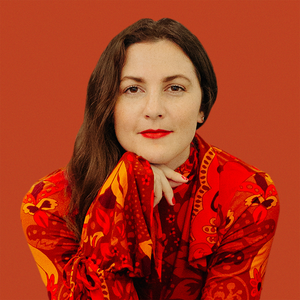
Fleeing Finance and Finding Creativity with Lauren and Elena
In this episode, CMO Lauren Porté Schwarzfeld and COO Elena Azzoni sit down to talk about their journeys through college, their careers in finance, and how they ended up at Rise Literary. From writing a book while on the 9-to-5 grind to creativity being their job, they cover the ups and downs of creating in a corporate world. If you’re looking for encouragement to follow your heart, this is the episode for you!


Automatically Transcribed Transcript
From the ladies of Rise Literary, welcome to Write the Good Fight.
Welcome to this week's episode with Chief Marketing Officer Lauren Porté-Schwarzfeld and Chief Operating Officer, aka Moneybags, Elena Azzoni. Today, you get two members of the Rise Literary team who are former, maybe a little bit current finance ladies turned members of this publishing and media coven dynasty, or, I don't know, we keep saying different words. We keep asking Chat GP Tina for non-masculine versions of Empire, and they all sound stupid.
So here we are, and welcome.
Hi, Elena. Hi, Lauren.
So I was a finance major in college. I got there in a funny kind of way. And now, I don't know, 25 years later, we get to do this fun publishing thing, which feels unexpected and also kind of exactly where I feel like I'm supposed to be.
Yeah, same. And I have 25 years of finance, though I was not a finance major. I have an MFA, so it's a little more appropriate.
I just keep wondering why it took me so long.
Yeah, I, like, always wanted to be a writer. I watched Murphy Brown with my aunt when I was, like, eight years old, and I was like, oh, my God, I love this lady. I want to be a writer when I grow up and a journalist.
And then I think I got to college, and I was like, oh, jeez, I have lots of student loans, and maybe I should just do something that I'm actually really good at and can make money at. And it's funny, when I was in college working in finance, it was, I don't know, like, 2000, 2001, when there was, like, lots of money to be made, in finance type places. And I was one of the only people working in this finance job, who actually understood any of the things.
I went to Northeastern, and so I was doing an internship there. And I worked with all these kids who were like, sociology majors and psychology majors and history majors. And they were like, I don't know, somebody offered me, like, a $5,000 signing bonus to come and work here.
And I just, like, plug these numbers in. And I was like, you don't know what any of this stuff means? And they were like, we don't have any idea what this stuff means.
Yeah, so that was me. I was like, I don't know what any of this stuff means. But I took a couple of classes at NYU, my first company paid for, that I landed at.
Because after doing my MFA, I also had student loans and was like, oh, I guess I need a real job now. And just kept self-teaching because it is something that when it comes to the day to day task, you have to be detail oriented. But you're using Excel, you're using QuickBooks, they do the math for you.
But those bigger finance questions, when it gets to global taxes and all that fun stuff, where you're like, I'm not so sure. I have an MFA in writing, not a master of financial administration. I'm not sure if you guys knew that, but maybe now is the time to tell you.
You're like, that's not where I go. Yeah, it's funny. I actually started as an accounting major.
And as I was getting ready to register for like, it was either global taxation. It was some big tax class. And I was like, oh, I don't want to take that.
And they were like, what about finance? And I was like, finance sounds great.
Yeah.
It was like, those classes sound a little bit better. And yeah, and then I sort of found myself in that world of, although I didn't, I did not stay there very long. It took me less time to realize, to jump into the finance world.
And it took me to jump out. I had like a series of jobs working in finance. And then I was like, oh, yeah, this does not actually fit as I thought it might.
Yeah, same. But I think it treated me really well because it was the one role. And I was in the tech startup world of New York.
So paid really well. You can work remotely, unlimited time off. My coworkers were always awesome.
And I think finance is something in accounting where you're the last to go if the ship is sinking, right? They still are always going to need that role versus like training or marketing, which we're always the first to kind of shave off in times. Yeah, and harder times.
So that satisfied my little Virgo need of stability. And then it's funny because I kind of fell into Rise through the finance door, through reaching out to Kristen and meeting both of you at the Bedford Playhouse when she had her book party. Yeah.
And she was telling me about Rise. And I was like, oh, when you get to the point where you need some finance help, let me know. And then that's evolved over time to where I've been more interested in operations and she needs more help in operations right now.
So it's kind of a natural migration within Rise for me, from finance to operations, which is something that always interested me when I was in finance, when I'd be at those exec meetings and the operations folks would talk or the HR folks, I'd be like, that seems more like me than finance, but I was kind of stuck in that role. So this feels much more me.
Yeah, I mean, operations is certainly a little more interesting than finance, having done both of them in my like wonky little path to where I am. I have a question for you. You wrote a book.
Yes, I did.
That wasn't really a question. I knew the answer.
Confirmed.
You wrote a book while you were working in finance. Do you feel like because your job was less creative, you had to find and create more kind of creative outlets for yourself? And that's what kind of like drove the writing of the book?
I feel a little bit of that. I think it's twofold. I think, yes, if I were only doing accounting and not something fulfilling on the side, then it wouldn't have been sustainable.
And I think because my job was not creative, it allowed that creative energy to be used for my creative endeavors. Whereas I have a lot of friends who are creatives who say love photography and became photographers, and they're mostly usually doing wedding photography. And that for some of them has kind of killed the passion because at the end of the day, they're like, well, I'm not really feeling the juice to go take photos in the woods, which is something I used to love to do.
So I've also been grateful along the way for not having those two intertwined, even though it was tempting at times to say, you know, is journalism something I should be interested in since I love writing and need to make a living. But I think having that separation, yeah, both drove me to seek it out outside of work and supported it because I wasn't doing it for work.
Yeah. When I was in college, I probably wrote more than I had ever written. It was probably one of the most creative times when I was in college and then like shortly thereafter because I was so deeply immersed in the most boring things you could possibly be deeply immersed in.
I mean, I worked a ton both between my internships and I also had like stupid retail jobs, but like nothing I did was creative. And I spent, so I probably spent after I graduated, like, I don't know, set eight years working in like different types of roles, but all in finance and they were so dreadfully uncreative. And it was, I have so much writing from that time in my life.
Whereas, you know, now having created this like proximity to creativity, it feels like it, it almost like, gives like just enough taste of that, that I'm like, no, I'm good. I'm being creative, but it's like satisfying enough, but it's also like definitely not diving into as much. I mean, I'm making a little bit more of a concerted effort now, but it's interesting how when you're so far removed from it and you have to actually like, you have to go seek it out when you're in like existing in these creativity deserts.
Yeah, yes.
Which I would very much describe the finance world.
Yes. Yeah.
I mean, I tried to like pivot my job where I was like, at one point I was just like planning events and things and my boss was like, you know, your job is more than just that. I was like, the other things I do are like literally as boring as making labels. And I was like, I have a new event.
I have a new idea for a new event we can have.
It's like I need the books closed. That's so funny. I'm impressed that you carved out time while in college to write, even though you were a full time student.
Well, I was a bit of a drunk writer. Actually, no, I take that back. I mean, I longhand wrote a little bit drunk, but I didn't actually have a computer when I was in college.
And so what's funny is a few years ago when we moved, I found a floppy disk that I had started writing a book on when I was in college. And so I would deliberately have to go to the library, stick this stupid floppy disk into a computer at the library, write, and then stick this floppy disk. I mean, it was like, I held on to this stupid thing for 20 years.
And now I don't know what to do with it.
Right. You need a floppy disk converter. I mean, I guess.
We might also need a glossary for the younger people for this podcast episode.
Fucking Google it. You can figure out what it is.
I know, but when I dropped Microfiche, because you also know. Yeah.
I do know what that is, but I'm sure Rayah doesn't.
Yeah.
So I mean, I don't know, I guess I hated to study. And so I was like, oh, I guess I'm going to go to the library and pretend to study. I might as well write.
And so I wrote stuff on this stupid floppy disk that who knows where it is or who knows what it is. But then I also had like notebooks and notebooks filled with just like nonsense writing. And then when I did have a computer, I mean, I feel like a million years old saying something like that.
Then when I was an adult and bought a computer in 2001, 2003, I don't know, I would email myself files. So I would like write stuff and then just like email myself files. So then I just like had all of these, I don't know.
When I did, when I wrote a book, I ended up sending my publisher, I was like, I have all this writing that I've done, like I don't really know what to do with it. And I literally just sent her, I don't know, probably like 40 random files. And she was like, so that's a lot of words, just from a lot of years.
And I was like, yeah, I've been writing for a while. I have a friend who I had taken a writing class with. And she was like, I used to write when my kids were little.
And one day I showed up to a writing class and I just had a bag filled with all of the things that I had written. And they were like notebooks and post-its. And she had just accumulated all of this stuff and showed up.
And the guy was like, yeah, you're a writer.
Oh, I love that. Yeah. Yeah.
We talked about that on one other episode where what makes a writer. And it's like, if you write, you're a writer if you love writing. Yeah.
Yeah. I also have rubber made bins of journals. I used to use those marbleized.
A composition notebook?
Yes, those. Yeah. Because someone gave me a tip once.
It was in college when I also did not have a computer, but I did have a brother word processor. So, yeah.
I had a word processor when I was eight years old. I asked for it for Christmas, and I was so stupidly happy to get this thing.
Well, now you're aging me. I had one in college, which was...
I mean, they made them for a long period of time.
Yes, they did. But I have all of these journals, and a friend of mine in college, I remember, wrote in journals prolifically. And I was like, oh, I really want to do that.
But every time I go to do so, I feel like I don't know what to write. And I said, I mentioned, I have all these pretty journals people have gifted me over the years. And she's like, no, no, you need to get the composition book.
So, you know, it's 49 cents at CVS or whatever, so that there's no pressure to write anything important or significant. And honestly, that tip has taken me all these years. I've carried through and I have lots and lots of composition books.
I mean, I think that's such great advice. I was just talking to a friend of mine who is, she's a phenomenal painter and she just was at a, she had an art show a couple of weeks ago and she had this massive piece of work. And people kept showing up and being like, I love this, I just don't have a place to display it.
And then I saw her the following weekend at another art festival in town. And I was looking at these smaller pieces and I was like, what is that? And she was like, oh, I cut up the big painting.
Wow. It was like stretched canvas. And she was like, everybody kept saying it was too big.
So I cut it up and I framed the smaller pieces. And it's this idea of like, don't be so precious about your work. Like just get it out there.
And she sold every single one of them. So this gigantic canvas that, I mean, it was stunning, but also nobody could hang it up. Nobody had a place to put it.
And I think she probably made it a year and a half ago. And she also like, if something's not selling, she'll just like paint over it and be like, let me see if I can make it something else. But this idea of like, don't be so precious about your work.
Get it, write it, get it out there, like put it on a piece of paper. But yeah, I was like, oh my God, you just cut up that big canvas. But literally now that amazing work is out in like, I don't know, 10 different people's homes.
And it's because she wasn't precious about it. She just kind of like went with it, which I think is really great advice for anybody about your work, like just sort of get it out there, whatever your medium is.
Yeah, I love that. I think not being precious is key, and writing truly for yourself. I know for me, that's when my most authentic writing comes through.
And having published the traditional route, speaking of our books, I had the experience of kind of losing that thread of authenticity in writing for, well, it was while I was in the midst of my accounting finance career, and I was like, well, this is my ticket out. So there was like, no pressure book, but you better be a best seller. And I feel like that really changed how I wrote and what I wrote.
And the book is, I'm proud of it, but it's certainly not the work I'm most proud of. That work is the work done at one in the morning when I wake up and just feel that little flutter and I'm not writing for anyone but myself. And so something I've been loving kind of witnessing from inside and outside through Rise is with our hybrid authors, how we support them to really write authentically.
There isn't the same pressure that you have from traditional publishing, which I've dipped my toe in recently and with my own work, where the feedback is always around what's selling these days.
Yeah.
Versus how can we pull out, how can we help support you to pull out your most authentic voice, which I feel is what ultimately sells, because that's what readers want.
Yeah.
I mean, I think we're both probably very familiar with this from being the finance world. We are very familiar with the general archetype of the people who are in charge, the general characteristics, if you will. And there's a lot of gatekeeping, and there's a lot of emphasis on the bottom line.
And that's kind of how traditional publishing roles. And yeah, we do things really, really differently. I don't know that I would, I think while I've always been drawn to writing, being a writer, being in that world, I don't necessarily know that I would have otherwise been drawn to the publishing world in another kind of model or another world or another like, like I don't know that that's necessarily a thing that I was seeking out.
There's something really different about what we're doing at Rise without making this podcast like, I don't money bags and the marketing lady go and just talk about what we do.
Sign up here for 20 percent off. No, just kidding.
But I spent a really long time working in these companies where it was like just all about money. Anyway, there is something very, very different when you are writing. Oh my God, I can't believe I'm going to say this.
When we interviewed Rob Bell, he was talking.
Lauren's official favorite person.
I mean, I'm going to tag him in all of the podcast episodes where I quote him, because I think I did it last week on the episode with Kitty Hendrix also. But he said to Kristin when she was writing her book, Live Through This, also published by Rise Literary, he said something like, you wrote this book and this book owes you nothing. You left it all on the table and it wasn't like, it needs to hit a chart or it needs to sell this many copies.
It was like this book, like Kristin wrote it because it was the book she needed to write at that time. And you should listen to that episode because it's a really lovely conversation. But when you're writing a book and you're like, I have to earn back this advance.
I have to sell this many copies because my publisher said so. I have to do this. I'm trying to get out of this job.
I'm trying to do this. And it's like, you're writing a book where you need so much from it, that it changes your relationship with your art, with what you're trying to craft. And so I think what we do with our authors that is really, really different is we take away a lot of that pressure.
We take away the pressure of like, these are sales numbers we want you to hit, and these are follower counts we want you to hit, and these are, you know, any of those like bullshit metrics and just really grounded in a very different kind of experience, where at the end of the day, your book owes you nothing because you have written it, because it's the book you need to write.
Yeah, I love that. And speaking of Rob Bell, I swear this is not scripted, but it ties into what we were talking about earlier. So when he did the live podcast, I'll never forget what he said.
He said, you're pretending to have imposter syndrome. And everyone in the audience was like, and he goes, yeah, just sit with that for a minute. It'll make sense later.
And then afterward, I went up to him and I was like, I get it. Having just left that finance career, because while I was in it, well-meaning supportive colleagues, when I would say like, I feel more stressed out than I've ever felt in my life. I feel like I'm not quite sure I'm up for this task.
I don't know if I have the proper experience. Everyone around me, mainly women, like I said, totally being supportive kept saying, you know, you're just having imposter syndrome. You got this.
We see you as a leader. We're all supportive things. But it never quite sat right.
And when he said that, I was like, yes, that's what I was doing. It was not imposter syndrome. Like I can't do this job.
It was imposter syndrome. I don't actually want to do this job. And so not only is this a commercial for Rise Literary, it's also an invitation to not stay in a stuck career that doesn't serve you and fulfill you if possible.
I mean, it took me 25 years to make that switch. But I think it's really important. And when he said that, I had never heard someone word it that way, and it really stuck with me.
Yeah, I mean, I took sort of this like strange little way to get here. But I think I kept taking, I think I did like enough volunteer work and then kept taking like lower and lower paying jobs that finally when I just was like, I'm quitting my job and I'm going to go work for this startup publishing company, it was my husband was sort of like, whatever, you don't make any money now anyway.
You did the slow fade, I just jumped off the cliff.
Yeah, I did the slow fade from like this very promising finance career to like a, do whatever you want.
And I kept doing things to try to make that experience fit what I wanted to do. Like I became certified as a financial coach. So I was like, oh, maybe if I do this and I'm helping people sort through their feelings about money and organize themselves financially, and that scratched the itch a little bit, but it wasn't quite right either.
It was just like, I kept trying to fit myself into this mold. By the way, historically anyone I told that I was a VP of Finance was like, and they would say, you don't look like, and I'm like, thank you. I don't necessarily want to look like-
Turns out VP of Finance is not ever the look I'm going for.
Yes, I'm wearing my bell hooks, Audre Lorde shirt. This is the look I'm going for.
Yeah, we have a very specific type of look at Rise Literary, and it is almost never corporate finance.
Right.
It is, in fact, never corporate finance. We typically use the word corporate in air quotes.
Yeah. Well, I did have my sweatshirt blazer earlier because I'm like, if we're talking about finance, maybe I should look a little official, but then I had a hot flash.
So I'm literally wearing a hooded sweatshirt right now. But I'm not finance anymore, so I'm allowed to wear whatever I want. So we typically end our podcast episodes with a jingle.
Usually we ask our guests to give us their best writing tip, but I guess for today, you and I can give either a writing tip or a tip about, I don't know, moving from one career into another, anything. So what do you got for us, moneybags?
I would say in either case, whether it comes to your creativity or your career, be true to yourself. Life is too unpredictable to put that off.
I love that. I would say trust yourself. You know when things feel like you're on the right path, and typically you know when you're not on the right path, and course correct.
Course correct over and over and over.
Love that.
And know that it looks different, right? So like I kind of flippantly said the thing about quitting my job, which is like a fairly obnoxious and like obviously very privileged thing to say. And I run a networking group at this art gallery and co-work space that I'm part of.
And we have these panels and networking clubs and groups frequently where we talk about, you know, all types of things as it relates to like career pivots and people in transition career wise or, you know, whatever. And it comes up a lot where there are obviously certain people where it works, where it looks very different to just sort of like quit your job and pursue a passion. And then there are other circumstances where that is obviously not the case.
And so I don't take lightly the fact that I was able to join, you know, a startup company in very early stages. But there are other ways besides quitting your job to course correct. And so I really like I don't like to say it sort of flippantly of like, just course correct and like do something different or find a passion, whatever.
It's like also I love that we had the conversation earlier around how much more creative we kind of were when we're, I don't want to say stuck, but like a little bit stuck in these kind of in our finance jobs, and that there are ways to sort of navigate both worlds. And so I just like to throw that out there so I don't seem like a jerk.
Yeah, no, same. And Course Correct could look like what you're saying earlier about, you know, just taking a writing course or a pottery class, if that's something you did in high school and haven't done in 30 years, and you're like, oh, I loved doing that. And that can even create the balance if you're in the same job, but just bringing more balance.
Yeah, I mean, and also not to be selling one of our courses, but like Five Months to Memoir, we just switched to being a course where the live meetings are during the week, to being on Sundays, right? So it's now like a thing that, I mean, and that very solidly taps into if you're looking to write a memoir, or even if you're just looking for accountability in a writing practice, being able to spend two hours with that group every other Sunday and then having homework in between, like that's a very solid and largely attainable place to start.
Yeah, yeah, I think attainable being the key word, because I also mentioned the word privilege when I was talking about my career. Switch, which was actually just like a small tweak. It wasn't what I actually want to do, which is be a marine biologist.
That's what I initially went to college for, fun fact. But I have to also be realistic, you know, I need to pay the bills and I'm not even sure what that would entail as a career change mid-life. But you know, you think about all the factors, like still needing to make money, what do you want your days to look like?
And then finding that thing that maybe is just adjacent, like operations, like you said, is not so far from finance, but I'm so much happier. So sometimes it can be a small, small change that makes big change in your quality of life.
I'm still reeling a little bit from this marine biologist thing, and I feel like we're going to have to go back to this, but maybe after we're done recording, I feel like it needs a little more explanation.
I just wanted to swim with dolphins, and as it turns out, that's not really what most marine biologists do for a living. They're like in the lab.
No, I don't think it is. I feel like there's maybe like a job at a resort, maybe in the Caribbean, where you would swim with dolphins, but I don't think you need to be a marine biologist for that.
I don't know if I want to support that. Yeah, usually you're like sifting through silt as it turns out from my freshman year oceanography class. And I was like, well, it's not quite what I thought at eight years old this would look like.
I think there's like a whole generation of people who have a very misconstrued understanding of what a marine biologist does. But I feel like that was like a real common like, I want to be a marine biologist. And we were all like, no idea what it actually is.
I don't think it's swimming with dolphins.
No, and it's for sure the word processor floppy disk generation.
Yes. On that sort of strange note, thank you so much for joining us. You can find probably more than you'd ever want to know about either of us on the Rise Literary Instagram page.
I'm it'severythinglauren on Instagram.
Elena is Elena Azzoni.
And we hope to see you soon.
This has been Write the Good Fight, brought to you by the ladies of Rise Literary. Thanks for tuning in. If you enjoyed today's episode, don't forget to rate us five stars, follow the show, and leave a comment.
We'd love to hear from you. Feel free to share this episode with friends, family, or anyone who might find it helpful or fun. Be sure to follow us on Instagram at Rise Literary to stay up to date with upcoming events, courses, insider info, behind the scenes fun, and so much more.
Or you can check us out at www.riseliterary.com. We appreciate you listening, and we hope to see you next week for another great episode. Until then, remember, it's your time to write the good fight.
From Write the Good Fight: Fleeing Finance and Finding Creativity with Lauren and Elena, Oct 16, 2025
This material may be protected by copyright.