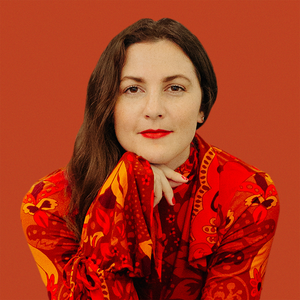
The Hard Truths Behind Book Publishing with Literary Agent Stacey Glick
On this episode of Write the Good Fight, longstanding literary agent Stacey Glick shares what it takes to make it in book publishing, the pieces of a book proposal that most catch her eye (and that of other agents and authors) and how the book industry has changed for both the better and the worse over the last two decades. With real tips on how to position yourself as an expert in your field and as a storyteller who is offering a new take on a proven concept, Stacey shares what helps writers to become celebrated authors - and finally break through the traditional publishing ceiling. Hint: Having a great book is just the beginning.


Automatically Transcribed Transcript
From the ladies of Rise Literary, welcome to Write the Good Fight. On today's episode, CEO and publisher, Kristin McGuinness and Chief Marketing Officer, Lauren Porte-Schwarzfeld, are excited to welcome Stacey Glick. Stacey is a literary agent and Vice President at Distal, Goddard, and Barrett, and has been at the agency since 1999 after working in film and television development for five years.
Stacey grew up just outside of Manhattan and is a former child actress. She now lives in New Jersey with her husband, four daughters, the youngest are identical twins, and two dogs. She has a wide-ranging and eclectic client list with a consistent theme of helping people live better and happier lives.
She's interested in, but not limited to, cooking and food, psychology, self-help, mental health and wellness, and also YA. Stacey is a member of the AAR Women's Media Group and is a former council member of the Rutgers University Council on Children's Literature.
Thank you, Stacey, so much for being with us today.
Thank you. I'm excited to be here.
Yeah, me too. And it's been so awesome. Just, I think it's always great when you get to watch people over the course of their career, build and grow.
And I love seeing your authors. I've loved sharing some author clients with you, which is always really fun working as a book coach. You get to maintain those agent relationships and help your authors to find agents like Stacey.
And this is the one thing I sort of always want to know when I am bringing people to you is, you know, what is that one thing that makes you say yes to a proposal or manuscript?
What is that one thing? If only there were one thing, it would be like hitting the jackpot, right? I think there's a lot of things.
And I think because I've been doing this for so long, it's like the combination of elements. That's how I think of it and describe it. And especially for nonfiction, which is my focus, you need the right combination of elements for any book project to be successful.
I think from my perspective and hopefully from the publisher perspective if I take it on. So it has to be a concept that feels familiar enough that it's not so outside the box or niche, but different in its perhaps execution or in how the author is coming to the project or the idea. It has to be an author who has the right credentials to be talking about whatever it is they're talking about, but also and in this market, more importantly, the right platform.
So ideally, they have lots of ways to engage and reach their audience and have already set up those things in advance of the book project coming to me. And then, you know, the last thing is the execution. Just how does it read on the page?
How well executed is the concept in terms of it being fleshed out and really strong from the kind of editorial level. So if something has all of those elements, then I'm very, very intrigued and excited. I would say most projects I get don't have all of those elements.
They might have one or two or some combination, but they're not all there. And in some cases, I can offer advice that might suggest how the author can build on some of those things and help develop them to kind of get them where it needs to be. But there's definitely not like a magic formula or one thing that makes it, you know, just right.
How much time do you spend with a manuscript or a proposal in order to make those kinds of determinations?
It depends on what I'm getting and what I'm seeing. I mean, sometimes it's just a pitch and sometimes it's a complete proposal. I can usually tell this is part of why I think I enjoy nonfiction.
I think it's a much faster determining process than fiction, where you really have to dig a little deeper into the manuscript and read more before you can safely determine whether or not it's something you think is going to work. With nonfiction, you know, you can kind of tell from the idea, from how it's pitched and presented and the proposal elements, you know, like what Kristen works on with her clients and what I often get when I see something in my inbox that's a complete proposal. It's like you can, you can sort of tell pretty quickly what the book is and who the author is and what their credentials and platform are and what the competitive titles are, which is so important in this market.
And if, you know, if those things sort of click, then I dig deeper into the content itself, the table of contents and the sample chapter to get a sense of voice. If I don't feel the elements are strong enough in the first part, in the idea and the author part, then, you know, it's, it's going to be a pretty, pretty quick pass.
Having worked on an enormous amount of book proposals, you know, there's two parts of the book proposal that I do think are so critical that, you know, one, the marketing section, right? Where you say, okay, here's my platform and here's what I can do and here are the people I know and, and presumably here's my reach, right? But I actually think that comparative title list, sometimes people think it's something that you just slapped together, but it actually forms like that idea of like, okay, what's been done before successfully and what makes this different?
And I think that's such an important question that people kind of, they either think they have to do something completely new that no one's ever done before, which is going out into untested waters, or they end up with a cookie cutter project that feels like, okay, we've seen this a million times over. But I do think there's that real sweet spot, where it's like, this is a new twist.
Yeah, and I think you're right about all of that. And I think the competitive titles is such an important piece of the puzzle for me and for publishers that I spend a ton of time on that, probably more than almost any other aspect of the proposal, because the books that we're including there need to be, you know, recent within the last two to three years, ideally. It used to be like three to five years, but now publishers really want more recent titles.
And it really has to be books that are successful. So, you know, I might see a project and I might say, oh, this is a great idea, you know, let me look at the competitive titles. And every book that doesn't even have to be the same exact, you know, idea, of course, but that would appeal to the same audience.
All the books that have come out in the last few years that they list as their competitive titles have sold under 5000 copies. So, that's a huge problem. And then we have to sort of start digging deeper and finding books that resonate with the audience that maybe have different enough elements that you wouldn't necessarily feel like, oh, yeah, that's an obvious comp title.
But you have to find a way in to prove to the editor and the person reading that that book and that concept that you're pitching is going to appeal to the same audience as whatever a big best selling book is. I just had a situation where I'm working on selling the book now, but a project came to me that was a referral through a client. And it's about mushrooms and mushroom foraging.
And I think mushroom foraging is really having its moment right now. I mean, people are just really into it. And it's a subculture that, you know, the people who are into it are like deeply, deeply into it.
Like it's growing from the earth. Like the people are obsessed with what they can get out in their foraging days. So I was like, okay, it's an interesting topic.
I know people who are into this. I know it's a subculture. I, you know, I knew a little bit about it.
I didn't know a ton. I don't do it myself. I started doing some research on the competitive titles and the numbers were really good.
And, you know, the further I dug, the more I keep like having these references, these mushroom references. But the further I dug, it's very metaphorical. I know.
The more I realized that, you know, that these books can actually sell really well and that you can also have the competitive titles branch out, again, metaphor there, branch out into, you know, other types of nature narrative books, whether they're kind of memoir, this has an element of that, or, you know, whether they're talking about other people in the subculture, this has an element of that as well. So it made me think, OK, let's do this, let's give it a try. And, you know, so far, I have some interest.
We did one call last week. I'm doing another call with an editor this afternoon. So, you know, I'm hopeful I'll be able to make it work.
But I think that's an example where the competitive title analysis is what tipped the scale for me.
Yeah, no, I love that. And I do think it's often overlooked.
Yeah, I mean, I think it's really interesting. We tend to think when we're talking to our authors, and it's typically where I come in as Chief Marketing Officer, we talk to our authors really about this idea of being a celebrated author is kind of how we have sort of redefined success. And I love this idea of it almost ties into coming up with comp titles because you want to find these places where there are these similar concepts, ideas, books that have these raving fans, these like huge sort of subcultures around them as like a means of almost like a built in following.
But what does it mean to you to be a celebrated author?
Well, when you say celebrated author, do you mean someone who's been previously published or someone who is kind of up and coming and trying to become published?
So a little bit of both. You know, we work with what we call sort of emerging writers to become published authors. And so most of our authors as they are on this path don't necessarily have big bylines, don't necessarily have large platforms.
And so we kind of redefine what's next, what the post-publication experience is going to be in terms of celebrated author, as opposed to bestseller list, which is typically the goal, but not always within reach.
Yeah, I hear what you mean. I mean, that's an interesting way to think about an author's success level or their experience with having a certain level of success as a published author. You know, I think that's an easier way to think about a celebrated author as somebody who is published.
And I do think there are, and I do try to tell my authors this a lot of the time, I do think there are a lot of ways in which an author can be successful that do not include selling hundreds of thousands of copies or being a New York Times bestseller. And I always try, when I speak with authors who are not yet published, who I'm considering representing and who I want to represent, I always try to find out what their goals are, because different people come into this with different goals and experiences, especially on the nonfiction side, which is what I do. You know, often it's authors who have a brand already established or some type of platform, and a book makes sense for them as an advancement of whatever it is they're already doing, or as a next step, or as something to add to, you know, I call it like the platform pie.
I've been using that kind of description for a long time, because it used to be, you know, 20 years ago when I started, you had a great idea, you know, when Kristin and I were working together, it's more than 20 years ago now, when she was an editor and I was, you know, a brand new agent. And it used to be that you had a good idea and you could potentially sell your book, and then you could build your platform up around that idea. The book was almost one of the first slices of the pie and the other slices came later.
And now it's really completely gone the opposite direction, where you have to have all your platform pieces already in place and the book is one of the last slices of the pie. So the whole dynamic and how publishers and thereby agents think about selling and books is very different. And it's a lot more, I think, front end work for the author to be at a point in their career where they can have a book project that's viable because they really do have to have a lot of these things in place already.
It's not just about being talented or having a great story to share. Those things, of course, are important too, but there's so much more to it. So, I think going into it, having an idea as an author, an aspiring author of what it is your goal is and what you want to achieve as an author, as a published author, you know, that's important, and it's important for me to know, and it's important for the author to think about, because not every author is going to be a published author, traditionally published.
Not every author is going to be a best-selling author, but that doesn't mean they can't be successful in some way with, or many ways, with their writing. So I like the idea of you trying to create aspiring authors or authors and to celebrate it authors, because there are a lot of ways to define success, and it's a very broad category. And I try to let my authors know all the time, because they always want perspective, like, what's happening?
You know, is this good? How good is this? How does this compare to everything?
Am I doing better than the other people?
Yeah, like, where am I in the, you know, so I... Yeah, like, so much of what I do now, and you do on your end as well, is give them that perspective. And sometimes it's hard to hear, because it's not always the best news.
And sometimes there are happy and wonderful surprises. And I think you have to kind of look at, hopefully, the whole picture, and, you know, figure out where those successes are, so that you can successfully say, at some point, you know, yes, I am a celebrated author.
I love that so much about your perspective on this idea of celebrated author. And I think for us, it really was this concept of like, how do we level the playing field? I mean, as we, as you know, we're now publishers and hybrid publishers.
And so we have folks that are investing in their books, and we want them to have this incredible experience. And as we all know, I mean, whether you're Simon and Schuster proper or we're distributed by Simon, but whoever you might be in the book publishing, and the one thing you can't control for is sales. So what we realized is we can control for the experience of our authors, and by controlling for the experience, hopefully then we can also support higher sales.
But I think for us, I mean, as I've said, because I came up in the same time, right, where the book was the platform or the book could be the platform, is this idea of like, okay, how do we kind of take that back? And how do we re-conceive if we're removing it out of a big marketplace competition, and we're sort of re-engineering this idea of what the book is and what it can do. And then, you know, by using the book to promote the platform and then the platform to promote the book, kind of creating this new ecosystem around books.
So, and I think so much, and I'd love to hear your thoughts on this, because I think so much has changed, especially in the last five years, obviously, with pandemic and sort of, and I mean, the rise of Book Talk and all these different new community spaces for readers. And I think there's been, you know, because of pandemic, there was this new burst in readership in book community and writing community. And I'd love to hear from you how that sort of shown up in, from agency side into traditional publishing.
Well, I think that the market has changed enormously. And I do think the pandemic had a lot to do with it. For both better and worse, I think especially during that, that intense pandemic couple of years, lots of people were reading probably a lot more than they ever did.
And a lot more online, you know, things were happening forums and ways in which people were talking about books and promoting books. And I think there were a lot of really cool, unique and new opportunities for authors to share their work. And now that things have sort of settled and gone back to the normal like crazy cycles of life that frankly we were in before, I don't feel like it's any different now than it was before.
I think everyone's just as distracted and busy and have very little time to focus on things that they might enjoy, but don't have time to do like reading in books. I do think, I mean, and I don't know how much of that, I don't have the sales information, how much of that is actually confirmed or denied in sales information. I'd have to look that up.
But I do think it's changing. I do think audiobooks have definitely skyrocketed in popularity, which is great. It's another way for people to read and to listen to books and to absorb that content.
So I think that's been super, super exciting. And, you know, author events are back in the mix. People are definitely going, authors are going out on tour again.
People are going out to see them. I think a lot of the same challenges that existed before still exist, which is getting people to show up and come out when they're so busy and so distracted. So I think a lot of those things, you know, and I think a lot of it is kind of shifting and evolving and changing kind of as we speak.
So I don't know, you know, sometimes I see books that are working really well. And then I start to dig around and try to understand or figure out why. And sometimes it's obvious and sometimes it's not, you know.
And so sometimes I scratch my head a little bit. I'm like, what is that author doing that, you know, is different than my author or the other authors, you know, whose books aren't working at that same level, you know. So much of it might be timing or it might be, you know, luck.
There's an element of that, right? Or, you know, that they have a team behind them that is doing things really super effectively. And I think, again, like all the elements that I was talking about before, I think in most cases, when books are successful these days, it's got all of those things in place.
And it all kind of comes together in that full circle moment. And it works. And it's a beautiful thing.
But it's a little like winning the lottery, you know? You just don't necessarily know when it's going to happen, how it's going to happen. Even sometimes when you put in all the right pieces of the puzzle, it still doesn't quite come together.
And then other times it does. So I think what we can do is focus on, I know this sounds cliche, but it's true, focus on what we can control, which is all the stuff about what it is you're kind of passionate or excited about or want to write about, focusing on making that the best it can be by researching, by continuing to develop and work on it, by rewriting and going back to the drawing board and getting help and listening to podcasts like this and reading other books and really educating yourself about the market and doing all the things that you can do to put yourself out there for the best possible chance of success.
Yeah, I love that. I mean, I think it's so important to really be a student of what you're trying to achieve and kind of get all of the information and kind of go at it with all of the resources you can. What do you see as kind of the biggest current trends in publishing right now?
I think trends are tricky business in book publishing because as Kristin was saying earlier, everything takes forever and everything's very slow. So really thinking about trends is a little dangerous because anytime you see something that's trendy, by the time you actually get a book out to try to follow that trend, the trend is over. So I tend to not like thinking about things in terms of trends.
I tend to try to look at things from a much more, from a much kind of broader umbrella view and then kind of figuring out where some of those trends might take us into the future. So, yeah, I feel like trends are a tough thing. The markets are very cyclical and they tend to repeat on each other, but it can take years to kind of get back to the point where something becomes a trend that once was, you know?
Because the truth is the timeline for any book, whether it's fiction or nonfiction, you know, it's a couple of years at least until a book goes from, I mean, it's at least a couple of years if it's at the proposal stage and the book needs to be written and then published. And, you know, even a complete manuscript that's ready to go, it's going to be, by the time it gets out there and gets out into the world, it's going to be at least a year to two, if not more. So, yeah, I try not to think so much about trends, but that said, if you have any specific trends that you're thinking about, that you want to ask me about, I'm happy to speak to.
So how do you think of, like, the direction of where people are, of where people's interests lie? Or do you think people are just kind of always interested, like their interests are sort of in the same spot, people always sort of tend towards the same things? Do you, in picking books, knowing that this book that you're, that you might put into production now is gonna be in someone's hands in three years?
I mean, I'm always trying to look for authors who are experts in their field, whatever it is, so that they've done all the research and that they have an existing community and an existing network of engaged enthusiastic readers that are already interested in getting their content from other things like a podcast or like online and social media. So I think it's more about that than it is about trends or even trying to think, I mean, who knows? I have four kids, teenagers, like the things that the trends that come up and the things that people get invested in and interested in, in many cases, are so weird and random.
So weird.
Yeah.
The things that I need to know right now, I didn't even know existed three years ago based on where my teenagers are right now in life. Like, who knew that these things, I didn't even know that these things existed three years ago. I didn't know I needed to buy a book about the nonsense that happens in my house right now.
Exactly, and yet sometimes if you look at the bestseller list, like some of the most popular books are books that, you know, that kind of do tap into that moment or to that trend. But I think, I don't know, I think my books that I represent tend to be a little bit more evergreen and less speaking to trends and what's happening now and more about, you know, books that can help people live better lives and that, you know, that can mean a lot of different things. I mean, food and cookbooks, you know, obviously those are things that can live in a kitchen for many, many, many years, you know.
And then there's things like, I have a book that's been successful on my list called ADHD for Smart Ass Women, which is based on a podcast. And so she had this, she has this kind of big fun personality and funny voice. And, you know, it was a 40-something-year-old woman who discovered she had ADHD when her son was diagnosed, her teenage son.
And so she was like, oh, she was an attorney and, you know, just had never realized before that some of the things that she'd struggled with all her life were actually like these very common things that many of us as humans, but specifically as women who have different things that come up and symptoms and ways in which we kind of interact with the world. I mean, the whole function of the way women work is, is, is via ADHD, especially in, you know, the where we are now as a society. So it's no surprise that most of us do probably have ADHD.
So that book was, wait, wait, what were you saying?
What?
Yeah, exactly.
Exactly.
Because it just got sidetracked to doing her dishes and cleaning laundry while we were recording.
What was I just saying? I mean, the whole way we got here to this moment today, I think, is a perfect example. But yeah, it took us a minute to figure it all out.
But, but, you know, that was at the time, something that wasn't yet really out there in the way that she was presenting it. And so the book has continued to do really nicely. And, you know, she's a voice for a very particular topic, but one that I think is of interest to a lot of people who are kind of going through this.
It almost feels like this smart, solid expertise as the opposite of a fast fashion kind of trend is what kind of has longevity.
Yeah, and I think that there's a lot of things out there that do speak to trends and do offer information and the fix that people want. You know, podcasts, any type of journalism that has, you know, kind of very fast turnaround. A lot of media that we're seeing now in terms of television and film, streaming, you know, I think a lot of that is tapping into stuff that is a little bit more trend-driven and maybe even that, you know, works both ways.
It's driving the trends, but the book stuff needs to feel a little heftier, more substantial and longer, longer living and lasting. We do get, we get a lot of pitches and there's often this thought of like, is this an article or is this a book? You know, like maybe this is is just not just in a negative way, but, you know, maybe this is an article, maybe this isn't quite substantial enough to be a book.
So and especially, you know, there's so much information out there that's kind of like free, right? That anybody can access at any time on any subject, which I think has made the market harder from our perspective and from author's perspectives, because it means you need these like very big platform driven, celebrity driven, brand driven authors who already have like this huge audience because people are getting their information in a lot of other places. So the business and the market has definitely changed and shifted and, you know, and frankly become more challenging across the board.
I mean, I feel like books that I was selling five, ten years ago, you know, for big money, maybe I'm selling now, but for less and maybe I'm not selling them at all.
Well, and I think too, there's, you know, there's these micro trends. And then there's also these, you know, I mean, I always say this about memoir, you know, and I think this is, as you were saying, like that cycle, because obviously, if you if you were a book coach, you work with a lot of people writing memoir. And it's and I always let people know right at the front end.
Right. Like this is you were working in the most competitive. Totally.
You're working in the most competitive genre out there. And it's really sad because I actually feel like the majority of people I know, middle-aged women all read memoir is their top genre. Right.
So and I know that there was a moment, I think I always say, I think what what happened, I call it the Eat, Pray, Love hangover was that we had these really big memoirs that happened in the late aughts into the early teens that then led to a lot of overbuying in the industry and probably a lot of like burnt. And I don't know if this is true. This is again, this is unfounded information.
But having watched it, both in the business itself and then from the outside, I think this happens in all genres like dystopian YA, right? It's these big genres that get really hot, that have a lot of books come out in them. And then there's a bunch of overbuying in those genres.
The sales don't match the overbuying, publishers get hesitant around the genre, they pull back until the next wave comes again. My husband's a surfer. So yeah, that's like the sets come in, and then they dissipate.
And so, but I also think there is, as you say, I do think there is this lottery ticket thing in terms of timing as a writer, of just sometimes you see into the crystal ball, right? And you just nail the thing three years out, right? You write the proposal, people love it.
Two years later, it comes out, it hits the shelves right when people are talking about the thing, like ADHD, you know, and middle-aged women, right? And just the zeitgeist and the pub date just like meet, and you get this like awesome successful explosion. But like, again, that was just a roll of the dice, right?
You know, you never know when you're going to hit that mark. And so I do think as people are writing, I think that is the evergreen of just like believing in the story you have to tell, but also recognizing the market forces around the genre in which you're writing. And I think, yeah, I mean, a lot of times I say that to my memoir writers of like, hmm, how can we make this narrative nonfiction?
Like, I do it all the time too. Like, you know, it might be a memoir, but we can't position it as a memoir. You know, we need to figure out another narrative adventure nonfiction.
I think I just told an author to call something.
Narrative adventure. I love that.
I don't know.
Let's come up with a new term. How can we not have the word memoir in it?
Memoir is one of the toughest categories. It always has been, but now it's worse because if you look at all the memoirs that work, they're all celebrity driven.
Well, then you have stuff like The Tell, right? I mean, there are memoirs out there that I do think that pierced through. And I think it's sad because I do think a lot of readers, I mean, that's the genre.
If I'm going to, I don't really get to read for fun, right? Because that's just, because I read for work, sadly.
I've been listening to audio now when I'm driving and, you know, multitasking with the ADHD.
That's what audiobooks are made for, middle-aged women with ADHD.
Exactly.
But I do think that, I am very sad that memoir doesn't get the love from publishers that I think it deserves because I do think it's a genre that so many of us love to read. And when offered with great memoir, it's like the top of our reading stack.
Yeah. So and there's plenty of it that is published. I'm being sort of, you know, overly dramatic.
But I do know that like when memoir comes in, it has to be, you know, so much better than, you know, what you might expect. And I know that there are agents in my agency who, like, won't even consider memoir at this point.
Yeah, because it's just so hard to sell.
Yep.
Yeah.
Yeah, I know it is.
And that will change too. I mean, that will be cyclical as well, I'm sure. But for now, that's, it's a really, it's a really tough category.
We just need another Eat, Pray, Love to come out and like, and go gangbusters. And then everybody is going to be like, you know what we need? More memoir.
Well, before we wrap up here, we do want to intro our final segment, which we lovingly call...
All right, take it away, Lauren.
Aside from changing the category of your memoir to some fun narrative adventure category, what advice would you give to a newbie writer?
Well, I think that, again, it kind of depends on what they're writing about and who their audience is. And I would say, since nonfiction is really my jam, so to speak, just really making sure that you're doing the research, that you are doing all the things that you can do to ensure that you are a voice that people will listen to in whatever space it is you're out there kind of speaking to. And I would say, whatever advice you can get, whatever you can surround yourself, whatever community of people you can surround yourself with that are able to hear what it is you have to say and give you like real feedback and advice.
Take that and use it to grow and to be able to continue to work and develop whatever it is you're trying to share. Because sometimes it's the rejection that gets you where you need to be. You know, the failure is as important as the success.
So I do think that being able to take that in and listen to it, and adjust and modify whatever it is you need to to get where you want to go, and to try to reach your goals, your writing goals, I think that's so important. And yeah, I would just say stick with it, but don't let your inability to take feedback or rejection let you not be able to continue what it is you want to do. Love that.
I love that.
Thank you so much, Stacey. That was so helpful, and we really loved having you with us today. We're excited to do stuff with you in the future.
This was really great. So helpful. We always love a little behind the scenes from someone that people don't usually have access to.
Thank you for having me. It was great. And, you know, feel free to visit our website at distal.com for any other questions about me or the other agents at the agency.
We're all doing great books.
You sure are. Well, we thank you so much. And now I am off to go volunteer at my kid's school because I'm a middle-aged woman with ADHD.
So, yes, are we all? Are we all?
This has been Write the Good Fight, brought to you by the ladies of Rise Literary. Thanks for tuning in. If you enjoyed today's episode, don't forget to rate us five stars, follow the show, and leave a comment.
We'd love to hear from you. Feel free to share this episode with friends, family, or anyone who might find it helpful or fun. Be sure to follow us on Instagram, at Rise Literary, to stay up to date with upcoming events, courses, insider info, behind the scenes fun, and so much more.
Or you can check us out at www.riseliterary.com. We appreciate you listening, and we hope to see you next week for another great episode. Until then, remember, it's your time to write the good fight.
From Write the Good Fight: The Hard Truths Behind Book Publishing with Literary Agent Stacey Glick, May 29, 2025
This material may be protected by copyright.