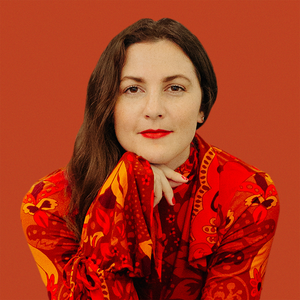
From the Page to the Stage with Rise Literary Author and TEDxOjai Speaker Maggie Boxey
This week's episode of Write The Good Fight, hosted by CEO and Publisher Kristen McGuiness, features Rise Literary author Maggie Boxey, whose book The 3 Things came out in May 2024. Maggie was also a TEDxOjai speaker, and her talk currently has over 26k views. Maggie and Kristen discuss the writing process and what it means to write through chronic illness and finding community in writing.


Automatically Transcribed Transcript
Before we begin, we want to let you know that this episode contains discussions of suicide. This content may be difficult or distressing for some listeners. If you or someone you know is struggling, please consider reaching out to a mental health professional, calling a support line in your area, or texting TALK to 741741.
Your well-being is important to us. Please take care while listening, and feel free to skip this episode if you need to.
From the ladies of Rise Literary, welcome to Write the Good Fight. On today's episode, myself, Kristen McGuiness, CEO of Rise Literary, will be interviewing Maggie Boxey, author of The 3 Things, and one of our first Rise Literary authors. I'm so excited to welcome Maggie today.
Maggie Boxey, author of The 3 Things, is a TEDx speaker, Navy veteran, and former sixth grade math teacher living in her hometown of Fitzgerald, Georgia. Due to disabling chronic illness, she can no longer teach, but the experience of teaching was the hardest, yet most rewarding of her working life. She lives with three of her children, her retired Marine husband, and their three cats and a pit bull mix named Jack.
She has been sober in recovery for 17 years. Her passion for progress and equity in her community is led her to serve on the board of directors for Sawego Rising, a black led nonprofit dedicated to progress in Southwest Georgia. Maggie shared her story of living with MECFS with Congress in April of 2024, and as a TEDxOjai speaker in 2025.
Maggie, I'm so excited to welcome you to Write the Good Fight.
Thank you for having me. I'm so excited. I've already binged all the episodes, by the way.
I love you. And shared about them. So thank you.
For those listening, feel free to share if you love our episode today. But as we were discussing who up next, I immediately was like, Maggie, I mean, you are like author number one at Rise Literary. Maggie is OG, she has been with our company, which is a weird word to say, but truly in my first workshop that I ever ran, Five Weeks to Book Proposal, I think you were the first author we signed to Rise Books.
You were the first author.
No, but I wasn't. So you were actually an author at Rise Books before I was, because I decided that I would do my book like later, but you were already, yeah. No, you were, I think you really were the first author.
Such an honor.
Yeah. And speaking of, I would love for you to share sort of where the three things came to be and what led you to write the book that became the first book at Rise Literary.
Yeah. So my father is an Episcopal priest. His father was an Episcopal priest.
And my brother graduated from a school called St. Andrew's-Sillawney in Tennessee. It's an Episcopal boarding school. And he was classed in 94.
And my grandfather was slated to give like the address at the graduation. I call it a sermon. You know, most people think of it as like a keynote.
And unfortunately, my grandfather passed away two weeks before the graduation. And my dad was like the obvious choice. I call him daddy.
Daddy was the obvious choice to give that address in his father's place. And I was a teenager. I was, you know, a angsty teenager in the audience.
But the sermon that daddy gave that day sort of blew me away. And it was called The Three Things. After that weekend, The Three Things became sort of our family mantra or inspiration.
And I was living opposite of The Three Things. I'll just go ahead. You want me to tell you what The Three Things are?
Yeah, please do. We weren't going to save it. We're going to save it as a secret.
You can't know what The Three Things are until you buy the book.
So The Three Things were or are. You're a part of a family. Be true to yourself and glorify God and all that you do.
That was the message to the graduating seniors that year from my dad. And so we would go home from that weekend. And so one of my favorite parts of the book is the introduction where I talk about daddy making me say the three things before I go out into the world.
And I was under the guise of going to very innocent sleepovers, but really I was going out to bench drink with friends and fields and ditches, passing out in ditches, that kind of thing.
As we did in the 90s.
As we did in the 90s, but that's actually one of my favorite little scenes in the book is where I'm running out the door trying to get away before daddy makes me say the three things, but he heard me. And so I have to, you know, like, fine, the three things are part of a family, be true to myself and glory. Can I go?
So so, you know, that would continue on. And I, I, I was an alcoholic, I think, from the first time I drank. I mean, I drank like an alcoholic.
I was a blackout binge drinker. And so it was really hard to sort of reconcile.
Reconcile. Yeah, that's it.
It was really hard to reconcile the way that I was living. And then, you know, this other, I was, there's Good Maggie and Bad Maggie, and, you know, like super religious, super high grades, dance team, all the things was Good Maggie. And then, you know, Bad Maggie was doing all the things in dark places.
And yeah, so it was really hard. And I sort of denounced them until I entered recovery. I had a suicidal bottom and I entered recovery.
And I realized how much the three things, how important the three things are and, and how we live them and it sort of became the background, like the three things are like constantly there. And eventually I realized I had to write the book. Daddy wasn't gonna write it.
I really thought daddy, I begged my dad for years to write the book, and he didn't. So it was my turn. I needed to write it.
As much as I love your daddy, cause I had the opportunity to spend a lot of time with him in Georgia. And then he drove me to the Atlanta airport. And for some reason, your poor father, literally he drives me to the Atlanta airport and he didn't know what he was going to get.
I told him my entire life story, but he's just that kind of, you know, I mean, I think if you've ever been a man of the cloth, always a man of the cloth. And I'm a Catholic, so I just, I immediately confess. So I was just like, here's everything daddy.
Here's the whole story. And he was like, oh, okay.
Oh, okay.
Like I really hadn't, I've been so sick on that trip. I really hadn't spoken. He was probably like, this publisher's really, very quiet girl.
And then he was like, I don't know who this woman is, but she won't stop talking.
That's what I know. He loved it. He loved every minute of it.
He loves to be in the Rise books, daddy.
Not in the gross way.
Not in the gross way.
In a very southern, maternal, none of us have particularly great fathers, and Maggie won the lottery. So, you know, and the beauty of getting to be a part of your story from the very beginning was in fact, hearing this, hearing how long this had been percolating in your family and knowing how much this story needed to be told. And then, you know, meeting you for the first time on Zoom and obviously sharing, you know, not only we both are in recovery, but we have the same amount of time, you know, minus like what month or something, a couple of months.
Yeah, I think my bio is out of date. I'm 18 years sober now.
Yes, we're both 18 years sober. So when we learned that, but then as you had expressed in that first call, you were looking to write this book, but already beginning to face significant health challenges.
Yeah, it was really one of my favorite stories about us, Kristen, is that I sort of met you through Rebecca Baruchy. I've been following her forever on Instagram, and y'all did a live, and I was like, oh, let me do a coaching caller, like a consultation, and we were going to talk about you coaching me. And right before you and I were to meet for our first session, I got a call from my doctor.
I had been experiencing some significant health challenges. I got some random virus, unknown virus in 2020, July of 2020, and I just never got better. You know, the headaches were awful.
The doctor was worried that I might have MS, so he sent me for an MRI. And right before our phone call, our Zoom call, I got a call from my doctor, and he's like, good news, it's not MS But, and I was like, oh, good. Thank God, you know, like, oh, phew.
But then he was like, unfortunately, there is a mass behind your eyes. And I was like, oh, you should have led with that, doctor.
Yeah, I know. I like that good news, bad news switcheroo.
Yeah, so I had a brain tumor. It's called meningioma behind my eyes and nose. But I just found out, like you, I think I texted my sister, but you were the only, the first like live human that I told about my brain.
You knew before my husband knew. And so then I sort of threw up my whole deal on you that first day. And you were so accepting and you honored my time and my story.
And yeah, it was sort of, it was really weird. But I was like, I don't know you, but I have a brain tumor.
That's how I like to begin all of my author publisher relationships. It's just, but but it is. I do think there's something about the process of sharing trauma, right?
And how we transmute that then through the storytelling journey. And we work together on it. And I mean, I don't think we thought that that chronic illness was going to become such a huge part of your publishing journey.
Certainly, we never would have wanted it that way. But it did really set us up for the journey that the universe has faded for us. So from from day one.
But we got trauma bonded from the start, Maggie, what can we say?
And honestly, I oh, like, so before I got sick, I was I was an athlete, I was a runner, I loved jujitsu, I was actually training to I wanted to be a jujitsu instructor. You know, I wanted to run 45 miles for my 45th birthday. You know, I had I had all these plans and designs that were around my physicality.
And when that was taken from me, it was like. It was so hard because I attached so much to that. I mean, I was like, that's how I connect with my higher powers running, you know, like that's how I meditate is running.
And when it was taken away from me, I was like, I don't know who I am or what I do anymore. And, and, you know, I had always said, even though I think I've always been a writer, Kristen, I think I've always been a writer. I mean, I remember I got published in like third or fourth grade.
I had a poem published in like an anthology for the school, you know, and it was about my twin brother who passed. And that's a part of the book as well. And I just remember feeling like, oh my gosh, I'm a writer.
Like then, then I forgot, like there's a lot of that in the book as well about the journey of forgetting my creativity. But after that physicality, my athleticism was taken from me. I turned in desperation to writing, to my creativity, to watercolors.
Thank you, Julia Cameron. The artist's life.
Thank you, Julia Cameron. Thank you.
Thank you, Julia Cameron.
She has saved many a life.
Yes, she saved mine in this, you know, it was, it was like I wrote an essay not too long ago that was called Kill Me or Cure Me was my prayer, because that literally was my prayer. I was like, I can't go on anymore. Like either make me better or take me because I can't do this.
And the answer to that prayer came in the form of the artist's way. And so I worked through it and I started in earnest doing morning pages. Now I've always been a morning pages girl.
Somebody told me about them 10 or 15 years ago. And I was like, okay, I'm going to write three pages a day. So even before I was writing, I was writing morning pages.
But I sort of took it and sort of ran with it. I didn't really run, but you know what I mean?
You found a new way to run though.
And so yeah, so I started, I've realized like, oh my gosh, like this healing journey, this create, you know, writing, creating. It was, it really was saving my life. And so when I came, when you came into my life, I had, I don't know, somewhere like in the middle of the artist's way, the outline came in my morning pages, the outline for the book came.
And I was like, oh, I'm going to write this. And that was when I started, like that's why I was like paying, when I saw you and Rebecca Baruchy, I was like, oh, I think it was like drop the mic or something. Yeah.
I was like, I have a story to tell. Like that's how the book sort of started to be birthed into the world. Because I was healing my creativity in it and it was finding its way out because it was stuck in there for so long.
Getting to watch that and also know how you had to transition your whole life and have had to continue to do that of like losing this really physical part of your spirituality and just lifestyle and finding new ways to channel that energy that I think is just natural to most addicts. I think we're just like high-energy people. Like we're just like the engine is always revving, and so we're just, I mean, I feel that even still always in myself.
There's always like a vroom, vroom, and we have to put it somewhere or we do. I mean, that's where our mental health just begins to deteriorate because the vroom, vroom just, so being sort of trapped within your body, finding new ways to process the vroom, vroom, and then getting to be part of that acceleration through your writing process where you came to me, you knew you had a brain tumor. In fact, you're one of the rare people who can't say, it's not a tumor.
It is a tumor.
It is, it is.
So, and know that that date of surgery was coming. And I mean, though I remember the first conversation, you know, it was still that like first meeting with somebody. So it's sort of vague, but the conversation where you said like, I have to write this book before my surgery, I will never forget that.
And you sort of saying like, no matter what happens in this surgery, like if you can help me. And I knew like, I mean, when I say you're the first person at Rise Books, that's the moment that I see you as the first person at Rise Books, because I was like, I'll just publish it myself. Like I'll just, no matter what happens to Maggie, like we're just gonna have to publish this book.
Like you can't be going through this experience and not get a book at the end of it, you know? Like you need a fucking trophy, man.
Well, yes, I remember that was like March, I think, of 2021.
Yeah.
So December was when we had our conversation and then we started the five weeks of book reposal. And then I went on to do the five months to memoir. But before my surgery and after five weeks of book reposal, I was like, I, if I can't do this, Kristen, can you please get this book out into the world?
Like you've heard it, you know more about the story than, than anyone other than daddy, right? And so like, please make, help me make this happen. If something happens to me.
And, and you were like, yes, I will. But you're going to write it before your surgery. My surgery is in May.
I think, I mean, I crammed it out. I mean, I just wrote and I wrote and I wrote and I wrote. And I had, when I went into surgery, I had nine chapters written.
Now it's 12. The final baby was 12. And then we let it rest for a bit.
And then you, then you started to write books. And I got the opportunity to actually make it. We got to make it come to life.
And it's here.
It's there right behind you.
Right behind me.
You got a trophy. For those listening, Maggie has a copy of The 3 Things right behind her, as any good author does. I'm a terrible author.
I never have my book frame behind me. I really need to work on that.
I actually have a reader's copy. This is like a nice copy with a jacket on it. I can't reach it right now, but I actually read it pretty regularly.
I get it out and I'm like, I'm so proud of you. I mean, speaking of that, and I will say to any author, the more you read your own book, the more comfortable you become in promoting it. Because I think, I mean, that's the beauty of reading the audiobook, too, is like moving from the inherent cringiness of writing a book into what should be the confidence and celebration of writing a book.
And I think it's, you know, especially a book like yours, right? When you're writing something that's super vulnerable, where you're not only like sharing the stories of your life, but you're sharing the thoughts in your head, and you're putting them out there for everybody to read and pick apart and have opinions on, and all the stuff that we can kind of drive ourselves nuts over, it's actually by consistently picking it up. And like, it's not just building the writing muscle, it's building the like reader reaction muscle.
So I think hearing you say that you do that, like high five good authorship.
I mean, it helps me, you know, put myself in the place of the reader. It also, I mean, because of the nature of the book, it helps me on my spiritual journey. It helps me.
I mean, I am not the same person that wrote the book. You know, like, I am a different person. I don't know if you experienced this, Kristen, but like somebody sent me a quote for my book the other day.
And I was like, where did that come from? Like, did I write that? No, I've heard that before.
And then it turns out, I was like, wait, no, that was, that was my book. It was actually my oldest, my 22 year old, who was listening to it on his run. And that's actually one of the biggest gifts.
Like he tells me he opens the audio book and listens whenever he wants to hear my voice. So sweet. But so I got a text, it was May 14th.
And he's like, I'd much rather be a Southern Peach than a drill sergeant, but dang, it's hard. And I was like, that sounds like something I would write. That sounds like me.
No, he's like, hearted it. I hearted it and I was like, I confirmed. I was like, oh yeah, I did write that.
So I say that to say when we write things, they're out in the world and I need to read them again. We read the In Recovery, we have the big book. Every time I read it, it's like I get something different.
And people say that about scripture. And so with this book, especially because it's so important in my life, when I read about the three things, when I read about community and creativity and how to connect with my higher power, even though I wrote those words, again, I was a different person when I wrote them. And now here I am, however many years later.
So it just hits different. And I really appreciate it as a reader. And sometimes I just don't even have the energy to pursue the writing or my spiritual journey, but I haven't given up, I haven't stopped.
So I do pull out the three things. I do pull out my morning pages when I'm able to.
Speaking of Georgia Peaches versus drill sergeants, I would love to chat for a minute about the other part of your book, The Three Things, which is not, though it is about recovery, it's about connection, it's about the story and history of the three things and how that shows up in your life. But it's also being about a progressive veteran living in a very, not just a red state, but a very red area of a red state. But I would love to hear too, because I think that was one of my favorite things about the book was that, yes, it was the spiritual message, but I think it's really what we try to do at Rise Literary is that within this larger message around spirituality and creativity and recovery and connection, was also a story about really progressive ideals in action.
One of my favorite things that I think you do so beautifully is also as a Navy veteran sharing how that experience, I mean, this is what I always say, we do more team sports than I would have ever signed up for because I'm not a team sports person. So we do baseball, and in our town, baseball runs very conservative, which is so funny to me because baseball is like the most team-oriented sport, but really, I mean, football and baseball, right? The whole thing is the team, and obviously that gets mimicked then in military.
The whole thing is the team. It's all about working together. It's all about community and collaboration.
I mean, you couldn't get into more socialist structures. It's all about sacrificing for your teammate, coming together to victory, win, whatever. And yet this falsity of individualism within these communities where team and community are actually so integral and important and revered.
And I thought you did such a beautiful job of talking about that, especially as a veteran. So I would love for you to sort of share how The 3 Things didn't just reflect your spiritual experience, but also your political experience and your military experience.
That's a great question, Kristen. I, you know, it's interesting when I was active duty, I was very apolitical. I mean, I think it's an expectation.
There's a Hatch Act after all. You know, we're not supposed to in our official capacity as military service members, we are not supposed to, you know, identify ourselves politically, right? But as a person out of uniform, as you know, after I was out of, after I had retired, I was a military spouse.
And so I did tread a little bit lightly then when my husband was still active duty. And, you know, I think there's this idea that everyone in the military is really conservative, and that's just not true. I mean, I think honestly, like, there's a lot of us who, I mean, I've always been really progressive, but I think military service makes you more progressive for that reason, kind of.
I mean, you see, we are, it is not about the individual. It is about the mission, it's about the whole, it's about, you know, watching each other's back and, you know, especially like being, I mean, I was in the Navy, but my husband's a Marine and Semper Fi is real. You know, like that, always faithful.
I mean, once a Marine, always a Marine, all that stuff. And, you know, in the book, I talk about, you know, that Army slogan, Army of One, right? And it's not, it doesn't make any sense to me because we are essentially a unit, right?
And so getting out, you know, well then 2016 happened, and I became super activated during that time. And I realized, I mean, it was so uncomfortable being, I mean, at the time I was in North Carolina, but it was really uncomfortable being so progressive in such a red area. And like the sort of trying to be who I am, but then also like not have to fight all the time.
You know, you feel like, like you're coming up against conflict all the time. And actually that's what I'm experiencing right now. It's like, I just, I'm for human rights.
Why is that a thing? Like, why is that?
Why are we fighting about this?
Why are we fighting about this? Like, why are you, why does my pride flag piss you off so bad? Like, I don't get it.
Like, I just don't get it. I feel like so much energy is spent just getting back to like, I don't know, I just feel like we're regressing and it's very frustrating. But this book, it was so, I actually was able to step in more to who I am as a person, as an activist, as a progressive white lady living in the South, right?
By writing the book because I was like, these are my values. I think I, I don't know, when the book came out, I was a teacher and I had to be very apolitical like on Facebook and things like that. Because I could have lost my job if I was like, go on, you know, Black Lives Matter and, you know, like, like, you know, yay, pride and all that stuff.
It's very, very controversial right now in the schools. But when I stopped teaching, because due to my disability, I was like, I'm not teaching anymore. I'll let it fly.
And I feel like I feel bad for, you know, all the people who didn't know this part about me and like friended me on Facebook and stuff because they're probably like, Oh my God, who is this progressive lady? And then when the book came out, you know, I do say God in the thing. So I think they had this idea of what God they were getting.
And it is not the same brand. We don't have the same brand of God. All right.
Well, that's what I love. And and it's what I loved. You know, I always there's probably not going to be a podcast episode where I don't say that I think like the best storytelling is always a Trojan horse, where, you know, somebody and especially your book, though, like because even from the cover, you're like, Oh, it's a sweet book about God and creativity.
And she's from the she's a Georgian peach. Okay, I'll read this. And then they're like, Oh, wait a sec.
But I think it goes to show that like, the values are the same. And if you do bring people in based on the value and not the, not the opinion, the opinion is just a projection of the value and depending what light you're projecting it through, it might look very different, but the value is the same. And so I think that's what that I think that's what The Three Things show so beautifully is like, these are core values that actually so many of us share.
And, and I think, you know, even this idea of like that the military is primarily conservative, right? That like, but that that's not true, right? And so I think it's just beginning to allow more openness on how we all view each other and our perspectives so we can, again, engage in these values that, I mean, I will say, like, I'm not like, I don't wave, my husband puts a freaking American flag outside our house, it wouldn't otherwise never hang, but like, that's not my style of patriotism, it never has been, I'm just not a team player, what can I say?
But I do think that like, your book was such a beautiful reminder of like, no, there are some core foundational pieces of our human experience, our American experience, that actually we can connect back into and we can begin to reevaluate the projections of what that means.
Yeah, and I think something that has been really hard for me, it's sort of hurt my feelings even, is the lack of ability or willingness to like, look at oneself in, you know, in like the general climate, like to, to, and that's what I do talk a lot in the book about self-examination and, you know, self-honesty and everybody's so busy, like I said, like being angry at Proud Flags and not everybody, but I see it a lot here, you know, but there's not, I don't see a big, a willingness to like, okay, what is my part? Like, what can I do to make things better rather than just being for all the things I'm against? But like, what am I for these values, right?
Like family, community, being true to myself, and then doing everything I can so that everyone else has the same privileges that I do, right? Glorifying God and all that I do. I think it's something that's so important, that is so undervalued in our like society right now.
It's all about blame and pointing and, and it's so frustrating. And I will say, on January 6th, I remember watching the atrocity that happened on the news, right? The insurrection.
And I remember thinking, this is why I'm writing The 3 Things. You know, like this is why The 3 Things needs to happen. Because how do we move on from that?
Like, how do we move on from this where we are so divided? Like, how do we move on from that? And I think the answer is The 3 Things.
It's, you know, I mean, all the things, the value, like you were talking about, the values, not the opinions, not the culture wars, not the, you know, identity politics that everybody likes to debate about, but like values.
Yeah, and that's what I hope. And we'll get back to book writing here, but I do hope that, you know, I have that right now, we actually begin to unite against our common enemy. And that, you know, the first four years of the first tea presidency, horrible.
So does I still forget he's even freaking president again. Like I just kind of like, what the fuck, really? It's like somebody just shit in the middle of the living room.
And I'm like, why did you just do that? It's so weird.
And why hasn't anybody cleaned it up yet?
Like, I know, I'm like, not only is it distasteful and unhygienic, not only we're all gonna get dysentery at the end of this, it's just freaking creepy. But I do hope that by the end of this four years, everybody's gonna be like, why the fuck is there shit in the middle of the living room? And we can all agree that is gnarly, and let's not do that anymore.
Because I do think there are deeper values here. And I think that is the whole point though of writing books that allows us to explore these conversations that are through a story. So watching your evolution as a writer, and then your evolution as an author, which we talk a lot about this idea at Rise, about a celebrated author and the experience that we are working to give all of our authors.
And I will say quite publicly here, it was so heartbreaking for us that not only we were not in the best position to give you the experience that your book deserved, we also all kind of had like a shock diagnosis, like months leading up to it, in which we didn't, I mean, we were so new. You were like the first book, honestly, outside of my own coming out, right? So like we were just figuring out what is a marketing plan?
Like we were just getting our act together. So we certainly weren't in the position to be able to embrace like major pivots or changes or medical diagnoses that were just kind of like, wow, everything just got turned upside down. So, I mean, you wrote through so many challenges, but I would love for you to share about publishing through what ended up being really the biggest challenge of all.
Yeah. So right before, so my book birthday, my update was May 7th. And in February, I was diagnosed like, and we had already gone to print like, like it takes a bit for things to like, actually takes a minute in the book industry, right?
So like, we had already gone to print, everything was done. And like the middle of February, I was diagnosed with myalgic encephalomyelitis or ME-CFS. And then like two weeks after my diagnosis, I had got a virus and was completely disabled in a way that I had not been before.
Even at the beginning of the illness, with the tumor and all that. And so it's sort of like I had this dream of this multi-city book tour, lots of podcasts and lives. And then all of a sudden, I was just fighting for my life.
And there was no promotion. There was no, you know, none of that stuff that you kind of have to do to be a successful, have a successful book launch. As far and when I say successful, I mean like lists and such, like bestseller lists and all that.
I will say I did have, I mean, the people that were there and were supporting and promoting were just fabulous and fantastic and wonderful. And oh my gosh. And the book launch event, we had a lovely event, Kristen, you came to Fitzgerald, you saw my town.
It's a lovely town. I wasn't, I hope that people know how much I really do love my community here from the conversation from before. But it was beautiful.
I loved it. We were on stage and had an amazing conversation. And the book was born.
But again, I think I was in bed for like a week after that event, you know, and then we had the party, the book launch, the audio book launch with Ed Bacon, Reverend Ed Bacon, one of my favorite people in the whole world. I think I still have that link on my link tree if anybody's interested.
Yeah, no, it's great. That was one of my favorite. It was one of my favorite book publishing experiences.
I mean, that was a really dynamic, you know, it did go to show that there are so many ways to celebrate and publish a book because once and obviously during COVID, there was a ton of stuff that was virtual, like that was commonplace, but you had a really special version of that nonetheless. Like that was a fantastic Zoom.
Yeah. Yeah, that was amazing. It was so beautiful.
And I mean, I that was one of the my favorite spiritual experiences since I've been sick. It's just out of this world. And so they're having some really beautiful moments since the book came out.
I will say it's not anything like I expected. You know, like the returns really broke my heart. You know, like looking at the sales and all that.
I didn't realize people returned books. Who returned books?
Like booksellers? Oh, you want to see? I'll send you my statement and you'll be like, oh shit, I'm doing great.
My returns on living through this are brutal.
Well, I didn't know that part about the book world, you know what I mean? And I was like, oh, but I really, I think that the opportunities I have had, like the conversations we've had about the book, like every time I'm able to talk about it, like in this kind of setting, I'm like, this is what I was made for. I just love it.
I love it so much. And I actually was thinking like, I have hope that I will continue to improve. You know, I was like, you know, well, let's do a do-over.
The book's not going anywhere.
No, absolutely not. We have a call next week about this. And I will say this for anybody, for our listeners too, if you've published a book and it's just been sitting there and you're like, I guess that's over.
I guess that didn't work. Like, I don't believe in the timelines that traditional book publishing puts on the book publishing experience. And I understand, so, and I'll explain returns too.
So, you know, booksellers, we work with Simon and Schuster as our distributor. And so we function like very much like a traditional bookseller, like a big five publisher. And that, you know, we have a sales team with Simon and Schuster who goes out and sells in our book to retailers, whether that's Barnes and Noble, Amazon, Target, Independence, specialty shops, all of that, right?
So all those booksellers, they buy in advance, usually of the book even being published. So the bulk of our sales happen before the book even comes out. And then over time, some of those sales, you know, if the book starts tracking, obviously booksell, book buyers will put in new orders.
So they'll order a new order of a book. If those books sit on the shelf or sit in their warehouse, if they're Amazon or even, you know, Baker and Taylor is a big book distributor, Ingram. If they end up sitting in those distributors' warehouses, you know, around a year, sometimes less, somewhere between the six month and year mark of a book coming out, they'll begin to return the books.
Basically, what they figure is like, I'm not selling these, you know, their warehouse space is limited, because we're talking physical copies. So they got to make space. So they return the books to Simon and Schuster.
And then, in fact, we get docked. I mean, we pay back on those returns. Hence, anybody who's ever had a author contract has probably seen publishers usually reserve 20% of your income that you make as an author.
They'll reserve that for returns, knowing that returns are coming in on the book. And 20% is the average number. So 20% of books are usually returned, unless your book sells through and they sell out.
And that's happened too. So in that process, I think a lot of authors think, well, you know what, it's been a year, the book has been returned, I guess it's over and that's it. It's not.
I mean, as long as you have books in stock or the capability to print more, books live forever. And there are so many times where a book will pick up steam five years out. There are so many, I mean, 20 years out, right?
I mean, there's so many books that get discovered down the road. And so you can always be like, you know what, I'm ready for my relaunch. And I will say as an author myself, like, I keep trying to relaunch Live Through This, my book.
And I have two years coming up, my two year anniversary is in October. I have the space to actually think about like, okay, so what does that look like? I had a book that came out on October 10th of 2024.
It was three days after October 7th. It was, not only did I lose like media and plans like you, I mean, we both got upended, but it was a really tough environment to even just be doing IG lives and like...
Right, like why, we can't be posting about like, here by my thing, because there's genocide happening.
Yes, exactly.
Like, how do you do that?
Yes, it was like, no one, I mean, the event of, you know, obviously the terrorist attack on October 7th, that alone was like, that's what we were talking about on October 10th. A month later, we were talking about what was going on in Palestine. So it was just like, yeah, waving around a copy of my book, you know, no matter where you fall in that conversation, just felt like, I'm just not like that.
That's not, I can't. I mean, some people can do it and, and yay for you, salesperson. But like, you know, my politics do come first and my values come first.
I just couldn't, I could not put my voice in that cacophony. And I think that, you know, and so I know kind of a similar thing happened to you though, too, though yours was in a, you know, it was a different climate, but, you know, being able to be like, hey, let's IG live. Hey, let's do these things.
That would have been the grassroots effort. We're really scurried by, you know, by your chronic illness.
Yeah, I think that it's, it is so, I don't want to say it. It's, you know, this particular disease is just so insidious and there's no, you know, FDA approved treatment or cure. And there's, you know, most doctors have never heard of it.
It's just a really frustrating, a really frustrating place to be regardless. And, you know, still having all this hope and ambition and fire is just, it's been a struggle. But I did, I had this amazing opportunity to take the stage at TEDxOjai.
My talk was called I Am One of the Millions Missing Because of the Impact of This Disease, I've felt, you know, along with so many others missing from life as I knew it. And I will say, when I found out that I was selected to give the talk, I wanted it to be a completely different talk. I envisioned myself going on stage and talking about the three things, right?
Like specifically, I wanted to talk about this idea of the rugged individual and and how it's like it's not working. It's killing us as a society. You know, I wanted to talk about community.
And as I was writing it, I was working with a coach, Sonali Fisk, she's amazing.
We love Sonali.
Yeah, I love her so much. I realized it was just like not hitting, right? Like it was like, I can't finish this.
Like this is not. And I realized the reason why was that feeling of being missing, being invisible. And, you know, I was talking to her and I think I mentioned, you know, I'm just one of the millions missing and that's the millions missing is sort of like how we refer to our, you know, it's like one of our slogans, right?
Or in the community. It's a hashtag really is what it is. And I mentioned that and Snally was like that, like that is your talk.
And then the more I dug into, I was like, yes, this is a voice that really needs to be shared. And I did have to be like, I had to like, Maggie, get over yourself. Like, there's going to be other times to talk about the three things.
And I really I mean, it was like, oh, this is and every time I do go to a support group every two weeks for in my community, Miami, Action, People in Georgia. Love you guys. I was regularly talking about like, don't you guys just feel like you're invisible?
And it was something that was, you know, resonated with everyone in the group. Yeah, so I went on to write the talk and it was so amazing. Like, I figured that that I would just die afterwards.
Like, I thought I would like I was so afraid that it was really going to hurt me, honestly, because that's one of the things I cover in the talk is, you know, to fight for ourselves is dangerous. And because everything with this disease, we have something called post-exertional malaise, where any kind of exertion can lower our baseline. Like it can, it causes a crash where like I crash for anywhere from a day to three days later, and it can last from anywhere from a day to, you know, a few weeks.
And, you know, I was really worried that it was going to hurt me. And it turns out that it did not. I returned to baseline relatively quickly after the talk.
And I did plan a lot. I planned rest, I rested for, I rested after, I rested during, you know, I stayed for a week in OHI so that I could actually do it, which adds to like that. I mean, that is sort of an illustration of how hard it is to be an author with this disabling chronic illness.
Like, because, you know, doing one thing, it requires a week of rest around it. A week of rest around it. And then, you know, time, and I will say that when the talk launched about a month ago on YouTube, it's on YouTube now, and I crashed when it launched just from the mental, you know, like the joy and the vulnerability of like being seen.
Like, the whole talk is about, you know, like seeing my community. And now I'm being seen and I'm like, ah, I'm scared.
Well, look at me.
So yeah, it's been emotionally, like I think that the experience both giving the talk and then just the past year of being at this level of disability, I've learned a lot about my physical health, like how to maintain the highest level of health that I'm able to. The mental exertion is still getting me. I don't get it.
Like I'm like, I can't from one day to the next. Like this may actually make me feel better, like sitting down and doing this podcast with you because we're having this human connection. So important.
But then it also may, I mean, it may just because I'm talking and I'm feeling, and it may knock me on my butt for a few days. So it's been a really interesting journey of learning about like what I can and can't do. But yeah, the talk has been so, so powerful.
I actually got to go to Decatur, Georgia, which is three hours north outside, just in Atlanta. It's like a part of Atlanta. We did a watch party with Emmy Action Georgia.
That's amazing.
Yeah. There's a virtual audience and in-person audience.
Oh my God. I didn't know that.
Yes. Yes. We did it on Blue Sunday, May 18th, which is a year of every year.
It's the Sunday after Emmy Awareness Day, which is May 12th. I did some online stuff on May 12th. But then on May 18th, Blue Sunday is more like a let's enjoy.
Let's have a tea party. Let's get in our PJ, a pajama party. Let's enjoy community like our community.
And then we also ask it's a fundraising day, right? Like we raise money for Emmy Awareness. So that's what we did.
We got together and we had we have there's a folks in Georgia. My friend who was also a meep. That's what we call ourselves.
We're our peeps that have any were. She has a like a what do you call it? Like a cottage bakery?
Yeah.
Her bakery is called Baby Deer Bakery. She can only sell in Georgia, but she baked goods for the for the tea party. And it was just so great.
It was like the sweets are so tasty. And the conversation was amazing. I did a Q&A after the talk and it was just, it was spectacular.
Your TEDx has now hit 23,000 views as of this recording. Is that correct?
Yeah, I think so. As of last night, I think I haven't looked today, but yeah, 20,000 views is amazing.
Oh no. And I mean, we knew it when you did it. I mean, we were all there in the audience sobbing.
I mean, it is that kind of talk. We were sobbing. And I found it to be so powerful because not only, I feel it was a talk about, you know, ME, chronic illness, but just the way that like life circumstances can remove us, you know, from the things we love most, you know?
And so whatever that challenge is, that gets in the way between you and the thing you love and how, you know, invisibility can show up in all sorts of ways. So I think it was such a beautiful talk that I know touched the ME community deeply, but I mean, even myself, like I had that experience in your talk of just seeing where I am invisible in areas in my life. And I think that it really did connect back into a lot of the ideals of The 3 Things, even though it wasn't about the 3 Things, which I think is great.
Like, I don't think a TEDx should feel like it's... As your publisher and as the producer of TEDxOjai, I did not by any means want you to do a 3 Things talk, you know, I mean, unless that's what made sense. But because something so much, not bigger, but you know, something really huge had happened outside of the 3 Things that wasn't in the 3 Things, this diagnosis and how it's impacted your life, it absolutely made sense that you had the opportunity to share that and explore it from the TEDx stage.
But I think also that there was such a natural connection to the 3 Things in these ideas of community, the watch party, you know, finding spirituality in other ways, like you know, when you lose one version of your spirituality, and we've all had that, where we find a way to connect into a higher power, and suddenly that way is gone, and it's so easy then to become disconnected and not realize, wait, this is an omnipresent experience that can be accessed in all sorts of ways.
So and also the piece of the advocacy piece, like the responsibility that we have to see and to see others, to see others that are not being seen, and to be a voice for people who don't have a voice. That's part of being a family, part of being community is advocating for everyone. And so I think that was the most touching part of my talk, was, has been the comments from people in the ME community and even other communities, you know, like you were saying, like, I think it's kind of a universal message for anyone who is marginalized in some kind of way, you know.
All the comments that have been like, oh my gosh, I finally, I feel seen. Thank you for seeing me. Thank you for using your voice, you know.
And that's just been so, so meaningful. And it all, I mean, you know, I was, I did say, yeah, I wish the talk would have been about the three things, but again, back to those values, like I wanted it to be about those values, right? And, and you're right, it is.
It is.
It is. It just is about it.
Yeah. And I think it goes back to, you know, what you said about awareness. Like I think awareness is such a critical piece of our spirituality and just our faith of like both being self aware, but aware of others, you know?
And I think, you know, finding that balance too, sometimes we can be so aware of others that we stop being aware of ourselves and sometimes we could be so aware of ourselves that we stop being aware of others. And I know it's hard. We live in like a hyper capitalist society, which forces us to like go, go, go rev, rev, rev.
And in that, we don't get to stop and hold space for others. We don't get to have those moments of reflection that really dig into like, are these behaviors in a really alignment with my values? You know?
And so knowing you, I just have to say before we before we hit our final segment here, I just I've loved working with you. I know this is a longer episode for those of you listening, but I could talk to Maggie Boxey for like six hours. We could just marathon this and just keep going because truly.
Oh my gosh, that would be a dream. I love you. It's just been such a dream, being a part of this whole Rise Literary world.
Well, we have loved having you. You've been a cornerstone of it. And truly, when I think of like, who are the people we want to be working with here?
I mean, you would just, you are like our avatar, because I just think, like, you know, I was saying to somebody yesterday, you know, in the world of books and entertainment and self-help and personal, there are so many charlatans. There are so many people that are good at selling, selling the authenticity. But when you get to, and I know a lot of them, I have worked with like some of the biggest names in personal development, Dr. Phil Tony Robbins, and that's not who they are, right?
I mean, one of those people is actually a bad man. I know less about the other. But there are so many people out there just in that industry where they're either, I mean, I know straight up lying or, you know, or they steal content from others or they don't work with true integrity.
And we have like a joke around Rise about like Integrity Plus, you know? And I just, you're somebody who just has Integrity Plus. And you're exactly the kind of author we want to support.
We don't give a shit what your platform looks like. We believe in you. We believe in your values.
We believe in the message you have to share. And we want to help you to build that platform, whether it's a TEDx, whether it's a book, you know, all the ways in which we're trying to support authors and writers and creatives in telling their story and in building what we hope is a career that helps to also pay their bills. And, you know, I know we're all working on that, but like, but really, you know, just creating amplification for, you know, for folks of integrity and value and honesty and authenticity.
And you just, you just check all the boxes, Maggie Boxey. So thank you for being here. Thanks for being our avatar.
And now we're going to finish with our final segment, which is where we ask our authors, writers, and book professionals what their one writing tip would be for others. Go ahead and hit it, Raya.
Now it's time for Just the Tip.
That makes me giggle. I'm like 12.
Like, that's the point.
It makes me giggle.
It's not cheating if it's just the tip. I know. You have to be a girl of the 90s, I think, to get that.
That's when we're laying in ditches.
Oh, so I'm supposed to share a tip, huh?
Yeah. One tip.
I if I could go back to to talk to Maggie, like five years ago, I would have said, stop worrying so much about like I had so much fear around writing. I had so much like, and the idea of who am I to be a writer? I'm not a writer.
I spent so much time doing that dance in my head and hemming and hawing and so much angst about like just this idea of writing and am I a writer? And I think where that stemmed from was fear, fear of vulnerability, fear of like, you know, the popular table in the cafeteria telling me that I couldn't sit there, you know, like I just, I had so much fear and I remember asking you and Rebecca about that. I was like, how do I get over myself in this fear of like not being enough, not being able to be a writer?
And Beck said, she's like, you do the thing, you don't die, and then you keep going.
You do the thing again.
And you do the thing again. So that's what I've done. I mean, I write, I realized that it's not scary.
If anything, it's healing me. And then I realized like I put it out in the world and I don't die. And I realized that I can do it again.
So I mean, that I think I wish I had spent so much less time on that. I'm a writer, do I write, how do I write, what do I write? And just like really getting in there and just writing.
Yeah, I love that. I love your writing. I love the three things.
If you're listening now, please head to any bookseller you desire. Or you can go to simonandchuster.com, check out the Three Things or to risebooks.com. You can go directly to our website as well to purchase the Three Things.
And please head over to TEDxOJai for Maggie Boxey's incredible TEDx talk that is just chugging along. I mean, a month out and you're already at 23,000 views. Watch out, girl.
And you can go to maggieboxeywrites.com or I'm on Instagram, maggieboxey and bluesky, chronicmoxey on bluesky.
Awesome. Well, you actually have quite a big following there too on bluesky now, right?
Yeah, I do. I love that place. It's really nice.
Nice. All right. Well, thank you, Maggie.
Thank you for this beautiful, long episode. Like I said, we could talk for another 20 hours together. And I've loved every minute of this.
And I just can't wait to see all the things that come for you next. And you know, you really are. You're just a testament to the power of our resilience, but really the power of human creativity.
So more soon from you.
Thank you so much. It's an honor to be here. Thank you for having me.
Always remember the three things.
Always.
This has been Write the Good Fight, brought to you by the ladies of Rise Literary. Thanks for tuning in. If you enjoyed today's episode, don't forget to rate us 5 stars, follow the show, and leave a comment.
We'd love to hear from you. Feel free to share this episode with friends, family, or anyone who might find it helpful or fun. Be sure to follow us on Instagram at Rise Literary to stay up to date with upcoming events, courses, insider info, behind the scenes fun, and so much more.
Or you can check us out at www.riseliterary.com. We appreciate you listening, and we hope to see you next week for another great episode. Until then, remember, it's your time to write the good fight.
From Write the Good Fight: From the Page to the Stage with Rise Literary Author and TEDxOjai Speaker Maggie Boxey, Jun 5, 2025
This material may be protected by copyright.