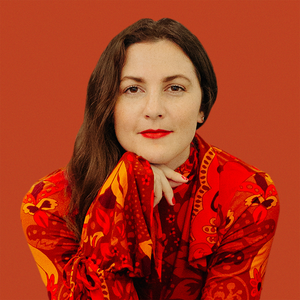
Building Your Career as an Author with Emily Lynn Paulson
On today’s episode, CEO Kristen McGuiness and CMO Lauren Porté Schwarzfeld sit down to chat with Emily Lynn Paulson, the author of Highlight Real: Finding Honesty and Recovery Beyond the Filtered Life, and Hey, Hun: Sales, Sisterhood, Supremacy, and the Other Lies Behind Multilevel Marketing. MLMs, ditching social media, defamation, and giving your life’s truth to the world are all topics that are on the table today.


Automatically Transcribed Transcript
From the ladies of Rise Literary, welcome to Write the Good Fight.
On today's episode, CEO and publisher, Kristen McGuiness and Chief Marketing Officer, Lauren Porté Schwarzfeld are excited to welcome Emily Lynn Paulson. Emily is the author of Highlight Real, Finding Honesty and Recovery Beyond the Filtered Life, and Hey, Hun, Sales, Sisterhood, Supremacy, and the Other Lies Behind Multi-Level Marketing. Paulson has given two TEDx talks and has been featured in major publications, such as The Today Show, New York Times, Washington Post, The Seattle Times, Chicago Tribune, Next Question with Katie Couric, and The Tamron Hall Show.
She resides in Central Oregon with her husband and their five children. Emily is currently writing her third book, a debut novel, and you can follow along with her writing in extremely random musings on her sub stack, The Outsider Scoop.
Welcome, Emily, to Write the Good Fight.
Thanks for having me.
I didn't put this in your bio, although I should have. Emily Lynn Paulson is also responsible for the friendship of Kristen McGuiness and Lauren Porté Schwarzfeld.
That's right. And all the credit.
She is. The most random of randomness, but the strange world that brought me and Emily together somehow led to me and Kristen being friends. So thanks, Emily.
Everybody else likes to take credit for it, but we always say, no, no, no, no, it's Emily Paulson and to a certain extent, multi-level marketing that has brought us all here today.
So very few things we can think multi-level marketing for, but that's one of them.
Yeah.
And it's been really fun working with you, Emily, because I have to say, like, my experience with you has almost tracked alongside the growth of my own company and my own coaching experience. You know, we'd started out together years ago with me as your editor. And then ultimately, when I opened up my company, Rise Literary, as your book coach and helping you with the proposal for Hey, Hun, and then expanding that into the TV and film.
And now that we've moved into publishing as well, you know, I just think it's been really interesting to sort of track how you've grown and how you as an author have ultimately inspired our growth, too, to see, hey, this is really what we can help people to do.
Yeah, I love that. I mean, I got to see you writing your book as a friend. When that first book was coming out, I went to your first book party and now kind of being on the other side of things from Rise Literary perspective as you're going through this journey with Hey, Hun and whatever is coming down the pipeline next.
So having been along the ride with you of your author journey since the beginning, you know, when I was sort of thinking about like, what is the one thing I don't know from Emily? It really is like, what was that one moment where you decided it was time to be an author? And I know you'd written a lot throughout your life, but this idea of like, okay, I'm ready to write a book.
And where did that seed begin for you?
Yeah. I mean, I was always I was always a writer. I was always a journaler and I always got great grades in writing in college and was told I should write.
And I think I never felt like I could because I was always like different versions of myself out in the world. You know, it's like, well, if I write about this, then it's going to bleed into this. And people don't know about that.
And like, I was keeping too many secrets to like write anything publicly. And so when I found recovery, obviously one of the biggest things is you're honest, you write everything down, you're working all the steps and you're putting it all out there. And I'm like, well, this seems like a good time to do this, because I've already got this like 40 year stream of consciousness.
And yeah, so it was kind of a lifelong dream. I didn't really know that I kind of unlocked and also very impulsive and random at the same time. And I didn't know, you know, when I wrote the first book, obviously it was sort of just, OK, this is my story.
This is out here. And this is this is maybe a platform for what I'm going to do next. But I'm not sure.
And I didn't really think I would go on to write other books necessarily. And then I kind of had the same feeling with Hey, Hun, obviously, is like this is something now I've got to write about. And then I just started getting that like that bug, that energy.
I just enjoyed it. And and yeah, so it's like that's now what I want to do forever and ever.
What do you like most about it? Like, what's the most fun aspect of this journey?
Most fun? I mean, honestly, I mean a lot of things. Like, I liked nonfiction because, you know, I'm like cerebral and it's like, there's a lot of research and I like that, like nerdy stuff.
And now that I'm moving into fiction, I really like the creativity of it. And like we were just talking about before we got on here, like my unhinged Google searches right now, you know, I have to let my husband know, like, if I die today, you know, you're going to find some really weird stuff on my computer and it's okay. It's like, tell people I'm a writer, please.
So yeah, just being able to like be super creative. And then also working through things, I think with writing, I've always been one of those people that I write strongly worded emails and delete them. Or, you know, I get my feelings out through writing.
And so maybe just some of that unresolved stuff that I can like work out in a character. I don't know, it's like therapy.
I love a rage email. We were just talking about that last week, that that's how I, I don't know, that's like the most cathartic thing I do, is to send like rage emails to anybody I feel wronged by.
Conservative senators.
These days it tends to be my local congressman. New York 17, I'm looking at you.
I mean, having gotten to see your journey and watch, you know, how many highs and how many things you've been able to achieve. And I do think we are always trying to help authors, like, find the joy in their experience, because as we all know, there's a lot of rejection. There's a lot of tough parts.
There's a lot of, like, thinking things might happen that don't happen, right? There's a lot of inherent disappointment in the author experience. But there's also a lot of inherent joy.
And it's been wonderful, like, being on the outside of your experience and getting to see you hit these, like, incredible milestones of making it on national media, seeing your audiobook go huge. And I've gotten to have a first-row journey, too, in the TV and film development side of it, which I warned Emily at the beginning. I was like, you thought books took forever.
Welcome to TV and film. But it is part of that, of just, I experienced this on my own journey of just really, like, getting to celebrate those moments when you're sitting, as we did recently, we were sitting with Emily's producer and talking about the people who are interested and their really exciting names and just getting to watch that ride has been really interesting and fun. So I've gotten to have a lot of joy just on the sidelines of it.
But also, I know it's really challenging and I would love for you to share as someone who I've also been on the front lines for some of these challenges in your author journey and what that has looked like for you and what you've had to really overcome as a writer both especially in your first two books, writing intimately about your own life.
I'm usually pretty good with rejection and maybe again, that's another thing that comes from being in an MLM and learning to have a thick skin, right? But I think one of the reasons I wanted to move into fiction is that it gets hard when it's not just about your writing, it's about you, right? The feedback and I'm very good about not reading reviews, but you know, sometimes they still come through and it's one thing for someone to be like, oh, you're a crappy writer or I don't like your style or whatever, but you know, of writing, but when it's specifically about you, I think that that is hard and no matter how thick of a skin you have, that's that's the hardest thing I think is, is when the feedback is so personal, you know, or even right now, like I'm querying right now, which is its own like, kind of hell, you know, just that kind of rejection doesn't bother me as much.
It's very time consuming and it's very, you know, like you said, like things take forever. I don't know, like the waiting isn't the hardest part for me. I think it's the, yeah, the personal like feedback that isn't so nice.
That's probably the hardest part.
Those mean Amazon reviews. I remember I once got an Amazon comment on my first book that was so devastating. And I mean, I was convinced, I was like, this person must like know me personally and have it out for me.
It just felt so like intimately cruel. And I think especially when you've written memoir where you are being really vulnerable, you're telling the stories of your life. And I don't want us to, you know, get too into the details, but I know that you had an experience with your memoir where you'd written a section and then confronted some legal issues and had to take it out, you know.
And I think too, like, I would love for you to share, obviously, as much as you can on that. But I think that's a really good lesson because so many people are like, that is such a big issue when people are writing memoir, right? And you are telling these intimate stories and you're talking about real life people.
And though I still think there was a good fight to pick in that battle because the statutes around libel and defamation are actually very high or else everybody would be sued all the time. I would love for you to sort of share your experience in being vulnerable and then also be having to take something out of your book, which is a huge choice.
Yeah. You know, when I so with the first book, I definitely let people read it first before it was like done, done before it was like this. You can't make any changes after this point.
You know, my mom, my husband, like anybody like close to me that I cared about because I considered everybody else a very, you know, details were changed enough that the only people who would know were those people and, you know, well, one of those people didn't like that. I talked about her in the book. Again, nobody would have ever been able to know who she was.
It changed enough details. But it also, it didn't matter enough to keep her in it, you know, and I think if you're looking at it from writing your own story that involves other people from your point of view with your own side, she didn't need to be in it either. Like it was easy to take that part out.
So I think going into Hey, Hun, where I knew I was going to be talking about a whole lot of people who were very public, it almost made it easier because I knew ahead of time, like I knew the legal challenges ahead of time. And I also knew that if people were putting themselves out there on social media themselves, that these companies, you know, anything I used was already publicly available information. And I got no pushback from anyone.
That's one of the questions I always get like on podcasts and interviews is, oh, was the company pissed? Were the people pissed? I'm like, probably, but they didn't come after me.
Like they really, they couldn't. So I think that's the biggest thing is when you're writing from a place where you're going to be talking about people, you know, what do people already know? Like what's already out there?
What's common knowledge and what's not? And maybe the really intimate stuff feels like the most salacious and the best, but like that's maybe not where you start. Start with what's important for yourself.
And I didn't need to talk about anybody else's experience with drinking, right? Even though there was lots of that, I could just talk about my own. So it was much easier.
I was glad to have the experience in my first book, going into the second one, because then I was like, I'm fine. Like I'm totally protected.
And a lot of those details were so funny, especially knowing who all of the people were and being like, no one's going to be like, oh, I know that was me, that person who behaved so badly.
Yeah. Well, what's funny about that?
I'm like such a twerp.
Yeah. What's funny about that is after the fact, I did have people reach out like, hey, is this about so-and-so? Is this about so-and-so?
So-and-so? So many different people, because again, it's an avatar of how so many of these women behave, people from different companies, and it's like, what's the, you're so vain song? Like, if you think this is about you, like, it probably is, you know?
But everyone thought it was about them. So it was just a funny, it's like, it's such a caricature of people who are in MLMs that it could really be about anyone.
Well, I think I sent you one of those texts, and I'm pretty sure I was right on all of them.
Yeah, I'm sure you were. Like, you were right, yeah.
Well, I always say, like, never underestimate a narcissist's desire to be reflected in other people's lives and stories, because I know, like, when I wrote my first book, like, I talk all about my grandmother in it, and it's not, if you were reading it from the outside perspective, you would not be like, that is an attractive description of that human being. You'd be like, hmm, that's an abusive narcissist. She read it, and she loved it.
It is her favorite book. She adored the sections about herself. And I was like, it is really like, and that's the beauty.
If you're writing about narcissists, it really doesn't matter what you say about them, because they're just like, it's me. And then they all think it's them. And then you actually don't have an issue of anybody being able to self-identify because everybody identifies.
But I do think that, I mean, I do think you were definitely helped in your second book because there were so, you know, there were so many avatars that it was easy to just get these, like, really fantastic composite personalities that, I mean, I never was in an MLM. Sorry, ladies.
But as it turns out, they're all the same person. They're all the same except for me and Emily.
And yes, and also, we all know them, whether we've been in one or not. So, I mean, that's where, like, I felt like Hey, Hun was a book, like, I loved even without knowing these people or having been involved in the industry. Like, you just did such a great job of storytelling this, like, Mean Girls experience, except for they're all middle-aged moms with, like, Burberry bags and shiplap.
And I think that's the beauty of setting where, like, you can set a story really deeply in this niche world, like MLMs, but it's the universality of these avatars and these people that, like, oh, you know, we all know Kimberly. We all know Kimberly.
Yeah, there's so many different places where we uphold all of these systems, right? Like, MLMs are just one of them, but even, like, your local PTA can be a total patriarchal hellish nightmare. You know what I mean?
So I think anybody who reads is like, I've never been in an MLM, but that totally reminds me of my country club or my whatever.
I feel like every PTA is that to a certain extent. I've never found a PTA that isn't, so.
I was PTA president for a little bit, and I was not like that. I was not like that. I was like Mila Kunis' character in Bad Moms when she was trying to be PTA president.
And that's why you're no longer president?
Maybe.
I feel like I was actually once president of my sorority, and, like, my whole motto was, let's make a lot of money and do a lot of drugs. And I feel like I would bring that to any PTA, and they'd be like, we can't have that here. And I'm like, with 18 years sober, I'd still be like, can we make a lot of money and do a lot of drugs?
I'm like, can we just drink tea and eat cupcakes?
Same thing.
Same thing.
Because I knew I was at your book launch for your first book, and then we sat together in a writing group last year when you were working on your novel. It seems to be a long journey. You've gone from writing a memoir in 2018 to now working on a very interesting novel.
Is that a journey that you imagined happening? Is that a path you envision?
No. No, not at all. I mean, it's like each thing has led to another thing, and I wrote Hey, Hun and realized like, oh, I want to write more books, but I want to do fiction now, and I've gone through like three different iterations of different projects I've been working on, and yeah, I'm just like learning as I go.
So no, this was not, none of these things were on my five-year plan, 10-year plan. Yeah.
Well, it's funny because I feel like, I mean, I think you are, I mean this in the best of ways, so please don't take it. We've known each other well enough, I feel I can say this, but you are a fantastic salesperson. I mean, I think that's why you did so well at the MLM, right?
And so you've brought that skill set to book publishing in a way that a lot of authors struggle to do, because many authors are great at writing, but are a lot less great at selling, and probably also got some training in MLMs, which has actually been very, speaking, we're basically saying all the ways in which MLMs have helped us today. We did not intend for it to go this direction. Yeah, that was not in the notes for the program.
But I do think that, you know, your ability to promote and to sell in a way that does feel really authentic because it is, but also really connects with audiences has allowed you to create, I think, a unique path as an author. So I'd love to hear and, you know, whether you've just done it naturally, because that's just your natural skill set, which is amazing. A lot of people have to spend a lot of money like building that strategy.
But you know how you've really approached being an author and, and how you've managed to sell your books and really make them visible.
Yeah. I mean, I just, I feel like I, I'm just not afraid to like ask people for things. Like if someone has a podcast, like I'm happy to ask to be on it.
Like if there's some way to leverage something, you know, it's like, hey, I know so-and-so who knows so-and-so like, hey, would you mind asking them if they'd have a book event for me or something? Like, I'm not afraid to ask people for what I want. And a lot of times the answer is no, and that's okay.
And maybe that's just, I'm okay hearing no, that's fine. Yeah, there's the things I feel like I really like that other people don't. Like I love, you know, making like sticker sheets and all that like stupid promo crap.
So that's fun for me, right? So then I go with that. I just, I find the things that I like and I go there and those work.
I don't try and waste a lot of time on the things that aren't fun, you know? I'm not, I'm never going to be dancing on TikTok. Like that's just not me that might work for other writers or, you know, influencers or whatever.
Like that's just not my thing. So I'm going to do the things that I like and try and do them well. And so I don't know if that's a strategy as much as I'm just not going to do the things that I don't, I don't enjoy doing.
Well, and I think part of it, I mean, having worked with you for so long, I think absolutely not being afraid to ask people for things is actually a major stumbling block for a lot of authors. And I mean, we're working with an author right now who's, that's been a big issue was, wait, I have to ask people for things? And we're like, that is like half of book publishing.
Yeah, like it is. You have to ask, you have to ask. I mean, I say a lot of times, like when I text people, I'm like, I'm sorry, but being annoying is part of my job.
Like, that is truly like what I'm, what I have to do in order to get a foot in the door, get people to pay attention. And I think that you do such a great job of it. And I will also note, because Emily is fantastic at this, you are very quick to respond.
You are quick to respond. Yeah. You are.
Which is like, I'm the opposite. I am like this, Emily dies. Emily sends me gifts, gifs, whatever you call them.
Emily sends me texts. She sends perrier kitchens to my windows. She knows.
She's like, will you freaking write me back? And I'm like, I am so sorry. I always say I'm a barrier to progress, which sucks to be a bit.
It's not something I'm proud of. But I think that like, I think it's a good note for people that it is, like if you respond quickly to people, it puts the pressure on that other person to also respond quickly, which allows for like a level of communication that will hopefully result in something really positive. So I think you just have some like real small techniques that I see being like really successful across all your work.
Yeah. And I'm also just self-deprecating sometimes to a fall where I'm, I totally throw myself under the bus over and over. So if I'm asking someone, you know, if I'm sending out the message again, like, hey, have you pre-ordered my book?
Like, I can totally make a joke out of it. Like, you know, most annoying friend here. Hey, you know, here's an event in your area, whatever.
Like I just, and maybe again, that's an MLM thing where I just, I'm not, I'm not apologetic about it, but I definitely joke about it, you know, because you have to, it's like asking for pre-orders is something you have to do. And it's so annoying. Like I know it's annoying.
And I see every author do it and I'm like, oh, you know, it's like, I'm like been there. And so when, whenever another author asks me for a pre-order, I'm like, yeah, of course, you know, and then I'm going to, you're going to return the favor for me. Like I'm going to come back in six months or a year or whatever and ask you to do the same for me.
Well, on that note, I actually would love to chat about this idea of writers in writing community. And it's funny because I know the background, so I can ask all the really hard questions that other people wouldn't be like. So look, Emily's already like, what are you going to ask me?
But I do think having having experienced this myself, like I think especially during the pandemic, a lot of us create a community on the internet. And I think this is true, especially for white women in general. Like, I think establishing communities of white women is very tricky for everybody involved, because the majority of us, us included, have been conditioned around, you know, socioeconomic relationships between women that are just filled with strife and oppression, both as the oppressed and the oppressor.
And so, you know, you start this thing where you're like, Oh, I'm just going to have a little friendly Zoom with some girlies. And then the next thing you know, you're sort of in this hornet's nest of sales, sisterhood and supremacy, right? And it doesn't matter what you're doing.
It doesn't even matter if you're not really selling anything, though you likely are. And so I think in the world of writing and in the world of books, there is so much community. But trying to both engage in it and maintain it can be really tricky.
And I would love for you to share your experience, because I know you've seen both, the best and some of the hard parts of that. As both a writer and a community leader, which whether you intended to be either of those things, you became both.
Yeah. The pandemic, I think, made a lot of things happen that wouldn't have happened otherwise, like good and bad. I think we can all say, there were great things that came out of it, and there were really fucked up things.
But yeah, I found this community in sobriety, right? And it was wonderful, and there was also a time for that to end, because again, it was a majority white woman space, wonderful people, and it's also people in recovery who aren't necessarily all the way through their process, right? And yeah, I think I saw some power dynamics in there that I didn't anticipate.
And I think one thing also that's true, not only in just in the sobriety world, but just in groups in general, writing groups in general. Like I'm not super comfortable being, I don't know how to put this, like I don't like being fan girled. And whether people intend to do that or not, one thing that, and I know this is like, this is not specific to a sobriety group, but it's just, that was the group I founded.
And so that's where my experience is here is, you know, I understand the need to be like, oh, thank you for this, thank you for this. It's just like the guru thing. I'm so, it like triggers something in me.
And I think it's from the MLM cult type stuff that, yeah, it's hard to be in that dynamic when you're trying to actively get out of it. If that makes any sense? Like it's really hard to be in something like that where you're like the leader.
And like, that's not where I want to be or who I want to be or anything like that. So it's hard to be the one cultivating a community and also trying to just be like a regular person. That's hard.
And so I think in writing, I've I've kind of been able to, like, be kind of a nobody in a good way. Like, yeah, I want people to buy my books and stuff. And I want I want people to read my writing.
But, you know, like my writing group here locally, there's like one gal's a New York Times bestselling author, one, you know, like people who have never been published. It's like all different walks of life. And like, we're all really the same.
And I don't know, like there's no fangirling. There's no maybe it's because of the size of it or whatever. But I've just really I'm I feel like I'm a lot more intentional now about about the spaces I will join or take any kind of leadership in.
Or, yeah, I just don't want to be like the the face of a movement or a I don't know, a group or anything anymore. Like, that's just something I think I have learned about myself. And I think that's why writing is so great, because it's very individual.
But the groups you can be a part of are like all over the board, like they are all over the board.
I think it's a great answer. I think the writing groups tend to I think what you're saying is that you are looking more for like this camaraderie. Yeah, as opposed to this space that you had been in, where people wanted you to like go up on stage and then have a line form where people could get their picture taken with you.
Yeah.
Is that what you're saying, Emily?
Yes. Yes. Exactly.
You don't want a line to form so people can buy merch and have their picture taken with you.
Yeah. And although that happens at like book events, it's not, it doesn't.
A book event and a by the skincare event are very, very different.
It doesn't trigger me the same way.
Yeah. Well, I think, I mean, I think what you said is actually it, that like, I think there's a big difference between community and camaraderie. You know, I was reading something recently about this concept of community.
And I think especially as we develop even with us as a company, like, you know, we were doing our org chart recently, and I was like, why do I have to be on top? Right? Like, yeah, I'm CEO, but like, it's so gross.
It's a pyramid. That's what an org chart is. And it's like, I don't want to work in a pyramid because it does immediately, and it doesn't mean that there isn't somebody who isn't ultimately responsible for the majority stake or the heaviest decisions or whatever that might look like.
But to create an inherent power structure in any group of people, especially white women, it's just like, you know, we, because we've got this conditioning, we will all fall into the structure, right? Like we'll immediately like a pecking order, we will all go to the place that we have been raised to go into. So some will immediately go into leadership, some will be lower ranks, some are in the middle.
And then and then the structure is formed and the fangirling begins. Right. And there's so much woven in that.
I mean, I have a couple of friends that have large community and I see it. I see what the fangirling does. I see how insidious it can be even when it's loving.
And it really, you know, I don't know if it's different with, you know, communities of color. I know we're all human and we're all conditioned in a similar society, if not specific, you know, cultures. But I do feel that, you know, we we immediately become cheerleaders and like somebody's going to hold up the base of that pyramid.
And I do think camaraderie, especially as writers, is very different because that is a sense of like we are all equals here, helping each other through this experience, which I mean, I would like to see it in a corporate level, right? Like what's corporate camaraderie where, you know, where we're not, you know, yeah, maybe someone has a heavier backpack, but we're all still like supporting each other as equals. And I think that just leads to much healthier relationships, both interpersonally, but also leads to like a healthier dynamic in the group.
Yeah.
It is so interesting, though, because I can also see how like writing and publishing in itself is such a pyramid scheme, too. It's very few people who get the big deals and the publishing houses get put their money into. And so I think maybe that's why it's like we're kind of all the little guys.
Like even if you're kind of a well-known writer or something, it's like you're still kind of unless you are Emily Henry or you know, whatever, like a few people out of the whatever 500,000 books titles published a year, you're all kind of little guys. Maybe that's what makes it easier.
Yeah, I think you're so right to see publishing as a pyramid scheme because I think in many cases it is and you do have these large authors that sort of, you know, not in a mean way, but they do really sort of suck up the value and resources of the company. And then everybody down below sort of gets whatever's left over. I always think of the movie Twins, you guys, with Arnold Schwarzenegger and Danny DeVito.
I love the Danny DeVito's.
And he's like, I'm the shit that's left behind. So I mean, that sort of feels like you have Arnold Schwarzenegger on top and then just a lot of Danny DeVito authors like trying to get theirs. And I think that's what little plug for Rise Lit.
But I think that's what we're trying to do different is like really flattening that we want to be, we want everybody to be Danny DeVito or there are no, we were joking yesterday, everyone gets yachts. We want everybody to be Arnold Schwarzenegger, but somebody better than Arnold Schwarzenegger. So we want everybody to be Margot Robbie.
We want everybody to be like Kerry Washington. We want everybody to be a star and treat it as a star so that everybody also has the same ability to go out there and sell and promote and create and really share their best work.
Or not even that just I would love it if everybody who wrote books could make a decent living, right? Like instead of having like again, it just mimics the real world. Like you have a few people who make millions and millions and millions and then most authors don't even sell 500 books.
You know, so just somehow level the playing field because it's not always it's not like it's Hemingway versus, you know, I don't know. It's like your neighbor. It's very good writers.
Like there's, I've read some amazing books. I'm like, how have I not heard of this person? And I've also read some that I'm like, how is this a bestseller, you know?
So it's so subjective that it's broken in the sense that the query process, the acquisitions process, it's all so broken when you look at it from the outside. I mean, anyone who's ever been in like query tracker, it's just like, really? This is what we're working with?
It's just if it could be an actual job that you just make it make a decent living. That's my little soapbox.
Once upon a time, it was the days of yore.
So Emily, you've done some really exciting things. You've written a memoir, a tell-all, a novel. What is next for you?
Well, in a perfect world, do my perfect world scenario.
Yes, we'd love it.
My perfect world scenario is that Hey, Hun is picked up in the movie, is picked up and that's somehow the best agent in the world. Like I have to work with you, write for me forever and the end. Then I can just ride the coattails of that forever.
In reality, I would just want to be able to keep riding and kind of see what happens. I'm fortunate in the sense that I have the same privilege I always have. I'm not the brand winner.
I can write and not worry about making a huge income right now and enjoy watching my kids grow. That's a pretty sweet place to be.
Your last two books are really around this idea of building community and creating these, being the face of a movement, whether you wanted to or not. In both cases, that's what ended up happening. I do feel like you're right to see that there's other avenues as a writer, where you don't have to.
I think of Laura Dave a lot and Janelle Brown, who's going to be one of our authors on the podcast in these coming weeks. She's got a new book coming out. These other authors who are really like, they're not running writing communities, they're not selling courses, there's no subscription.
I mean, maybe they have a sub stack or whatnot, but they're not building this big entity or being the face of anything other than being an author. So I do, like when you had mentioned that earlier, I think that's such an important difference in the career you'd already built as an author, and I implore you as somebody who's book coached you to sort of, what does that look like for you? What does that mean to you to quote, just be an author?
But I think that's really empowering too.
Yeah, yeah, to like not have to necessarily be on Instagram, but you know what I mean? Just like kind of get out of the hustle culture as much as I can, because there's always going to be some of that. Like how much of it can I, can I divorce myself from without completely being off the grid or something, which I don't, I don't want to be.
I want to be, I want to be there. Like I want to be invited, but I don't necessarily always want to show up. You know what I mean?
I'd like to reject that invite. Thank you. I need to stay home and wash my hair.
I will be movement adjacent.
Yes. So, I mean, in that too, like I would love to ask this, even though I know we're getting to the end, but you just begged another question. In terms of social media, which I know was really critical for previous book sales and for just your community that you were building.
And then I know you took a step away. We were both like, Emily, this is not the time to walk away from Instagram. Lauren and I were judging from a near distance.
But I would love to hear how you are managing that relationship with social media and recognizing that we can't get rid of it. And I do think there's a shift. I just, I see it in myself, right?
Like I spend less time on it. Like I think there was obviously prior to pandemic and then fueled a lot by pandemic, like we became very attached. And now like we're finding more balance with it, which I think is amazing.
But I would love to hear how you have seen it as part of your career as an author and how you think it can be repositioned to support the career of an author, but not necessarily like drag us down to the depths of the doom scroll.
Yeah, I think, you know, I have found where I have good boundaries with it and where I don't and I've tried to cut out where I don't. And, you know, I'm good at like my personal Instagram is personal. It's friends and family and that's all it is anymore.
And I have, you know, my business Instagram that isn't personal. I'm like, I don't share my family on there because that's important to me. Like it's important to protect their privacy and also my privacy.
Like I don't I don't want to be on vacation and feeling like I need to update my fans or whatever. Like to me, that seems like a prison. And so, you know, I don't log in to my business account very often.
You know, someone, if I'm on a podcast and someone tags me and wants to collab or whatever, like I'll comment, you know, I like I'll do what I need to do. And since I've really stepped back in that way, I've kind of see it as more of a tool, like more of an advertising tool than a, you know, a part of my brand. I've just really, I don't want to be a brand.
I, you know, want to be a human being. And so for me, that just means, you know, promoting my work where I can and, you know, checking in once in a while, but I don't really feel the pull to be on there all the time.
That's great. And I think it's about, I mean, I think you're right. It's just finding the balance with it where, you know, it's you're, you could still be a part of it without it becoming a prison.
And at the end of the day, it's not even as valuable as it was, I think, for folks. So it really, and I think we're all just like reestablishing, especially as, I mean, I'm a business owner, so I can't ignore it. I wish I could.
I mean, I do personally ignore it. Like, I'll just be off for two months. I'm like, I don't fucking, I always used to say this.
I used to think of you, Emily, with like, wow, your hands are full. And I'm like, so how is she holding the phone and posting pictures to the internet? Like, my hands are so full, I can't even text you back when you send the pair of your kitchens to my window, let alone put something on the internet with a reasonable caption.
So I do think that we're all finding like, okay, what does it look like? What feels organic? What feels true to who we are?
And how can it support our best efforts as authors and as writers?
Yeah, and really, what are you getting out of it? So like, for me right now, I don't have anything out right now. Like, I don't have a book out right now.
I don't have a movie out right now. I don't have anything out right now that I need to be from the book. Not yet.
Not yet. And when I do, then I can reevaluate. But so that's the biggest thing for me is like right now, it doesn't matter if it really doesn't matter if I'm on there.
And you know that that ability to always change your mind, like that's been a lesson for me too, of being a very black and white thinker, right? That I'm not on this right now. I might be in six months.
I don't know. We'll see. I'm not going to do anything permanent.
So I can always go when I'm asking for pre-orders again, and I can go be annoying on social media again. But right now, I don't need to.
Yeah, I agree.
Yeah, so now we have a fun little segment that we like to end every episode with. Oh, now it's time for Just the Tip.
Oh, oh.
Oh, that's funny.
Yeah. So I would love if we're asking everybody to finish off with their one final tip for writers or authors that you have gained from your own experience over the years.
Just keep writing. Just keep writing. It's helped me in every circumstance, like going through everything.
Yeah, just keep writing. If that's like a thing for you that you're called to do, keep writing. When you're trying to query a project and you're getting nos, start writing something else.
Like if you're like, it's helped me in every step of the way. When you're waiting for the book to come out and like you've got nothing to do, keep writing. So yeah, just keep writing.
That's my tip.
Yeah, it was funny. I'll wrap it up. One of our other upcoming guests is the actor John Bernthal, and my husband and him are good friends because they always play basketball together.
And John always says, on to the next. And I'm like, yeah, it really is. You just have to be like, on to the next, you know?
And then that keeps you from watching the paint dry on the last one. So I think it's so important for writers to remember that. So we can't wait for your on to the next.
And we loved having you there. And once again, thank you so much for introducing Lauren and I accidentally through the social media. The upside of social media is sometimes you meet strangers on the Internet and they are not the best people in your life.
And other times, you meet strangers on the Internet and they are the very best people in your life.
So strangers on the Internet who are supposed to be your best friend all along on the other side of the country, who you never would have met in a million years.
It's Sefer Emily Paulson.
And you're welcome.
Thanks. And thank you for being here today. We're so excited to have you on.
We are so excited to launch Write the Good Fight with you. You've just been integral to so much of what I have done as a book coach and an editor. And now as a book publisher and producer.
And I can't wait for all the things next to watch in your career.
This has been Write the Good Fight, brought to you by the ladies of Rise Literary. Thanks for tuning in. If you enjoyed today's episode, don't forget to rate us five stars, follow the show, and leave a comment.
We'd love to hear from you. Feel free to share this episode with friends, family, or anyone who might find it helpful or fun. Be sure to follow us on Instagram, at Rise Literary, to stay up to date with upcoming events, courses, insider info, behind the scenes fun, and so much more.
Or you can check us out at www.riseliterary.com. We appreciate you listening, and we hope to see you next week for another great episode. Until then, remember, it's your time to write the good fight.
From Write the Good Fight: Building Your Career as an Author with Emily Lynn Paulson, May 29, 2025
This material may be protected by copyright.