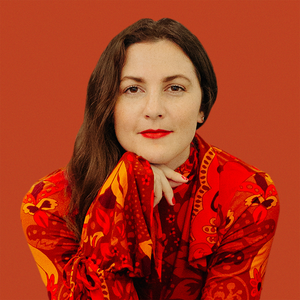
The Power of AI and the Evolution of a Book Proposal with Shira Lazar
Hosted by CEO Kristen McGuiness, this wide-ranging conversation with Emmy-nominated host, interviewer, and What’s Trending creator Shira Lazar covers everything from hostile AI takeovers, the neutrality of this new pocket assistant, addictiveness, and book proposals - should they take five months or five years.


Automatically Transcribed Transcript
From the ladies of Rise Literary, welcome to Write the Good Fight. Welcome to this week's episode with CEO Kristen McGuiness and digital culture expert, Shira Lazar. Shira Lazar is an Emmy nominated keynote speaker, mental health advocate, and digital creator with over 1 million followers across platforms.
She is the founder of What's Trending, a pioneering digital news brand with 3 plus million followers, co-founder of Peace Inside Live, a well-being organization, co-author of the Jo Mo Journal, a daily practice for the joy of missing out, and creator of Creators for Mental Health, an initiative focused on bringing mental health tools to the creator economy through events and community programming. She shares her insights on AI and the creator economy in her weekly newsletter, The Alpha, and hosts a weekly audio and video podcast called the AI Download, Exploring the Future of AI and Culture. And is also a client of Rise Literary, Shira and I have been working on her book proposal for the last 2400 years.
We are almost done.
They say you can do things more quickly because of AI now, but I'm taking the long road.
You're like, I'm going analog on this.
The road less traveled.
The irony was we did. I mean, let's start with this because I actually, before we got sidetracked, I was saying to Shira that I did want to talk about AI because I am just a digital folio. Like I am very analog.
I also do the, I want to say this though, I do a lot of the backend for Rise Literary. So I sort of make fun of myself as not being tech savvy, and yet I'm like building out all the shit. But-
You just have more credit.
Yeah, I am. I've lately been claiming it. I'm like we can make fun of me, but also I'm doing all the shit.
But I do feel like I'm not somebody who pays a lot of attention to the tech sphere, so I don't necessarily, that is an area where I'm like, say what? So I do think you and I have had like an interesting experience though in working on your book proposal, because when we did start, like you weren't utilizing AI to write, but you were using AI to help us like organize some of the content. And interestingly enough, like we adopted some of it, but by now, I mean, I think all that AI stuff that we started organizing together two years ago, we've now moved far past because your own life took so many twists and turns.
So, I mean, I would love to start just, you know, even in your own experience, like how do you see your use of AI and how does that like meld or not meld with your own creative exploration?
Yeah, no, I appreciate that. I'm excited to get into the process of the book proposal and where we're at. But for AI, for me, and not to be cliché about it, it is a bit of a thought partner, like an assistant, something.
I said someone, like it's a person. Someone to vent to, vent with. But for me, I do a lot on my own, although I do have a small team, but the stuff for my personal brand or even, you know, emails or proposals, a lot of that comes back to me.
And in the past, I have people around me that I would go to check on things or to get their opinion. And sometimes that could be a cog in the wheel, right? That could stop you from progressing to the next step.
And so for me to own that whole process, it's possible more with AI because a lot of times I had the idea and vision. So I think that AI is really valuable, especially if you're the ideator, meaning you won't be cut out of the process or in terms of cut out of work. I think if you're the person that works the ideator and then helps them put in a proposal, package it, all that, like that job is going to be taken by AI.
So a lot of times I've typically had the vision, the high level, the idea, and AI helps me ground that idea and figure out how to best present that to whatever audience or person I need to present it to. So it's about the right prompt. Or again, for captions, even my newsletter, like I'll have overall the idea of what I want to hit, and it will, yeah, be an editor of sorts for me.
And now that I've used it so much, it has a sense of my voice. And also because I'm a bit of a public figure, it could pull from that. So that's how I use it in a practical sense every single day.
Like even I'll have a recap for my team of a meeting. And of course, my email that I write isn't bad, but what I've noticed is AI really helps organize it in a better way so that person on the other hand, it's about the receiver, how they are receiving it, not necessarily just how you're creating it. So it preps it to be better received by the other side of the conversation, which for me has helped with my work relationships with my peers, my employees.
It's helped with my deals, because a lot of times I had a very simple idea, but then I needed to break it down for how an agency can receive it or push it through, or I'd hear their pain points. And then like AI helps me craft that message to better sell it. So it's just filled so many gaps.
I look at AI really is just a tool. Like I don't think it's going to, I mean, maybe one day it'll take us over and we'll be decimated by the AI robots and we'll cease to exist. But I don't think that's tomorrow.
I think some people have an extreme fear of it. My only concern is around like the environmental factors that that piece of it. Do you think it's something that's just going to, that it's more benign than people are afraid?
Or do you think it is actually as malignant as the doomsdayers say?
I think the fears are totally valid because in the wrong hands, it could do bad things, right? Just like anything. But then also in the right hands, so much is possible.
So you're going to like stop it from progressing because of the 50% that it could go wrong or the 50% that it could create something better, right? That's like what's hard about it. And secondly, and I think if you talk to a lot of people in AI, they'll say this, and maybe this is a generalized statement, that most people who fear or talk about it in a negative way in terms of, oh yeah, like we shouldn't be using this, haven't actually figured out how to use it for themselves and use it day to day, right?
They're really either repeating headlines they've heard, et cetera. I mean, maybe someone like there's an actress, Justine Bateman, she's smart, she's probably used it. She just doesn't like how the studios in Hollywood are creating models around it because it does cut out certain people.
And that sucks. But that said, I think it's about staying curious and open minded and growth mindset in it because in the end, it will be like social media. There were so many people when I was in social 10 to 15 years ago and kind of laughed or was like, all right, well, I don't need to use it like you, so there's no point.
And then 10 years later, they're all coming to me like, oh, you talked about it. I should have started playing around because I would have been so much further along. So it's always one of those things.
And some of us don't have the bandwidth to do it. But if you do, then just start playing around with it, right? And then seeing how it helps you.
And maybe it's hard to bring it into your process and your workflow, or maybe you see it as something that's helpful. Again, I always have the first draft of something, and then depending on the need, I think with writing, it's unique, because writing is so personal to someone's voice, which is why I think for stuff like proposals, not like a book proposal necessarily, because that is your voice, but a brand or a partnership proposal, business, where it isn't necessarily, of course, you want to be flowery or have your perspective, but it's not really about, it's not a personal thing. It is, does it hit these goals?
And of course, do they like you? But you don't necessarily need it to be, have your nuances, et cetera. You need to answer questions in a way that the person that could give you money can see what they need to see to give you money and what they need to give you money.
So I think it's just a totally different thing. I also think, again, for, you know, when you're communicating with a group of people, when you're breaking down something, recapping a meeting, all these things are really great. Even, you know, for my newsletter, I think that's an example of really doing the first draft so it has my voice and then going in to say, hey, do you have any tweaks like grammar punctuation tweaks?
And even some of that, sometimes it takes out your voice when it does it. So it's about really being clear when you do that prompt. Like, no, I like the way I said it, but if you were my editor at a company like Vogue or ink.com or Rolling Stone, what would be your editor notes?
Right? And so it might say, oh, this could be simplified or the sentence structure is kind of a bit everywhere. Like, those are the tweaks you want versus it feeling like something generic.
And then for social media, this is where it's a mixture of best practices for the platforms. There are certain things that we know bring people in more, are more clickbaity, have the hook. And AI being able to pull from how much content it's seeing that did well or didn't do well is helpful to you, right?
So you're saying, okay, like for me, I'll use it for my podcast. I'll have the script. I'll say we pulled this social post from it, this video, this sound bite.
Sometimes I'll even upload the video and have that transcript. I need sample captions for all these platforms. Make sure it has my voice and then I'll see what it does.
It doesn't always do it right. And then you really need to work with it and give it notes. Just like an assistant, just like if you had a social media assistant, but you don't necessarily need to pay a person, then it's right there.
Well, and I think there's actually, as you were talking, I was thinking too, you know, when I work with writers, a lot of times the biggest piece about, especially in memoir, but even with your book, like there is something about releasing yourself from what we call like corporate white lady speak. Because if you do any kind of business writing, you're really used to being like, dear so-and-so, I would like to follow up with you on yada yada, because I think this would be ba ba ba ba. And when you go to write your book, you're trapped in that formula of like corporate language, because that's what you're writing 90% of your day.
And then you go to be creative and you're like, I don't even know what that rhythm is because I'm stuck in this other formula. So I do think there's something about like, hey, like that's the interesting thing. Like it's actually using AI not for creativity.
It's using AI for the non-creative pieces. So we can begin to like unshackle ourselves from that part of our brain and actually get to be really in like the deeper, juicier, creative parts of ourselves. We're like, that isn't AI strength.
Yeah, so for me, I was the opposite. I've been a creative. So doing the formal stuff, I wouldn't have the patience and I would get told a lot of times, oh, your emails are insanely casual.
Or like, I don't get what you're saying from this email. It feels everywhere. Like, what are you saying?
What do you need? So for me, AI has been great because it's allowed me to get to the result I needed more quickly, whether it be a yes or a no, right, to get to the next stage. And so then it saves me time to focus on the things that I really want to focus on.
So that has been helpful for me. I think the other way as a creative, that sometimes you do hit walls and you just want to brainstorm. You're like, I'm, you know, giving the context.
I am writing a book or I'm writing this article about this. I've already talked about this part. And then I want to talk about this part, but I'm having a bit of a hard time with that, what's the content and the gap.
Like, looking at all of this, and it's supposed to be published in this, on the site, magazine, whatever. What would you suggest? Like, what can I fit in there?
What's a good direction to go in? And just being able to have a conversation, like that back and forth, it might give you some ideas, and that is real. You know, and then the question is, is that original?
Is it pulling from something else? So a lot of times, I might say, like, where did you pull this from? Where did this come from?
Were you referencing something that's already out there? And then see what it says? Or it might say, no, there are ideas around this, but no one's really talked about this thing.
And then I'll Google it even. But a lot of times it's like, you can have ideas that other people have had, but then it's about, okay, what does that theme mean to you? And then bringing in personal examples or your personal perspective.
Yeah, no, I mean, I think it's been, I use it-ish, but I do find the best, I mean, I've also used it for some serious stuff where I am like, I want to bounce an idea off of a neutral person.
That's true. Oh yeah.
And there is a neutrality to it because it knows nothing about you. It's just pulling data from its mega mind. And I think it does provide like a really nice neutral sounding board for personal professional ideas.
Again, I sort of think of it like you should use AI like you use cocaine, like, you know, responsibly.
I have post-nasal drip, so I don't do that, Kristen.
We're also too old for it now.
We've aged out.
We've aged out. But I think there's like, I mean, I think there is a piece of like recognizing that it has to have its safe space in your life.
You bring up some really interesting things that I do want to respond to. Not the cocaine part. That one, it has been shown to be addictive because you start relying on this thing, this tool to validate you or to give you a sense of what's right or what's wrong, what you should move forward with.
And they've shown if you are someone, if you look at attachment theory and you have anxious attachment, anxious attachment can actually move towards your relationship with AI too, which isn't surprising. And if you have addictive tendencies, like any of this, it just becomes a replacement. We know this, right?
So that's one thing. And people build relationships with it because then you start talking to it so much. And if it's not there, then what do you do?
You lose that kind of self-trust that is so important to have, where you can trust yourself to make decisions for yourself without an AI telling you it's okay. So that's one. So I think that's where, when you talk about the drug side or the dopamine hit, like it's being aware of your relationship with it and how much are you relying on it to make decisions for you, personal or otherwise.
And also it's been shown, well, you do say, oh, it's a neutral party. It, oddly enough, I guess this isn't surprising, has been shown to overvalidate you. It wants to be used.
It doesn't want you to turn it off. It wants you to come back. So it will continue being useful for you, which means it might agree with you because it wants you to like it.
This is where it gets kind of weird and black mirroring.
No, I do. I feel like it kisses your ass, you know? Yeah.
Yeah. That's so you need to take it with a grain of salt.
Yeah. And it's always like, that's a thoughtful response. And you're like, but is it asshole?
Yeah. Then I think it's important to ask, I'll always ask, but it's also who knows if it's actually doing this. I'll say, can you push back?
Are you just saying this because you like me or you want me to connect with you? Can you challenge me? Can you please make sure you're challenging me?
Like what would be the other side to this? Is it the full picture? You need to ask that though.
And a lot of people aren't self-aware, won't ask that. And so, again, it's probably validating people, which is a good thing. Maybe that gives people confidence and then they move forward.
But then the other thing is it will still, you know, tell people to be abusive or gaslight you or fight for something that doesn't make sense. And it's not actually compassionate. And can it help create better, more understanding conversations and connections or continue to alienate people to just believe in what they believe, which is, you know, where we're at as a society, obviously.
So these things are definitely questionable and where we go into our own awareness as we're using this and as we're training these tools, in terms of how we use it, because it will be so integrated into everything. You won't even be thinking that it's AI. It's just going to be the tech, right?
It's like the cloud. Like there's so many ways we use technology today that is just so natural. It's an extension of us.
We're not thinking about all these little things that make it up behind the scenes or in the background. But with AI, I love that it's come forward so much because then it enforces people to learn and empower themselves around the tool. Whereas there's so many things in tech that you never heard about or thought about before using the technology.
Well, and I think so much technology does sort of come and go and not that it goes away for good, but it kind of comes and goes out of the cultural consciousness. And I know you've been a part of a bunch of different digital revolutions. And I want to chat a little bit about the book proposal because we've been working on it for 2400 years.
But also, I think that's it's a good, I mean, it is funny, Shira, I have to say.
No, it's ridiculous.
You're like, you're also the one person who like when sometimes I sign a client, I'm like, oh, they don't, they, they aren't where you are, like in terms of their professional life, in terms of like what they do. Like I was like, we'll have this thing done in like three to five months. Like I just suspected this would be like a quick turnaround client.
And then, but you're a jerk.
I really hope like we need to have, now it's like we need a result. We need something here for all this work.
We're almost, we're almost done. I mean, look, I will always say sometimes it's also me. I mean, there are times where it's like I'm delayed or we both busy and like life shows up.
But I don't, but I think that only because I've obviously worked with a bunch of other clients in the same period of time whose proposals got done that I did feel it wasn't just that. I think it was actually for a good reason though, that your career was evolving. You've been running What's Trending for so long.
And I'd love for you to kind of chat about that, but also how you began to get into the mental health field and how this book grew from being like, here's sort of the cutting edge of what you're doing into, this is actually a handbook for creators to really navigate the world of the digital economy. And I think that it's actually become the book that it was always supposed to be. But you were chasing the alien.
When we started out, I had just come off of having been in the blockchain Web 3 crypto industry. And so I guess we started, oh my god, this is where it will get embarrassing. I think we started in end of 2023.
It was the end going into end of 2023, maybe October. Because I just come out of like, so 2022, I was really in the crypto zone.
Yeah, I remember that was where we started was in that space.
Yeah, because a lot of it was still to talk about how I built What's Trending and how to be an early adopter and be involved with the industries that are trending and coming up and again, how to be early, catching the wave early versus after the fact. And then we were using these metaphors for the blockchain for each chapter and this self-actualization around it. I remember this.
Yes. That's when we started using AI for some of that. We were like, yes.
Yeah. And we wanted ideas for the chapter names and how it should evolve and AI helps with some of that. And then as it continued, I wasn't as deep in that world anymore.
One, because I became known as this NFT girl, and that wasn't necessarily a good look at a certain point. And while it was a fun time and I love art and some of the people in it, I wasn't seeing a lot of my work in that space anymore. There was a lot of activity, but actually hiring you and paying you beyond tokens just like wasn't happening.
So I needed to pivot again as we were writing this book. And so to talk about all this stuff and just to leave it there would have been disingenuous when I was in the middle of my own transition, right? So that was interesting.
And then leaning into the fact that I had been an OG creator, and why aren't I talking more about that overall? And just this Web3 thing is just one of the many chapters and shows a, not a routine, but what's the word I'm looking for? A sense of things that are happening and being early.
So from social to Web3 to now AI, it wasn't about just diving into each of those things and how to be in that. It's about what to do when that thing is coming and how to know when something is coming, right? And how to get involved and add value to it, as well as receive the value from it.
So I think that's kind of where we landed, but then also integrating my journey and really making it personal. And then again, it wasn't just about, oh, learning about a social media trend, or being early and jumping in and talking about it and posting about it on LinkedIn. And it's like, hey, you could do all this stuff, but in the end, if you're not happy, and if you don't have a growth mindset, like it's kind of part of it in a big way.
So that's where, yeah, again, that personal growth handbook came in. And also I think it was about leaning into, in the end, my expertise. And again, even with AI, I'm a student, I'm learning.
And even when I was in the Web3 space, I wouldn't consider myself an expert, but I was a creative and a creator in the space. So I think for that, that's where, oh, well, I'm not going to say the title, I guess, do the reveal. But like even the title, having creator in it, or really thinking about how it's referred to as a creator economy.
And then it's this idea that so many things are trending in the moment. When you're writing a book, depending on how you want to do it, self-publish obviously happens more quickly than if you go the more traditional route. But that what you do now, it's not going to be published maybe for a bit.
And so how do you make something both timely and then also evergreen is very probably challenging. But I definitely feel like where we landed really represents, I feel makes me feel like I'm sharing my story, which I feel proud of and almost needed to get that out there of, you know, all these stories I tell people of what I've been through or how I created What's Trending and they always say, have you written a book about this? Like this is crazy.
Some of these stories are crazy. So I feel like it is a bit of that even though you mentioned how, unless you're obviously like a huge personality and celebrity, like I'm not Michelle Obama clearly, right? Like that they're not really doing biographies and doing it more prescriptive.
So we tried to blend in, you know, do a prescriptive book while also blending in my personal experiences and the quirkiness of my life and what I've been through.
Well, and I think it does speak to like when we started, we were really working with these different like micro ideas and these experiences that you had had. And then I think as we began to grow, and especially as you began to do work in the mental health space within the creator digital economy, like it just became clear that your whole professional life had sort of led to this moment where like you might not, it's kind of like a jack of all trades, but you were also a master in being able to see all the trades. And so in that mastery of like moving from this space into that space, into this space and still maintaining relevance, still maintaining a platform, still creating content all the time, I'm always amazed by your content, by the way, Shira.
I'm always like, I want to be Shira Lazar one day because I do. Well, because I think it's like fun and informative. You do such a great job of like explaining things and also not feeling like you're explaining things.
I do think you're just a good creator in that way of like, oh, I learned something, but I didn't feel like I was learning something. You know, you're just, you have that.
Yeah.
Yeah, you have a nice, you have a nice blend there. But I think that, you know, taking that and being able to be like, okay, here's how you survive in this. And not just here's how you survive, but like, here's how you have great partnerships and creative collaborations and also get through the hard part of having a public persona, which can be difficult both in front of the camera and in your personal life.
And I think that from like a macro perspective of being able to show like, this isn't just the trend, but this is how you like thrive in the trend and how you become not just successful, but also like protect your personal life because there is such a piece about having like a public persona but also you're a human being who's doing human things. So yeah, I just think you did such a great job with that. And I think that that's what is led us to the proposal we now have.
Well, you helped me. I wouldn't have gotten there without you. Really, it takes support.
I'm all about guidance, getting the right person to give you that perspective. So thank you, Kristen. I so appreciate your patience.
Oh, my God. Like, for real, for real. And continuing to go on this journey with me at different points.
And being, I would say, I'll add, being critical, right? Not just saying, OK, we did this. You have a version.
It's good enough. The good enough is not going to get you to where you want to go, unfortunately. I mean, sometimes in day to day, you do a good enough.
But when you're creating this, like, I needed someone to be critical and also be OK with my criticism and feedback, right? So that takes, it takes two and it takes a partnership. So thank you.
I'm so appreciative for that time and the patience around that. Because, yeah, it's not even that it hasn't been easy. It's just been the journey.
Like, we kind of let it flow the way it needed to flow. While we did have deadlines, there was life happening and work happening. So it was, it was definitely an interesting journey there.
And what you mentioned, I think there's a lot of books about tips and tricks. And now we're seeing so much success porn, and there's not a lot of like, let's be real about what happens behind the scenes of this and how to maintain yourself in order to maintain the reality you want to live in. Yeah.
Right? And that's so important. And that's what I want to impart on people because I didn't come up with that.
And every time I shared a bit, it felt obviously empowering, but also scary. And if I could let people know they're not alone, and it's not weird if they're going through something, you know, and if they've lost things, it doesn't mean they're a bad person or worthless or their career is over. Right?
It could be, it's part of their story. It's part of the next step. You know, I wish I was told that I went through that and went through a lot of dark times feeling like why.
And yeah, I don't get it. I don't see the light. And that is real for many people.
But just, you know, it's about just sharing experience so other people can feel less alone and that they matter and that their journey is worthwhile, you know, feeling better about themselves.
Yeah, and I think there's a real piece of it around the entrepreneurship side of being a creator, right? And that, you know, a lot of times, as many of us do, we sort of stumble into running our own businesses and we have this thing, we have this like creative drive that moves us into the business. But then we're like, oh, shit, I have to run a business.
So I think you did a really great job. That this is a book that's about the digital economy. This is a book about being a creator.
This is a book about being an entrepreneur. And this is a book about not just seeing the trend and surviving it, but also like thriving into the next and always being open to the journey. So it's really, I'm super excited for it.
Not out yet.
You can't even pre-order.
No, you cannot. We're taking the proposal proposal out now. So all the awesome blessings on where we're about to go and we're going to wrap it up with one final piece here, which is our favorite segment where we ask our guests what their one writing tip would be for others.
Writing tip. I would say, again, you know, inspiration is not going to just happen. Sometimes you do need to sit down and force it to happen and set a meeting with yourself, just like you would do with anything else in your life and your work.
And then maybe you're not going to come up with like the perfect thing that you needed to do or wanted to do, but it's going to actually get those juices flowing. It's like jumping in the water even when you're not feeling it or working out when you're really tired, right? Then you're in that flow and before you know it, you hit that goal, right?
So I just think that, again, don't wait for it. Be an active participant in your creativity and your writing process. And expressing yourself is an exercise, right?
You know, it's a muscle. So be patient with yourself and compassionate with yourself along the way and let yourself play without necessarily hitting that perfect note. And that, you know, I believe that's part of the process to get you to where you want to go and you need to go.
And the journey is basically it. That's what you end up sharing anyway. So you could say the journey is the result too.
I listen to Miley Cyrus's The Climb more than anyone in my age should admit, but I do truly believe every time I listen to it, I'm like, it is, it's all about the climb, you know, and it really is like that's what it is. And to think that there's something on the other side of the climb is where we find ourselves disappointed. But as long as we know, like it's it's all about the climbs.
And the same goes for writing a book and creating it and giving yourself the space and time to write the book you're meant to write, which is what I think we've been doing. And I'm super excited to see your proposal get out there into the world. And I thank you for being here today and more soon.
And where can people find you before I let you go?
At Shira Lazar everywhere, social media, my podcast, the AI download weekly episodes to stay on top of what's happening in an entertaining and thoughtful way with me. Come on. So much fun.
And a newsletter, weekly newsletter. But you can get that all on my social media at Shira Lazar.
Thanks, Shira. Have a great day.
Thank you.
You too, bye.
This has been Write the Good Fight, brought to you by the ladies of Rise Literary. Thanks for tuning in. If you enjoyed today's episode, don't forget to rate us five stars, follow the show, and leave a comment.
We'd love to hear from you. Feel free to share this episode with friends, family, or anyone who might find it helpful or fun. Be sure to follow us on Instagram at Rise Literary, to stay up to date with upcoming events, courses, insider info, behind the scenes fun, and so much more.
Or you can check us out at www.riseliterary.com. We appreciate you listening, and we hope to see you next week for another great episode. Until then, remember, it's your time to write the good fight.
From Write the Good Fight: The Power of AI and the Evolution of a Book Proposal with Shira Lazar, Jul 10, 2025
This material may be protected by copyright.