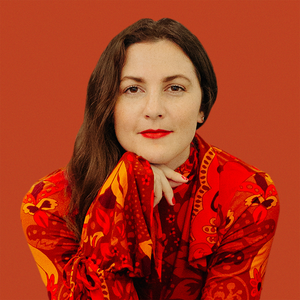
Reparations and Witty Repartee with Krystal Joy Brown
The gang is back together! This week’s episode, hosted by CEO Kristen McGuiness, rejoins her with her former podcast cohost, Broadway sensation Krystal Joy Brown. KJ 2.0 sits down and talks all things Broadway, civil disobedience, and Beyoncé. This episode is hilarious but poignant and one you won’t want to miss!


Automatically Transcribed Transcript
From the ladies of Rise Literary, welcome to Write the Good Fight. Hello, and welcome to today's episode of Write the Good Fight with Rise Literary CEO, Kristen McGuiness, and award-winning actress, Krystal Joy Brown. Krystal Joy Brown is a dynamic force in theater, television, film, and voiceover.
Her critically acclaimed performances and commanding presence have made her a standout in the industry. In 2024, she originated the role of Gussie Carnegie in the New York Theatre Workshop's lauded production, Merrily We Roll Along, with Jonathan Groff, Lindsay Mendez, and Daniel Radcliffe, which headed to Broadway and won the Tony Award for Best Revival of a Musical, also marking her sixth Broadway show. Most recently, Krystal wrapped up the critically acclaimed play written by Coleman Domingo and Patricia McGregor, Lights Out, where Krystal portrayed Eartha Kitt and Natalie Cole, and recently starred as Julianne in the world premiere of my best friend's wedding, The Musical.
Her Broadway career spanned six productions, including Hamilton, Motown the Musical, Big Fish, Leap of Faith, and Hare, and Krystal has appeared in numerous television shows and in movies and is also a Grammy nominee, a Lucille Lortel Award nominee, and two-time Fred Astaire Award nominee. She is also my former podcast partner from our podcast, How We Do This, and is truly a woman who can do anything. So Krystal, thank you for hanging out with me today.
Thank you for having me. I'm so glad to be back with the headphones on and back at podcasting with you. Yeah, it's exciting.
It feels old, but new, very familiar.
Well, and for those listening, back in the day, Krystal and I recorded a podcast together before we were really zooming or riversiding. I mean, I know people were doing that, but we had one going in her kitchen of her apartment. And I was super pregnant throughout the entire podcast.
And I would just lump my heavy pregnancy body up the staircase into her apartment. And then we'd sit down with guests. And I joke that I think you actually edited on a transistor radio because we were…
It was like analog. It was... We started in 2017, 2018.
And it was like, you know, in response to the Trumpism. And it was a very, like, feminist podcast. It was kind of guerrilla style.
I was just like, I really want us to say something. I really think our voices, our opinions, our banter is really good. And I think we can motivate people.
And so that's how, you know, how we do this. That was the name of the podcast came up. And I just I loved every second of it.
But most of all, I loved adding a bunch of ridiculous sounds and music that I probably could not legally use. It was a I really loved like radio lab. So I wanted a lot of different sounds and I wanted us to be like, brr brr brr.
Like I just needed that.
I needed sound effects. Like I needed the sound effects.
But I think that our segments were really good. The show was really great. And I'm excited to be bringing it back, actually.
I'm excited about that too. And I know we had talked, Krystal reached out. She's like, you want to do it again?
And I was like, I know. I was like, I will do anything to spend time with you. But I also knew that I had to do something that was very like book focused.
And it has become more creativity focused. But I would truly do anything to get to spend time with Krystal. And I mean, I do think, you know, the idea of Write the Good Fight is this idea of, you know, once again, here we are, eight years later, back up against the same forces of tyranny that we were, yeah.
Did that happen?
Yeah, well, I mean, I think we all know, sadly. But this idea of like really creating in the face of this and what creativity means in the face of fascism and how I think there's a piece that can feel like, is this where the fight is fought? And yet there is also a piece where this is, where the fight is fought.
So I'd love to hear how you view it, especially as a creative and such an incredible talent.
Well, man, I mean, working on a new piece, working on this show Lights Out that you got to see with Sammy Davis Jr., Nat King Cole, Eartha Kitt, Natalie Cole. It was just a lot of these legends. And during the 1950s, when there was so much oppression and it was the beginning of the Civil Rights era.
And this show is about Nat King Cole losing his television series, which was a groundbreaking, barrier breaking show that aired for about a year, but it didn't get sponsorship. And Nat King Cole was sponsoring it himself and paying for it himself by the end. And it was doing great, but major sponsors would not attach because of his blackness, right?
And because of racism. So he lost that show. And so the show that I was just working on was about his psychology around that.
His mind, what was going on right before he had to go on and put on that brave face to do his final show. And what it means to be oppressed and suppressed and repressed. And how do we as artists create in the face of oppression?
And sometimes that is buttoning up and just being higher than everything. And sometimes that is rebelling against what is presented to you or expected from you. And I think that that was always a battle for Nat King Cole, which is why he pulls in people who were so free with themselves, like Sammy Davis Jr. and Eartha Kitt, who could kind of pull him and be like, you know, let's get a little dirty, let's get a little rough and tumble.
Like, just speak your mind. Just say how smart you are, how brilliant you are. And working on a piece that's about oppression while we're in the middle of an oppressive regime has been, at first, it was really daunting in rehearsal because it just felt painful because we're excavating, we're trying to figure out the true story here and the parallels of what's happening then and what is happening now.
It sometimes was too close, you know, and it can be very painful. But doing it, getting up and seeing audiences and then meeting with audiences afterwards, I was like, this is essential work. This is essential storytelling.
In fact, Lee Daniels came to the second to last show. And he said to me, he was like, you know, we don't give credit to our ancestors and the people who had to do all of this work to get to where we are, who had to fight during the civil rights era. Like these people who without an Eartha Kitt or a Dorothy Dandridge or Sammy Davis or Nat, like we wouldn't exist.
So it feels daunting to create, but it also feels like what I need to do for my own healing as we are going through this. And it as I see people moved by it, I feel like I can wear it, I can do it, I can push along through it. If I feel like I'm moving the needle at all in anyone's hearts or minds or making them feel seen or making them understand and have more empathy.
At a time when people are every man for himself, it's more essential than ever to be telling stories that can bring us back to our identity, back to our ancestry, back to who we truly are and also connect us.
I love that. And I love, I really loved Lights Out. I mean, you were spectacular.
You're my best friend, you got to say that.
I know.
But also, but you are, I mean, you are so spectacular. I mean, as I was doing your bio, it actually, the longer version mentions the fact that when you played Eliza in Broadway, and as I, I mean, in Hamilton rather, as I was even saying, including Hamilton, she played Eliza. But truly, like the way that you would sing Burn, and I love that you had it in there, like that people would give her an ovation in the middle of Burn.
Like the whole production would have to like slow down because Krystal just tears up a stage and it's like, you are so phenomenal and you're such a phenomenal performer. But what makes you a phenomenal performer is I just think you bring the emotions of the character out of the story and into the reality for everybody who's watching them. And I felt that way with Lights Out.
I mean, all of you did such an amazing part of that where you could have, because it is a political story. And I think sometimes when we get into the headiness of politics, we lose the emotions sometimes of the humanity, right? That like hearts are breaking.
You know, that it's not just breaking.
Yeah, that it's not just about like dreams, the advertisers, you know, but like people's like, you know, and it's not even just about identity. It's about like what we love and what we lose and what's taken from us. And I think that all of you were able to go from what could at times be like a heady script that that that wasn't always prominent, but your performances were so emotional and it just really brought it to the audience.
And I do think that's the beauty of great art, is that it just makes it really emotional for everybody. Yeah.
A great concept and great writing. And I mean, we're both writers. And I always look at a script from the perspective of a writer.
I always try to think of what is the story they're trying to tell? What is the subtext here? What is the point?
Because I think that that's, I mean, if you can look at it multidimensionally, it just helps with the work. But I really do think that a really good story starts with a great concept, but then it really is capped by good writing. You need good writing.
You need good dialogue, or you need to know when there is no dialogue, or when it absolutely is necessary for a song. When you can't say it, you sing it. When you can't sing it, you dance it.
And in writing a play with music or a musical or anything like that, you really need to know the timing and the finessing of that. And a good writer, a good script is everything. It's the bones to put everything else on and to sink the emotionality in.
What are the projects that you get really excited about? I mean, when you're looking at stuff when you're auditioning, what are the things that you're like, oh my God, I want this?
I look for things at this point in my life that I feel like are going to make an impression that are going to help with representation, that are going to be maybe a little bit groundbreaking, or they're going to stretch me as a person, as an artist, as an actor, as a human being. If I feel like with this particular show with Lights Out, I was like, Eartha Kitt and Natalie Cole are so different. They are so different.
The challenge of playing those two people in 85 minutes is something that I really want to be able to do and try for myself. So if it's something that will stretch me, if I'm working with people who I think are incredible like Coleman Domingo and Patricia McGregor, like if I'm working with a Lin-Manuel or a Alan Minken, I'm just like, those are people who are going to stretch me, challenge me, grow me. And that's important.
But then also if I feel like I can be a representation that moves the needle, like when I did My Best Friend's Wedding, playing the Julia Roberts role, we originated that at the Agunquit Playhouse and last year in September and October. And it was such a success. And I remember being so afraid.
When I got the job, I was so grateful because I loved the movie. I love anything Julia Roberts. I really do.
And especially those movies from the 90s. And I was like so excited. But then they were like, we're going to put you're going to do a photo shoot and we're going to put you on the cover and like have you as the poster.
And I was like, I really panicked because I was like, this is going to be in Maine and no one's going to want to come. And people like if they see that it's actually a black girl, like maybe if they, you know, they might like the show for the name recognition. But if they see it's me, they might change their mind.
And what if I don't sell tickets? It was my first show out of of Merrily. And I was like, what if I am not a big enough name?
What if I'm not this? What if I don't bring a draw? And the show broke records.
There were tickets on sale for $1600. People came nine, ten times. And we had the most multicultural cast.
We had non-binary representation, trans representation. We had, you know, a black woman and an Asian, well, Afro-Latina and an Asian, like, best friends. Like, you know, it was just everything.
And that was right before a certain person became president. But like, it's things like that where I'm like, okay, if I can play a traditionally white role and bring something to this and, you know, expand or have people see this in a different light, like Gassi was also a traditionally white role and had never been black on Broadway or the West End. So I was like, yeah, like, that's a great challenge, you know, bringing that representation and thinking about Gassi being an artist from the 50s, 60s, 70s, once again, in the civil rights era.
But like, I am, as Gassi, I was in my own dramaturgical world.
Okay, like the work I did on the research I did on the back end of Gassi that is absolutely not featured in the book. I was carrying a lot, Hattie. I was carrying a lot.
Gassi was going through it.
You did all the writing.
You did all the writing.
It was all back.
I mean, there was no thing. I couldn't talk to Sondheim. I couldn't talk to anybody.
Everybody was dead.
So I just had to do this on my own. I was like, all right, let's get in here. And it's gonna be black.
And it's going to be, she's gonna be vulnerable. And she's gonna be complex. And it's going to be a tough thing because she's like the scapegoat.
I mean, there were so many complexities to that character. And I was so afraid of playing the like what is going to be cast as the villain. She doesn't really do anything to anybody aside from make them all rich.
Yeah. I mean, I mean, it's funny that it's funny that a black woman had never played that role before when it actually really made sense, you know, like in terms of how that character is drawn and how Sondheim drew that character. And I think that was what made your performance so amazing was that, like, again, you just showed this like humanity to a character that could have just had this like kind of superficial note to her.
And like, you really felt her. I mean, in all the reviews, that's where you were just like consistently mentioned. It's just this like star in the show.
And it was really phenomenal to see that even with, you know, with Jonathan Groff and Daniel Radcliffe and Lindsay Mendez, like the way that she felt so full bodied, you know? And I think it's such a, it's an incredible, well, and I just think it is, it's what you bring to this stage and what you bring to all of your characters. And how do you think being a writer, I mean, so I will say this, Krystal, many, the way Krystal and I met many years ago was after we met, I was like, hey, I have this book I wrote, and I am looking for, still looking for somebody to star in it.
We had set it up with Alison Brie at one point and went away. And I was like, maybe we make it a musical. And then Krystal was like, hey, I wrote a book too, and then you sent me your book.
And then we both read each other's stories. And then there was so much overlap that we were like, hey, are we actually the same person?
It was terrifying.
And then she's Krystal Joy, and I'm Kristen Jane. And then we became friends. And then we have the same, so much backstory.
We basically come, we're like, we are seriously like, my family is the white version to Krystal's black version.
It is so weird.
If you put them all in the room, like they're the same character.
Daddy issues, mommy issues.
I mean, it's deep.
Grandma issues.
Grandma, yeah, everything.
It is very simpatico. That's why we were a good dynamic, and we still obviously are, but it's like sometimes you meet those people who just inspire you. And we ended up writing so many things.
We wrote so many scripts. We, I mean, obviously we did this podcast.
We did a screenplay. Remember that? Yeah.
I mean, we did so much. And like, I still think there's a world for a lot of that stuff. And especially now that I'm like, I'm back in college.
As I've been doing this off Broadway show, I am finishing my BFA. It took six courses last semester, and I'm taking five this semester, my final semester, and then I want to get a master's and an MBA. Because I want to be a person that...
Oh my God, this is so nerdy. I want to be in the room where it happens. Okay, Hamilton reference, don't care.
But I do, I want more people who come from the artist, like the ground, the roots of the artistry, to be making decisions, to be changing things, just like how you are doing, like how you're now the CEO of this company, of your own company, so that you can be like, I want to help produce and release stories that really matter to me, and that I think will shape people's journeys, their identities, their understanding of themselves, like that's something that you wanted to do, and amplify other people's stories and amplify, which is what you've been doing for the longest time, but now you're doing it in this way that feels even more specific and even more grand, even more of a larger scale, and you have total control. And that's kind of what I've been noticing about my journey, is that I want to have more agency. I want to be able to be someone, I love helping someone's dream come true.
Like the short films I've produced, and connecting people and connecting the dots, that is something that I truly love to do. And as we're in the midst of this oppressive regime, we have to come together more. We have to support each other more, especially if we have artistic goals, especially if we have dreams that seem too big and too far and too wide and too deep and too impossible.
We have to continue to dream in order to act as a point of resistance. Your art, your artistry, connecting people, making sure that people are having a space to tell their stories is also an act of rebellion and resistance. So, yeah, I mean, what you're doing is amazing as well.
And I really want to champion you in this moment because I really think that it's really hard. And as I've known you for so long now and how much we've hustled and how much I know we will hustle, we are hustlers, OK? You know, like I don't drink and I invested in a wine company because I'm a hustler.
Because I'm about that hustle, honey, like, you know, but I just I just feel like there's so many stories to tell.
And like this is a part this in the show and lights out, he does say like this half hour that he occupied in people's living rooms was an act of resistance, you know, his art, him standing there, him being poised, him doing this work, regardless of being pulled off the stage by the KKK, regardless of a cross being burned on his front lawn. He still went out and did the work and was, you know, an artist. Now, do we think that maybe him dying at 45 from cancer was a lot of that stress and repression?
And I mean, sure, probably. But that's something that we can learn to persevere through. And then also how to release that so that we aren't creating a toxic environment for our own bodies.
No, and I think it is sometimes just telling the story is the greatest act of resistance. And I do think, because I recognize there are much stronger and more potent ways to fight back. And I think that as Americans, we are consistently disenfranchised from our own power.
We don't take it. We're not marching in the streets. We're not burning things down, like the French do, right?
I mean, there's plenty of examples of real strong civil disobedience that I do think can move a needle. And that is not an American way.
Which is crazy because like the tea party. That's how it all started. Isn't it?
Yeah, isn't it?
You think it would be, but yeah.
We've just been so, is this a word, domicicitized? No, that's not a word. Domesticated.
Well, yes, but I felt like there was another, I'm, whatever.
Infantilized.
All of the things. We are sucking on the teeth of the, yeah. We are impotent-ized.
We are impotent-ized.
We are distract-itized. We are distract-a-cold.
We are commercialized.
Ooh, girl, say it. We are.
Capitalized.
Not, yeah, we are absolutely capitalized. Disenfranchised. Yes, yes.
You better speak it, girl.
You better speak.
It's like the Bob Dylan, which is like the size.
Yeah. Yeah. Yeah.
No, it's tough. And we have lost our power in a lot of ways. And I mean, we just had a crazy election in New York, right?
Like we did something where we really broke away from the- Yeah, finally. Like one semi-win.
I know, it's not even a full-completion for now. I'm not even getting fully excited until November because the attack ads, like the establishment, the idea of just status quo, I don't know how people even think that there is a status quo anymore. There is not.
There's no fighting with what? Cotton candy like the Democratic Party wants to do. We need to be radical.
We need to be making radical movements of radical humanizing steps. This is a time where we need to be radically empathetic, radically caring, radically connective, because everything is about disassociation, disconnecting, distrusting, distancing each other. And that works.
That's why it works. And we have all this, you know, these deep fakes and all of these stories, like, oh, people are rioting and people aren't rioting. People are doing their civic duty of protesting.
But in this country right now, you can't protest. You will get arrested. And you and I protested.
You know, you and I were in the streets, the women's marches. I think with Ella.
My daughter. Yeah. Like the second one we took Ella, yeah, the cutest.
And I mean, and it's it's just I think people are so scared and so scared to lose the little bit that we have that it's causing us to shrink. And that's why art art has to survive because art has to tell the story of now. Art has to tell the story of of what's happening.
Art has to be the hope so that people can be like, I have something to look forward to. I have something to believe in. I have something to connect to.
Because right now, it's bleak. It is just bleak. And we're waiting to see, like, all these bills, you know, or we're waiting to see if, like, on the Fourth of July, they're going to big, beautiful bill us to death.
And I don't really celebrate the Fourth of July, but I'm in DC., which is where my family is. If I'm not on stage, I'm typically, like, with my family in Virginia, and I'm in Virginia, and so will be Beyoncé.
Okay, she won't be in Virginia, but she will be so close. She'll be in Maryland. She'll be in the DC area for Fourth of July.
And guess where I shall be? With Beyoncé. With Beyoncé.
Because that's how I want to celebrate America, because she is everything. And she gives me hope. Like her artistry, like people will be like, why do you pay so much money for a ticket?
Or why do you do that? I'm like, she for me is the blueprint. She gives me the hope to believe that there's something greater, that there is, even though she is constantly disrespected, underrated, you know, belittled and undermined.
Like, I'm just like, you are the gold standard of female empowerment, of persevering through anything. And so, I mean, last time, Kristen came with me to Beyoncé.
I'm so jealous. I actually want it. So Cowboy Carter has been, I mean, I'm also from Texas, so I take, I mean, I have a lot of Texan pride in her version of Country on that, but that album is so brilliant.
It is truly, I think, one of the most brilliant albums, both in terms of like, it's genre bending and then genre disruption, and then genre, let me blow this up into a million pieces and tell you to go fuck yourselves with genre because I know how to do it, because this is my roots. And I mean, every fucking song on that album became like a prayer for me. Yeah, it was just, it's so phenomenal.
And I really had like a new experience with Beyoncé through it because I've always been a Beyoncé fan, but then in that album, I was just like, it also felt so beautifully timed with what we are going through. And I think of Beyoncé as like, like what is America, you know? And I think of like, she is our star spangled banner.
And so that album, though, like to me, it was like, this is the best of who we are. Like, I don't understand, and Maisha and I were talking about this, just about blackness in general, but I think this is actually about Americanness. Like, there is so much about being American that is actually a really beautiful experience that we all share.
Like, it's something that is a through line, no matter who you are, of just, of our freedom of expression, right? Like, that is the thing that we all have. And yet, the level of like self-hatred that, and I do think that is, I think it's the root of so much, is just self-hatred, and then the need to weaponize self-hatred against other people.
Because I do think of that album as being like, no, this is who we are, right? Like, we are a little bit country. We are a little bit rock and roll.
Like, we are a little bit hip-hop. Like, we are a little bit like, that is what we are.
Yeah.
And homogeneity is in fact, just such a deep act of self-hatred.
Truly. An erasure. So, I mean, a lot of it is, a lot of what's happening, a lot of the erasure that's happening is, yes, out of that desire to just be, yeah, homogenized, a monolith, which who, what is, what is interesting about that?
Like, I mean, what even is, like, white American culture? Like, I was having this conversation with someone the other day.
I was like, what is it? Somebody tell me what it is. Is it hot dogs?
Like, I have no idea what it is.
Listen, you take away all the Chinese food places, you take away the Mexican food places, you take away the soul food places.
You take, like, there is nothing left. There's nothing left. There's nothing.
And so I'm just like, it amazes me. What I also think, and what I've been talking about in the shadows in this, so this will be my first time really saying this, but this is, I think I know how to end all of this.
I think I really...
Love that you're dropping it here.
I know how to end all of this.
This is not exactly news, but I will say I think I want to get to the root as to why this will fix everything.
Okay. We're ready. This is, okay, is everybody ready?
I'm just going to say it.
I believe that if black people were just paid reparations, the true amount of reparations needed, then white people wouldn't have to carry any guilt. They could be like, the guilt could roll off this silent, sneaky guilt that is very deep, deep, deep in the marrow of white people in this country, that feel a quiet shame or will secretly vote for Trump, but be like, I'll have a black best friend. Like what all of that could just be leveled if the reparations were paid.
And it's like, then white people could walk around and be like, look, you were paid, okay, now we equal, you know? I think if that were just off the backs of white people, that it would just, like, it would be a big, big thing of just releasing some of that stress. But it's not going to happen.
It's not going to happen.
I do think, but I think you're right. I think it's about spiritual debt, you know? And I think that when you have a spiritual debt, you either look at the spiritual debt, you confront it.
It's like the program, right? Like you make amends and then you can move forward on an even playing field. But if you have a spiritual debt that you aren't paying back, you're likely going to live in some level of resentment around that debt.
So instead of owning the debt, you get mad at the debt. You blame the debt. You say the debt fucked me up.
But it's actually like, no, it's just your debt to be paid. We were at one point, when Live Through This came out, I come up with this idea to have this whole campaign called Anonymous Janes that was going to be about trying to force Biden to sign these really big executive orders. It was very lovely.
It would have been awesome. I had no energy for it. I could barely get out of bed.
I actually ended up with a respiratory virus for three months when we were supposed to launch it. I was like, that was cute. We might have been able to save America, but you know, another time folks, we can't do it all.
But one of my things in the one of the executive orders was actually around using the tax code to pay reparations so that there would be a reparations tax credit, just like a child tax credit. Like there is actually, we have a system of finance that we could make easily a reparations bill built into the tax code.
Yeah. I mean, on Ancestry, the records are there. Everybody knows, like it's so detailed.
I could, I traced my Ancestry back to like 1700. Like it was crazy. The side of me that is the non-Puerto Rican side.
Like I was like, wow, I could really see it. I could see the line and where it all went back. And I was just like, if we know, we should just, it's only, we're only 12% of the population.
Like, I mean, just, I think that it would just end some, yes, karmic debt, some spiritual debt. And it would feel like, okay, we've done it. Everybody else, not everybody, but a lot of other cultures, religions, groups of people who have been traumatized, exterminated, they have gotten reparations and it has caused them to flourish in a lot of instances, but also for the people of that lineage of their generations beyond to not have to carry that because it's been the debt has been quote unquote paid in some ways.
And I'm just kind of like, I just think that we're running in this, this toilet bowl of nonsense because of people having this shame and fear. And as program people, we know what shame does and we know what fear does. And this is nothing but shame and fear cycling around the toilet bowl.
And it's just like, we just got to face facts. We got to face facts. And listen, black people don't want to talk about slavery every day.
No, we don't. We're not really that interested. We don't want to go in the streets and say, please, black lives matter.
Like that is the least fun sentence I have to say. And I have had to say it too many times. We don't, we want to just live our black ass lives.
We want to travel. We want to eat good food. We want to have good sex.
We want to like play video games. We want to write books. We want to do art.
We want to bowl. Like we want to do just regular degular shit and not have people just trying to take away our anything.
By the way, if you ever make me go to another engagement party, a bowling alley though, Krystal Joy Brown, I ain't doing it.
Wow.
Wow.
First of all, that engagement party, as we are supposed to only reflect at that engagement party as my early birthday party.
That was a early birthday party, not an engagement party anymore.
We have reframed that memory.
Reframed it?
Okay. I'll always go to an early birthday party and a bowling alley for you. I did not bowl.
I hate bowling, so I refused to bowl that night. I was picketing though.
You did sing though. So don't even start. You had a good time.
She sang, everybody, she sang. So, and I have video of her singing. And she was sitting down.
And then while I rapped, it was Eminem, Lose Yourself.
It's a classic.
As a white person, that is my white culture, it's Eminem, Lose Yourself.
That's appropriate though.
You didn't try to do Biggie. You know what? You did another white person.
Yes. You did another white person impersonating black.
Sadly, the only other song I can rap, which I do very well on, is a P Diddy song. And now it's gone forever.
So yeah.
Yeah.
And I saved myself. I don't do it in public.
Thank God, because otherwise I'd have blackmail.
I'd have it in my back pocket. And I can't say I wouldn't use it, okay? Like, times are tough.
Every man for himself.
What is your relationship to P Diddy?
Like, oh, God. People ask me that question all the time. Like, so do you know?
I'm like, no. No.
What?
Yes. I get that question all the time.
Like, no.
Oh my God, people. Oh my God, white people. Yeah, we really do have so many.
I love that you know that it was white people.
Yeah, it was white.
Really? Like a black person's going to be asking that? No, we know.
We know who it is. I mean, you know, it's all of us. I don't ever want to like take myself out of the running too.
There's shit I do all the time. Like, I'm such a fucking idiot. But, you know, and my husband too, as we all know.
Oh, Tare Bear.
Oh, Tare Bear. I will say though, as you were last week, Terry went into a, this could always be filled with crazy Terry stories, but the best was Terry goes into a, into what do you call it? A kebab store about a week ago.
And it took him a while to get home, which I knew because he went to go get kebabs, which could be like a three hour errand for a Greek to go get kebabs. So when he came back, I said, how was the kebab store? And he was like, well, it was run by a Persian.
And I was like, okay, so I'm imagining that took some time with Iran. And he goes, but then an Israeli walked in.
Oh, my God. Oh, my God. It's amazing that he ever made it out.
I was like, and also I was like, how did you get out of the store without figuring out a ceasefire? Like, I mean, here it was Greek, a Persian, an Israeli and a kebab store. I mean, this should have just been done, you guys.
It should have been done. It should have been done.
It should have been done.
I don't know. Oof, God, we're not even gonna go over there. Well, we have enough problems over here.
But it's, yeah, there's so many problems. There's so many problems. And so that's why we have to focus on, I have to, I personally, as an artist, have to lean into my art.
And also I'm loving going back to school. I suggest to anyone, like it's never too late to go back to school. Like I'm loving it.
I'm actually applying myself, which is something I did not do in college when I had, but I did the AMDA two year integrated program. So you do it really fast. I did it in a year and a half.
I did it super fast. And because I just wanted to be out in these streets and performing and working and which was great. So I didn't have gen ed classes, but now I'm like really taking gen ed classes, psychology and dramaturgy and algebra.
But I love that you're like that you're like performing, you know, with in a Coleman Domingo play. And then you're like, but I have my algebra homework to do, guys. I could see you in your dressing room, you nerdy little-
Oh, yeah, I was. Oh, absolutely. My blue light glasses, my headphones, and just, you know, writing an essay on, oh, I did an essay on OK Computer, Paranoid Android, the music video, which is I think one of my favorite, I also did an essay on Beyoncé, of course, but that Paranoid Android essay is like maybe the best thing I've ever written.
I really, really analyzed the shit out of that video, which if you have not seen it, go watch it.
It's crazy, but it's also beautiful. Like it's really, really complex, and really ahead of its time in a lot of ways.
And now we'll all have to go watch the video for Paranoid Android. Well, I'd love to, as we wrap up here today, I would love to, one, talk a little bit about what's next for you, and also is there writing in your future? Because, so my dream is that Krystal writes, Krystal wrote a book years ago, again, the book that we both wrote basically the same book, and then matched them up, and we were like, oh, wait a sec.
Yeah, we can make it as a series, and yeah, and then we, and then we wrote a pilot, and which was awesome. If anybody's ever interested, let us know. It is available.
But, but also, I do think you have such an amazing story to tell about your experience as a black actress on Broadway, and I would love to see you fictionalize that into perhaps a murder mystery, and I don't know. There's just lots of amazing. I want to see you write a book.
I think you have a book in you. I know you're such an incredible writer, but what do you hope to write next, and what do you hope to star in next? If anything, or maybe you're just like, screw it all.
Just give me my algebra textbook.
Oh my gosh, there are most days I am just screw it all at this point. As soon as I look on Instagram, I'm like, no, I want to go anywhere else.
Put me on an island. I'm taking every, like all my money out of my bank. I'm going somewhere else.
I have to go. I have to go. And Chet TPT and I are always strategizing how to get out of this country.
But as I am staying currently, yes, I am still here.
At least the Beyoncé concert on Friday.
Yeah, at least until July, through July 4th.
Yes. But I would love to star, I know. I mean, I loved the show I just did.
And it was a really ensemble piece. Like I want to continue to work in art and with artists that inspire me and that, like pull me and challenge me. And so, like, I would love to.
I mean, and I also want to give more just flowers to the women who came before. Like, I could see a full Eartha Kitt show. Like, Eartha Kitt is, her story is incredible and wild and beautiful.
And she's so complex and she did so many things. Like, that would be amazing to do. And something I would want to write, honestly, I'm a big fantasy nerd.
Like, I'd want to write a fantasy novel. Sorry, Kristen.
I mean, you could put a dragon in it. I don't mind.
Okay. As long as you don't mind that there's a dragon, there's probably going to be Swords of Fairies. There's, yeah.
Right.
Yeah. No, I mean-
Nine in the Middle of Broadway.
Perfect. I mean, she could be... This is not the time to spitball ideas.
But no, I do, I feel like there's... I would want to write like a memoir with you or something. Like something that is deeply personal and real.
When I am ready to go to that island.
When I'm ready to name names and go to the island. So in about 30 years, I would love to do it. So, okay, so then the fictionalized version can definitely come out in 200.
Exactly. Exactly.
Yeah, we changed the name.
If you put a dragon in it, no one will know what's real and what's not. They'll be like, oh, that asshole director couldn't have existed because it was a dragon here. Because it was a dragon.
It's just a dragon all along.
Yeah, exactly. No, I think it would be fun to write. Yeah, this world, the Broadway world is so mysterious for so many people, and they don't really know the ins and outs of it.
And I think it's hard to kind of translate, because some of it is so weird and different, and some of it is very pedestrian. So I think that there is a lot to mine in this world, and people don't use it as a setting very often, because it's hard to explain musical theater in text. So it would be a fun way of trying to tell a story within a story, within a story to music.
Oh, who knows?
Yes.
Well, yeah, and make it a murder mystery.
I do know. I do know. So one day we're going to get to do it.
So, well, this is how we wrap up every final interview, is that we ask our guests to share their one tip on writing or creativity.
Wait. Just the Tip. That made me sweat.
I'm sweating. I don't know. It got me going.
I was excited. What a surprise. So wait, what am I doing?
What was the question? Yeah, I'm just thinking about Just the Tip.
And you're like, all right. So our writing tip, which would be fun too.
Oh, right.
Yes, yes, yes, yes, yes, yes, yes.
Going back to being a scholar.
Yes, creativity.
Yeah, so right, right, right. Being a professional, just the tip from me would be.
It's not cheating if it's just the tip.
Oh, my God. Oh, my God. I cannot, I swear, I'm going to stop being a 13-year-old boy without this.
No, please don't.
Wait, can we hear the jingle one more time? I'm sorry. I just, one more time.
Just to appreciate it.
Oh, my God.
It's so good.
Oh, it's so good. Oh, my God. It's so good.
Okay. It derailed my entire thought process, but it is so good. That's going to be stuck in my head for the rest of my life.
Don't worry. Now it's time for Just the Tip.
Oh, my God.
Okay. I will write a full song about Just the Tip. The extended cut.
Oh, my God. The extended cut. This is great.
See, this is why Kristen and I work well together.
We just brainstorm just the tip and... Spitball. Spitball.
A few moments later.
Tip. My writing tip is to just write. To do it every day.
I think that that's one thing. Like, you're gonna... You need to write in a journal.
You need to just sit down. One thing that I've been learning in my creative writing classes and my English composition classes going back, feeling like I'm brand new to this world, is that writing, you have to write to be a writer. And that means you have to write often and you have to write regardless.
And you have to just sit there and even with that five minute timer from YouTube, playing with some, like, holistic music as you just write your thoughts, just write, just get something down on paper, create the muscle of creating. And then also, don't give a shit about what other people think about it. I mean, you're going to just create something and then start showing it to other people.
Other people help you stay accountable. So you need people who are going to be your accountability coaches. Once you get it to a place that you feel like, you know what, I think I need eyeballs.
I think I need someone to see this and getting out of your own way. I think that we have, as a country, as human beings, we live in shame too much and our shame stops us from our greatness. And so creating the muscle, getting those things off your computer into your hands, and handing them over to another person that can help you be accountable and can help you fulfill your dreams because that's what we really need, right?
Coming back to that community component, coming back to helping each other with each other's dreams. We just have to stop being so isolated and fearful that we are not going to translate to other people. We are.
We are all connected, and your story is going to touch me, and my story is going to touch you, and we're going to figure this out together, but only together. I love that.
Also, Krystal, you're such a good friend. You just accidentally promo-ed my company. That's how you're like, so what you really need as a writing coach or a support system, like you can find at Rise Literary, where we help people to write and publish their books.
Yeah, but truly, but it's like even just getting the nerve to be like, to people in your company, to be able to send it, to just push send. It's hard to get out of your way, but just close your eyes and just push send. Just push send and just type and just write, just do it.
There's nothing else but to actually do it and to do it every day and to do it to Stephen a little bit will change the behavior and make you start getting out of your own way.
I love that. And I think the hit send part is so important because I do think it is. It's, you know, again, just just doing it is the act of resistance.
Like you don't have to worry about the consequences or the impact or the, is this going to be successful or not? You just, it's just doing it is the thing. So I love that.
And your first draft is never your final draft. So like in anything from an actor's perspective to a writer's perspective, to a director's perspective, it's never, it always is going to change. And that's what we're doing as human beings.
We're constantly morphing and changing. So lean into that people.
I love everything that you have leaned into. By the way, at one point, Krystal and I even wrote a screenplay called Lean Out. So if anybody's interested in that, let us know, also still available.
Also still available.
So a woman-led comedy.
Yeah. Remember that one? We wrote So Much.
And that is the point. Just write, share, send and find an amazing buddy whose first two initials match yours and go with it.
And put some stuff out there.
I love you so much. I loved our podcast. I love our friendship.
I love that you were here today. And happy Beyoncé Day. Yay.
I can't wait to see the pictures afterwards. And thank you for being here today with us at Write the Good Fight.
My absolute pleasure. I love you so much.
This has been Write the Good Fight brought to you by the ladies of Rise Literary. Thanks for tuning in. If you enjoyed today's episode, don't forget to rate us five stars.
Follow the show, and leave a comment. We'd love to hear from you. Feel free to share this episode with friends, family, or anyone who might find it helpful or fun.
Be sure to follow us on Instagram at Rise Literary to stay up to date with upcoming events, courses, insider info, behind the scenes fun, and so much more. Or you can check us out at www.riseliterary.com. We appreciate you listening, and we hope to see you next week for another great episode.
Until then, remember, it's your time to write the good fight.
From Write the Good Fight: Reparations and Witty Repartee with Krystal Joy Brown, Jul 3, 2025
This material may be protected by copyright.