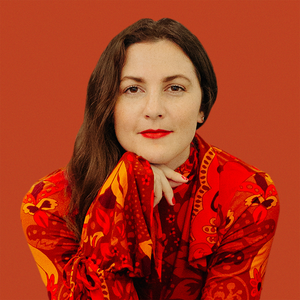
The Humanity Archive with Jermaine Fowler
CEO Kristen McGuiness reunites with NY Times bestselling author Jermaine Fowler after years apart to discuss the importance of documenting and sharing human history. At a time when everything feels like a radical act, how can we intentionally change the world by speaking to readers? From podcasting to history to falling into authorship, this episode really tackles what it means to Write the Good Fight.


Automatically Transcribed Transcript
From the ladies of Rise Literary, welcome to Write the Good Fight. Hello, and welcome to this week's episode with CEO, Kristen McGuiness and author Jermaine Fowler. Born in Louisville, Kentucky, Jermaine Fowler is the host of the top rated history podcast, The Humanity Archive, which has been praised as a must-listen by Vanity Fair.
His book, The Humanity Archive, Recovering the Soul of Black History from a Whitewashed American Myth, was an instant New York Times bestseller. Connecting current issues with the heroic struggles of those who've come before us, he brings hidden history to light and makes it powerfully relevant. Welcome, Jermaine, I'm so happy to have you here.
Kristen, thank you so much for inviting me. Yeah, we have such history together and it's glad to be back with you and speaking with you and here on your podcast. Thank you.
As we were speaking before, I, you know, it's so tough when you edit books, because a lot of times what happened with you is what happens is that you end up so deep working on a book together. And then like, as soon as you're done, you're like off that project and off the book goes and you don't get to ever see it again or even speak to the author again. So I'm so glad this has brought us back together.
And I truly, as I was saying again, before we started, I don't have favorites, but you know what, everybody has favorites. And The Humanity Archive is such a beautiful book. I can't say enough about it.
If for anyone listening, like we'll just open with a buy it right now. But I would love to hear how you came to write the book and really where your interest in history began.
Yeah, I think for me, I've got to go way back. And this is a story I kind of allude to in telling my book to a young Jermaine who is walking in the halls of the Free Public Library, which I would like ride my bike there. Every summer, I was kind of cerebral always, not really so much into sports or anything, just always into reading and books and literature.
And so I would just read my way in and out of the library. And at one point, I think I came to the realization that I was not seeing a lot of myself in the history books in school. Like there was this mountain rush more of black history figures, the MLKs and the Rosa Parks's and George Washington Carvers.
And so kind of knew there had to be more. And I went in the black history section at the library and started finding these stories of black revolutionaries and architects and black civilizations in ancient Africa and across the world. And that really opened my eyes.
So I think the book started there when I was like 13 years old in the free public library. But then fast forward to the future, older, I'm starting to realize that the path that I followed wasn't that kid in the library. I was working just various jobs.
I think I was managing restaurants at one point. I went to school for architecture at another point. I had these various paths.
And that kid came calling back to me, that kid who was curious, who wanted to learn and to share that information. So that kind of flowed into seeing the opportunities with social media and being able to kind of put yourself out there in that way. And then started sharing this history on Instagram mainly.
And that snowballed into Rebecca over at Row House reaching out to me seeing the stories I was telling on Instagram. And I was like, hey, would you like to write a book? And I'm like, you know, never thought about writing a book, but I'll try it and see how it goes.
And then The Humanity Archive was born. You being such a brilliant editor and helping me with that for anybody who doesn't know, like Kristen is just deep in the literary tradition of being able to take a book and shape it. And, you know, I take a raw author like me, who's never really written in this format before of the publishing world and helping me shape the book into the New York Times bestseller that it became.
So that's the story in a nutshell.
First of all, I love the plug, but also I loved working with you. And I had no idea, I mean, that's hysterical that you had no intention of ever writing a book, especially considering what a book you ended up writing. So was it really like just on like getting the ask by Rebecca Baruchy from Row House Publishing?
And I'll say a little bit about Row House too, is that Row House was built in 2020. We had another Row House author on actually a couple of weeks ago, Maisha T. Hill, and it was at the time, Rebecca had actually been a published author at Hay House.
She had come out of like the personal development world, but was also a biracial author and had just experienced a lot of Hay House around bias and the way that they looked at book publishing with a lot of gatekeeping, which is traditional in book publishing or had been. And obviously in 2020, when there was sort of a reckoning across many industries, and sadly, many of them have now gone back on that reckoning, but at that time, Rebecca sort of had this idea of like, what if we built a publishing house that actually brought down all the gates and we really tried to create. One, we tried to create publishing deals that were the same for everybody, that were really fair, that were author-empowered.
But also, Rebecca had already been sort of big in social media and began to really look for authors that were out there like you, who were creating this amazing content and who maybe hadn't thought of writing a book before. So, that had never entered your mind in that process. I mean, it just feels like you're such a natural storyteller.
Yeah, I mean, everything started with the podcast. So, I mean, I was already writing these stories and scripts and different things for the podcast and pulling all this research together for that. So, it was a natural progression, I would say, but I don't think I made that natural leap in my mind to go from podcast to writer until I got reached out to.
I think maybe there had been like one or two other kind of outreaches before then, but nothing like, you said, the fair and just really brilliant offer that the Row House had as far as trying to bring equity to the publishing world. And I really kind of believed in the mission of what you all were doing over there as far as that. And empowering authors even, too, to kind of like take their platform and then kind of parlay that into a book and just kind of continue in a career in that way.
So yeah, that really was the spark that ignited the flame. And now I can't wait to write more books and just continue in this. And this is that really opened up the path for me to a lot more opportunities as well.
No, and I think from our perspective, I mean, first of all, we were thrilled when you signed with us. But I do feel like your stories did naturally lend themselves to being a book. And we were joking also beforehand, we gave Jermaine this like crazy deadline, too.
I mean, it was so funny when you think back. I mean, there was so much happening during that period. We were signing so many authors.
We were trying to produce all these books really quickly, edit them. I mean, I was hopping in to Ghost Write with other authors. And like, we were just trying to really like, you know, we had all these really important stories that there was so much urgency to get them out there.
But in terms of taking those stories and beginning to weave them into this larger narrative, which I know you and I worked a lot on, how did you really get to, and I think your subtitle, we did a really good job on that, but recovering the soul of black history from a whitewashed American myth. How did you begin to see that as the through line between all these disparate stories?
Yeah, I think the American myth, it really grinds people's humanity down to a very narrow stereotypes and racist stereotypes and sexist stereotypes. And these things all have broader overarching themes, whether it applies to black history or indigenous history or women's history or LGBTQ or any of the marginalized groups that you could think of. There's overarching themes, right?
And so that's kind of where I got this idea of the American myth, right? And, you know, where does black history fall into this larger idea of how America shapes stories to uphold power, you know, systems of power and, you know, just kind of playing around with that idea. So I think that while it is a book of black history that then ties it to a larger human history and then also to these power structures that are kind of holding us all down in some way.
And then being able to weave that history. So I think that's really what has made my work a little bit different. The book, a little bit different, is always trying to tie it to the broader, more universal power structures that play and the larger universal humanity of us all, while kind of being able to kind of go back and forth to the to the macro of like black experience as well.
Yeah, so that was really my idea behind that.
No, I love that. I mean, I think as we were working on the book, and again, if you're if you're listening, Humanity Archive is so beautiful because it's really rooted in these incredibly individual stories, you know, and I think that's what you did such a great job of is that it wasn't a polemic on the system. It allowed the individual stories to speak to that system, but also really brought these characters to life that were sort of, in some cases, perhaps unknown or just not known across, they're not household names.
And in other cases, even those that were known, really diving deeper into their story. And I know that's so much of what you do in your podcasts. How did you get here?
How did you start doing that? And what led to The Humanity Archive just even pre-book?
Yeah, I think I am the reader in some ways. I think that, you know, people say writing changes the world, but I think it changes the reader. And then hopefully the readers then change the world, whether that be individually or collectively.
And so me being the reader and reading these individual stories of black revolutionaries or activists or just people from empires and ancient African history, you know, that weren't really placed next to other empires, like fairly, I don't think when you're just looking at that history, if you're learning it in school or just whatever that may be, it changed me. And then the spark that it lit for me is I want to share this information and kind of go back to my roots of like learning and sharing and of course doing that through social media. But yeah, I think that that change within me as a reader then sparked me wanting to change others in the way of, you know, using writing as a medium, podcasting as a medium or storytelling online, you know, through, like I said, Instagram mainly.
But, you know, this book really being one of the foundational bricks now in everything that I've done, hoping to change other readers one page at a time.
Yeah, I love that. At Rise we have these sayings like, writing is the resistance or books are the revolution. And I think like, I mean, sometimes I'm like, it just sort of feels like a bloated motto.
Like, is it really? But I think you're so right in saying that books change the reader. And I do think having been a reader who's been changed by books, like it does go back to that idea of like one story at a time, one person at a time, and then over time, right?
The arc of history, it does begin to bend. And I think that is the beauty, especially of the work you do. And I love to dive in to this idea of The Humanity Archive.
You know, when I work with people, I often say that the title of a book is the promise. Then the subtitle of the book is like the approach, right? It's this promise of the Humanity Archive, of that it isn't, though you might be telling it through the lens and the soul of black history, it's actually all of our histories.
And I know, I remember even years ago, us talking about that, that black history and the reclamation of black history were actually reclaiming human history. So how did you even come up with that term, the Humanity Archive for the podcast? And obviously it's what we used for the book as well.
Yeah, I mean, this idea to me of humanity. Yeah, it's the threads that tie us all together. I mean, yeah, the podcast is where that started.
And it just came from me not wanting to have to, for one, pigeonhole my story telling into a narrow, I can only tell black stories. A lot of people might only expect that I only tell this one type of story. But I wanted to really connect to all of humanity.
And again, that goes back to my early journey. Once I found myself in black history, that naturally I wanted to go into other cultures and dig and see what was missing. And then that's allowed me to start making connections between cultures.
You know, well, these people resisted the same way, or this group of people experienced the same thing, like other examples of people coming together. You know, what are the universal threads that tie us all together? People who fell in love or people who were oppressed in some way and figured out ways to resist and kind of push back against power.
And so that was really the original idea was like trying to find the universal and the individual. But like you have to go back and forth between the two and expand my own storytelling and that be pigeonholed. Like you can only tell this one story, right?
Or you can only talk about black history because otherwise it would have been called the Black History Archive. And I don't think it would have really hit the same or touched on like what I really wanted to do.
I go back to and I'll let you tell the story of the gentleman who created his own Black History Archive in his apartment. Was that in Philadelphia? I forget now the exact story of...
Yeah, that was Philadelphia. So you go back and you see such a repression of black history throughout history. And you know, there's that quote, if you deny people their own history, it's like a tree without roots.
Marcus Garvey had said that. So if you don't know where you came from, like it's hard to know where you're going. Like this history is a map that we can read to look back and see what other people have done and the directions they've gone to find our own direction, our own no star.
So you had so many people throughout black history who literally had to dig in trash cans. And then, you know, they're throwing the history away. They're hiding the history.
They're suppressing it and begin to go to museums, go to auction houses, go to like these places or travel the world. Jay Rogers is one of those individuals from like 1920 travel over to Europe and go on antique shops and go to archaeological sites and just really become your own history production machine because there is nowhere for you to go. You know, the libraries didn't have your books in them or your stories in them.
The oral histories got suppressed. So we have these brilliant individuals throughout black history who were the shoulders that I stood on to build an archive. Start an archive for the digital age, I would say, standing on their shoulders, where they're going to get physical papers.
Bring these stories into the internet more so, in a mainstream way, is what I hope to do, right? Because you're not getting them in school. History's being totally suppressed right now with these Trump initiatives on patriotic education and eliminating divisive concepts, which these are very vague terms, which we know to mean upholding white supremacist types of power structures and racist and sexist power structures.
You know, keeping the status quo, you know, make America great again going back to the 1950s. How do you do that? You suppress people's history so they don't know where they came from.
They have no North Star to fight back against it. So that's kind of the space that we're in right now is like people who are trying to preserve and uplift the archive of these stories of humanity, I would say, versus the patriotic, narrow, you know, education that we all grew up with. And I think the most empowering thing for me is like people saying, I'll never learn that or having these aha moments and then that kind of sending them down further down rabbit holes to become that reader who sparks change then.
Yeah. And I think it's in history that we build empathy, right? It's in history that we build connection.
And I mean, I remember in the Humanity Archive, it was actually the story of like the restoration in the post Civil War period in this moment of whatever shimmering equality might have, or a shimmering promise of equality kind of happened for about 10 years, right? It was around that period, around 10 years, where there was so much progress within black communities. This was, you know, the black Wall Street, obviously then, you know, the Tulsa massacre.
But it was the hope that was like, I mean, I just remember being crushed by reading that hope. And then, and then obviously seeing what happened and just, and it feels that way consistently in our history that we have these moments of hope and progress. We have this, it's almost like the tide rises up and you're like, oh, we're going to get over this.
And then the system launches its wall in front of it and pushes it back again. And we're like, okay, here we are, you know, we just lost 50 years and in four. But I found like, that is the beauty of getting to see it in the past is that it's the reminder that this is what always happens and that we have to begin to figure out a way around it.
And we have to begin to work forward. I remember Jermaine and I were working together at one point, you were like, you know, I'm not really a radical. And I was like, well, thank God I am because we're going to try to find a way to.
I always joke like I secretly try to radicalize every book I work on, even if it has nothing to do with politics.
It's not that hard to be a radical these days, is it?
No, it isn't.
Just a normal act is radical in today's times of just the atrocity that's going on.
Yeah, no, just caring for another person is considered radical right now. But I think that those ideas of those stories, they really do connect us. And I'd love to hear like post the book.
I mean, so for everybody's listening, I will say it was a very exciting moment to be on the publishing team when your book came out because it did become an instant New York Times bestseller. And it was such a thrill for a first time author, for a new independent publisher. I mean, independent publishers work decades to try to get New York Times bestseller.
That Roe House did that within a year with your book was just, it was such an incredible feat, but also really spoke to your book. So I'd love to hear, you know, what has happened since and how have you continued to build the archive and what does it look like?
I think since the book, I mean, I've been doing a lot of speaking, you know, that's kind of rolled into outreach. People coming to me like, hey, we'd love for you to come tell these stories at our university or our corporation. I did something in California, for instance, on the history of environmental racism and Palo Alto, California and how separate neighborhoods are separate and kind of segregated or they're more prone to flooding from flood zones or just how that all came about.
And opened a lot of eyes within that talk. I've been invited to tell about the history of black literary organizing and how people kind of form these coalitions in bedrooms and back rooms and salons to uplift black literature whenever that was being pushed to the side and not taken seriously. So I really found a lot of joy in that and speaking directly within groups and going around the country and doing that, but also really focusing on just trying to broaden a platform and reach more people with these stories, just telling stories in short format through like IG Reels and communicating with people there, kind of playing around with ideas for a new book as well and teaching through courses and things that I have over on my website where I'm teaching about the lies of American history or the lies of presidential power, or there's something that I came up with called Snatch, where it's about all the different inventions of marginalized people that have been suppressed.
So it's kind of always this journey of discovery each and every time where I'm, you know, surrounding myself with books as I have very many around me right now, you can't see them all, but they're all stacked on the floor and against the walls. And you know, they're everywhere. And trying to dig to find the story that's not told, give people those aha moments.
So this just really been a continuation of the Humanity Archive and building it in different ways. And I think all of my work, you know, that's what I hope to be my legacy, is having this Archive of Humanity where anyone can see themselves in history and not just the powerful.
Yeah, I love that. I mean, I love, you just, you basically came up with three new book ideas, by the way, in that conversation. I was like, oh, that one, oh, that one, oh, that one.
So what are you thinking about? I mean, are you going to try to focus in on something specific like Snatched, which sounds like an amazing book title, by the way, and also, I think, obviously, even in Humanity Archive, it was always such a question of like, there are so many stories. I mean, that was, I will say, Jermaine was on such a tight deadline that in a way was helpful though, because it didn't give you the time to really go into the rabbit hole of what stories stay, which stories don't.
We just had to run and just make choices quickly. But in terms of all the other stories, obviously out there that can be told, where would you love to focus on next?
So for The Humanity Archive, I was able to zone in on some individual stories, but I think that book was a little bit more of a broad exploration. I just kind of had this idea, well, if I can only read one black history book to just start me off, I want to write that book. So I told, there's hundreds of stories in the Humanity Archive and I kind of bob and weave and maneuver and you're, you know, you're turning left, you're turning right, fast paced, exciting, I think, journey through black history and through a lot of black history.
But I think for my next book, I would like to kind of focus in on a little bit more of the myth building, you know, how these myths are built, how they shape what we believe, how they shape our politics, our, our light bill, our, you know, what we read, what media we consume and kind of break down that structure of American myth building, because I think America is just, just so good at the marketing of, of making itself look great, making itself look benign and harmless around the world. And we have this history of imperialism. And I want to really like get behind that and see, see how the machine works, pull back the curtain and, and see the wizard you thought was this, this big powerful person, but it's just this little guy right back there, pulling all the strings.
So I think I want to dig into the myth and the machine at work to show people more of how it operates. Also, of course, keeping it grounded in the human stories because within those myths, there's always humans who are getting kind of, kind of ground up in that machine of the myth. But yeah, I think that's the direction that I would love to go is like take the myth out of the American myth part of like what I started with my last book and can kind of continue down that way.
Yeah, I love that. And I think just, you know, in terms of even organizing, right, of like seeing these like these different ideals that we've held on to these lies of American culture, that whether it's the promise of opportunity or all these different things. And I think the other side, which again, was so beautiful about the Humanity Archive, but the hope that it still can be there, right?
Because in some instances, the myth is true. And I think that's what makes the myth so dangerous is that we have examples of it being true to the point where we want to pretend it can't be false, even though we know otherwise. So I think I would love to see your exploration of that and see how you retell that American story.
And I think it's more important now than ever. I mean, how do you see, especially in this wild age? I mean, I was saying to somebody this morning, like, every time Trump is president, I feel like everybody gets into this weird yolo vibe, because literally we are like, I mean, it could all end tomorrow, you know?
I mean, that's what happens when you put a lunatic in charge. Like, there's such a sense of like, how benign and how malignant is this, right? Are we walking into World War III, or are we walking into just like a Ponzi scheme in Mar-a-Lago?
And I think that's what makes him so dangerous, because you don't know, you don't really recognize how dangerous he is, and the impact it's going to have on our American history. So, as you've continued to tell your stories, and both through the Biden administration and into the Trump administration, how do you see history to be this space where we become radical, even if radical is just simply being human?
You know, with the Trump era, there's lots being broken in real time, but there's also lots being revealed that was already at play, you know, and you're seeing the mask being pulled down, pulled off, really, it's not even up anymore. And so I think in terms of history production and how we view history, I think, with Biden and that administration, as you kind of harken back to Black Lives Matter era, 2020, Mata Abri, George Floyd, which kind of flows into the Biden era, it's how much was symbolic, right? Whenever you have now the total reversal of a lot of that energy, a lot of the corporations pulling back funding now, afraid of the DEI pushback from the Trump era, you see the pendulum has swung the total opposite direction.
I think as the people who are on the ground, like us who are writing, who are living, who are working, I think we have to just realize our place is a little bit different from what America is doing in the sense of the American, like we have to have this ground swell, I feel like, to push back with something a little more real, right? Not this, like my writing, I think, and I hope my writing is a little more real to move the reader, to see themselves in history in such a way where they feel like they can have some impact on what's going on. Even though, like you said, with the Trump era, I mean, there's definitely a lot of bait and switch.
There's a lot of normalization of the mendacity that's going on to where you feel like, hey, this is normal now, but it's not normal, right? So hopefully, like by looking at history and looking at those kind of bullet points, we can see that this isn't normal. And there's a lot of people who realize it wasn't normal, who continued to do something about it.
So we can be part of that legacy, as opposed to the larger percent of people who just kind of go along with. There's only ever been like a smaller percentage of people, I think, throughout history too, who have actually done something, or who didn't see these things as normal. And just like you said, I'm trying to radicalize the reader too, or at least nudge them to see themselves maybe as part of those traditions, as opposed to the people who just kind of set back and hope that this would go away, or hope that something would change versus trying to do something about it, in whatever way you could or you can.
Oh, I absolutely agree. And I think too, there's a piece of like, the witness can be just as powerful as the warrior. And so, standing there, and even though, you know, I think there's so many different pieces of resistance, but being able to watch it and document it and share about it and create an archive of it is its own resistance, because it's just that it also creates opportunity for community.
I mean, like the salons, right? That like, you know, maybe we're not, maybe being in the streets doesn't have as much meaning as we wish it would. Maybe it really is being in the back rooms.
Maybe it is cultivating our own culture and our own story and our own resistance, whatever that might look like. But I mean, that's where, like I say, sometimes I'm like, when we, you know, I literally have a coffee mug that says Books of the Revolution that's branded for our company somewhere over there. I was like, is it over here?
And I'm like, but I but I always do go back to, you know, I mean, the first thing they do is burn books and they jail journalists, right? So if we don't think that words are powerful, then we just have to look at, well, who are usually the, what are the first things threatened by those in power? You know, and so I do think those stories change us.
We're really already seeing that, maybe not so overtly as a book burning, but whenever you have MPR threatened or PBS, or, you know, these entities whose funding is threatened, that's automatically going to shape what books, what media, like they are choosing like it can have an influence. And thank God for the people who are holding the line and saying like, no, we're not going to be bullied into telling more narrow stories that kind of fit what, you know, the Trump administration is trying to get us to tell. But there are, there's so many people, you look up every day and some media company is buckling.
Paramount, the $16 million lawsuit.
Yeah, and then that affects, so maybe that's a marginalized writer or a production person who's not going to get a job because they're going to sway away from those stories. So that is the new age. Book burning is just the bullying and financial pressure for these corporations and media entities to start going another direction.
And then you have, again, that that is the solution. And then even Rise is quote unquote a back room kind of literary organization, not to minimize it by any means, but you are getting people on the ground and trying to empower from the ground up versus somebody getting signed with a major publisher or a major media company who is beholden to the shareholder and bottom dollar and who are going to be swayed by the administration, whichever one, whether it's symbolic on a Biden end or pressure to shut down a lot of their marginalized stories on the Trump end. The solution is always with us, writing the people and trying to build these organizations, build this humanity archive and speak to one another and then collectively push back whoever is in power.
But definitely, I feel like more urgency now than before, but the solution, I think, is still the same for sure.
Yeah, and I do think it just comes to like, if you're not sitting at the master's table, you build your own, you create your own party and you build your own stage. You find other ways to storytell that are actually more effective and they're not censored. I mean, we just, I hosted a TEDx OHI here in California in February, and we hit censorship from the TEDx community that made it really clear to us.
And we know other people that had experienced it where it was like, okay, I mean, they've got their, they have their idea of what they want to see on their stage. And it's not, they don't, they don't want radical. I mean, that's when you look at the talks that have really big listens, like you begin to see there's a trend.
It's a lot of like how to gain confidence. It's this real like, it's actually feels like Hay House is speaking up. Like 10 steps to be creative, which is great.
I mean, I'm not saying that the world doesn't need that too. But you do begin to realize that some of the biggest platforms, the biggest publishing companies, that a lot of times that like radicalism is superficial or even, you know, that isn't really progress. It's just the allure, you know, the projection or the performance of it.
And so I do think there is, that's why the back room and the smaller salon and the independent publishing house, and we're actually looking to build our own version of TEDx that removes those boundaries that we really did not feel was in alignment with true storytelling, you know? And so I think it is all about, okay, so we build our own. And that's what we got to do with Row House.
And I think it offered us a lot of freedom too, and like what The Humanity Archive ended up being, that might not have been able to exist at another publishing house that had more cooks in the kitchen, so.
Yeah, there's a lesson in there as far as keeping some control of your, whether it be intellectual property or just trying to form to the best you can, a community or business that's not always beholden to the larger corporate world. And I actually have a pretty big media project that I've had some partners working with for years, where we have been in talks with some major media entities. I can't go too much into detail, but I will say, we were in these rooms with heads of different departments, and people literally right now are scared.
So to be able to see that in real time in a project that I think could be so empowering for people on a larger scale that I'm working on based out of my storytelling, it's affecting literally marginalized stories being put out. Like this modern book burning era, just based on the fear of the pushback from these DEI initiatives, and just then circling back to, well, maybe we try to do this on our own in some way, or put this out because you don't have that censorship and it's going to reach directly to the people, and you'll have that kind of more one-to-one with them. So that's a great point, I think.
Well, I think it's something we're all trying to figure out, right? Because everybody has bills to pay too. And it's like, you want to do it on your own, and you also would like a paycheck from somebody.
And it is always that balance of like, okay, how do we really, like, how do we tell stories that are going to move people and change them, and still pay the bills, and still have power and impact? And I do think, though, that's the beauty of a story, right? It's free to tell, and it's free to listen.
And I think you've done such a great job of showing that both through the podcast and through social media and through the book. So what are your hopes next? Obviously, you've got a project going on with a media company, and you've got your courses and a potential book, but any other big goals ahead?
Yeah, I think I really want to continue what I started with the Humanity Archive and expand that through more books. I would love to get into a space where I can also expand to maybe young readers and hit this generationally, because I think that that would then solve the problem at the root to some degree of... Right now, I'm mainly talking to adults who are looking back and saying, okay, I didn't get this history in school.
Why did I never hear about the Tulsa Race Massacre? Why did I never hear about any of these stories, not only of atrocity, but these people who fought back against it? Why don't I hear the other side, for instance, of Sacagawea, the story where we only heard through Lewis and Clark and her being this guide who is looking stoic in the pictures, and they aged her up from 16 years old, and didn't say she was a trafficking victim, and that tying in to maybe the boarding schools and then the missing indigenous women.
We got this version of the myth instead of the real story that could empower us to help these communities. I think taking those stories and trying to hit that myth at the root, when kids are in school learning in 1492, Columbus Seld the Ocean Blue, which we sang in my first or second grade class, and seeing this heroic figure like, how can I empower parents to have the resource they need to, even if you can't homeschool your kids or whatever, like everybody doesn't have time, but at least we can give them something to counterbalance that hero narrative. So I'm definitely looking into that space because, I really just want to make an impact with the work and the writing and do that starting from young age to adulthood as well.
So that's where I'm looking to expand now, in addition to everything else that I'm doing.
The Humanity Archive for Kids. I'm surprised we haven't done it yet. Yeah.
Rebecca will be on it. Well, we always end this segment with a very funny piece, where we ask all our writers to give one final tip for other writers.
But we would love to hear your one great tip for other writers out there. And especially, I mean, I love that for writers who haven't even been thinking about writing a book, but are building storytelling or sharing storytelling.
Yeah, I think this definitely applied to me. Like coming into it, you can tend to romanticize the work of writing. But, you know, don't romanticize the work.
I think you, you know, you bleed the work, you revise, you erase, you edit, and then you keep going until the pages speak back to you that you're writing on. So that's that's the advice I would give to any up and coming writer. Be ready to go ahead first into it.
Love that. Yeah. I mean, there's only really one way to do it.
When you have a crazy deadline, that also helps. Yeah, definitely. I always say there's two things that will really motivate a writer, a paycheck and a deadline.
But if you don't have either of those things, yeah, you just have to jump in. And you are such a beautiful storyteller. I'm so excited we got to reunite today.
And again, let everybody know where they can find you and where they can find the Humanity Archive.
Yeah, you can follow me on Instagram at the Humanity Archive and search the Humanity Archive on Google. My podcast will pop up, the book will pop up. So yeah, I am grateful to be here and have talked to you.
And thank you so much for inviting me.
Thanks Jermaine, have a great one.
This has been Write the Good Fight brought to you by the ladies of Rise Literary. Thanks for tuning in. If you enjoyed today's episode, don't forget to rate us five stars, follow the show and leave a comment.
We'd love to hear from you. Feel free to share this episode with friends, family or anyone who might find it helpful or fun. Be sure to follow us on Instagram at Rise Literary to stay up to date with upcoming events, courses, insider info, behind the scenes fun, and so much more.
Or you can check us out at www.riseliterary.com. We appreciate you listening and we hope to see you next week for another great episode. Until then, remember, it's your time to Write the Good Fight
From Write the Good Fight: The Humanity Archive with Jermaine Fowler, Jul 17, 2025
This material may be protected by copyright.