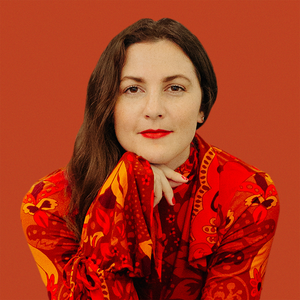
Loathing to Living and a Lot of Hustling with Sarah Gormley
On this episode, Publisher Kristen McGuiness and CMO Lauren Porté Schwarzfeld are joined by author and art gallery owner Sarah Gormley to discuss how she went from loathing her life to living it to the fullest. From writing a book to successfully marketing said book and finally feeling like life is how it should be, this is truly an uplifting episode.


Automatically Transcribed Transcript
From the ladies of Rise Literary, welcome to Write the Good Fight. Today's episode of Write the Good Fight is hosted by publisher and CEO, Kristen McGuiness, and Chief Marketing Officer, Lauren Porté Schwarzfeld. We are thrilled to invite author Sarah Gormley today.
Sarah Gormley is the owner of Sarah Gormley Gallery in Columbus, Ohio, founded in 2019 to make contemporary art accessible and joyful for all. A DePaul University alumna with an MBA from the University of Chicago, she spent two decades in marketing with brands like IMAX, Adobe, and Martha Stewart. Named one of 2015's 40 Women to Watch Over 40, Sarah's path to gallery ownership blends her love of art, storytelling, and unexpected connections, including one that led to the publication of her book, The Order of Things, which we are so excited to chat about today.
Sarah, welcome to Write the Good Fight.
Thank you so much for having me. It's a real pleasure to be here.
I will say we're excited to have Sarah back because we, I'm going to tell the story up front because we love Sarah so much for coming back. We had done a live podcast version of this for one of our recent group coaching programs called Five Days to Celebrate an Author. That's about to become Author Alchemy.
But we had this fantastic group of authors really talking about how to publish their books and what it looks like to become a published author and the different paths to publishing. Sarah came on to chat about her publishing experience in front of this group. If technologically it could go wrong, it did.
We ended up with just one snafu after the next, until we basically at the end all gave up. That's what happened. In the end, we're like, oh, forget this.
This is not our day. So Sarah kindly said, how about we do that again?
Well, we tried. We did try and we had some laughs.
We tried. It was funny. Usually, Raya can work some real good magic and this was unmagic-able.
It was. We're going to reproduce the magic here today. Sarah, what I love truly about your book, and I will admit this that when I was looking at it, I mean, the cover, your book tour, the PR, the Amazon reviews, I just presumed this was a traditionally published book.
In fact, when I look at books, I can typically see from the outside, it's like, oh, that's probably a big five book or an independent book, and in some cases, self-published. But I never would have guessed your book was self-published. I mean, you just had such a phenomenal campaign around your book.
So, I would love for you to share about what your journey to choosing self-publishing was. I know how hard it is to self-publish, but truly, what made you finally decide, you know what, I'm going to still do this, and then chat a little bit about that campaign, too. But I'd love to hear the impetus first.
So, I started writing in 2020, had a full manuscript in a year, fall of 21, pitched to agents, both of whom were interested, both provided similar feedback on the structure and the overarching sort of storyline. And so, I took their feedback. Editing was really hard for me.
Like, it was very painful because, you know, giving up the babies and, you know, I cut out huge swaths of the original manuscript, but it got better and tighter. And by the time I finished it in November of 23, like, I knew enough from friends who are traditionally published authors and aspiring published authors what that road looks like. And I'm wildly impatient and I'm a control freak.
And I also had been told from the folks who had these deals, you have to do the same amount of work anyway. I mean, unless your name is Maggie Smith or Barbara Kingsolver, you're doing your own publicity, right? So I was like, I'm just going to go, because I couldn't wait two years.
And somebody recommended a group called Girl Friday Productions. And I just called them up and said, this is who I am, this is what I'd like to do. They have a menu that you sort of choose from.
But to say it now, your introduction was so generous and so kind. Now it's been out a full year and it looks like I knew what I was doing. At no point did I know what I was doing.
And I truly, if there's any aspiring writer listening, the idea that you can imitate or do what somebody else did, or that there are certain things that if you do them, if you do X, Y will happen. That is not how this industry works. That's my top line.
You just have to make it up as you go and go. So that's what I did.
Well, I think it's interesting. Choosing to self-publish is not easy. And I think, as you said, figuring out along the way.
First, I would love to hear more also about writing the book. And then in terms of writing it, memoir is such a vulnerable experience and act, really. And so, I had this experience in my last book, Live Through This, which is fiction, but it's definitely very auto fiction.
It's very much based in my life and marriage. And then I was also its publisher, which was interesting because you're out there selling your story. So I'd love to hear a little bit more about the order of things.
But then what did that look like for you to really be, because you kind of have to be both the, you're like both the team and the cheerleader. You're out on the field and you're also having to be like, rah, rah, rah, you know? And so it is hard to play that double duty, especially for a story that's so intimate as your own.
So how did that feel for you? And also what was your process of deciding to write the order of things?
I'll start with the decision to write. I've always loved writing, was a lit major and primarily wrote poetry up through college and just for fun. I've done some workshops on first person narrative and essays.
And the catalyst to writing the book was I was sitting at a gas station crying, hanging over the side of my steering wheel and some man, this was in Ohio in 2020, looked over at me concerned, you know, ma'am, are you okay? And I was crying. I cry a lot now.
And I was like, yeah, I'm good. I'm so good. I can't believe it.
Like, I'm so happy. I can't believe it. And what you'll learn in the book is that most of my teen years and all of my adult life through truly about age 42 or 43, I was just filled with self-loathing all day, every day, carried it around.
And so in that moment at the gas station in Ohio, in response to this man's attempt at an intervention, I was like, I mean, I, it's, what happened? How did this happen? How did I go from being a pretty miserable, emotionally struggling marketing executive living in San Francisco, working in big tech, to a woman who feels wildly fulfilled living in Columbus, Ohio, I own an art gallery and I'm madly in love with like the greatest man ever.
Like how did that happen? And so I started writing. And I was doing workshops with Ruthie Ackerman.
I don't know if you know Ruthie weekly. And so Ruthie really got the first draft out of me through the workshop process in one year.
That's awesome. And then what was it like to go and share that story with others and begin to pitch yourself? I mean, and I would love to hear what your PR campaign looked like.
I know you come from the world of marketing. So did that help guide you in how you put together your book campaign or?
I love that you keep saying campaign, like there's a document somewhere.
I know.
I mean, I must say, your book experience, I don't know how else to describe it. I mean, again, like I said, I think you did a fantastic. When I looked at your book tour, I was like, damn girl, like, it's hard to get into bookstores.
Like, that's impressive.
I knew I had to do it myself. I was very nervous about the story coming out in the world. The people I was most concerned about, though, were my brother and my sister and Camillus, my partner.
They all read it in advance and were like, this is amazing. Go for it. Don't change one thing.
So then, you know, I mean, I have a lot of friends. I'm old. So I thought my friends will like it and be nice, right?
And then I was like, the Kirkus Review came out, which was glowing. I was like, oh boy, maybe it's not awful. And then I got through the first ring of just like, friends and people who are going to say nice things.
And then as that circle got bigger and the responses were really encouraging, I was like, okay, you know, people are interested in this story. And I've touched some universal themes, grief, loss, love, midlife career pivot, you know, things that people are interested in. And in terms of like the events, I only really went to some local bookstores, and then the one in Chicago and in Bedford, where people who knew me, who asked me to do something.
So I've got like zero bookstore presence, because I don't have the distribution. And why would they, they don't even know who I am. There are being, you know, four million books come out a year.
They're like, who's Sarah Gormley? So I just sort of skipped that. And I planned events in cities where I know people, and I had ticketed events, and the ticket included a signed book, and I covered my costs.
So I did two or three here in Ohio, New York, Chicago, Minneapolis. You know, the Chicago one had 70 people there. And we had a party.
It was so much fun. So I just, but I really just made it up. That's not true.
By the time launch date, you know, publication date hit, I had five things scheduled out, sort of the five tent pole events. The rest of it, I just kind of really made up. I mean, and I still don't know.
I'm a very tough critic on myself, more so than others. And so, you know, should I have done something differently? Should I have done that?
Somebody told me I had to have a newsletter. I'm like, I don't have time to have a fucking newsletter. And what am I going to say in the newsletter?
I wrote a book. I want people to buy the book. I'm not going to write a newsletter to try to help sell a book.
I mean, but again, there are a lot of people that tell you what the right steps are, and I'm not sure that you have to have a good product. And I feel like the book is pretty good. So does that answer your question?
Absolutely. Yeah.
I think whether you went into it with a solid strategy or campaign, you started doing things and then you kept doing things.
Correct.
And you kept showing up. I mean, your social media presence was consistent. Yes.
You did have one thing that might not have been directly book related, but it is in the book, and it certainly helped you go, I'll say a little viral.
Oh, yes.
And got shared all over the place, which then links back to the book. You want to talk about that fun little recipe that's in the book that is like a little recipe for success. I mean, everybody loves a cookie.
Everybody loves a chocolate chip cookie. And if you can, I mean, I'll say my takeaway from your marketing campaign is if you can make a really good chocolate chip cookie recipe and stick it in your book and make those cookies over and over on Instagram, do it.
I know. But so in that, I'm making this face because I was really reluctant to lean on that angle. So for those who don't know, I worked for Martha Stewart.
She fired me in less than a year. After she fired me, I spent three months, four months perfecting a chocolate chip cookie recipe. And much like I knew the cover of the book was beautiful, so if the book sucked, at least it would look pretty on a coffee table.
I was like, I know these cookies are the best chocolate chip cookies anyone's ever had. So I'm going to put the recipe in the book. Am I an idiot?
Did I not think it might get some attention because of the title of the cookies, which is Martha Stewart Fired Me Cookies? Sure. But I will also tell you that I'm not, I don't know, it went viral, more than 10 million views, whatever.
I don't know that it turned into book sales. A few people have commented, heard about your cookies, bought your book, loved it so much. The only thing that I know that had a direct correlation to sales, were the Huffington Post story and the People Essay.
Because you can go on and see sales in those 48 hours. But yeah, the cookie thing was kind of fun. It's a little tongue-in-cheek, but also the cookies are just really good.
Yeah, but I also think that I think if you can create a way where you're putting yourself out there in a fun way. I mean, we talk about this all the time. Once you write your book, once you put it out there, so many authors are like, I'd like to hide under the covers now and not talk about it.
And if you can create a way for you to have this book out there that feels really vulnerable and also do something that feels really fun and engaging with the outside world, and also makes people want to be like, oh my gosh, I ate your cookies. They're amazing. Like, you've created this fun thing, and people know your name because of it.
And I will say, again, I'm trying to be as transparent as possible because I might be helpful to another writer. You know, did it lead to sales? I don't know, but, you know, Katie Couric reached out to me and on Instagram and says, have we met?
I'm like, no, we have not met. But so the kind of the notoriety from the cookie thing, at least now, if people go to my Instagram page, they see that I have almost 60,000 followers, which is not because of the book. It's because of the cookies.
But I try to just be myself and it's fun. It is playful because the memoir and the vulnerability that comes with putting yourself out there like that is really hard. And some of the cookie stuff help me get more comfortable just talking and posting things.
So it's all related. And we'll have to see. Let's see what happens in year two.
I also saw your post last week because you just finished the one year anniversary. And I saw your book sales from the first year. And I'm going to say 5,400 books in one year is, you know, nothing to shrug your shoulders at.
I don't know what the quotes are for that. But yeah, that's phenomenal. And I don't always think it's a straight line.
I don't think you need to be like, I don't think everything needs to be like a KPI that you're analyzing of like, I did this and this is the outcome from it. Like, it's the whole experience. You're a whole person and like, all of the things that you did created this year that you had.
I know. And it was now, like there were moments though that were super not fun. I had some very dark days.
And like Kristen said, I had to be the team and the cheerleader. And there were days where like the team gave up and the cheerleader took off, you know, put her pom-poms down. And I was just like, what did I do?
She was smoking cigarettes under the bleachers, going, this was a dumb idea. But so, but I continue to get like, I'm really proud of myself. It's the hardest thing I've ever done.
And, you know, is it a perfect book? No, but it's the best book I could write at the time. And, you know, the one thing I do say when I speak to other writers, like, you better love your fucking book, my friend.
You better believe in it because nobody else is going to believe in it as much as you. They're gonna say nice things, and then they're gonna read the next thing. They're gonna go to the book club and say how much they love it, and then they gotta go home and take care of the kids.
The person who has to be celebrating your book every day is you. So, you better write something you love. Especially if it's a memoir.
Probably different for fiction, but...
Well, I mean, I think it's true in all genres, definitely, and I think there's something. I mean, this is what I always say. I know we do a memoir workshop as well, and I always say one of the biggest pieces of that memoir workshop is actually people reading their memoirs out loud to each other, because it's like in that experience of reading your book, that one, you actually get comfortable with what you've written.
You begin to get that positive reinforcement on it that builds confidence in yourself, but also you get confident in sharing the book. And if you're not confident in your book and confident in sharing your book, then you're going to get terrified of your book. And we do publishing as well.
And so we've been through that experience of what does it look like when an author's book comes out, and suddenly they get terrified. It's like you get like PPD and you don't know what to do with the baby. And you're like, Oh my God, what am I doing here?
I don't know how to do this, this was a crazy idea. Like I don't want this. And then you feel horrible because you're like, I went through all of this to have this book come out.
And so I think there is something really about, you know, prior to the book coming out, like in the writing process, in that editing process, getting really comfortable and confident in what you've written so that should that day come where it gets published, like you are ready to be its number one cheerleader. Because no matter what, I mean, as you said, right, even if you get a big deal with a big five publisher, unless you're one of the 1% of names that gets all the attention in the world, you're still going to be the cheerleader, you know? I mean, you're still going to be the cheerleader in the team.
Maybe you'll have a few more cheerleaders that the publishing house has sent in. But there are, and I tell this to our authors all the time in terms of even us, we're a small independent publishing house. But like if we're working with an author who doesn't seem to care about their book, are we going to give them our time in attention?
Are we going to give our time in attention to the author who's really dedicated and is really out there and is hustling for their book? It's like, well, no, we want to support that person. It becomes really hard to offer finite resources to an author that's just scared and not willing to get out there with it.
So I hope for you this has been a great experience that should you write another book, you'll be, you might actually call it a campaign next time. But I would love to, go ahead.
Oh, no, no, no, I was going to say, I'm working on the second book and already it's so much more fun. I mean, I'm so excited for the next book to come into the world. I'm having so much fun in the writing of it.
I'm already like 15,000 words in and it's going to be a shorter book. But like, I wouldn't feel this way about book number two if I hadn't done book number one because you just don't know. And so, it's starting to sort of pay dividends a little bit and I'm going to have a super fun October and I've lined some things up all because I hustled in year one.
So, we'll see. But I like that you use the word hustle because that's what it is. And I think hustle feels like, I don't know, I'm like, what are you doing today to talk about the book?
Figure it out. Go, email somebody. Get used to rejection.
That sucks, but it happens.
Well, and I think it's just like you constantly have to put yourself out there. And even if you're doing something that people aren't paying attention to, or you don't feel as like, who knows whether it's going to have value? Like, it's just about putting out that consistent energy for something that ultimately I think attracts people to it and attracts the energy back.
I would love to dive a little bit into your writing of the book. I know you did it in a workshop, but, and even now maybe in the writing of your second book, what does your process look like? I mean, do you write in the morning?
Are you all over the place writer? Do you have any kind of consistency or structure? You just throw in pain at the wall?
I have no discipline. It's like, you're like, why did we ask her to come on? But I have no structure.
How do the duets don't work?
I have to have deadlines. So my editor is Christy Tate, who's phenomenal. And I'm about to email her after this call and say, I need a deadline.
Tell me, we're going to talk about pages on Friday. So I have to send her something on Thursday. So between now and Thursday, I'll try to do like 2,000, 2,500 words.
I have to have the deadline. Otherwise, I have a lot going on. I have the gallery, I have other life stuff.
I have promoting the book. And so for me, I let writing, you know, there's no, I don't have to do it. But I, it's just, it's, you know, it's a crazy thing.
It's like, there's nothing more joyful, but I'm still reluctant to do it every day.
Oh, totally.
It makes no sense. Yeah.
Well, I think like anything, writing is one of those things that once you're in the flow of it, you're like, oh my God, I love this so much. But until you're in the flow of it, it's, I mean, I just posted something yesterday from Joan Didion, who was like, I like writing, and it is not a lot of fun. And I was like, yes, it's, I mean, it can be once you get into that flow, but approaching it, sitting down to do it can feel very like, I've got to do this, you know?
And inspiration, like inspiration doesn't step into you, you have to step into inspiration, you know? And so I do think it's really like, it's not like all of a sudden you're like, oh, no, it's like the thing you love the most, and yet it is always last on the priority list.
Exactly. And I, part of my process is a lot of thinking about a particular chapter. And so yesterday I had had an aha about one of the sections I owe Christy, and I'm like, oh, yeah, that's going to go in there.
And so now, later today, tomorrow morning, when I start writing, because I've thought about it for seven days or eight days, it will be better. So I do a lot of that. And some people in my writing workshops, I'm very lucky.
I tend to almost be a, like, first draft final. Like, I've thought about it so much by the time I get the sentences down. It's generally what ends up staying in.
So we'll see. But it's, I feel like I'm very lucky to, I have a hard time calling myself a writer. I have a book in the world, I probably should, but I feel very lucky.
I feel very lucky to be able to write. How about that? Yeah.
I'd love to hear more about, like, do you feel like owning the gallery and now being, I mean, what did that look like for you, leaving behind a marketing career and getting into the art world? And how did that influence your writing? And how does that influence even the story you're telling now in your new book?
First of all, everything is better except for the money. So, I mean, this is, I 100% am not making this up. My financial advisor six months ago was like, Sarah, I love the gallery.
Love it. Love your passion for it. I love your book.
I love your writing. Could you please find something you're passionate about that would make some fucking money? I was like, no, I don't know.
So it is maybe, maybe, maybe if I just sell $20,000, 20,000 more books, I wouldn't have to maybe get a job again. I don't mean to be so cavalier about it. But the truth is, yeah, the corporate life, I mean, working at Adobe afforded me the last eight years of not making a ton of money, but being able to open an art gallery and being able to write this book.
And it's just, it's a blessing. And again, I'm just so grateful for the opportunities. And I'm proud of myself for taking the chances.
I think a lot of times when we're reluctant to change, it's uncomfortable. So giving up those things that you've known for so long, it was wildly uncomfortable, but it's wildly fulfilling. So we'll see.
And my life is going to look very different a year from now than it does right now. And it's taken me about three months to get my head around that. Like I probably have to get some type of consulting gig, the Mr. Man and I will move in together.
That's a big change. And so I'm just like, oh, I kind of like this. I own an art gallery and I'm a writer.
And there's probably going to be something else.
Well, and I think that's the dance of most creatives, right? And I think that's the lesson too, that like, you know, I actually wrote about this last week. And because I do have a newsletter, but I do feel the same way, right?
It's like, okay, what do I write about? But I mean, thankfully, I feel like I get enough out of my job where like these conversations always lead to ideas. And so, you know, I was saying, like, I think for a lot of folks, we do think that like, you know, it's either the day job or the creative life, but they can be very much integrated.
And if you aren't, you know, independently wealthy, a lot of times you have no choice. And I will say, I mean, in my own experience, I've had a day job multiple times. I mean, many times in my life, I had like a full-time day job.
And then I wrote at night. And that was actually when I was most productive and prodigious, because there was something about the day job that, one, I usually wanted out of the day job, because I'm just not a day job type person. I'm so grateful I'm not in one right now.
But I mean, that nine to five, I was like, I need to write my way out of this. And I would like be really motivated to like write the project I thought would get me out. And in both cases, it did.
Like in both cases, those creative projects ultimately, like were my pathway out of that job. But also, there's something about a body in motion that stays in motion. And I think a lot of people think, you know, oh, if I have a full time job, like I'm gonna, I'm not gonna have enough time to write the book.
And I always say like, I remember one year, I actually went and did a master's in Paris. And I thought, oh, I'll write the great American novel. I'll be in Paris, I'll be in cafes all day.
My master's program was kind of like a joke. I barely had to go to class. So it ended up being like a really lazy year.
I didn't write a thing. I came home to LA to work on my master's thesis. And we just happened to live in a house where we could rent out rooms.
So we didn't have a lot of bills to pay. So I didn't have to take on a lot of work. I could have also finished that great American novel I had dreamt of writing.
I watched Game of Thrones and Walking Dead. At that point, there were multiple seasons of Game of Thrones and Walking Dead that I had never seen. I spent like six months and like every season of Project Runway ever, and like never wrote the great American novel.
As soon as I had the job where I worked 40 hours a week, I wrote the novel, you know? And so I think there's this thing that like, we get into our heads that we have to have this like creative looking life to be creative. But actually a lot of times, like it's the pressure, it's the deadline of like, I want to get out of here.
And it's also the time management that happens when you have more on your plate that really does help you to write.
And also I'm gonna do the thing that Kristen, I know you love it when I do, but a few months ago we interviewed the author and creative Rob Bell on our podcast. And he was saying that when you have that finance, Kristen loves it when I quote Rob Bell to her. Quote Rob Bell.
When you have that like finance piece kind of buttoned up and it sort of like takes care of that column of things and then you just have this creative world off to like be whatever you need it to be, it like really changes your relationship with whatever it is you want to create in a really kind of like magical way. He was using the example of like sometimes people just go and get like a job at Trader Joe's and they're like, I can pay my bills and I'm fine and like that's what the finances are. And now we can go over here and just create whatever I want.
Not that I anticipate you getting a job at Trader Joe's, but like having like the finances like buttoned up over there and like the creativity is whatever it needs to be.
Also, I don't expect you to come visiting anytime soon, but I do expect you to visit. Columbus is such a cool city. And once I stopped palling about the idea that I might have to get another sort of job, like a real income, I started networking about it and already like three opportunities have come up that are like so amazing, so kick ass, that keep me dialed into the community and the arts vertical.
And I'm like, Sarah, your life could actually get even better and back to the busyness and the productivity. It's like, oh yeah, if I'm doing something 20 or 30 hours a week, then I'll probably become a more disciplined writer because I want this second book to come out in the world. And I thought about like, maybe I try to sell the second book.
How about that? I don't know. Figure it out.
Hustle. Just keep hustling.
Yeah. And there's so much that comes from like putting yourself out there, being in the world in like a different kind of way, that just kind of like gives you new life. It's exciting.
It is exciting. It's fun and it's exciting. And like everything can stay the same, and what makes it exciting and fun could also make it terrifying.
And the only person who can control that is you, right? And so it's like nothing has changed externally. But three months ago, I was like sad and feeling sorry for myself and lying in bed.
And so it took me some time to like recognize like, hey, you can create the next year of your life, however you want and come out with a second book, some really fascinating thing where you're contributing to Columbus differently and have the art gallery, like go do that. Let's go. So it just took me a little time to get there.
I mean, the creative journey, if we just allow ourselves to be open to it, you know, it's I mean, I actually had this experience last night. We were at the Ani DeFranco concert and my friends and I were sitting and it was like an opening band. So we were all chatting and the girls in front of us like turned around and they were like, can you please be quiet, which was fine.
They wanted to hear the band. But we saw these like open seats that were actually way better. And we were like, let's just go sit over there so we can chat.
So we went and sat over there and then no one ever came. And then these guys came over and they were like, oh, these are the best seats. No one ever buys these seats, but these are the best seats at this venue.
So we all then became best friends with them. We all ended up hanging out. We were like, you know, it's just such a reminder that like those points of frustration that you think are limitations are actually opportunities if you just are open to them and see that actually they give you, they offer you a better view, you know?
And it's like, and you can get like pissed and be like, no, I'm just gonna stay where I am and be mad that things didn't work out the way I want them to, or you can be like, hey, you know what? Over there is like a much more like free, and we had like a whole area to dance. Like, you know, it's like we got to be dance and be free.
I was like, we ended up in the liberated seats because we like allowed ourselves to like not be, you know, not be frustrated by a challenge. We were like, we took a very deep life lesson from it.
But I love that, that's a great...
But it was, we were like, that is, it's like, you know, instead of like, it's so quick to be like, I'm just gonna be the way I'm gonna be, you know? And it's like, no, like, just being, just go where the road takes you.
That's your newsletter content for next week.
Yes.
The Anna DiFranco analogy.
Substack for next week. Yes, it's a great lesson.
It's a great example. Oh God, I don't do substack either. I have, like, three posts up there.
So I'm like, when am I supposed to write the substack thing? I don't know. It's a lot.
It's a lot of content, Kristen and Lauren.
I know. It is. It is.
It is. It's like, how much can I really write? I mean, I have chosen right now to not work on a book because I'm working on my substack.
And I had, I mean, I did make that conscious choice because there was a project I had been working on. And I was like, okay, I only have X amount of hours in the day. And, you know, and so I do have to like actually, you know, sometimes you can't get to do it all, right?
And so I realized, I was like, okay, I actually really enjoy it though. And I have, since it is my creative outlet right now, I'm using it as that. And I'm like, okay, I'm not working on a creative project.
So instead I am getting to pour that into substack. And I do think, I mean, you said it before. I mean, I just think it's all about the hustle.
It's all about putting it out there. And again, I mean, it's not hustling for the sake of hustle because I do think, I mean, I had this experience a couple of weeks ago. I was writing the substack and I was having so much fun writing that actually I got that joy that I hadn't had in a while where I was like, oh, I love this.
Oh, that's right.
Like, I love writing. And like, so I think that like wherever you find that outlet that just brings back that reason why we do it is awesome, you know? And so whether it's you're working on your next book, whether it's you're working on a substack, whether it's social media, whatever it is for somebody, as long as you find you're like your thing, that you are finding your joy in writing again, you know, that's all that matters, at least to me.
So, well, Sarah, before we let you go, I don't think we got to do this with you last time, though maybe we did. I can't even remember. Everything had fallen apart by the end, but we like to finish all of our episodes with a fantastic writing tip from our guests.
Oh, God.
It's so cliché. Just keep writing. You have to just write.
There's no perfect path. There's no answer. There's nobody else who has done it the way you're going to do it.
And it's sort of like write from your heart and write for yourself and then see what happens. I don't know. I really, I've become sort of the preacher of memoir.
Like everyone should write a memoir. And I mean it because you learn so much about yourself and you learn so much about how you connect with other people. So it's a gift.
Well, no, it is. And there is no perfect path. And I think everybody has to find their way to it.
And we love memoir too. So I think this episode will be coming out in time. Our memoir class actually starts on Sunday, September 21st, called Five Months to Memoir, where we work through the whole memoir writing process in a group we meet every two weeks.
So if anybody's listening here at the end and you're interested in writing memoir with Rise Literary, you will still have a couple of days to sign up. I think this goes live on Thursday. But I know that, Sarah, I mean, again, I've loved watching your book be out there in the world.
I think you have done a fantastic job. I mean, also, you know, when you posted the sales the other day, I too was like, oh my god, like, I wish that's, it's really hard to get a book to sell. It really is.
So kudos to you. I hope you take a minute to breathe it all in from time to time and realize that you've done something really fantastic. And I know it does take a lot of hustle and muscle to do it.
But congratulations. And I think it's amazing that your beautiful book is out there in the world.
Well, thank you. Thank you for having me. And if there's ever anything I can do to be helpful to you or your students or anything, you know where to find me.
Well, and now we've dialed in the technology, so we've got it.
Yes, you've got it.
This has been Write the Good Fight, brought to you by the ladies of Rise Literary. Thanks for tuning in. If you enjoyed today's episode, don't forget to rate us five stars, follow the show, and leave a comment.
We'd love to hear from you. Feel free to share this episode with friends, family, or anyone who might find it helpful or fun. Be sure to follow us on Instagram at Rise Literary to stay up to date with upcoming events, courses, insider info, behind the scenes fun, and so much more.
Or you can check us out at www.riseliterary.com. We appreciate you listening, and we hope to see you next week for another great episode. Until then, remember, it's your time to write the good fight.
From Write the Good Fight: Loathing to Living and a Lot of Hustling with Sarah Gormley, Sep 18, 2025
This material may be protected by copyright.