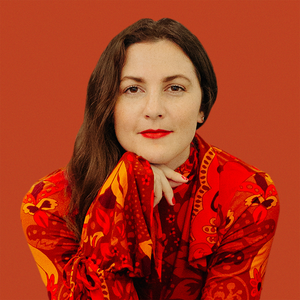
Learning to Live a To-Die-For Life with Karen Salmansohn
CEO & Publisher Kristen McGuiness is joined by multi-bestselling author and leading Behavioral Change Expert Karen Salmansohn. An inspiring conversation, not to be missed, these two dive into topics about life and death, writing the book that needs to be written, and the power of female friendships.


Automatically Transcribed Transcript
From the ladies of Rise Literary, welcome to Write the Good Fight. Today's episode of Write the Good Fight is with publisher and CEO Kristen McGuiness and multi-best-selling author Karen Salmansohn. Karen is an author and leading behavioral change expert with over 2 million books and online courses sold.
Plus, the creative force behind the popular personal development website notsalman.com. Her career began in New York's top ad agencies, leading her to a successful transition as a thought leader in personal development. Today, Karen not only focuses on developing life-boosting, best-selling books like How to Be Happy, Dammit, and her soon to be published or rather most recently published book, You're to Die for Life, as well as courses like The Anxiety Cure and Tweak a Week.
Karen also uses her extensive experience in branding, marketing, and SEO to coach other authors and entrepreneurs to achieve significant growth in their business. Additionally, Karen is going to be joining us on Friday, October 3rd at Book Magic New York City for a live event we are having in Manhattan at the Arlo Midtown. So I'm super excited to be talking to her that day.
And if you are listening this week, feel free to sign up if you're in the New York area. So Karen, I'm super excited to be seeing you both here and soon enough in person. Thank you for coming on the show today.
Well, it's so great to be here. And I'm very much excited for the event. It's going to be awesome.
We can't wait. It's such a great group of people. And I have to say, I know we just did an IG live about this.
But back in, I mean, it shows the power, though, of female friendships and female networks, because last March I was in New York for our last Book Magic event, which you attended, which was like a smaller version of what we're doing this month, or rather in October. And there was this fantastic dinner with all these amazing women. And I joked that like half of them are now part of this Book Magic event next week, because they are.
And I really do love how women come together and work together. And I also think it's such an important part of how we publish books. So I would love for you to share sort of how your book career came to be.
But also, you know, I know you mentioned before about writing being such a lonely experience, which is great if you're an introvert. But as I know, book publishing is actually such a community-based experience. And how have you seen community show up in your incredible publishing career?
Well, I do feel like it takes a village, a village of really wonderful women, to keep you going and to get even feedback as you're coming up with the idea. Like, you know, some people say that you should wait until the idea is fully formed to share it. But if you have trusted colleagues, friends, experts in the fields, like what you are having at your event, it's good to get those eyes on it and that feedback, even in the early stages, to help you to notice the blind spots or even to fan the embers of things that you might think are like, oh, well, that's an okay idea.
And they're like, oh my gosh, no, that's your big idea to find out where the golden nuggets are in your book. So bringing in people even in the early stages is really helpful.
I love that. I mean, I think that community is such a huge piece to also like that positive reinforcement as you're writing a book and as you're beginning to share it. And I would love to hear like, I mean, again, you've written so many books.
What is your process in writing? Do you have like a writing community or do you just share it with your editor? Or what has your writing process looked like over the years?
Well, I'm lucky in the way that I have very smart, funny, talented, creative friends. And so they have been, you know, definitely helpful. I'll send them pages, even knowing I'm going to send them the pages.
Like I'll write a chapter, I'll press send, and then knowing that my friend Bonnie is going to be on the other end of it, reading it. I then rewrite it again, like what is Bonnie going to say? And then I notice things, you know, after I press send, I suddenly become much more wiser about what it is that I'm writing.
So that's been a part of it. And then lucky to have had agents that I also have trusted, felt like they were, you know, brilliant, smart, creative, all of those things where you feel like they're stretching you to become the best writer that you can be, which is what you're offering with Rise Literary, which I think is fantastic. But I do like to percolate alone.
I wake up early, I wake up at 5 a.m. and I just sit, you know, without any distractions and with that quiet time is when I do my best writing. So my best writing is probably like 5 a.m. to 9 a.m. and I get it all done then. I'm not like an evening writer.
It's the morning for me in the quiet.
Yeah, in the quiet. And do you, I mean, how long does it take for you to write a book right now? I mean, I think you've done, I mean, I know I've written, I've ghostwritten a ton of books.
So I think in writing a lot of books, you do speed up your process a bit. And I'd love to chat about Your To Die For Life. And what was this writing process like for you?
Okay, well, that one had been percolating in me since my dad passed, because it was, unfortunately, inspired by his passing. I say I wrote the book for two reasons. I wrote Your To Die For Life because when my father passed away, I became really awake to the idea that life is short and that we're here, that we're not.
It's up to us to do everything we can to make the here part as meaningful and bold and brave as possible. Something happens when you really understand, I'm going to die someday. It actually helps you to live better.
And things that you're afraid of, instead of like, oh, I'm afraid to write that book, you're more like, I got to write that book. You know, you don't want to die with the music inside of you. So it changes things.
You become bolder. You want to live more authentically. In the book, I looked at the top regrets of the dying, all of them, and then I reverse engineered each one and thought, what do I need to do now so I don't die with these regrets?
And in the book, I also have people write their own eulogy. And for a lot of people that might have a little too much creepy, crawly factors, so I made it more fun. Yes, fun and eulogy in the same sentence.
But I have like this Mad Libs type template where you fill in the blanks on what you want.
I love that.
So it makes it easier.
I love that.
But that book kind of, I've been wanting to do that book for a while, and my agent at the time kept talking me out of it, because she was afraid of a book on death, because I usually write books about like, how to be happy, damn it, is one of my books, and the bounce back book, which is about resiliency, psychology. And she thought death would be too much of a downer. But I knew that I was going to still bring humor to it, because I can't help it.
That's kind of how I process life and how I write and everything. So I ultimately decided... Well, actually, I'll tell you the little story really quickly.
I was listening to her about not writing the book. I've been wanting to do it for a while, and I thought, oh, well, she doesn't really think I should do it. And I was listening to her.
And then it started to, like, get into my CROA more. I really, really need to write this book. And then again, she shot it down.
Nobody wants a book on death. Stick with the happy. Stick with the happy.
And then I remembered when I wanted to do How to Be Happy Dammit back in the 1990s. And that agent at the time said, no, nobody's going to buy a personal development book with the word dammit in it. Like, she couldn't see the vision.
And back then, I thought, you're wrong. This is a book that I need to do. I know it's going to do well.
And I thought to myself with this new book, I thought, I guess when I was younger, I was feistier, I was bold, I was more of an innovator. And then I heard myself say that, and I thought, wait a minute, I'm still feisty, I'm still bold, I'm still an innovator. That hasn't gone away.
I'm going to write this book. And then I let that agent go, found another agent and sold the book. And now it came out and it hit like number one, new release in a lot of categories and it's been getting really strong reviews.
And I'm really excited about it. So I listened to what I knew I really my gut felt rather than... That's where you have to listen to what the people around you say, but then know when to really trust your own gut with things.
And then the book poured out of me. When you know you have the right book, when it does pour out of you. It was like it only took about six months to write, which I think is pretty quick for a 256 page book.
Yeah, I love that. The market doesn't always know, and the industry doesn't always know. I mean, I think the market knows.
I mean, there's people out there who want to buy and they want to read a book, but I've been talking a lot about like memoir and this pushback in the industry against memoir. And I'm like, that just doesn't make any sense. Like I had actually looked up the data on it and the top selling books at Amazon or memoir, the number one genre that hits the New York Times bestseller list is memoir.
You know, women predominantly read memoir and read most books. So, you know, I was like, I don't think it's actually about the market. I think it's about the gatekeepers to the market.
And I've also seen this of like, you know, this risk tolerance where like people are afraid to take risk, but yet that's what sells, right? Like it's not this middle of the road vanilla book that does has nothing to say that doesn't sell. I mean, so these ideas that like safety sells, that's not true.
I mean, you even look at Liz Gilbert, no matter what you might think of her or her most recent book, that thing is selling, right? So, and probably there were probably a ton of people that were like, do not tell these stories. And yet, right?
That's what's, you know, again, you can have complex feelings about it, but nonetheless, like risk is ultimately what turns into reward, especially in book publishing.
So, yeah, and I forgot to mention that How to Be Happy Dammit was a big, you know, bestseller, like a quarter of a million books sold, was in an M&M video of the musician. You see him holding the book and the camera pans by him, PBS documentary, like the range of M&M video, PBS documentary on happiness, it was featured, and it keeps selling and it spawned two more sequels. So, but I also felt like, I remember in both cases and in each of the books, I felt people need this book.
Like, I really did feel that way and in talking to people and reading what was going on, that was even part of it. Yes, I wanted to write the book, but I felt it, because I write nonfiction versus memoir, though it's probably the same with memoir too, there is a pain point in people right now that they need this book. And how to be happy, damn it, had the damn in it, not just because I wanted to be attention-getting, but it was before there was even something called positive, what's it called?
Toxic positivity, that didn't exist yet. But I felt like I don't want to write a book that's just like, be happy. It's like people feel damn it.
And that's why I put it there. It wasn't just to get attention, it's how I felt people felt. And I wanted to talk to them on that level.
And I felt there needs to be what I call self-help for people who wouldn't be caught dead doing self-help. Or self-help that you could give to a friend as a gift, and they're not going to punch you because the book feels kind of cool, and they feel like, you know what, I might really benefit from reading this. And that's why I kept moving forward with How to Be Happy Damn It.
And same with this book about, you know, Your To Diaper Life, because I do feel, I started to feel like we're starting to get a little more open to talking about death. You know, it's still up there in the things we don't want to talk about, the taboo. I mean, now we'll talk about gun control, abortion.
We'll talk about everything. But if you talk about death, people don't know what to say. I wanted to open up a conversation.
I feel like it's time for that. And I also started to feel at my age and knowing my friends and even colleagues, we're starting to have, you know, friends around us that have health issues, or people that we love passing. And this helps people to really tiptoe into what is, what is it like to deal with the death of a loved one?
How do you use that to spur you on to live a more meaningful life? So I felt like people need this. So that was part of it.
I also think in this age of like post-COVID, I guess, post-ish COVID, we should say, right? I mean, COVID will now always be here. And obviously, it doesn't look the same as it did in 2020.
But I always think back to those moments early on in 2020, where there was this sort of freedom around our YOLO, right? I mean, not only did we have like more time in our hands than we usually do, but also we were getting to explore these things. I mean, I say like my business was booming in 2020 and 2021 because everybody wanted to write a book, right?
Everybody wanted to make bread. I went bike riding all the time. I mean, I haven't gotten on that bike since 2022.
I see it. It's outside. And I'm like, oh, remember the days when I used to bike ride all the time?
Because we got to really live these... There was this sense of YOLO, right? Truly, that death could be around the corner.
We didn't know. And I always think, if you just want to think back of the things you chose to do during COVID, during those first six months of COVID, and what were the things... I mean, whether it was time with your family, whether it was going for a bike ride, writing the book, baking bread, whatever it might have been that suddenly you felt like you had the space to do, like that's what you should be doing right now, because the specter of death exists, whether we're in a global pandemic or not, right?
It's death and taxes. There are only a few things we can count on in life. And I do think of this book being particularly well-timed because I think sadly, you know, I think there are so many lessons we didn't bring out of COVID that we should have, because when we came out, we really didn't get to process the trauma, but also we didn't get to process the blessings.
Like, we just didn't, like, you know, we didn't navigate that experience out in a way that would have allowed us to really integrate the joyful parts of it. And I think it is that where we learn to maximize joy. And I say this, I mean, my uncle died from COVID, so I'm not in a silver lining for COVID.
And yeah, I mean, it was truly like the most devastating death of my life. And so I saw the dark sides to it too, but that doesn't mean that we didn't get to see this maximization of joy that I do think took place.
Yeah, and the other pathway into why I wrote this book is I say I wrote the book inspired by my dad's passing, but also I wrote a book about death, not because I had a near-death experience, but because I had what I call a near-life experience. And what I mean by near-life experience is another pain point I see a lot of people having. A near-life experience, so many of us have this, is where, okay, you're on your phone, you're swiping through and you're not really in your life.
You're near your life. You're like life adjacent because you're on your phone too much, or you're at dinner with a friend and they're talking to you about something that's going on and your mind is elsewhere. You're future projecting about something that you're worried about coming up, or you're ruminating about something from your past.
And again, you're not fully in your life, or you're saying someday, someday I will later. And again, you're not fully in your life now. And I see too many people having near life experiences.
And a lot of it has to do with being on our screen so much that we're not fully in our life. And I want to wake up people to go out there and live more meaningful, bolder lives.
Yeah, I mean, I love to that piece of like, even when we're in conversation, we don't even need a phone in our hand to find distraction, right?
Yes.
And I'd love to ask, I mean, how did you determine these top regrets in the book? So I'd love to get into a little bit of craft. Like, as you were writing the book, did you have a proposal?
What did you, how did you begin to develop the concepts? And, you know, I know you've got some, like, awesome activities in here as well. But what did it really look like for you to craft the content?
Okay, well, I had been percolating it on for a while. And I knew I wanted to include the eulogy piece because I had written my own eulogy after my dad passed. And I found it really inspiring.
You know, it's funny, we have like five-year business plans, but we don't have like, what's my life mission statement? And a eulogy sort of works like that. You look at current you, and then you look at aspirational eulogy you, and you think, okay, what do I need to do?
What are the bridge habits that I need to do to get from current me to aspirational eulogy me? And I was also reading The Top Regrets of the Dying and trying to reverse engineer them, but I had another influence because I'm a research geek, and a lot of my books, all of my, pretty much all my books have research in them. And so one of the, I write with psychology, neuroscience and philosophy, both Eastern and Western.
And I love Stoicism and Aristotle, but I write it up funny. So it's like fun to read. And Aristotle said that you don't know if you've lived a good life until you're on your deathbed.
And he also said that you should begin every project with the ends in mind, including that gigantic project called your life, and then reverse engineer it. But he also said that you have to think about what you want for your life, and that he believed that all of us should have the same end goal for life, whether you're from Timbuktu, Toronto, Toledo, and that goal is learn lessons that help you to become your highest potential self. And Aristotle believed that a lot of us have the wrong end goals for our lives, and that's what makes us miserable now, and makes us disappointed when we're on our deathbed.
And these wrong end goals for life are become the richest person on the planet, become the sexiest person on the planet, have the most YouTube followers on the planet, you know, sex, status, wealth, power, beauty, fame. And those, if you follow those things, you will be mightily disappointed when you're on your deathbed because you're going to realize you chased wrong rabbits. So my book is about refocusing on what Aristotle called soul-directed goals, not ego-directed goals, status-directed goals, wealth-directed goals.
And Aristotle believed that the soul is your G-spot for happiness. Now, he didn't say that. I'm kind of like, you know, saying that for him, but that's sort of what it's about.
So it's about making sure that you're focusing on becoming your highest potential self. And a lot of that is about bracing core values. So the book has a lot of different things in it, but delivered with humor and from all different areas of psychology as well as philosophy.
But that's like a little sample of it. So because I gather together, okay, I want to include the Aristotle thing and some other tools that I found. And then I put it together and each chapter flows in that way with the different tools.
Yeah, I love that. I mean, I think with a book like this, structure is so important, right? Because you're really, and it's funny, I'm actually working on a book today that we're publishing.
It's called The Beauty of Blowing Up Your Life. So not too far off.
Great title.
Yeah.
Great title. Yeah.
And we're calling it A Liberation Manual. But in that, we've really started with her story, right? So the beginning, Anya, if you're listening, we've really started with more of like a memoir, and it really is like her charting out like what's happened, kind of like opens childhood.
It's almost chronological, truly, though there are some sort of segues in that. And today, I'm going to be like putting in the like, okay, like I always say like the outward facing language, right? It's those anecdotes, it's those stories of other people's lives, it's those data points, and then it's the exercises.
And so it's really like, as especially in personal development, like you and I were actually talking on the IG live before this, you know, title being so important. And I think that's so true. I think that title is the thing that grabs us because title is the promise of the book.
But I always think of subtitle as the approach, right? So when you're writing, I'm actually looking at yours, how to maximize joy and minimize regret before your time runs out. Like we know that that's going to be the approach of the book, right?
It's like showing ways to maximize joy and showing ways to minimize regret. And like you can begin to, before your time runs out, so you kind of like, that whole structure kind of gets built out from the subtitle. And so I think in personal development, especially, like if you use that, that subtitle is a map.
It's so much easier as you begin to figure out, okay, I know what I want to say, like I know my main concept, but then how do I actually break that down into the content of a book?
Well, I, what you said, I did begin it that way. I began in a memoirish way. I began with my personal story, why this book came about, why mortality awareness has been so helpful for me.
It actually completely changed my life. When my father passed, I realized...
When was that, by the way? I keep wanting to hear, so how did your father pass, if you don't mind sharing, what did...
He had a couple of things. He had cancer and he also had dementia. So, it all kind of came at the same time, like a very dark vortex of things.
But I realized when he passed that it was very sad to me that... I mean, everything was sad to me, but one of the extra sad things was that he would never see me as a mom and he would never get to meet any child I might have because I wasn't a mom yet. And I realized that I loved what I was doing, but I was working too hard.
And I had kept saying, oh, someday I'll have a family, someday I'll have a family. And my dad's death woke me up more than my own biological clock, that I really didn't want to wait anymore. So I had my dad's death to thank for my son Ari's birth.
And ironically, or I don't know if that's the right adverb, but weirdly, I'll just say weirdly, my father died on August 27th, and then four years later, on August 27th, my son was born. My dad's death day is my son's birthday. Yeah.
Oh my God, I just got chills. That is so sweet.
Right? I know. So, and then I started to really embrace mortality awareness because it really, death is an excellent alarm clock.
So I explained this, but I also did some research and I had some main pillars of the book that I went through. But I also wanted to make the book so if somebody didn't want to write their eulogy, that the book still had a lot of value and tools in it, anecdotes, easy to do tools that like wouldn't be morbid to anybody, that would just really help you live. It's really a book about how to live a meaningful life is what it is.
So a lot of people think I'm an end of life doula, I'm a middle of life doula. I give people the tools now. I mean, why wait to the end of life to get those tools to have closure?
Give them to them now in the middle of your life when you have more runway to make the changes that you want to make to live a meaningful life.
Well, yeah, and I think that it also offers you a whole different experience when you are at the end of your life to be able to pass without regret and to feel like you live the life you were supposed to have. And I actually take care, not as much anymore. We now have a professional caretaker, but I was taking care of my 92, now 93-year-old grandmother, who is, I mean, she's a complex character, but also an incredible person who sadly did not get to live the life she should have lived.
And, you know, part of that was the time, you know, she's 93. So when she was in her 20s, at the time where she could have gone to be a million different things, her only, I mean, she was already married. She was married at 15, you know, so she was already, yeah, she had her first child at 19, and then had two other children, one of which was my mother.
And she never really got to live or have the life that someone with her talents and her je ne sais quoi, you know, should have had. I mean, and I see it now. I see what happens when that life force in us gets stifled and we don't get it out, because it does turn acidic by the end of life.
And you don't get to like, you know, we now have her on Cymbalta, which I say is like a freaking miracle drug. She is like happier than she's been in a long time. And it is definitely the, it's like, yes, pharmaceuticals do work because.
Oh, I'm interested.
Yeah, oh my God. I'm like, we should put Cymbalta in the water. I mean, the difference, it was always like doom and gloom.
I would say I would go over to her. She lives in this really sweet little ADU in this beautiful house. And she has this such a charming apartment.
She's 93 and still lives on her own in this adorable one bedroom. It's always sunny and she's like a fantastic decorator. So it's so beautiful on the inside.
And you would go in there and suddenly we would feel like it was like a cloudy day just because of her attitude, you know? And I mean, it wasn't even, it was clinical depression. I'm not just blaming it on her.
It was biochemical. But since she started Symbolta, she's like a new woman. I was telling my mom yesterday, like she like plopped down in a chair the other day.
And I was like, I don't think I've ever seen her do that in her entire life. Like, she's so, like I was like, I think she just like literally was like, hey, what's up? And I was like, who are you?
But without Cymbalta. But without Cymbalta, her clinical depression, I mean, I'm sure some of it is biochemical, but the other pieces are like, yeah, she's had a song trapped in her her whole life. And she never had either the pathway because she was a woman growing up in the wrong time with no resources like abject poverty.
She was Hungarian and they just were like, deeply poor Hungarian immigrants. Or she just didn't have the bravery that sometimes it requires. Or the book, or she hadn't read your book.
But I mean, but it is the power of books, right? It's how we can inspire people to be like, don't, not only don't die with the song in you, but in fact, if you don't let that song out, you're not going to get to experience the end of your life with the joy that the end of life should have.
Exactly. And we don't think about it, but there's a gentle way. My book is Symbolta.
My book is Symbolta in page four. You don't need a doctor's prescription. You just need Amazon or go to an independent bookstore.
bookshop.org.
Yes. But yeah, no, I feel that way. And actually there is a structure of the book, but I didn't want to get too into the weeds.
But when I reverse engineered the regressive, the dying, I realized that there are seven core values that if you live by these, you will live a life that is to die for, that you're proud of. And I'll just say them so quickly, because I know we're towards the end, but they all went in alphabetical order except for one. So I had to get a little creative to sneak that one in.
So you'll see, but I was looking, I'm like, oh, these are alphabetical, but here they are. A is Authentic, because some of the top regress of the dying are, I wish I had expressed myself more, I wish I had lived more truly, I wish I hadn't worked so hard and, you know, been doing what I really wanted to do. Like there are a lot of them wound up being about the power of being authentic, living an authentic life.
B is Brave, so obviously get yourself out of that damn comfort zone. C is Curious, because we repeat what we don't repair. And instead of going, why does this always happen to me?
You have to go, why does this always happen to me? You know, get curious about, and then curiosity also helps you live with awe and wonder, which is also great. D is Discerning, because a lot of us, we have excuses again, there's someday I will or later I will.
We say, I didn't have time for that, I don't have time for that right now. And if you're discerning, you're aware of how to get rid of the crap and clutter, because I don't have time for that, it's sort of like the adult equivalent of the dog ate my homework, it's like bullshit. E, and this was the one I had to sneak in there, is Empathic Love.
And I actually, when I put the E, empathic in front of love, I think it even became clearer, because if I just said love, that might've sound like romance or lust or something. And I want it to be about cross the board, like being a loving, empathically loving person with friends, colleagues, clients, strangers, animals, you know. So, you know, that brings you a meaningful life.
In fact, I think meaningful relationships are the huge cornerstone of a meaningful life. And let me just go through it. F is for fun, and that's a core value.
And because a lot of people said, as I keep going back to top regret, I wish I hadn't worked so hard. So you have to be a person that embraces fun and making that a core value in your life. And the last one is gratitude.
And that's where you can appreciate what you have now, appreciate who you have, what you have. Another top regret of the dying is, I wish I hadn't lost touch with some of my friends, my favorite people. And if you have gratitude for who's in your life, then you will show your appreciation and you'll make sure that you don't lose touch with them.
And so these seven core values, and I give tools for embracing them, there's a real like a system in the book, along with the memoirish stories and the humorous way of presenting it, so you don't feel like you're reading some sad, depressing book. It like it actually, you laugh during the book. It's a, it will make you happy reading this book about death.
So that's how I presented everything.
I love that. Well, I think they're all extremely useful, not just tools, but experiences. And I love the reframing on the curious of like, why does this always happen to me to, why does this always happen to me?
Right?
It's funny. How we say that why really does change that whole experience there. So I love that.
I, we're going to talk more about that when we're together in New York. So if anybody is tuning in and is in the New York area and you want to join us, I'm super excited. I'm going to be having a conversation with Karen and fellow author and Arlo Midtown Women's Dinner from last March, Nicola Krauss.
So it was so cute. We all got to meet at that dinner and now we're all going to be reunited at the Arlo Midtown. I'm super excited to get to be back and get to have a beautiful day with all of you.
And for anyone listening, Book Magic New York City is going to be a fantastic day long event with authors, with agents, with editors, with PR professionals, and our dear friend and marketing maven, Michelle Garside, who is so fantastic. We're going to have a morning session on PR and marketing with some breakout time with Michelle and Andrea Thatcher from Smith PR. We're going to have a fantastic lunch with Karen and Nicola and a much deeper dive into what it means to be an author and a successful one at that.
And then we're going to finish off our day with two agents, Bethany Assaltman and Emily Masada from Jennifer Weiss' agency, along with Diane Ventimiglia. I have to pronounce her Italian name correctly from Hachette. And it's just going to be a beautiful, wonderful day.
So if you're listening, go to riseliterary.com. You can sign up today. The event is next Friday, October 3rd.
And Karen, I can't wait to spend the day with you in person.
Likewise.
And super excited to hear more about your publishing life and experiences.
Great. It's going to be a great event. I can't wait to go because every one of those people you named is like, these are a few of my favorite people.
So it's going to be a fantastic event.
Before we let you go, we actually like to end every single one of our segments with a writing tip.
Well, I didn't know I was going to give one, but I do have one. Do you want me to just blurt it?
Blurt it out.
Blurt it out. I do a lot of my writing in one room here in the apartment with great light, but I need to edit it in various locations. I know this is very strange, but sometimes I put it into my notes area, my iPhone, and I sit on a bench in a park, and then I read it through and I edit it that way.
Then I go to a different cafe. I feel like I notice different things to edit in different settings. So I will edit it like in five different places on purpose, because I just, my brain notices different things.
And if I only edit it in that one room, in that one spot, I don't notice as much. And it happened by accident. It was a happy accident that I realized when I was in different locations, I noticed different things.
So now I do it on purpose.
I love that. I think that's a great tip. And I do think it is, somebody was telling me that they do the same, where they will, they actually like edit, they write in the light and they edit in the dark, which I thought was really interesting too.
Yeah, that they'll like edit, is it Raya? I think it might be Raya, but she'll edit on her screen in the dark, which I thought was actually, yeah, but I do think it's all like this change of the external scenery and like the dimensions that offers like a new perspective and how we're looking at it. And it doesn't feel like ours is much anymore.
I think it allows us to get some space. Yeah. So I love that.
And yes, we always love to add the just, we don't want to give you advance warning on just the tip because the best just the tips are the ones that come off the cuff. So thank you for yours. If you could tell everybody where to find you and where they can buy your amazing book, Your To Die For Life.
Thank you. Okay. Well, it is called Your To Die For Life.
And I have a whole website for Your To Die For Life called yourtodieforlife.com. I have freebies there if you head on over, but my name is Karen Salmansohn and everybody mangles it. And they're always going salmon sin like the fish.
So I'm always going not salmon, not salmon. And so everywhere on the internet, I have not salmon as my moniker. So my other website, my main website is not salmon.com.
Instagram is not salmon. Facebook not salmon. Substack is not salmon.
So that's how you can find me because nobody can spell salmon sin.
So that makes sense. I think that's great. And I think I actually, as I was saying your name, I was like, wait, is it like the fish or not?
I forget even though I know your handles and everything. So the beauty, not salmon Salmansohn. All right, Karen.
Well, thank you. Can't wait to see you on October 3rd and appreciate you doing this with us today.
I'm looking forward also. Bye.
Okay. Bye.
This has been Write the Good Fight brought to you by the ladies of Rise Literary. Thanks for tuning in. If you enjoyed today's episode, don't forget to rate us five stars, follow the show and leave a comment.
We'd love to hear from you. Feel free to share this episode with friends, family or anyone who might find it helpful or fun. Be sure to follow us on Instagram at Rise Literary to stay up to date with upcoming events, courses, insider info, behind the scenes fun and so much more.
Or you can check us out at www.riseliterary.com. We appreciate you listening and we hope to see you next week for another great episode. Until then, remember, it's your time to write the good fight.
From Write the Good Fight: Learning to Live a To-Die-For Life with Karen Salmansohn, Sep 25, 2025
This material may be protected by copyright.