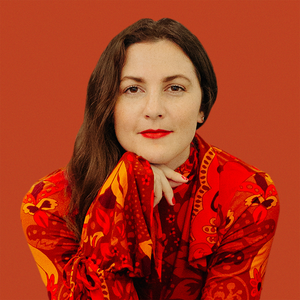
Sacrifices, Suppression, and Stardust with Dr. Gertrude Lyons
Live from the Ojai Playhouse, publisher Kristen McGuiness interviews Rise author Gertrude Lyons for this special edition episode of Write the Good Fight. From a disappointing dissertation experience, to a dream-fulfilling book, and around to a suppressive stage, Lyons shares the ups and downs of her journey rewriting the mother code.


Automatically Transcribed Transcript
From the ladies of Rise Literary, welcome to Write the Good Fight. Hello and welcome to this special episode of Write the Good Fight, filmed live at the Ojai Playhouse on Monday, June 2nd. Write the Good Fight Live was hosted by publisher and CEO, Kristen McGuiness and Chief Marketing Officer, Lauren Porte-Schwarzfeld.
We were thrilled to invite New York Times best-selling author Rob Bell and Rise Literary author, Dr. Gertrude Lyons to the Ojai Playhouse stage for a special set of interviews. Today's interview is with Dr. Gertrude Lyons, author of Rewrite the Mother Code. We are so excited to share with you our conversation with Gertrude.
At the heart of her work, Dr. Lyons has a deep commitment to helping every individual understand, realize, and own their inherent value, guiding them toward living the life they've always dreamed. Whether it is through her writing on her retreats, in her corporate workshop, or through one-on-one coaching, she works directly with people, guiding them with the nurturing, mothering energy that helps them find balance between creating the life they choose to embody and releasing what no longer serves them. With over 25 years of experience, Gertrude is the author of Rewrite the Mother Code, From Sacrifice to Stardust, A Cosmic Approach to Motherhood, Released in May of 2025 by Rise Books.
Please enjoy our interview from the Ojai Playhouse stage with Dr. Gertrude Lyons.
Hi, this is a new experience. So Gertrude has been on the stage before. She is also a TEDx speaker and we're going to dive more into that.
So we'll talk a bit about her TEDx experience. One of the reasons why I almost feel like you're back on this stage, not because we don't love you, but also we felt that we wanted you to get an opportunity to be on this stage.
Talk about it.
Yeah. So I am first and foremost, honored to be your publisher and also had the opportunity to be your editor on the book. So before anything else, congratulations.
You've written a beautiful book.
Thank you. And thank you for being my publisher and editor. I'm like, this podcast is going to end up sounding like I was told what to say to lift you up, but it's all going to be, it's all true.
Everything I say, this has not been planned.
She doesn't have note cards.
That's what I was going to say. Where are my note cards?
I think we just get the cool brand. You write the Good Fight note cards. So I will say, from our first conversation, and I always feel this way when I'm working with new authors, that it's usually in that first conversation that they will say one thing, that becomes the heart of the book, that helps me, and I often refer to it as the promise of their book, but it's like the flashlight in the dark.
And I know in our first conversation, you had said that you really see motherhood not as an act of self-sacrifice, but rather of one of self-realization. And that was, I was just like, let's do this. I mean, that was the only pitch I really needed.
I know you sent me a proposal afterwards, but I was like, well, I'm already sold now. But I think that that is so much behind what you do of this idea of rewriting the concepts of motherhood, but also just of being human. And I would love to hear about how like building confidence in forging your own path really translated into writing this book and your own path of self-realization.
Yeah, I love that you framed that question because actually I hadn't really thought about it in that way that, you know, the book is a culmination and an ending and a beginning in so many ways, but it took me right back to that first time I decided to do, I was invited to do and thought it was a little crazy, but I decided to do pre-marital coaching when I got engaged at 24 in 1989. Nobody was doing that. This was like really out there and weird and not from a framework I came from at all.
You know, this, I grew up in a small town in Michigan and you didn't, you did something like that if you had major problems, but I actually didn't know anybody who did some, had done something like that. But I allowed that little spark of realization that with my own parents who were on the brink of divorce and an alcoholic, formerly alcoholic mother in recovery, and this man I'm about to marry whose parents had two divorces, like it wasn't a pretty picture. So following an inclination and actually following through with it, that there must, there might be something to learn here.
Maybe there's a way not to end up on the other, you know, the percentage of people who get divorced. And some of it was just like, I found a great guy and I want to keep him. I'm not going to say it was all like, oh, look at me.
I just had this major realization. Some of it was just primal. And at the same time, it opened up so many doors for us.
So he actually said yes, which was kind of a miracle because now that you've met my husband.
Because it was 1989.
It was 1989 and he's like this guy's guy. And like, what are you talking about? Why would I go do that?
But he golfs a lot and he golfs a lot. So the fact that he said yes, you know, obviously won a lot of points, but that opened doorways and windows and I know we wouldn't be married today if we hadn't opened that door and stayed on a path of self-realization. So, you know, then we continued to make those kind of decisions when we looked at having children or starting a family.
And, you know, then I kind of through deciding to, you know, do graduate degrees. Oftentimes, I was at a choice point of like doing it differently or having an inkling that I didn't want to do it how... It wasn't just I don't want to do it how others, like something was moving me to do it in a different way that felt right to me.
So, I think that's where it kind of led, and then we'll talk more about the book.
Yeah. Well, no, and I would love to hear too. I mean, I know you had jobs and you got degrees, but also you were a wife and a mother.
And I sort of wonder what was the impetus, just even in these last couple of years, where you really were like, you know what, I'm doing the work, but I want to take it out there. I want to write a book, right? I mean, I think there's one thing that to do the work in private, to do the work professionally, to do the work in your personal life.
But it's a completely different thing to be like, no, I'm going to go out on a stage. I'm going to be like at the Ojai Playhouse or on the TEDx stage or doing media. I mean, being out there in the world can be terrifying.
And what was sort of that leap from you in your own self-realization process to be like, okay, I've got the Ph.D., but I want to write the book. I want to actually be the face of this movement.
I always feel like I'm the face of a movement right now, Gertrude.
Well, and I always feel this need to correct when somebody says Ph.D. because I have an Ed.D. And in the academic world, these are hierarchies.
And we won't tell anybody.
But I always feel like I'm false, you know, falsely. You get to put a doctor before your name. I get to put a doctor before my name, and I'm really proud of that doctorate, which leads me to the why write, you know, how the trajectory to write the book is deciding to do a doctorate was another leap of faith.
That kind of that really came through in a I'm going to call it a more mystical, spiritual experience I had in Kathmandu, you know, where I realized I had raised this family had gotten two master's degree. I was done with school, but somehow all these realizations came pouring forth about what my motherhood experience had been, both where it had been one of self realization and where I had really abandoned myself, had really lost myself and my children done all the things that I was coaching other people not to do or, you know, ways to kind of keep developing themselves. I realized, was starting to realize, I had abandoned that and myself.
So after pouring out a whole lot of tears to this beautiful shaman woman in Kathmandu, I'm like, somehow, I don't know how that related to a doctorate. No, I do. It was, it was, I want to study this.
How did this happen? How did this happen to me that I'm in an environment that is so supportive of growth and development? And, and I wanted to support, I wanted to take those lessons, study them, and then, you know, make something out of that.
So it wouldn't be a waste. Like, I think it was kind of my way to say like, oh my God, I didn't like waste all that time, did I? And some of my regret and remorse.
So I did something that was fairly unthinkable because master's degrees, it's not like they're easy, but, you know.
Some of them are.
Some of them are. And, you know, they were challenging. But this felt like.
I got an easy master's. It was like, I was like, what? This cost a lot of money.
Exactly. This was now, you know, challenging me and a lot of mistaken beliefs I had of my intelligence, of my fortitude, of my writing. Honestly, I'd never, you know, considered myself a writer.
And, and then fast forward going through an experience. I never, I didn't want to take it on just to like get that degree. It was like, what is this going to, how is this going to change me?
How I wanted to start shifting back to like have this be for me, and really have this be an experience that was for me. And so it did really turn me, I did really turn myself inside out. And some of that inside out was in the, finding this new level of writing.
Now, I will add in here quite transparently, the program I was in and the people, some of the people that were on my committee were, highly critical and it was not a fun experience. And so I was basically being told, they didn't think I could do it. Like, which is a pretty hard thing to decide to stay with when some of the people on your committee are like, we may be embarrassed by your dissertation.
Oh yeah, it was, it was really quick.
Don't we love abusive people?
You know, it's never too late to recreate your family, right?
No, not at all.
So I realized I had done that. So I took it on, I did it, it was a challenge, something I'm super proud of, but it was made very clear that nobody reads your dissertation. So you go to all this work, you do that, and that was fine.
I didn't mind it kind of being hidden away in a way, but I was super proud of it on many, many levels. Was there more? Did I answer the question now?
Well, yeah, I think that, well, they release about this bridge. I have another question here, which actually is perfect for this. But I think this idea of, I think we talk a lot about this, that the metaphor between creating a book and creating a human is very aligned because you go from this idea of it.
For many of us, not everybody, but you grow up with this like, oh, I want to have a child one day. I want to be a parent one day. I want to be a mother one day.
The same thing is true, I feel, for writers who have that dream too, like I'm going to write a book one day, and maybe you try at it or you write something else, you have some of those experience. But I think leaping into writing a book, which is an incredibly vulnerable experience. We've worked with enough authors now, and we've watched people seriously self-sabotage at the last minute because it's so scary to take everything you're thinking.
It's a lot like picking your nose in public. It's this really intimate thing of you're doing it by yourself, you're thinking about it by yourself, you're behind closed doors, and then you're taking all that, but you're sharing it. Then not only are you sharing it, but you're like, and you have to pay for it.
There's a sales element, and so there's so much in that chasm that to bridge it is a really big decision. And it is a lot like jumping into parenthood. It is a lot like being like, okay, now we're going to get pregnant, and not even really knowing what you're doing on that first one, right?
You're like, I mean, I don't know what that's going to look like until you have a baby, and then you're like, oh my God, this is intense. I think writing a book is similar. So I mean, I'd love to hear how that experience of motherhood aligned with your storytelling experience, but also really the decision of like, yeah, I mean, not a lot of people are reading an Ed.D.
dissertation. I mean, that's just not something, and you're certainly not out there selling books, you're not selling the dissertation in the lobby. So what was really for you that moment of just like, no, I want to share this with the world, especially hearing that story.
I think there's nothing worse than people who make people afraid of their own creativity. I always say that. I mean, I've worked with great editors.
I've actually worked with some of the most famous editors in the history of book editing, Michael Korda and Alice Mayhew, that if you know anything about books, those are people who wrote. I mean, Michael Korda edited All the President's Men. He was a bastion of the new journalism movement into books.
Then Alice Mayhew edited some of the biggest historical biographies ever written. They were kind editors. I think anybody who's an unkind editor, that to me is, I mean, you shouldn't be in the world of editing anything, even a dissertation.
But for you, what was that leap to really move out of that and into, no, I want to share this with the world?
I think that did evolve. It wasn't a one day I woke up and I'm going to write the book. First hearing that nobody reads your dissertation, it was kind of like few, you know, there are a few.
But I wanted to get the message that was in there. I was excited about the discovery. The dissertation was a curriculum evaluation study of raising women's awareness on the transformational personal development opportunity and mothering and motherhood.
So I had learned so much, I uncovered so much. It's like I wanted to get out there. And the first step was writing a talk about it.
Because I found just gathering women to come to a curriculum like that was very vulnerable for them. So I'm like, OK, we'll start. We'll do a keynote talk.
And I remember being just gripped with fear of that. Oh, my gosh, I'm going to put myself out there now publicly with it. So that was the first step.
And then it was suggested I start a podcast on it. Like, let's get talking about it. And all these were me really coming out of my shell.
And I think, you know, those two steps led to, I think, I don't know. I don't know about this book thing. And I had people, I was a guest on podcast or people that were on my podcast were like, do you have a book on this?
Have you written a book on this? And there's something. And maybe that's like children, too.
It's like, do you have children? You know, have you had children? And I think that it wasn't something like a childhood dream I had.
I never thought I would write a book. Now, I made a discerned decision, just like I ask women to do when it comes to deciding if they're going to have children. You know, don't just take that immediate yes or no, like really dig into it.
And I did dig into it. So I think, like motherhood then, it's good not to know everything that's going to come ahead. And even everybody that tells you, and I talk to authors, I talk to people who have been on the path, and it's never the same until you're doing it.
And then it's your experience. But this whole concept of conceiving, creating and giving birth to something, I found the parallels just were so evident and so apparent. So having been through that really helped me in the book writing process, like, oh, this is this phase of it, right?
Like this is the scary phase or this phase where it's kind of blissful. And then, like, you know, it gets kind of scary and hard again. Exactly.
And the best thing ever was to meet you and have someone who really midwifed and dueled me through that. I don't I never would have completed an endeavor like that without having someone like you that, well, first of all, the first time I turned something into you and I'm just like, oh, gosh, it's this is where someone else is going to tell me, you know, like just all those terrible things. And she was so mean, she said, you are a terrible writer.
No, she didn't. She's like, and just casually like, and you're a good writer and I'm like, like, did she I had to hear it like five times, you know, maybe I even started asking you, but to get the reinforcement, to understand that you can't this is hard, but you can do it. And to be in that mindset with it, I felt like it was I kept tracking, you know, all the different phases.
And with books, you're giving birth a lot. And then it doesn't track exactly, but it's close.
Well, and I think that's in speaking of giving birth, we're not doing that here because otherwise I will definitely get a weird card. But but I do think like part of your re rewrite has been rejecting, you know, and moving away from traditional or more commonly accepted practices. And I think commonly accepted is right.
You know, I think that much like as we were talking about corporate, not with air quotes, I think there's, you know, there's a corporatization of childbirth. There's a corporatization of motherhood. There's a corporatization of storytelling.
There's all these ways in which we've removed the soul and spirit from these really big creation endeavors. And we're going to talk a bit about your Ted Talk because we will say, so we did a TedX here back in February, which was incredible. And some of you guys were here.
And part of our Ted experience is that you submit your videos to Ted. And then Ted reviews them and then releases them. And so we had two videos that were, for lack of a better word, flagged by Ted and one of them was Gertrude's, which we never, I know she looks like such a rabble rouser.
You're like, you know, she definitely, she's on the front of the picket lines here. Sneaky. Yeah, sneaky.
Which was so shocking to us because really all that her talk was about were these different ways to consider childbirth and nothing, I mean, you know, talking about midwifery and certainly the suppression of midwifery by the Western medical community. But, you know, this was not, I mean, none of us were concerned about her talk. There was nothing political in it.
And it was interesting to watch her get flagged because it just doesn't fit into the mold of, we're not even sure other than, you know, we were talking earlier, like, you have a guy named Ted, which actually stands for Technology, Entertainment and Design. So it's not even a guy named Ted. But it did feel, and I'm going to use the word, I mean, it felt, if not misogynist, sort of patriarchal in the fact that this is in a conversation that they're comfortable having from the Ted stage, which is just funny because it's obviously a conversation that people still aren't comfortable with about reclaiming childbirth.
And I think that's true too, about reclaiming creativity. So I'd love to hear about how your experience of rewriting both that story for yourself personally, but now also helping other people to rewrite it and what that looks like, especially in light of this fun we've been having with Ted. And we were going to talk about it because we can't not.
It's been fun.
Yeah. Okay. There's so much.
There's so many ways to go with this Ted question, but I'm going to start with, I worked so hard on that talk. I don't think I've ever done something where I've worked so hard and put so much into it and went up against so many again of my beliefs and challenged myself to do a real. I read those guidelines.
I'm like, you got to have studies in it. You can't be too woo woo. You can't sell.
There were some really obvious things. I'm like, and I won't put the really super confront of data. I got two coaches.
The coaches are like, you want to make people a little uncomfortable. You don't want to just say what everybody knows. The whole idea is to have a big idea.
You know, what's your idea? And mine was really about self-mothering, about having choice, knowing that there are choices. And sometimes, you're just unaware of what those are.
So here's a few of them, right? So I kept those. You know, in the birth world, midwifery world, they were the most benign I could come up with that were just clearly statistics from the CDC, you know, that the US has the highest mortality rate for pregnant and giving birth women than any other developed country.
That's just data. Just a fact. Just a fact.
So when I first, you know, heard that they're questioning it, I was like, oh my gosh, I scoured back through the data. Like, did I put something false, you know, in it? Was I not careful enough?
Because they don't tell you, they just don't. But I really got, it really gave me this opportunity to look at how easy it is to put, I don't know, an illusionary or just put something up on a pedestal, like having a Ted Talk was going to make my book soar, you know, and all these things, this power I was giving it, even though, you know, I knew it was for me, there were also kind of these sub things going on in me. So I'm like, okay, we're going to peel that away now.
I'm going to let myself have all the feelings about it when it became clear that they're, everybody's was up but mine by this time. And it's like, okay, there's something really wrong. No longer am I thinking, oh, they're holding it back because mine's going to get raised up to the, you know, the editor's choice, full Ted thing.
I harbored that for a while, like, oh, maybe I shouldn't think negatively. It's going to be the best outcome. And it started to become-
And then you were in Ted jail.
I found out. It's like, okay, no, now it went up. And it took a while to discover, like, yeah, it's up, but you can't search it.
So it's like, wow, there's- I mean-
It's unlisted.
It's unlisted. I didn't even know you could do these things. And they don't tell you.
And so there's all these ideas I had are crumbling about something that I thought so positively about. And at the same time, I'm like, wow. I said something powerful enough to have Ted suppress me.
And I could cry because that's so not my former persona. You know, it's like, just keep it nice, you know? And so for me, this has been a radical act.
I didn't expect it to be this radical, but I think it's working out perfectly for me in a lot of ways, just for my own awareness, but also like, this is an important message. And this is something that I now feel even more empowered to. I was.
And now it's like, no, no, there's just this is a no. And I will stop there for now, but I could keep going.
Well, and I think it does go back. I mean, it's why, you know, as I said at the beginning here, but I think it does go back to this idea of Writing the Good Fight. And I mean, I always joke, I always make people more radical than they expect to be as their editor.
People will come in and be like, no, I'm not, I don't want this to be political. And I'm like, oh, well, give me a few months. When do you get your notes back?
Well, that just made me think about when we were coming up with the subtitle. And, you know, I have a whole chapter in there about cosmic codes. You know, when you when you strip, when you do go deep and and peel away the layers of your programming from your family and the culture around motherhood, then you open yourself up to like what's possible, you know?
And and I'm not, you know, sharing anything new. It's just my way of putting that cosmic wisdom, you know, out there in this framework. So we had this title, the subtitle, Sacrifice to Start Us, and I was like, hmm, that's it's going to turn off people.
It's too woo woo. We shouldn't, you know, like we should keep it kind of more safe. And Kristen's like, I'm going to be mean Kristen now.
And I'm like, oh my gosh. If you're not willing to put it in the title, don't write a book about it. And I was like, okay.
That was one of those like stop me in my track moments. Like, all right.
Yeah. Well, and I think it is, I mean, being safe, one being safe doesn't sell books. So I also, you know, I do have a publishing company to run.
But I also think that being safe in this idea, I mean, really from the Ted of like, yeah, the idea is to offer new ideas. And, you know, we were recently speaking with an agent and she was like, here's the thing is nobody wants a new idea. They just want a new take on an old idea.
And I'm like, well, that's why nothing ever changes. Because if you're just presenting the same thing, but painting it a different color, it's why we just get the same thing over and over again. We actually need to present something new.
And though that might be like scary for people because they don't want change and they don't want anything new, but then what are we doing? We're just wasting paper. And so I do think that as storytellers, you have to be able to get behind the strongest things that book is saying, because not only is that, I think, what breaks through the cacophony of podcasts out there, that I'm like, isn't that all the same thing?
You know, but I also think it's ultimately what does shift and undermine systems and says the thing that gets you unlisted. You know, I mean, we've discussed it of like, you know what? That's actually way more interesting.
You know, that's way more interesting that you said something that sparked them to retaliate, you know, even though it might be a gentle retaliation. But like, so what is that? What is it that's scaring people about this?
And so I do think the idea of rewriting the mother code and writing the good fight, there's so many overlapping themes in there. But I would love to hear, I mean, especially in your experience, but this idea of like, how have you written the good fight through this book? And ultimately, what do you hope that it does?
So writing the good fight, you know, for me, it was first looking at like, what were my internal battles, right? And what am I willing to put out there personally about what I've been through? And I think that vulnerability is a big part of writing the good fight.
You know, whether it's explicitly about you, but it's what matters to me, it's what matters to a writer, what matters, right? And what matters to you most and where I had experience that I want others to know about, and to know that there's possibilities beyond what we're told, beyond what is there, and be willing to have that rejected, have a lot of challenges come my way. And I think this TED thing has prepared me for the fight, right?
I don't want to just have this and be in front of people who accept it and already feel the same way, but have the opportunities when you write a book to get it out there and expose yourself and have the challenge and be willing to fight the fight for the challenge of what I believe in. And having a shift in a culture that has turned something so empowering and so wonderfully beautiful, powerful as motherhood and childbirth into this narrow framework and pigeon-holed and where the medical environment can be so beautiful and so helpful, but has taken usurped the power, isn't okay with me. And I don't want it to be okay with anyone.
And I want everyone to know that they have a choice.
I love that. And I will say, I was recently, we were on book tour with Gertrude and we were in Chicago with my children and my husband. And then they left.
And then I was like alone for a day without my kids. And it was really interesting because I was like rewriting my mother code in live time while we were promoting rewriting the mother code. And I was really thinking about a lot about this idea of how like motherhood is such, and I think parenthood, and I think, and as you share, you know, motherhood isn't just for people who've given birth.
Like we all mother, you know, we're all caregivers. But I just think that how we integrate caregiving for others and caregiving for ourselves ultimately determines who we become in this world. And it's a balancing act no matter who you're caregiving for.
I think the more people you care give for, the more challenging it can become. But to sort of wrap up, I would love for you to sort of share where rewriting the mother code isn't just for people who've given birth, but really is an opportunity for everybody to step into self-realization.
No, absolutely. It was started as just a minor point in my dissertation curriculum that had so much grab. And then as I kept working with it, which is that we all conceive, create and give birth to, you know, as women, children, you have that choice, but to ideas, to books, to careers, relationships, dreams and ideas.
But that and anywhere we put our care and creative energy, we're mothering. And the most important person we need to mother in that scenario is ourselves. You know, not just so we can be there, but so we can be there.
So we can be fully present to the miracle, the beauty, the awe and wonder of it all, and allow that experience to transform us. But it does take many forms. And I also want that to bring people, women particularly together on the same page versus identities that separate us.
I love that. Well, we don't have the jingle for Just the Tip. I mean, you've heard it.
I could sing it. But I would love to hear your one tip for writers and creators and even mothers, whether metaphorical or real out there. Now it's time for Just the Tip.
Well, I have a lot of tips, but we'll narrow it down to one.
Just one.
Just one.
Just a tip.
That does make it very difficult. But I think as I looked at a through line, and even though I haven't actually talked about this yet, I think something in maintaining this transformational opportunity in all of these endeavors is access and ability to be in touch with my emotions and seeing the superpower of my emotions and acknowledging them. Like through the TED thing, I went through the whole range of emotions so that I could stay present to like what really mattered and what really matters in these endeavors.
So a tip that I have is a potential practice or however you want to integrate something like this, which is once a day, whether with yourself or in community or with your family or with somebody, share where you have experienced fear, hurt, anger, sadness, and joy at least one time in your day. And keep that flow going to really allow us to stay access to keep that access to our emotions so we can be present, so we can do this beautiful work we want to do in the world.
I love that. I love that. Well, Gertrude, I'm so thrilled that we got to bring you back to the stage.
I will say your book, Rewrite the Mother Code, is out now, and Gertrude also leads retreats throughout the year, so please check out her website, and she has her own podcast, Rewrite the Mother Code, that I have never listened to, even though you were on it. So, the last episode I will listen to is the one I was on. I stay far away from it.
When people post clips of podcasts that I am on, I'm like, oh God, mute. So no, but you're doing so many beautiful things out in the world that so many people can engage with and leading retreats even this summer in Ireland, that I'm very excited to go on, and I've learned so much, and I just wanna say at the end, I think there's such a beautiful opportunity, and I just go back to that idea of like, in all of our lives, of moving out of self-sacrifice, which I think we do, whether we're mothers or not, moving out of self-sacrifice and into self-realization, and really just this opportunity that we get to rewrite our codes every day, and to have new experience of being human, so.
Thank you so much. This has been such a pleasure and blessing, and thank you for you mothering me and doing all this beautiful mothering work you're doing.
Oh, well, thank you. All right, everybody, many thanks to Gertrude Lyons.
This has been Write the Good Fight, brought to you by the ladies of Rise Literary. Thanks for tuning in. If you enjoyed today's episode, don't forget to rate us five stars, follow the show, and leave a comment.
We'd love to hear from you. Feel free to share this episode with friends, family, or anyone who might find it helpful or fun. Be sure to follow us on Instagram at Rise Literary to stay up to date with upcoming events, courses, insider info, behind the scenes fun, and so much more.
Or you can check us out at www.riseliterary.com. We appreciate you listening, and we hope to see you next week for another great episode. Until then, remember, it's your time to write the good fight.
From Write the Good Fight: Sacrifices, Suppression, and Stardust with Dr. Gertrude Lyons, Sep 11, 2025
This material may be protected by copyright.