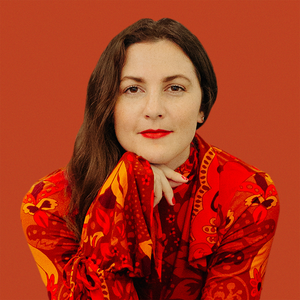
Matriarchy and the Randomness of Neurodivergency with Raya and Vyana
What do you get when you give two neurodivergent individuals mics and press record? You get this delightfully chaotic episode with Rise Literary Content Director Raya Whittington and Creative Director Vyana Novus. The two discuss a wide array of topics, from the difference between patriarchal and matriarchal structures, the way age affects how you operate in corporate settings, and how to juggle the visions of many in the pursuit of one.


Automatically Transcribed Transcript
From the ladies of Rise Literary, welcome to Write the Good Fight.
Welcome to this week's episode with Content Director Raya Whittington and Creative Director Vyana Novus. Today, you get two members of the Rise Literary team. So everyone, please welcome Vyana, because this is her first time ever on this podcast, which is super exciting.
Oh my god, I'm so excited to talk to you today. I'm going to let you kind of guide because I feel like you're smarter than me, so I'm going to let you go first.
I was like, I don't really know what I'm going to say, so I'm going to let you guide me and then I'll start yapping along. All right.
Well, we've been talking about a few different topics and a few different directions to go in, and I think really the core of it is integrating our voice as writers, how we are finding that integrated voice, especially when there are so many different buckets of writing, different voices for different places, different voices for different aspects of ourselves, and then that divide between us as individuals, us as creatives that are working on our own, and then coming together and working on behalf of a larger company is a really different experience.
I think it's a good kind of topic to talk about as far as, yeah, balancing being your own person while still being a part of a company, especially about a company that has such individual distinct voices. Because for those who don't know, every single person in this company is a writer, which comes with typically strong personalities, strong visions, and we have to intertwine them all in a way that feels cohesive and still works for our brand's overall identity, which is funny because we've had a lot of conversations as of late, just with everyone, of like, what does our brand identity look like? Do we want to be super classy and put together?
Do we want to go with our slogan, which is corporate with a lowercase c? Like we just, we're not, we're not corporate at all. Do we toss between both of them?
Are we funny and silly? Are we put together and buttoned up? Are we both?
And how does that look? How do we make that not feel almost overwhelmingly chaotic? Because I think that if you start stacking different strong aesthetics, like silly, goofy, and really put together, it can kind of look a little insane.
And so finding a balance that works for us, that showcases all of our individual personalities while still aligning with the company, truly down to like colors and grid patterns and the language that we use and as the content director, like the content that we put out, like I just had a meeting with the CEO and publisher, Kristin McGinnis, which you usually listen to most weeks on the podcast. And she told me, she was like, Raya, you can be silly on this account. And it was one of those things where I was like, I had not let myself be silly on like our big account.
Like I let myself be silly on our podcast account because I think it's fun. It's just the tip. Like it's fun over here.
Hello. It's so fun. And I love being so free on that account.
And it was so weird because I'd kind of just been going through the motions of creating content for the company. And then she goes, have fun. And it was such a liberating thing for me because I was like, oh, wait, you're right.
Like it's social media and yes, it can be serious. And yes, it can be used for serious things, but it's also fun. And we are a fun company and we are fun people.
And we deserve to have an Instagram feed that looks put together, but feels fun. And that is a balance that I think we're still finding, but I'm really excited to dive in with that, especially with like your support Vy of like your design aesthetics that we can really, yeah, we can really walk that line and it not be insane and look crazy.
I mean, that's so much of what I've been doing since, you know, coming in and working more directly. Like history wise, I've creative directed in little spurts and moments for years with Kristen, mostly on photo shoots. But it's only been a couple of months really, since I've been working in a more ongoing way.
And, you know, really coming in to dig into the soil of the strategy of what we're doing behind the scenes, and bringing in that cohesion that ultimately culminates in what we see. But it starts so far before that, you know? It starts in the energy in the room and the vision where we're moving, like what direction we want to go towards.
Where is this project going to land in five years, in ten years, in 20 years? What is the legacy of this? What is the hope of like the core heart of what's being done?
And how do we bring that into something that is so stable that whatever we do on top of it, it's the metaphor I've been using for months of we're building the house right now so that we can decorate and we can change out the wallpaper and change out the throw pillows and invite guests over and throw parties or have a quiet day at home on Sunday. But at the end of the day, the house is the house. And that is a, it's a really deep process.
It's a very emotional process because it's not just about the words that we're using on an Instagram post. It's so much more foundational to our vision in the world. And, you know, we're all working in support of ultimately, right, Kristen's vision.
And this is the seed of her brain. And we're coming in as resources with all of the skills and training and experience that we have as individuals and coming in to support facilitating that, which is so fun. And that's also such a different experience than, you know, working on strategy for my own brand.
I mean, I've done creative direction for a decade. And with every client, it's such an interesting process of finding that essence of who they are as a brand, who they are as, I mean, working with smaller brands too, it's very different than working in corporate because I'm not going in to target, you know what I mean? I'm not going sitting down and they're like, here is the foundation.
Usually, it's relaying the foundation and it's maybe one person or a team of four maybe, but it's small scouts, small groups of people. And when you're working with Vision on that level and really working to bring it that same level of refinement that a brand like Aesop has, a brand like Le Labo, where these brands are so clearly distinguished in the marketplace, you know exactly who they are based on every little subtle detail. I mean, special interest alert here.
Yeah. I love branding because it's intelligent communication in the most subtle and somatic way. And in order to do something that is so simple, you have to be extremely skilled.
And this takes me back to my baking days. I used to work as a baker. I made wedding cakes for a long time.
And inevitably, a bride that would come in and want like a clean white wedding cake, that was always the hardest thing to execute. I worked at a bakery that made sculpted cakes. Okay, we were making full on sculptures out of cakes, and we would get the white cake and be like, oh God, okay.
I had to mentally prepare for this because that is precision. That is like a level of refinement in skill and taste. And knowing who you are, being able to hold a confidence about yourself.
One of the things I know that's been coming up a lot as we've been doing this behind the scenes strategy work is being quieter to actually say more. And how, especially because we are a team of big personalities, a lot of vision, like every time we're in the room together, it is a fucking riot. And there is so much skill and wisdom and experience.
And there is a lot of shared ethics and there's a lot of shared values. And we're all here in support of this vision for what Rise Literary is. But we also come with our own visions, right?
And the beautiful thing, I think, about how Kristen is running this company is that she really is making space for her vision to be influenced by those of us that she's bringing into the room. And that's beautiful.
Difficult as well. That takes a lot of setting your own pride aside. And also just because she's been running the company for so long that it's also giving up truly a part of yourself.
And being like, here, have my infant child. Please don't kill it. And that's scary.
And not that we are randos. She's known us for a long time. But it's basically if you dropped your infant off at a rando person's house and was like, good luck.
Can't wait to pick you up. Hope you're there when I get back. It's scary.
That's a very scary thing to let go of.
Yeah. And like the, you know, back to what you were saying about all these different parts of us and how we're working to find that cohesion right now. There's such an invitation, an opportunity to do less so that that room we have to breathe reveals itself.
And I think, you know, we've really started to execute on that. And we're getting a little bit more dialed with that because that gives us the room to grow, ultimately. And it's happening in visuals right now, but the more that it branches in and seeps into all aspects of what we're doing, we start to see, ultimately, the skill that's in the room rising and being the loudest thing there, because Le Labo is not out here screaming, you know?
They're just so effortlessly quietly like, oh, here's this beautiful little flower.
Yeah.
Your experience is exquisite. Aren't you delighted? And everyone's like, yes, I am.
And we're all going to smell exactly the same. Like speaking in Ojai, the amount of people that wear Cental, like, I mean, I'm a Te Noir myself. Like, I love Te Noir.
I do love Cental as well, but their brand in the, this is a perfume company for those who aren't familiar. And it seems to be like the signature perfume of Ojai. When I first moved here, I smelled it on everybody.
And the fact that you could get so many different people and archetypes and personalities to identify with one thing so strongly that they're willing to wear it as their signature scent. I love perfume because I think it is such a beautiful example of this. Like, you are self-identifying.
You're walking into the room and letting that speak for you on your behalf. That's exquisite. And that brand, I think, they do that so well and they do less.
Like, the core of what they're doing is do less. And then what they do is so loud, it seems to transcend a vast array of people. And we're cusping that.
Yeah, I think our goal is always so that we... It's not we as individuals lead first. It's what we offer that leads first.
And it's interesting how that's kind of played out slowly but surely in finding that balance, because I think that... Well, I will say, you and I have, while different, very similar... And you have definitely years of experience on me, but similar educational backgrounds in the fields of interest that we have, which is so funny, because you wouldn't have guessed, really.
Because we're both just like, what does it mean to be a person?
You have way too many credentials for no reason. It's one of those things where we're like, why? No one needs that.
No one needs that much education, actually. I think the average person would be like, there's no such thing as to... No, there is, and we've reached it.
We've reached... We've peaked.
There is such a thing as too much education. In fact, when I went back to school, for the fact that I wanted to know more, they were like, you realize you have too many credits to come back? And I was like, I didn't know that was a thing.
I didn't know... I didn't know that was a thing.
No, I'm going to give you money, though. It's fine.
I don't understand. And they were like, you have too many credits. You have to like appeal and share why you deserve to be reinstated.
I was like, I don't... What?
Excuse me?
What is higher ed? So I had to like beg them to let me in because they were like, you have too many credits, which is fine.
Okay, 24.
It's fine. I hear you. I hear you.
But it's one of those things where it's so wild how we overlap. Because I remember when we first sat down with our meetings, I was like, this is the vision I have for this company. And they were like, no, same.
And I was like, really? And it was all because of the similar like, how do humans human? And how can humans humaning help us to help them?
That's a convoluted way of putting that. But I hope that people understand what I mean. Because we just are fascinated by people and to know.
I mean, even when I was setting like social media management, like they were like, you must know your target audience enough to be able to sell to them. And also just to like create stuff that they'll want. Not even like buy, but just like create stuff that will like stick in their minds.
So then in like 20 years down the road, when it might be something that is like possible for them, they'll want it and they'll think back on us. And that requires a lot more than I was really aware, a deep understanding of the human psyche and individuals on an almost like manipulative like level. You have to really know how to get under people's skin and into their brains very parasitically, honestly.
But I think there is a way that like it feels a little less evil and attacky.
I mean, I love Seth Godin's perspective on marketing because his whole stance is marketing is an act of generosity. And manipulation is just a tool. Like we judge it so often as a negative thing, right?
But manipulation can be used. Look, anything can be a weapon, okay? Anything can be a weapon.
It depends on how you wield it. It depends on the choices you're making. So manipulation, absolutely, it can be something disgusting and vile, but it can also be something beautiful.
It can be a gift like Yarnu Rimorti was yesterday, Day of the Dead, Halloween Friday, right? So I was talking a little bit on Instagram about just like everyday mundane magic. And one of the things I talked about was how I consider names to be a spell.
And to me, that is a very intimate conversation that we have with each other's nervous systems. And a name can be so charged and loaded depending on how it was used in your upbringing, the experiences you've had in your life. And I choose to not use people's full names back at them very often because when I do, I'm very considerate of what I'm saying to them because I want it to land like a blessing.
And so if I'm saying somebody's name back to them, I'm punctuating, I'm speaking to their nervous system. That's a form of manipulation, but I'm not doing it because I'm trying to be a bitch. You know what I mean?
I mean, I could, I could. I have in the past, look, if you push me to a place, like I'm willing, I'm willing to use the tools I have and know how to use, but that's not how I'm operating my life. And I think that marketing in general, brand building in general strategy work on this level is it, it's exactly that.
I mean, it's, it's a form of spell work and we can use it in the, ultimately the vision of this company is something that I am so willing to put myself behind. And that I've said this to Kristen, I have never, never been willing to let go of my own projects to stand behind somebody else's vision. This is the first time I've ever been willing to do that.
I've always worked freelance. I've never even considered not working freelance, because I have always felt like I can't let my vision go. But actually what Kristen is doing is so aligned with the vision that I want to create in the world.
And I mean, there's a lot of benefits to like being in somebody's corner rather than being the one at the head. It's a very intense role to be the one leading up a vision. And like, I'm disabled and exhausted.
There's only so much I can do. It's perfect timing. But and still, I would not make that choice if it wasn't a vision that I was willing to get behind.
And to be able to use psychology, to be able to use really like how permeable we are as people to each other's ideas and to each other's influence, to be able to use that on behalf of creating a world that I want to be a part of, I'll use every tool in my toolkit. I mean, I don't have to, and I won't because I don't have to, but look, if I needed to swing the bat, I probably would.
No, it's true. I also think that what's really special about how we operate is I, so anyone who's ever worked for me knows, I don't do bosses. I don't like that.
I don't have one of those. I'm not a fan of that. And I've had many jobs where I've had bosses, but every time my bosses ever told me to do something that I don't like, and I don't recommend this if you want to keep a job, but all of the bosses I've had, minus one, have allowed me to do whatever I want as I please because they trusted that I knew what I was doing enough to do it on my own.
And I had one boss say, I was working at a restaurant, and he was like, you have to do this. And I said, oh, no, I won't be doing that. And he goes, well, then I'll fire you.
And I was like, then you can do that. And then I kind of just stared at him, and he was like, well, rush hour is about to start. And I was like, so it looks like I'm not doing it and I'm not getting fired.
And he just was like, and never like questioned me again. I was like, you must let me be because I truly have no interest in doing what anyone tells me what to do. But that results in a very controlling energy that I have, and the thought of even bringing someone else into my creative process makes me actually ill.
But I will say, working with everyone here, and you're like specifically working very closely with you, I'm like, okay, you know what? Maybe if your vision is aligned pretty tightly with my vision, not the same, but like enough, letting go is a little bit easier. So this is like the biggest lesson in like giving up power.
I think that I've at least I've ever experienced because I've never had to because no one pushes against me. And this is the and not that it's pushing against you is like a negative thing. It's just a like, if I push against you, that allows us to create more and be more creative and also get to a place that's probably even better than either one of us even imagined.
Because we have so many brains working together.
That's the best thing about collaboration to me. We don't, it's not just me bringing what I have and you bringing what you have. Like what you have is yellow and what I have is blue.
When we come together, we're not making yellow blue. We're making green. We make something completely unique that could not exist without either of us.
And that's what's so beautiful about collaborating. It's honestly, I mean, I've gotten to do a lot of collaborations over the years, working freelance and being an artist on my own. But it's very different when you're coming in and you're just doing these little spurts of things to actually get into the soil of something and be part of shaping it in connection with other people.
Where, I mean, the trust is the biggest thing. It's like, why could you get away with that? Well, it's because clearly the quality of your work was able to hold that.
You weren't just being difficult and defiant. Because if you were just out here being disobedient on a level without actually the skill to back it up, you would have gotten fired, right?
That's true.
You brought something to the room that made your no have impact. And ultimately, I mean, the way that I look at it, power is never, it's never up for negotiation. Like, that's not the currency we're working in.
We all maintain our power because it's sovereign and it exists. It's not something we can delegate. It's not up to be questioned.
It exists. Our relationship to it may be wobbly, but like the reality of our individual power, it just is. And for all of the like various experiences and ideas and visions that we have going on in the room, I think the thing that really holds true is that even if it's not articulated, we all have a very intimate relationship with our sense of self.
And so that willingness to be impacted is very different because none of us are actually feeling threatened by each other. We're not like, oh, Raya is coming in with an idea, and now that means I'm not worthy. Right?
So the skill is on a level that we can all trust. It's like, you know, we know that we're coming in with a certain amount of experience and education that when we say a thing, it's coming from somewhere. It's not just a random opinion.
And if it is, we'll also name that usually, right? Where you're just like, yeah.
I'm throwing this out here real blindly. What do we think? Yeah.
This one, I'm just pulling out of my ass. But usually, if somebody is saying something, it's coming from somewhere. It's coming from a point of integration that has weight.
And then because we're all actually standing very deeply in ourselves and we know you're coming with what you got, and I'm coming with what I got, I think there's also a certain level of humility in the room where-
Definitely.
Across the board, right? Because Kristen is holding us down in the world of publishing. I don't know the world of publishing.
This is a new direction for me to be going in. I've worked with a lot of small publishers over the years, like on book covers and things like that, but not behind the scenes, like in the soil of publishing. And then at the same time, Kristen hasn't been out in the world of design and working, like in the spheres where I've been working on more visual sides of things, you know?
The power dynamic is very matriarchal within the company. It's not CEO is at the top and like all wisdom trickles down. It's very much like I bring what I have and you bring what you have.
And we are able to impact and influence each other because there's a certain level of trust relationally and also on the quality of our work. And then also because we're not feeling threatened in our sense of self, and there is that place where we can all say, yeah, this is not my skill set. Yeah, I don't do that.
That's not mine. Like you tell me, you lead here, I'll lead here. And we all play with that sense of leading and following with such ease.
It's honestly, I mean, given the rooms I've sat in and the things I've studied, it's amazing to me how beautifully we work as a team without needing to like get into all this team building stuff and really like practice. Like that's a thing, people have to practice because usually it doesn't meld like this. And I think it does have so much to do with how we relate to power even when it's unspoken.
I, yeah, I think it's, you know, we had talked about this a couple times, but I, and you mentioned it of like having such a strong sense of self and coming in with a strong sense of self. I think that it's weird because I think my sense of self has definitely been tested by this job in ways like I never really fully considered. So I think when I first got hired, I was hired for social media and that really just like blossomed and seamed world into doing more content work.
But I also have to recognize that I'm 24. And when I came into this company, I was 22, I think, and I had no experience in anything point blank period. All that I was was a brain-rotted 22-year-old with a vision.
Like, that's all that I had going for me. But where I want to go? I was like, I want to work with books.
I've never done anything in books, but I read. And I'm on the internet chronically. And Kristen was like, perfect, that's exactly what I need.
She's like, bring the Gen Z magic, we need it.
I'm like, but it's nice because though I do get a little like anxious that I will tell my friends all the time, when like Kristen's like, oh, this is your new position. Like every time that happens, I go to my friends and I'm like, this doesn't make sense, right? Like this seems stupid and silly, right?
Like she's crazy for this. It's not just me. And they're always just like, well, she wouldn't have given this to you if you like didn't deserve it.
I was like, no, but you guys don't understand. Like I'm a child and they gave me scissors and said, run. Like that doesn't seem right.
I hope you guys know that. But in the moments where it feels like I'm really starting to run downhill with scissors, I know that I can like slow down and look to my side and be like, oh, but there's an adult there. Oh, good.
Adults are in the room.
The adults are in the room and that makes it so easy for me then because I'm like, oh, okay. There's been many times I've come to you and I'm like, I need help with this. Not because I don't know where I'm going.
I just don't know how to get there. And I need someone to like back me up on this to have a little more guidance of where I'm going. Like when we pitch things, I'm like, I have the thoughts.
I have the ideas. There's just not the experience behind it. We had just hired a head of production basically.
And I had asked, I told her, she was like, oh my God, what if I fail? And I was like, the one thing I can strongly say about this company is we fill in each other's gaps so seamlessly that there's no way you will fail because we won't let you. Because that's just not a thing that happens because there is such a lack of ego that goes into how we operate, which I've never seen before because I've almost solely worked with men in my life.
So that's not been something I've ever experienced. But until I've actually to like let go of my ego because I'm like, oh, I'm not trying to like ego to ego. I'm trying to human to human.
And that's very different. And that's really special. And I might be running down the hill, but there's an adult, there's an adult somewhere.
And I'm not going to like fall in trip. And if I do, then there's a bandage waiting for me. Like, I'm not going to bleed out on the side of the road.
It's okay. Like, we're all good.
We're all fine. You know, I have to say, like, so I was 22 working with C-suite executives at a multi-million dollar tech company in San Francisco. And I felt that exactly where I was just like, do they know I'm like, baby?
I was like building out systems and building out the position. And I remember just being like, um...
Was in the womb a couple years ago.
Yeah. I was still swimming very recently. This is a choice.
And it's interesting because there was a moment in my interview for that position. It was so out of left field. I had never worked in an office before.
However, it was not anything that I had saw myself doing. I was working at a bakery still. And like, honestly, I don't even know why.
I was just like, I think I'm just gonna try to this now. Like, okay. What?
Where did that even come from? I don't even know. But in the interview, they were having me answer emails on a tethered laptop.
So I had the laptop in front of me, but it's tethered to a giant screen. And all the executives are in the room, and watching me type in real time how I would respond to this email. And I get going on it, and I'm also like dyslexic, and like all of my neurodivergences that had yet to be diagnosed were just like, this is my...
They were blown up on a big screen for everyone to see. Yeah. Like, yeah.
This is, and I'm 22, and I'm like, I'm a baby. I've never been in an office before. I remember like going shopping to like get my interview outfit, and I was like, oh my God, look at me.
I do work.
I cosplay an adult every time we have an event. And I truly, I don't even know if I'm doing it right half the time. I'm like, jeans aren't appropriate, right?
So what kind of pants do we wear? It's terrifying. It's so scary.
It's hilarious and so accurate for that age, though. So I got this job because in that moment, I stopped and I was like, there is information missing. And the CEO kept being like, we'll just answer the email.
And I was like, okay. And so I wrote the email as I would write it, if it was real life and it was just a series of questions to fill in the gaps of information that I didn't have. It wasn't actually like responding to the email the way that they were trying to get me to.
And I got hired because of that. And every time I met that edge in the job of like, oh my god, I am a child. I don't know what I'm doing.
Later, once I was hired, the CEO told me I was the only person out of like, I mean, I was in competition with 50 year olds, you know, like I it wasn't like it was just this pool of young kids. There were grown adults that were applying for this position. And people who have done this before, people who have have experience in this position as an EA.
And I'm a baker.
Like I'm coming.
I literally showed up to my first day of work at that job with three beautiful layer cakes from a photo shoot I had just done for the bakery I was working at. And I just like showed up and was like, hey, who wants cake? I was just like this little like fairy coming into an office in the tenderloin.
It was weird. But every time I hit that edge, I kept coming back to that the reason I got hired, which was I saw something different and it didn't matter my age and they knew that they could teach me the skills. It ended up not being a great environment for various reasons, but I will say it was a C-suite of men.
And well, just not to the side, but I understand so much that feeling of coming in and being like, I'm so young, what am I doing here? And I think you hold it with so much grace. When I was your age, I did not hold it with grace.
I held it in absolute chaos. I was either the bull in the china shop that was like, I have a vision, listen to what I have to say. Or I was like, I have no idea what I'm doing, I'm going to go hide in the corner.
It was, there was no balance, it was just a ping pong between those extremes. You hold it with so much grace. You're like, I got this, I don't know this, I'm willing to be influenced here, can you help me here?
And ultimately it is that essence of what we have in the company, of it being a place that is, none of us are coming in like we've got this all figured out. We're all coming in with like, I know what I know and I know I don't know, I know a whole bunch of things. And I know that you know different things than I do.
And if we show up with humility, we're all gonna grow, we're all gonna ultimately get to where we wanna go. And I think the thing that you do so beautifully is that you bring your vision, which is, and I'm not talking about your vision for what you wanna build, I mean the vision of what you literally see, what you are taking in and digesting and understanding about the world. You come in with what you know to be true and how you see the world and that unique thing that is Raya, the unique thing that is not about your age, it's about who you are as a person and how you move through the world.
And then you hold that with like, yeah, and I'm 24. So like, I don't know. I don't know this, but you know this.
Yeah. And like, so I'll follow you here.
Yeah.
I mean, I can only imagine where you're gonna be in a decade from now.
You know, I, I talk about it often, or think about it often of like, what, what is up from here, which is like a really weird kind of place to be. Because I feel like I've like, hit, like for the most part, and like where are the companies going? Like I've hit my vision for like my life, which is, ah, that's like so terrifying.
Because I'm like, my friends are like, oh my God, I just got a job at a coffee shop, and I'm gonna like use my degree. And I'm like, I've been using my degree for two years. And I am going to be using it forever, because like of like where my life is at, like that, like that's it.
I hit my mark, I did it. I got the like corporate job, but it's corporate with a lower C. I work from my bed, I zoom from my couch and my PJs.
Like it's, there are more corporate positions for sure. But it is one of those things where I'm like, yeah, I like, I run content for a company. That's crazy.
And that's insane. And who let me do this? But also, I'm so happy to be here.
Thank you so much. Please never recognize that you gave a 24 year old way too much power. Please never notice that.
But again, it's because what you bring is who you are.
Yeah.
And you're doing a thing. Sure, somebody else could do those responsibilities, but nobody's gonna do it like Raya does it. The age, it's both so relevant and so irrelevant, because the older I get, and I used to fight this so much when I was younger, that feeling of like, just because, and I know you and I have such very eerily similar lived experiences.
Very strange. But when you come up in the dark, you have a different kind of skill to navigate the world. So by the time you get to your early 20s, you're like, been there, done that, with a lot of stuff that our peers are just starting to get up to.
Yeah.
And for me, when I was in my early 20s, I often had this feeling that I was fighting against having a certain kind of wisdom that even a lot of the like, 30, 40, 50 year olds around me didn't have.
Yeah.
But at the same time, not having a certain amount of experience and skill that balanced it, that it was always this like, oh my god, you're so young, just wait. And that feeling of like, bitch, you wait, excuse me. Like, you know life of lived, excuse me.
Do you know what I've already seen and what I've already done and what I've been through?
Yeah.
That like, in my early 20s, I fought against the perception of age as something to not be respected and regarded. I think things have changed a lot since I was in my early 20s, because now there's a lot more capacity culturally for us to be acknowledging the reality of lived experience and the wisdom that comes with it. It's not just looking at a job title.
But even so, the older I get, the more I'm like, oh, yeah, age, it does something to you.
Yeah.
The more you experience life, the more things you go through, you just, there is, and just to bring it into, you know, a little bit of my field of study. On a biological level, our nervous systems, especially coming out of environments like the ones that we grew up in, when the nervous system has a chance to actually like test and learn and integrate, these are things that don't come from the mind. It comes from doing, it comes from what happens in our bodies.
And it takes time. It's never going to move fast. I might be able to read a book in two days, but that doesn't mean my body can hold the lessons.
I may cognitively understand it. It doesn't mean I can go out and implement it into my life. And I think that's ultimately what aging does.
It gives us the time to actually integrate.
It's true.
The things that could stand as blockages before us. And the places where in our youth we can be kind of bullheaded. The more we live, the more we soften into our bodies.
Or not. That's not a univ- I'm not making a declaration for Universal Intent.
That's not-
I think it's a choice.
Absolutely a choice.
It's for sure a choice that you make where you say, you know, I don't want to repeat patterns. I want to actually take these lessons to heart. I think I'm slowly getting there.
I've been seeing how I approach the world. Even like- and to like bring it back into writing and like creating content, like I was so hard on myself about being good at my passion.
And I have gotten to a point, like I was even telling my grandmother the other day when- because Vyana and Sienna, who works for production, and I all went to the beach and I wore my hair down for the first time, like years naturally.
So gorgeous.
And I was telling my grandma, I was like, because at a certain point, it's just not important. Like, it's- like it just-
it doesn't matter. And the weight that I put on things is just simply not important. and some of it is, some of it is, and like I can acknowledge that.
But like with my writing, I think I have been so like serious about it. Like I ha- I was so academic.
And over time, I've learned that like, to be good isn't to be perfect. To be good isn't to be always writing every single day. I know a lot of the time we get advice of like, just write, just write, just write.
And I was- while I agree with it, there is something to be said about actually just existing, and living, and letting things sit within you, like you were saying, like, live your life, and let those lessons- so you don't repeat your patterns, and you don't make poor choices for yourself.
Like refusing to sleep so that you can write something, or forcing yourself to sit down when you're going through something painful so that you can like, squeeze every last bit of emotion out of your body for your art. I think that, well, art is very beautiful. It can be very masochistic if you're not careful.
And I have struggled finding that balance. But with age and with time and with lessons learned, I've let my love and my passion be my love and my passion, and not be brutal. And although it's something that I do for work, which can get complicated, it is a thing that I'm learning to balance and separate so that I can have my own voice outside of my job, have my job voice, and both of those can be different parts of me that are true to me, and not painful to exist with them.
Yes.
Yeah.
I love that. I have a thing around good, and this changed my relationship to it, because I think that, I would say my primary medium is non-verbal. It's visual, right?
It's painting, illustrating. That's my home base. I mean, I've like long joked that, I've never considered myself a writer.
I say, I write, but I've never owned writer as an aspect of my personal identity. And I think I have a lot of ideas about that, but I write, there's something to me in it that is active. It reminds me to actually do it.
That it's not just like, I'm a writer. I think about writing. No, girl, sit down and write.
It is a congruent statement. But painting is a place where I feel the thing that you said so deeply, because there is a foundation of technique and understanding your medium. I mean, watercolor is where I started with painting, and only in the last year and a half, I've been oil painting, and I love oil painting, but they're very, very different creatures.
They behave differently. It's relating to a whole different person working in each medium. And it's so easy to get caught in the loop of good.
And we miss the art if we do that, because good is a judgment. And we can judge or we can relate, but we can't judge and relate at the same time. And to me, making art is relating to our own selves.
We have to be able to bring ourselves fully to the page, to the canvas, whatever medium we're working in. And if we're judging what we're creating, we're missing the opportunity to actually tell the real story. And there are things that we do, I think as creatives, in all of the different mediums that we may work in, that are specifically for skill building.
You know, like working on a portrait, for me, is, I mean, I love, I love portraiture. I love painting portraits. But it's not about the story I'm telling, it's about the skill I'm building.
Yeah. I actually like haven't even really shared my work, which is so funny because if you look at the body of work I put out in the world, people would think like, oh yeah, we get what Vyana does. Nah, I got a lot that I just keep tucked away in private because I'm not ready to tell that story yet in the public arena.
That story is still mine, and I'm still having an intimate conversation with it. It's not ready for public consumption. So I'll show you where I'm skill building, or I'll show you where I'm competent, and I know how to sit down and write a short story.
To me, I'm thinking about that in a visual sense, which is like illustrating in a particular style, like I've got my buckets where I can sit down and I can just execute it. It kind of makes me think about Kristen writing Substack. Like she can sit down and just bang it out because she's like, I got this hat, I put it on, I do the thing, right?
It's all laid out. There's enough constraints that make the storytelling easier within that. But then when it actually gets into me relating for the sake of creating my art in the world and where I have to go in myself, that's a different thing.
And if I bring judgment into the room, there's no way I'm ever going to be able to tell that story. I'm going to get stuck in skill. And skill is necessary, right?
We can tell stories, but how our stories land, you see skill in the room. You see when somebody knows how to weave a sentence in a way where you're just like, oh, my whole body responded.
Yeah.
Versus you're just like, oh yeah, I'm listening.
Cool, cool, cool.
Then that happened, then that happened. Yeah, absolutely. Their skill is not invisible.
It's the thing, I think it's the jump between doing something and letting it just kind of like sit on the table and exist in the room versus doing something and having it actually make an impact, having it make a splash, having it like touch people. Skill bridges that gap.
For sure.
But if we rely on it, we're not doing anything. We're not doing we as individual artists, as creators. We aren't doing anything.
We're not necessary. I'm not needed in the room for that. If we're just looking at skill alone, you can get any person to do that because it's a skill.
It can be learned. It has nothing to do with me. It's not what I'm doing.
It's not what I'm doing as Vyana, an individual, sovereign person who's making decisions about how I'm being in the world. It's just this thing. Go get anybody to paint this oil painting.
It doesn't matter because it's not reliant on my unique voice as a person. Yeah.
I think that in the skill conversation, in going back to the age conversation and also just like fully going back to the beginning, it's like you can't, in our specific. I mean, maybe it is for everything and I have never done content creation for any other company other than books. But I think our specific fields, and maybe this will change and AI will prove me wrong.
I like to think it won't though. AI is my enemy.
I can speak from the inside.
Yeah. I think that with skill, there are better people for the job that I have. But I also think that our specific job requires such a level of humanity that not anyone could do my job.
And I think that that is... I'm not saying that I'm like the best person for it either, because I don't think that's true. But I think that our work that we do with Rise requires, and in fact, solely relies on humanity.
And without it, this company just wouldn't exist. Book publishing would not be... I mean, we're seeing it.
We're watching it. AI books exist, but they lack... Books are such a medium that requires soul, that I'm so honored that my soul is tied to this one.
It's so important that soul and humanity be tied into the work that we do. We get to show that every single day. We get to come up and be like, this is my soul, that's your soul.
Let's put our souls together. Let's make a really cool soul together. And that's so magical.
And that is why we are a witchy group of individuals, because we come in and we create, and we do that for the love of the game. We do it for the love of the game, because, I mean, God knows we wouldn't be doing it for the money. Let's be real here, guys.
We do it because we love it and we want to be here.
That's why we got sad hustles.
It's exactly right. Like, we do it because we love it. Like, and that, and AI can't do it because it loves it.
That's not a thing. We do it because we have the humanity and the soul to care enough. And I, yeah, there's people more skilled, but no one's as brain-rotted as me.
So they don't, they don't win me out for sure.
Out of all the traits that you could have said, that was not the one that I expected.
Really? No one has a frat boy named Kyle inside them that, like, rules how they make choices in this company.
So except for the rest of the company, except for the rest of the company. I mean, we've all gone through our archetypes as individuals and, like, have our alter ego frat boys.
Yeah.
Kristen is Chris.
Yes, Chris. Chris.
I'm Joey.
And I'm Kyle.
Archetypally, Joey, you know, just imagine the most cliché Sicilian New Yorker you could imagine.
Yeah.
Also, I love, I love, like, just a little behind the scenes of how we function when we're working together. We will all be working in this very feminine way, like gender aside, we're all working in a very feminine, matriarchal way. And then there are these moments where we do just kind of bro down.
We're just like, I have my baseball cap and I got to flip it backwards because I'm like, hold on, Joey's coming in the room.
I got to lock in. No, I slide down my seat and man spread and I'm like, listen up. Yeah, I need y'all to listen here.
Different ideas get created.
It's true.
Which actually, wait, but this is also a perfect tie-in because we were going to talk for a little bit about code switching.
Yeah, we were. We did have a vision.
The code switching helps.
It's so fun because the more that everyone works with me, I think the more you just loosely get used to it, so it doesn't even process as a difference.
You're just like, oh, Kyle's here now.
But Kyle will show up. I have an old Southern grandpa that shows up.
I love him.
He's like, where do you come from?
If you're getting tired, you need to eat.
It's usually when I get tired or annoyed or frustrated that a really aggressive Southern man pops out, and I'm just like, grandpa's here. Yeah, I can't do this anymore.
Dinner and a nap.
Yeah, she needs a nap. She needs quiet time. She needs to stop talking and stop hearing people talk.
She needs food in her iPad because she's an iPad kid. That's what it is. That's really what it is.
And it usually happens at the end of meetings, and they're like, okay, it's time to wrap up. We got to at least...
Once grandpa enters the chat, then we know.
We got to wrap it up.
Day is done.
You queue it for all of us, really. Oh, yeah. And it's one of those things where, like, I think the code switching that we do within just our own group, and it's funny because I think sometimes we're on the same level.
Like, we all code switch at, like, a specific time. We're like, okay, no more silly, goosey girl time. We have to be, like, business individuals.
And then, like, someone will say something and we'll all just, like, ooo, switch. But I think the most enjoyable for me is when, like, all, like, three quarters of us switch and one of us doesn't. One of us is still, like, hey.
And usually, it's Lauren. Usually, Lauren is, like, Lauren's, like, um, I thought you were having a corporate meeting and we're, like, so do you ever think about running into traffic? Do you, yeah, like, do you ever not like yourself?
And what do you feel about that? You took that to such a more PC direction. Yeah, I'm trying.
And I was like, to you, and how do you deal with that? Also, are we out of nerds gummy clusters because I feel like we shouldn't be? And then Lauren's like, hey, so we were talking about a book and what we were planning on marketing.
And I'm like, so the answer is no, you don't ever feel like you hate yourself. Okay. And we are out of gummy clusters.
All right. Someone please put Subway Surfer's game play so I can repay attention. Because I'm not with you anymore.
You got to put another thing on so my brain can be overstimulated so I can refocus.
Yes, you need the emotional support background noise.
Yes. All the time.
But I have to say that this is one of those things, and we did have a moment like this in one of our recent team strategy meetings, where it was exactly this dynamic. You, me, and Kristen were just off in the deep end on a topic, and Lauren was just like, guys, no.
Guys, we only have seven hours of this meeting. Please lock in. And you might think seven hours for a meeting.
I can't say for certain because I don't remember at this point, but I feel like where we dissolved in that moment of utter nonsense actually ended up fueling a few of the ideas. Or at the very least, it was like directing away from some of them. But there was, every time we do, like, let ourselves drop deeper into our humanity in the room, we inevitably come up with strategy that builds on it.
Because we were also talking about Nada's book and strategizing the marketing for that and how we wanted to approach it. And we had just had this like really big tangent, divergent off into a topic that like is not what we're going to be doing in the strategy for her book. But it's not not in there.
It's actually, if we were to take it to the deepest core, we would arrive at the place that we were at in that moment of the meeting. And because we all went there and we were all cackling. And to like Lauren's horror where she was just like, why am I laughing about this?
This is not safe for work. This conversation is not safe for work. Yo, it's so, I think, again, it just comes back to how we are just like so unapologetically ourselves.
And we are given that space to be unapologetically ourselves. And we also have a lot of similar parallel lived experiences that do assist in that as well. But it is one of those things where even our tangents are beneficial to us.
Even our conversations that are like tangential to what we're actually talking about, come back to us in a way that is really beneficial. Because us talking about not liking ourselves actually was like a catalyst to be like, no, but there really is like a way to talk to people who also feel the same way and like have this book be a guiding light for them. And to allow them to feel like they're being heard in a piece of art.
And if we had gone there, I don't know if we would have come out on the same side. I mean, we probably would have just knowing us, but like, it is kind of important to let our minds wander a little bit sometimes, for sure.
And I think that this, you know, looking at more of a systemic lens in business, I think this is really where we see a divide between patriarchal corporate and matriarchal corporate. And rather than us like not being corporate, I see us embodying that matriarchal sense of things, because what we're doing internally is rooted in our relationships with our own selves, first and foremost, and then also with each other and with the vision as if it's its own, you know, entity.
Yeah.
And because of that, we plan seven hour long strategy meetings, because we know first we got to dish out the tea, we got to catch everybody up, what's been happening, I got news, you got news, you got some gossip, let's hear it, let's, let's kiki for a minute, and then we're going to get into some real stuff, and then we're going to have these breaks. And I love that you just like made it so like cute and PC the way you were talking about it. My brain was immediately just like unfiltered, give it all.
But also even when we're coming with, with some pretty dark and demented aspects of being human, we do it with a balance of honesty and humor and levity, but recognition, like I hear you and we're laughing, but we're also not like, the reality is not invisible, it's just we're holding the duality of, this is very serious and also life is absurd. And then because of that, we bring it back around. And I think on a like larger, just thinking of what might be a thing that somebody is taking away from this, because not every work environment offers this kind of relational foundation, and you've got to be able to work within the structure that you're working in.
I mean, that's part of, right? Like, this is a bigger thread here in terms of creating content, which if we're distilling that as our basic theme here in all of our tangents. Give the two neuro kids the mic.
Like, we're going to run into-
We were never going to talk about what we were supposed to talk about. And you know what? I even regret announcing what we were talking about at the beginning, because it was never happening.
False advertising.
We just need to have a conversation and see what happens.
Yeah, I am so sorry.
But you know, on that thread of creating content, especially if you are a creative individual, I mean, I think we're all creative. Like I'm not, I won't tangent on that. But you know, if you're coming in as a sovereign person with a vision and you're plugging into a larger entity that you are working on behalf of, and you don't have that kind of freedom, making it for yourself is a decision.
Even if other people are not participating, we're so lucky. And it's part of why I'm willing to step away from working freelance to be a part of this team. I love that we have that space.
But even if we didn't, I as an individual, I get to choose how I show up in the room. And if I bring myself fully, I mean, obviously, you got to play within HR's rules. Don't be a creep.
Don't cross the lines. The boundaries are there for a reason. But to be able to bring yourself fully into the room is a decision.
That's an internal decision. And it takes practice. It takes time.
It takes somatic integration. It's not going to happen overnight. But ultimately, making content as a creative individual on behalf of a larger entity, there is a real dance between showing up deeply embodied, deeply present with who we are, and also soft and open and vulnerable and willing to be impacted by the room and the space.
Because it's not all about us. What I put out and what I create for Rise is never Vyana. It's never fully me.
You'll see my fingerprint in there, sure. If you know what my fingerprint looks like, you'll be like, oh, I see Vyana's echo here. But it's never going to be fully me.
And even if the room wasn't offering that, that is a choice that I can make as an individual artist to show up and practice that, to show up and practice bringing what I have and making space for it in a room where that space might not be given. Yeah, I'm very curious about the lives of the listeners of this podcast. Like, who knows?
I'm also curious, what the heck we even said today. Also, we have to give a tip. Now it's time for Just the Tip.
It's so cute.
I love it so much. Oh my gosh.
So Vy, what's your tip for listeners?
I'm gonna bring it back to something I said earlier. You can judge or you can relate, but you cannot judge and relate. And the idea of good is a judgment.
To whose standards are you judging yourself, your work, your writing, what you're creating, and does it actually serve the storytelling that you're after? Are you actually relating to yourself, or are you relating to somebody else's ideas about what good is? So my tip in essence is relate, don't judge.
Relate, don't judge.
Relate, don't judge. But also like, I don't hate judgment. I like judgment.
It's just know the place where it belongs.
Yes.
It doesn't belong in your creative practice until you're skill building.
Yeah, I agree. I love that. I guess my tip for people, and if you're younger, then just hold that.
But if you are older than 24, I would say that my tip for writers, although I don't even think I mentioned it at all in this podcast, would be to play like you are young again. And it's a thing that I have had to practice because, you know, like I said, I try to be very adult in the spaces that I'm in, and I sometimes try to hide my youth a little bit. But play into your youth because I think that some of the truest parts of who we are and the most honest parts of our writing come from where we came from and the people that we have been because those all shape the people we will be and the writer you will become.
So get really comfortable with little you, face little you.
I love that, Raya, because I had a little note of when I had my podcast, which was called creatively relating, funny enough.
Whoa, perfect.
I would always give a little creative prompt at the end of it. And one of the things I was thinking about for this was to prompt listeners to spend a little time writing from different ages. So like sit down and write as your three-year-old self, as your five-year-old self, as your 12-year-old self, as your 16-year-old self, and like write about the same thing but from those different ages and just see what happens.
I had a dance teacher that every year made us write a letter to our future self. And I have a couple of those letters and it's so weird to look back on what was important to me at those ages. That couldn't be less important to me now.
Like it was like make sure you're still friends with Cindy and also have a 4.0. And I'm like, I'm grown and Cindy's a bitch. You know, that's not important to me.
You know, hilariously, I mean, in all of the like ridiculous ways that I took this as a young kid, I have been writing about love my entire life.
Yes.
Been the through time, through it all. It's all I've ever wanted to write about. It's all I have enjoyed writing about.
I just wrote about it like a 7 year old and a 16 year old. And now I write about it like a 34 year old.
No, there's no way to write without writing about love. That's literally impossible. And if you think that you wrote a story without love, show it to me.
I dare you. I will find love in it. Trust.
That's how I feel about that. Well, while I don't know what I'm going to title this or what I'm going to describe it as, because I don't know what we talked about, I feel like we did a million, trillion things, but that's what you get when you're like, hey, neurodiversions, one room, good luck.
One room, one hour.
It was never going to make sense, but hopefully you got something out of it, whether it was a smile or a helpful tip or a reason to quit your job and go find a job that is more beneficial to you. Power to ya. I hope you got something out of this episode.
And Vy, thank you for hopping on last minute with me and just chit chatting. I love talking to you, and I can't wait to literally talk to you in like four seconds. Love you!
Love you! Ciao!
Bye! This has been Write the Good Fight, brought to you by the ladies of Rise Literary. Thanks for tuning in.
If you enjoyed today's episode, don't forget to rate us five stars, follow the show, and leave a comment. We'd love to hear from you. Feel free to share this episode with friends, family, or anyone who might find it helpful or fun.
Be sure to follow us on Instagram at Rise Literary to stay up to date with upcoming events, courses, insider info, behind the scenes fun, and so much more. Or you can check us out at www.riseliterary.com. We appreciate you listening, and we hope to see you next week for another great episode.
Until then, remember, it's your time to write the good fight.
From Write the Good Fight: Matriarchy and the Randomness of Neurodivergency with Raya and Vyana, Nov 6, 2025
This material may be protected by copyright.