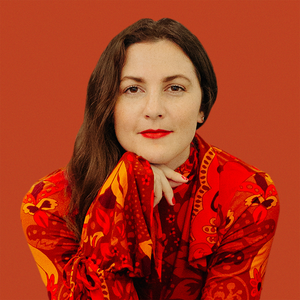
Navigating the Rollercoaster of Publishing with Linda Camacho
In this episode, Publisher and CEO Kristen McGuiness is joined by Gallt & Zacker literary agent Linda Camacho. Camacho shares her industry insights, emphasizing the importance of community, the challenges of diversity in publishing, and the evolving market trends. If you want to know what makes a compelling author, this is the episode for you.


Automatically Transcribed Transcript
From the ladies of Rise Literary, welcome to Write the Good Fight. This episode of Write the Good Fight is with publisher and CEO Kristen McGuiness and literary agent Linda Camacho. Linda is a senior agent at Gallt & Zacker Literary Agency, where she has the pleasure of representing award-winning bestselling writers and illustrators.
Over the years, she's held various positions at Simon & Schuster Writer's House and Penguin Random House. Linda received her MFA in writing from the Vermont College of Fine Arts, has a short story published in the YA anthology, Every Body Shines by Cassandra Newbold, and has been featured in Forbes, Writers Digest, and Latino Leaders Magazine. Thank you so much, Linda, for being here today.
Super excited to have you on.
Yeah. Thank you for inviting me.
Yeah. I know you and I had the chance to meet at the People in Publishing event back in September, which is crazy that that is... That was funny.
When I reached out, it was like, how did September suddenly become like six months ago? Is what it feels like.
Exactly.
But was such a great day of... I mean, it was nice. I got to see friends that I hadn't seen in a while, too.
And really a lovely day for a bunch of agents to come together, but other publishing professionals. So, so nice to meet you there. I'd love to start with your background.
First and foremost, I did not realize you worked at Simon & Schuster. What did you do at Simon? I am also a Simon alum.
Oh, nice. For a while, I was an intern there, and I was in the marketing side for Simon & Pulse in Aladdin.
Oh, nice.
Yeah, early 2000s. Yeah.
No way. I was there. So I worked at Simon from 99 to 2002, an editorial.
I worked at Simon Proper, and then I worked at Free Press at the imprint there. I mean, we were doing a lot of the big self-help writers during that period, but I've continued to have relationships from that time for many years, and it was a huge piece of my development as an editor. We're out in the world, so how did you move then into working as an agent, and what has that process been like for you?
Yeah. Well, it's interesting about it. The first time I fell into publishing, and then afterwards, it was the opposite.
So it was both easy and hard. So when I graduated from college, it was 2005, and I didn't know what I wanted to do like many people, even though I'd been trying to figure and search it out. Someone said, well, you love reading and things like that.
Why don't you look at book publishing? And they worked in HR at a financial firm, but they were doing diversity recruitment on some panel. And she sat next to somebody who was talking about her work at Penguin, and this is before 2005, before the merger.
Yeah.
And so I applied, I reached out to this lovely person, this HR person there, Francine Rosado, and I think she's still in HR. And she said, yeah, we have positions open, and then I was going to go in for an interview. And the day before I was supposed to go in, of course, that got taken internally, as editorial positions were very popular.
And she said, there's this other position called Reprint Production. If you're interested, we can have you come in. And I was like, sure.
I mean, I had no idea what that was, but I really wanted to get my foot in the door. And then I went in and it just was, it felt like the stars aligned, right? I had a great interview, got along really well with the person who would be my boss.
And even on the way home, I got the job offer. So I was like, oh, this was easy, lovely. And I was there for a year.
And at that time, I started to get restless because I learned a lot, but I wasn't sure, I was young. Do I want to be in publishing? Is this it.
What do I need to do? And I just hadn't considered maybe exploring other departments at the time. And I just promptly decided, maybe I should try law school or something.
And I will say, I did not go to law school at all. But I studied for the LSAT and did all of those things. And I missed publishing, actually.
So I figured it was so easy to get in. Shows how much I know. Because then when I wanted to get back in, I was like, it's going to be easy.
And of course, it was the recession, so not so much. I did a bunch of internships to get back in. From Simon & Schuster, the small press called Dorchester Publishing, which unfortunately doesn't exist today.
But I kind of took on any place they would, any department, any area that they would have me. And then Random House, and then at one point, still no jobs. I've been interviewing like mad and nothing.
I got an internship at Writers House Literary Agency, and that kind of sparked something. I was like, well, maybe agenting could be a potential opportunity. But I still needed a job and there was nothing there at the time.
So I wound up still applying, and then I got a job at Random House on the children's side. And then I stayed there for five years, got my MFA, and I knew I still wanted to work closely with the talent. I was doing marketing there.
So I was getting closer to it, but I kept applying for editorial jobs. And at that time, I was in my late 20s, and they kept saying, Linda, you're a little, I mean, older, which is wild. But they're saying, you know, start over, because I was willing to start out as an editorial assistant.
But in the end, I was like, you know what, I think I need flexibility. And so after interviewing for it with many people, so many people gave me their time in informational interviews, agents, that I eventually moved into agenting. And then I've just been there for the past 10 years.
So like 10 years on one side, struggling through different areas, and then 10 years as an agent. So yeah, it was kind of a weird journey. Yeah.
No. Well, I love that. And I think coming from like marketing too, it does give you like a real perspective on like, how do books sell?
Like what makes a book sell? And like, what do people need to be as authors in order to get books in hand? I mean, one of my dear friends is the author, Jim Pasteloff, and she always says like, you think the hardest part of the process is writing the book, but the hardest part of the process is really getting books into people's hands.
And I think it's so true, you know, of like, and that's all, you know, I mean, PR is lovely, but it's really all about marketing because as we all know, like I think, at least when I was in book publishing, we all sort of agreed that the number one way that people buy a book is because someone tells them this was a great book, right? It's just, it's a word of mouth business. It's a word, it's like, it's such a personal thing to like a book that we really need someone we trust and respect and like telling us like this was a great book.
And you're like, okay, I'll, you know, I'll invest the time, you know, even more than the money. So as an agent, how do you look at books in terms of like, hey, this is a great candidate as an author. I mean, obviously, there's the talent of the writing, but as you begin to work with authors, what really makes you want to get behind an author and especially as an agent, because you guys put so much in without a guarantee of success, you know, what really makes you want to work with somebody?
Yeah, yeah, you're right. I mean, at first, it's the book that hooks us, the story. And even then, whenever I talk to editors, and editors say a similar thing, where we go, we're always asking each other, what are you looking for?
And we're basically answering the same question, beyond the obvious genre category. I was going for a great story and a great voice, which says nothing. Everything and nothing at the same time.
And the other thing about it is I'm very type A, and I know so many type A people, including clients, that we kind of marvel at the fact that we're in such an industry that is undeniably subjective. And something that I love, the person next to me might despise and vice versa. So I look for something that surprises me.
I think that's what it is, especially as you get sometimes jaded in the industry and you try to maintain a fresh perspective because we're always looking for something that inspires us, that excites us. So if I find something fresh in that voice, in the way they tell that story, that's one big chunk of it. And then once I fall in love with it, where I'm reading this submission and I forget that I'm reading a manuscript and it feels like a book that's already been published, if I keep thinking about it, I know I want to have a conversation.
And then the conversation is the other part of it, where I get out the phone, if they're willing to have a conversation with me, then I never offer immediately. I always go, what are your goals? What are the things you're looking to do?
And if it feels like it could be a true collaboration, then I will make the offer at the end of the conversation.
And have you found over the last 10 years, in terms of what the market looks for, do you still feel like you get to really make choices based on the authors you love and feel connected to? Or do you also have to leverage that with like, well, this is what's selling right now or not, or how have you been able to balance that commerce and creativity?
Yeah. I mean, it really is a combination of both though, it does weigh much more heavily on the things that I really love. I definitely keep it out in the market.
I'm always talking to editors and the things that they're looking for, I'm seeing what deals are being made. And I definitely have an eye towards that. So when I get a submission, I can usually pin point, all right, is this a quote unquote harder sell, even though what is the thing like easy?
But, you know, easier in the market, right? But, and especially I had to learn this in the beginning, I'll go, even if someone already has an offer, right? So if someone comes through my way and they go, hey, I already have an offer, you have a limited amount of time to read it and then maybe make an offer of representation.
I really always have to ask myself, okay, when I read this, did I really love this or do I love this because someone else expressed interest? That is something that I really have to think about because there's no guarantee of a sale. And even if someone comes with an offer in hand, that happens.
Sometimes it works and I take them on. Sometimes I say, no, not for me. But there's never a guarantee of anything.
So I have to ask myself, do I love this book and want to work with this person that even if we don't sell this book, that I'm excited to read the next book and the book after that. And even with this book, if it does become a book, do I want to read it over and over and over until we get it to that acquisitions meeting? So it's a lot of, do I really love it?
And there have been times where I've taken on clients and I'll be very upfront. I'll say, hey, I think this is a harder sell. But I love this enough.
I really want to try. And if they're willing to do that, then we can make it work. And sometimes it works really well.
Sometimes I can't sell it, but we always try to move forward.
Yeah.
I mean, I come from it from the book coaching side. And it's a little different because I'm not out there. I don't have the imperative that I'm going to ultimately have to sell this book, right?
So I get to take on people whether I think it's going to sell or not. But I do think that in working with people, I definitely feel the ones that I'm like, oh, I love this book. This is a book that I can read 100 times and do the work on and still be engaged by.
And I believe that if I feel that way, that we're going to be able to find an agent who feels that way too. And sometimes we do, you know, and sometimes we don't because that's the same thing with a publisher, right? Sometimes you're going to find the editor and sometimes you're not.
But I do think that that's such a key part of the process. And I mean, I would love to hear like, especially, and since you said like you would come in, you know, through different diversity program, which has always been such an issue in book publishing, which I actually think stems to like the internship issues with book publishing. You know, it's like, well, who can afford to work in this business unless they come from some level of resource that they can be supplemented by family, you know?
And so I know that that really created a certain face in book publishing that obviously also structurally from the top. I mean, I cracked up when we went to the like, CEO's panel at the publishing thing. And I'm like, it literally is three Johns and a David.
Like, it really is. And, I mean, it was like John, John and David. I was like, oh my gosh, you guys.
So, I mean, you see it at the bottom and you see it at the top. And so structurally, it's just created this dynamic and throughout media, throughout a lot of industries, but obviously very centered in book publishing. And have you seen that change?
I know in 2020, you know, obviously there were different pushes and different initiatives. And, you know, I was part of helping a book publishing house get started that primarily still to this day only publishes black and brown voices and queer and disabled voices. But have you seen sort of the tides change in the last year?
Or do you still think some of those initiatives have now planted some seeds to actually see changes throughout the industry?
I feel like it's mixed results. I think especially, I know that we had the, even in what, around 2014, and I know this isn't a new conversation, right? In the 90s, it was multiculturalism, right?
And then around 2014, we had the We Need Diverse Books movement that was started out as a Twitter hashtag, and then it grew into a non-profit. And a lot of that was children's, and then eventually flowed into, on the adult side, more on the genre, romance, a little bit more horror these days, literary fiction, you know. Certain things are catching up with each other.
And then of course, yes, 2020 came, and tragedies like with George Floyd and such, interestingly made some publishers go, oh, we need black people. And I'm like, well, obviously, you always have, but it's funny that now they go, oh, right? And I was excited and terrified at the same time when they started hiring, especially young black talent.
And people, not even necessarily the young black talent, but some brown, yes, but especially the black talent, people coming from different industries, having them head up, I think of like Lisa Lucas, and people brought to have a imprints, and of course, they brought in a lot of young agents. But my fear was that they wouldn't be supported properly, right? Because as we know, it's not enough to just say, all right, here's your job.
You have to actually mentor them, support them, and that's not even including the financial gap, right? I mean, I know for myself, I had privilege growing up in New York, and when I was trying to move into publishing, I was able to live at home, and do these internships which were unpaid. I mean, I was lucky, air quote lucky.
I think one of them, they paid for my commutation, but that was pretty much it. I think Rider's House had a stipend, but it's not reasonable for anyone outside of New York, unless they're moneyed in some way. But yeah, unfortunately, I will say, well, I'll go with fortunate.
Fortunately, I am seeing, I have seen an influx, especially BIPOC and some neurodivergence, not enough. I think that was increased when they went remote in some ways. Literary agencies are more flexible for people who are marginalized to get in as opposed to the book publishers.
Where for a while, the book publishers were remote slash hybrid, and now they're basically mostly relocated back to New York, right, in terms of hiring people. So it feels like they've forgotten about the supposed directives where they were saying they wanted to diversify and they say a lot of things, but I'm not quite seeing that enough. Then of course, literary agencies, thankfully they are more flexible, but it is harder and harder to be a literary agent these days, especially when you're starting out, and so many, especially of black editors, so many have left, especially a majority of the ones that they've recruited in 2020.
Because they just weren't given enough support, so we're still very much floundering, unfortunately. I see that there is interest, but so many people just don't seem to know how to move forward. The big problem is money, money, money.
Always money, a ton.
Always money.
Money especially.
I know, it is always money, and it's terrible to, you know, I mean, I've seen it from the inside as well, that it's like, you know, setting people up to fail and then being like, well, look, it didn't work. And it's like, well, yeah, because it was structured to not work. You know, I mean, whether that's systemic or just, you know, the nature of how those initiatives kind of evolved and then were abandoned, you know, in many cases, where it's like, oh, yeah, we want to do all this good work.
And then 18 months in, suddenly there was no budget to do the good work. And so I think that a lot of those like early initiatives that felt really exciting and like a step forward, you know, ended up feeling like a step back because because there wasn't the money there when actually it was most needed. You know, it has been hard to see.
And I think it's also been hard to see then obviously the political, you know, backlash of it all and feeling like, wow, now it's even being penalized. And I do feel like book publishing. I mean, it was lovely, I will say even with The Two Johns and The David on that stage, that where you see a lot of corporate capitulation in some other areas of media, like Disney and whatnot, it was kind of nice to see that at least The Two Johns and The David did not appear to be that way and were very like adamantly like against book banning and very like very vocal.
So I was sort of like, okay, we haven't lost. There's still there's still some heart to book publishing, which is, you know, one thing that I would hope would stay. But I mean, in terms of like your own experience of like selling authors and how have you seen the market change in terms of and I don't even know what your list looks like.
So are you acquiring, you know, BIPOC writers and selling BIPOC writers? And have you seen that there's still an increased interest in supporting, especially BIPOC authors, which I think is just as important as, you know, if not more so even than the professional side of it. But what does that look like for you?
Yeah. No, I'm glad you brought that up. I think what's interesting is there has been such a focus on increasing the actual voices who are being published.
And I've seen a big push, and I've definitely seen an increase there. But I do think the reason I focus on the other side of it, the people who are acquiring it, the people, whether they're agents and editors and people in marketing is because sustainability is at question. And I'm definitely going to talk about the writers because that is absolutely the first thing that changed in terms of the amount of voices, especially a lot of my list is children's.
And that was kind of the first influx. You know, especially it's filtered into the adult side to a certain respect. And I've seen a change.
And of course, we always need more. But I've definitely seen that change. But children's 100 percent.
It's like by far the most advanced. Could they continue to advance? Absolutely.
Definitely. But that is, I would say, the biggest push. I'm seeing editors thankfully being supported.
And they have been since, I would say, especially around 2014 where there was kind of a change for the better. And especially you have big people around that time that were coming up to prove that. I mean, to me, it's pretty obvious, but it's like publishing needs to see numbers.
But also goes back to the support that these creatives are given. But people like Angie Thomas and all of that. I remember when she had that auction for the hate you give.
And we would hear about the numbers being floated about, about how much people talk about the numbers. And I was just so nervous. I was thrilled and nervous, and I was just so happy.
She not only earned out, but I mean, look at her now. And many other voices as well, long since then. But the reason I like to also talk about the people on the other side is because if it continues with the way it is, and again, it's not nearly as it, like they just haven't figured it out yet in terms of how to diversify the industry outside of the creative voices, it's not going to last.
I mean, it's impossible to keep that going because otherwise it's the same people in the same rooms making the same decisions. And they're going to go, oh, yeah, that was a nice trend, and we're going to move on to the next trend. And also the people who, you need those own voices, whether they're queer, marginalized in any other way, they're people from different socioeconomic backgrounds, of course, BIPOC, neurodivergent and such.
But they're going to get the story in a different way and be able to get it to acquisitions and beyond acquisitions. But thankfully, I will say the more cheerful news is that on the creative side, they're doing far better than the other side, which feels a little bleak at times. But they are still doing well, and especially, as you mentioned, book banning.
It's hit everybody, but it's especially hit the children's side the hardest. And I was concerned for a minute there and going, all right, well, are these editors, and the editors are very much looking for marginalized perspectives, but are they being supported and are they being given latitude to acquire books? And so far, the answer is yes.
And they are fighting, and the publishers are fighting back, thankfully, against book banning.
Yeah, no, it was really, I mean, obviously, they want to sell books, but they're like, don't ban them. I mean, there's a profit motive there too. But I was happy to see sometimes, I always say, power can trump profits in like a heartbeat, that if they decide they just want to line up with the powerful, they'll forget their own profit bottom line.
But I mean, it's been interesting to watch, and I don't know Children's as well, again, other than the work with the publisher. I was one of the co-founders of Row House, which has a Children's imprint, Wheat Penny Press, and they've done really well with their children's books. And we actually, the publisher and owner, Rebecca Baruchy, she and I had started out together with Wheat Penny and really driving diverse authors' initiative in children's, because obviously the statistics were so terrible in children's publishing for so long around diversity and not reflecting diversity across a wide array of identity markers.
And so it all started with Rebecca doing a series called Zara that was about a biracial girl whose parents were divorced and who has a neurodivergent little brother. And it was like, okay, how is, you know, really seeing representation in children's literature and how important and critical that is. And again, my background isn't in children's, but I was a parent at that point.
So, you know, I'd become like a children's consumer and was already seeing, you know, that again, like the horrible statistics of like, there's, you know, more animals than people of color. And, you know, and so it was like, wow, this is this isn't reflective of the culture that I want my children to learn about and grow up in. And so that's where I began to see that conversation.
But I do feel like, you know, watching it in the adult trade region, and I have seen, you know, sadly, I have seen some cooling begin, obviously with authors that, you know, five years ago, and I've been in the book proposal coaching market for a really long time. And, you know, where I was hoping that we were actually seeing a real systemic change does now feel like a trend, which I think is, like, extremely egregious to look at any, to look at identity as a trend, first of all, you know, and that the support that there was for BIPOC writers, especially, you know, even three years ago when we were, when I was taking authors out to market, and now where it is where I'm like, okay, this is no longer a selling point, you know, if anything, it's something that like, you know, we were doing like really fun books a few years ago around diversity that I feel now like, oh, now we have to make it, this just has to be a traditional self-help book, right? That like, what was diversity first now feels like back to like genre first, which, you know, I do feel like that has shifted a bit.
So when you were taking, I mean, I would love to hear how you work with authors as an agent and what you have begun to see in the market and some trends, especially for any listeners that are, you know, struggling to put together proposals and figure out how they're marketing themselves and how do you really work with authors to begin to see, like, how do you put the best foot forward for publishers to become interested?
Yeah, and if we're looking first at the children's space, I would say that's the friendliest space, not that, you know, in terms of wanting to bring in people of marginalized perspectives, they are still very much hungry. That's not to say it's perfect. I've definitely encountered, like, especially in the beginning, and this happens less, thankfully, but it was almost the stories that were acquired tended to be more focused on pain narratives, right?
It's almost like the fruits and vegetables, the issue books. And again, those have an important place, especially when we're talking about trade publishing. But we wanted to see more joy, we wanted to see more genre fiction, and if the character is neurodivergent or something, it's like, can't you put them in an action adventure?
Why does it have to be solely an issue book? That way, they don't feel pigeonholed. And so there is still occasionally that level of it, but there have been imprints that have been opening up.
I mean, if they have a Native American one, Write Heart Drum, they have, of course, Joy Revolution, which is specifically for BIPOC, rom-coms and romances. And of course, it's not just specific imprints. That's not the goal either.
I love those. But I also am seeing more integration into every other imprint. So in terms of trends, picture books are hard, but again, they are, you know, editors are looking very much, they get excited when they see if it's a diverse story.
And that tends to be at least 50-50, right? Where before it was like a stronger selling point, and now it's like, no, this is a really great selling point, but we also need something commercial. Because I think across the board, whether we're talking about children's or adult, it's just a harder sell across the board for anybody.
And it's such a tight market in general. So while there are beautiful literary stories still being told and sold, commercial is kind of where it is right now, right? They're trying to build franchises, they're trying to work in terms of merchandising and film.
If they can have that package, publishers would just love it. Which is, I understand it, but it's frustrating because there is such a blockbuster mentality. And while that isn't new, it's become a bit more stringent on that.
So I am seeing middle grade flounder just a little bit, because everything's a pendulum. There are reasons for it. Middle grade's floundering just a bit, but middle grade is pretty open.
YA, Young Adult, is also pretty open. Again, it just has to be something super commercial. As commercial as you can get it.
If that's not the writing style, though, please don't force it. There's room for everybody, but right now commercial is kind of the key. And if we're looking, oh, also graphic novels, graphic novels, especially if you're the author-illustrator, it's a bit harder if you're the writer-only, but there's still room there.
But middle grade seems to be the place that has the most monopoly. YA does pretty well, but middle grade graphic novels across any genre, it's pretty flexible. Even though it tends to be sometimes a little more literary, oddly there too, in terms of stories there.
On the adult side, literary, literary is always the last to fall into place. They usually will take someone and hold them up as the supreme person. They just like to do that.
That's adult literary. They do. For the longest time, I remember it was Junot Diaz until his thing crumbled.
I always say, I grew up in the era of Zadie, where it was like, well, if you haven't written a Pulitzer Prize-winning book by the time you're 22, then good luck to you, because it was Jonathan Latham and Franzen, all the Johns.
Yeah. They're always a little behind the times and very established, wonderful voices, but it's harder for newer voices to break in, I find. They do, but not as often as I would like.
Then on the genre side, I would say that women's fiction, they are looking especially for more diverse voices. Romance is doing okay, even though they're struggling in the traditional space unless the person's already established, but they are looking in the romance space. Women's fiction, I'm seeing a nice burst in horror, I'm very happy to say.
I am seeing more of that, more diverse voices there, so that's great. I'm just curious to see where the next trends in terms of the genre will shift, but the adult genre seems to be more proactive. Literary, I'm not saying that they're not looking, but I just haven't seen the results of that yet.
No, it's funny what you said about the blockbuster mentality, which ironically, I feel like the more they search for a blockbuster though, the less they have them because I know that book publishing has really been struggling these last couple of years because there haven't been enough blockbusters. It's like you don't actually find the blockbuster when you're looking for it. The blockbuster happens when you're actually looking for these smaller, interesting, unique, quirky titles that feel like we just haven't seen it before and then boom, they become a blockbuster.
It is really funny. I think the more that publishing and media in general, I think it's true on the TV and film side because that's become very blockbuster driven and they're flopping because it's like, well, if you're going so broad and so commercial, you actually lose the flavor that makes something successful.
And when we're having those conversations too with our film TV agents, and they're so wonderful and enthused, but sometimes we'll have some conversations, or I guess more often than not, they're always saying, what's the best-selling book? What's the best-selling book? And it's like, all right, these are the best-selling books, but how do you leave room for that surprise hit?
Which happens all the time. There's no way you can predict it. There just isn't.
I live in a house of K-pop human hunters, and so yeah, I mean, it's the quirky surprise hit that ends up saving Netflix and Sony. And so it is, it's funny to just consistently try to look for this thing that feels like it checks all the boxes because that's not the thing that actually makes people want to go see or read something. I mean, I'd love to hear from you, like, what are the things that you're most excited about right now when you're reading things?
What gets you really like, hey, this is, I love it, whether it's genre, whether it's story, whether it's author, what really makes you want to work with somebody?
Yeah, well, I think if we're looking at genre, you know, I'm a horror buff, so I've just been so excited to see the resurgence in book publishing because on the film TV side, they've always done, you know, they've always been fans of horror, and they've always produced those movies. But I would say around the time of like Stranger Things and Jordan Peele, when I saw those hits, and that was around the time when they started doing It, the new versions, was like, oh, watch publishing now. I mean, even this year we had Sinners and Weapons, and it's just growing and growing on the publishing side, and now they're having some new imprints show up.
And I just love that, that horror is starting to get its due as something that's not looked at in a superficial way because there's so much heart. And what's really cool about it is there's so many sub-genres of horror, but the really impactful ones are the ones that have, again, it's not unique to horror, but especially with horror, something to say. And if you look at a movie like Sinners, there was so much history, there was so much story beyond, which I love vampires, I adore them.
But it wasn't just the vampire story. It was about the black oppression and all of these things that you can tell and entertain someone while you're sort of wink wink teaching them something.
Absolutely. Yeah, I mean, I always look at like the best storytelling is always the Trojan Horse, where, you know, on the outside, it looks like entertainment, it looks like the genre you're watching or reading in, but inside, it actually has a really pertinent message. And yeah, it's funny, I actually just, I was like in a hotel room last week for a book launch, and I was like, it was so late, and I was like, I just want to watch something.
And I ended up catching like the last hour of Get Out, which I hadn't, I mean, I saw Get Out when it was in theaters years ago, which kind of set off though. I mean, it was such, and it reminded me though, just like what a master craftsman act it was, and like using the horror genre with just this like, such a fantastically subversive message that like, and again, like watching it though, like it was so smart culturally on what it was saying, because it sort of had like a primary, but it also had all of these other secondary messages that are like really bred throughout that film. And I was like, wow, this is like such a wonderful use of horror is a metaphor that like, from all these different angles around trauma and racism, but like, again, as I was watching it, I was just sort of like in awe of the storytelling of that movie.
And again, I think horror, I am also a horror buff. I grew up being like super into horror, but again, I loved, you know, horror metaphor of like when horror really teaches us a lesson, which is what I think from its origins of gothic storytelling. It's really, that's what its goal.
Horror was always supposed to be about oppression and, you know, and the darkness of the human spirit. And so getting to see it intellectualized is always super exciting. But are you, have you seen Frankenstein?
Is it out yet? I have not.
It's on Netflix now. I need to watch it. I'm definitely gonna be watching it soon.
I know, I'm interested. Yeah, I'm interested to see. I mean, I'm sort of, I don't love the casting, but I love the, I love the director.
No offense to Jacob Elordi, but I'm sort of like, I don't know. I feel like I could have done something smarter than that, but okay. But I, but I also want to see it for just, for the Guillermo del Toro side of it, you know.
Exactly.
Yeah. So. Well, anyway, well Linda, thank you so much for coming on today.
And before we let you go, we always like to end with one final piece.
Oh, so the tip I would say is build your community. That is going to be very critical to you continuing on this wonderful and difficult path. Community is going to be so critical.
Whether, you know, nourishing you spiritually in that way, you need those people with you who really can support you through the hard times and celebrate you with the good times. But also, practically speaking, those people will also, whether it's people who are outside of publishing, help you build that platform that also that publishers are looking to do as well. So it's practical and spiritual.
Yeah, I love that. I mean, I think it's so important for authors to, I mean, ultimately that community does turn into the big scary word platform. But like, it really is about whether you're building it.
I mean, I think first for support, right? First for just, you're in the, you're in the woods together and you're figuring it out. And it is scary to write and to share your writing.
And ultimately, those are the two big pieces of what it means to be a writer. You know, we actually write and then we share it. And I think having a community around you from the start makes that whole process.
It can actually be fun and not just terrifying, though it will always also likely be terrifying in moments. Yeah. Well, Linda, thank you so much for being here.
Is there anywhere people can find you or also query? What does that look like for you?
Yeah, I've been close to submissions for a while, but hopefully I'll open next year. If you go to galltzacker.com, galltcacker.com, then you can look at submissions there. And also my team tends to open up the first week of the month.
So I would say starting next year, definitely. Yeah.
All right, well, thank you so much again for being here. It was so lovely speaking with you and hearing more about your world as an agent.
Yeah, thank you.
This has been Write the Good Fight, brought to you by the ladies of Rise Literary. Thanks for tuning in. If you enjoyed today's episode, don't forget to rate us five stars, follow the show, and leave a comment.
We'd love to hear from you. Feel free to share this episode with friends, family, or anyone who might find it helpful or fun. Be sure to follow us on Instagram at Rise Literary to stay up to date with upcoming events, courses, insider info, behind the scenes fun, and so much more.
Or you can check us out at www.riseliterary.com. We appreciate you listening, and we hope to see you next week for another great episode. Until then, remember, it's your time to Write the Good Fight.
From Write the Good Fight: Navigating the Rollercoaster of Publishing with Linda Camacho, Nov 13, 2025
This material may be protected by copyright.