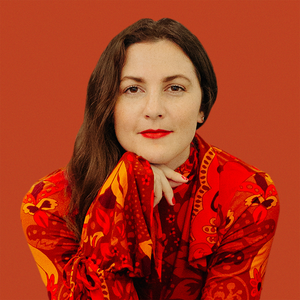
Secrets to Page-Turning Fiction with Janelle Brown
On today’s episode, NY Times bestselling author Janelle Brown joins CEO Kristen McGuiness and CMO Lauren Porté Schwarzfeld to discuss her latest book, What Kind of Paradise, and dive into her career as a novelist. We discuss Janelle's early career as a journalist, California as a backdrop and character in her books, and the importance of having a writing community.


Automatically Transcribed Transcript
From the ladies of Rise Literary, welcome to Write the Good Fight. Today's episode is with author and novelist Janelle Brown, whose new book, What Kind of Paradise, has just been released. Janelle Brown is the New York Times bestselling author of the novels, I'll Be You, Pretty Things, Watch Me Disappear.
All we ever wanted was everything, and this is where we live. Her new book, What Kind of Paradise, was just released in June of 2025. Her books have been sold in two dozen countries around the world.
Pretty Things, named the best book of 2020 by Amazon, is currently being adapted for television by Peacock and Fifth Season. Her journalism and essays have appeared in the New York Times, Vogue, Elle, Wired, Self, Real Simple, the Los Angeles Times, and numerous other publications. A native of San Francisco and graduate of UC Berkeley, Janelle has since defected to Los Angeles, where she lives with her husband, Greg, and their two children.
Chief Marketing Officer Lauren Porté Schwarzfeld and Kristen McGuiness are excited to interview Janelle today. Thank you, Janelle, for being here with us.
Thank you so much for the invitation.
Yeah, we're really excited. And I had the great honor of interviewing you on like an IG Live years ago when Pretty Things came out. So it's a really fun full circle to be doing this again today so many years later.
And also to hear the amazing news on Pretty Things, that it's in development. And I know a lot of people over this season. So that's really exciting.
Thank you. I mean, it's Hollywood. So I'll believe it when I see it on screen, but yeah, it's been it's been fun.
I know whenever I work with authors and they you know, they think books move slow. I'm like, oh, no, no, no. Hollywood is like 10 times as long and with a lot less guarantee.
So glacial, glacial. First and foremost, and like I said before we began, you know, at Write the Good Fight, we really like to focus on authors writing careers and what has driven them to be an author, but really what's sustained them to be a writer too, because I think that's so important. And just, you know, reeling off that list of books that you've not only written, but published is so huge and such an amazing accomplishment.
So I'd love to hear about like really what has been the driving, motivation of your writing career, not just from the start, but really what has kept you going, because I know that is not easy.
That's a really good question. I think I'm just a little bit crazy, I guess. No, I mean, I just, I love books.
I've, you know, it's what I have, I've been passionate about reading since I was a kid and wanted to be a writer my entire life. And I've been lucky enough that I have had enough success with it that I can just keep doing it. You know, the day that no one wants to buy my books anymore or that my publishers say, nope, you know, maybe I'll lose steam, but for now, I'm, you know, I keep writing them and people keep reading them.
And so I just keep doing it. But it is a crazy, crazy career. It really is a wild career.
It's like the emotional roller coaster of being an author is, I think, unparalleled.
Absolutely. Well, and I think especially as a novelist, like I mean, I know having written a novel myself and just trying to sell a novel, but also working with other authors, like fiction is, I mean, obviously it's probably the most read genre. And at the same time, it's one of the hardest genres to build a career in and sustain a career.
I mean, I would love to hear how you broke into publishing with your first novel and what that looked like for you in terms of getting into fiction. And I don't know. I mean, do you have an MFA or how did you really begin as a fiction writer?
Well, I started, I came from journalism. You know, my, I'd always thought that someday I would be an author. That was always my plan.
But I graduated from college into the.com boom of the 90s in San Francisco and immediately kind of got sucked up there. I was working at Wired Magazine right out of college and then salon.com right after that. And so, you know, it was really one of those things where I always thought, well, at some point I'll go back and get an MFA and become a novelist.
And then by the time I realized I really wanted to just start writing novels, I had been already a writer for so long that I felt like I could probably wing it without an MFA. And I did take a bunch of writing classes through UCLA extensions and private workshops and things like that. So that's how I kind of broke into fiction and really got feedback and developed as a writer.
And then because I had been a journalist, I was very lucky in that I knew a lot of writers. I knew people who had published books. I knew people who had agents.
And so when I finally had a manuscript to show, I was able to get connected to a whole lot of agents and eventually found one that I loved. So and you know what, that was almost 20 years ago now. So it's funny because people are like, what advice do you give to people who are trying to find an agent or trying to break into writing now?
And I'm like, well, you know, I did it so long ago. And the game is so different now that I don't know that any of my advice is relevant anymore. My experience feels so different from the experience of someone who's like starting out now.
Yeah, except for the piece around like getting connected to other people, which I think is, I think holds true no matter what, right? Whether it's like you started in journalism and then you made connections. I mean, I think, you know, whether you're making connections on the internet and through social media, I mean, I do think, you know, building a network of writers is important at any time in the history of publishing or in any, you know, industry really.
Yeah, no, it's just very true. I think connections are critical. Network of other writers is really helpful, I think.
You know, people who are starting out at the same time, finding writers who can be mentors, taking workshops with teachers who are published authors, things like that, like it all helps to not be working in a vacuum.
You write a lot about secrets, which feels interesting, like this having this background in journalism, but this like mysteries and personal investigation. What made you so interested in these like secrets, these big secrets?
I mean, I think the best books all revolve around secrets and miscommunications, right? Like people withholding information that is really, they shouldn't be withholding or not telling someone the secret that's going to blow everything apart. That's what makes a good story, right?
And so, yeah, I mean, I think all of my books have involved secrets in some way, including this one for sure. I think it's just, I find that I find it an interesting engine for a story. You know, the information that needs to be shared and is it, will it ever be shared and what's going to happen when it will, when it is, you know?
Yeah, I mean, I always say, you know, when I'm working with authors that every book, I mean, even if it's self help, like it needs a whodunit, right? Like it just every every page needs to have that tingle of like, there's something you don't know yet, but you have to keep reading to find out. And speaking of In What Kind of Paradise, I think the secrets being revealed start from page one with the narrator, you know, looking backwards and beginning to tell this story of, you know, what happened to her and what happened in her life.
And I'd love to hear like, because I do think, you know, that reflecting backwards narrative is obviously a structural decision. And how do you really decide your structure? Like, when you're laying out a book, what does that process look like for you?
Do you, are you somebody who starts with the beginning in your head? Or do you end up, you know, putting, as I did at one point, putting note cards on a bed and moving them all around? And sort of how do you develop?
I am not a note card person. I am more of a, you know, I'm more of a pantser, as they say, a fly by the seat of your pants kind of writer, where I have no general idea. And then I have a very, very, very rough outline of some things that I think might happen.
And then I just start writing, and I let the story start to evolve on its own. You know, it's funny, you mentioned the narrator looking back. That wasn't my initial structure.
It was the thing where I started writing in the girl's voice, and I was writing it, you know, she's a 17-year-old girl. She's a protagonist, my protagonist is 17 years old. And I was writing in her voice, but I realized she sounded much more worldly than a 17-year-old.
And part of that was because she is a worldly 17-year-old. But I also realized that I was writing it from a kind of a modern perspective, having, you know, it's a book that takes place in 1996, and I was writing it with all the knowledge of 2025. And so I realized I needed to change the framework on it and make her reflecting from the future her, right?
It's not written by a 17-year-old in the 17-year-old moment. It's written as that 17-year-old much later in life, reflecting on her time as a 17-year-old. And that allowed me to do two things.
One was have more perspective on the themes that I was writing about, the things about technology and what the Internet had done to us as a society. And the other thing allowed me to do is write in a voice that did not necessarily sound like a YA voice. I didn't want this book to sound like YA.
And you always risk that when you have a first-person voice, teenage protagonist. So I gave her a little bit, by putting her in the future, I was able to give her a little more perspective on herself and be a little bit more wise and have a little more adult voice.
I love this idea of looking back on where technology things are from the 90s, reading it or listening to it. It sort of reminded me of the movie The Net that Sandra Bullock was in, in the 90s, where it's talking about all of these wild things that happen with the internet. But it took place, I think that movie was also from the mid 90s, but it's this foreshadowing, at the time it was very much foreshadowing.
This is now written about the 90s, but written now. I thought that was really interesting.
Yeah, I mean, I lived through the 90s, I was there and I wanted to write about it. Being able to set a book that's simultaneously in the present and in the past, allowed me a lot more space to analyze and dissect how I felt about the journey that I've personally come on, from having been a technology writer at Wired to being a novelist now. Yeah, it was really in a way my reckoning with my own story, my own timeline, you know?
I love that. And I think it's so funny, I'm working with somebody that's writing in the 80s, and I keep referring to it as historical fiction, but it is, you know? I mean...
Like when my teenagers refer to like the turn of the century, and I'm like, I did not graduate from high school on the turn of the century. Although, I guess technically I did.
I'm a Book of the Month pick this month, and they categorize their five, six picks. And when I came out, and I guess it had called a historical fiction, I nearly died.
Yeah. I know. It's scary.
It's scary to think that was 30 years ago when we were all wearing Clinique lipstick.
Some of us still wear it.
Well, there. So there you go. It can't be that historical.
Yeah. And I mean, I think what does make it exciting too is like setting these secrets in the past and unraveling them and also getting to know this character. And I love what you said about the YA piece, because I think even in reading it, you never get the sense that you're reading YA.
You get the sense that you have a protagonist. And I do think that structure of that we're looking back and we're moving forward. And so I'd love to hear how you, throughout your stories, how you look at time as a character, especially as your characters move through different periods of time, how you've really begun to see that as a storytelling piece within your books and theme too.
Yeah, I mean, I like a complex structure. I studied this book, I was like, I'm finally going to write a book that's first person, like first person present tense. And instead by the end of it, it was like more than one POV.
There's like a present tense, there's a past tense, there's a second person voice and a memoir. And yeah, pretty much every book that I've written, I've kind of jumped around in time a little bit. I've done a lot of flashback sections.
And I like that because it allows me to explore cause and effect, you know, that to really kind of look at the why some, why we are where we are now, because everything is a reaction to things that came before. And so it's hard when you're writing a book to be like, well, I'm writing what's happening now, but I want to show how everything that happened before that led to this moment. And you keep kind of peeling the onion, like unpeeling the onion until you get to the core, right?
And so time is one of those onion peels, right? Where you kind of go back and see where it all started as much as you can. You know, and that it's something I kind of do a lot with switching points of view as well.
It allows me to look at a situation from the multiple points of view of the people who are in it and get the full picture from multiple perspectives. So yeah, I find it very helpful as a framing device and as a narrative tool.
Yeah. No, I love it. And I think it also, you know, it keeps readers on their toes too as they're moving around.
I mean, I think there's, you know, there's books where you can get lost in the framework, but it's what I loved about Pretty Things too. It was this idea that like the structure keeps you hooked as well, you know, as the writing itself. And I love to hear how you, I mean, I think this is such a big thing in fiction.
Although again, I think it's true across all genres of this idea of like being a page turning writer, which I think you very much are. And I think there's a magic. It's a little bit like having charisma, right?
Like it's kind of like, well, you can't really just make it. I mean, you could do things that like make you more magnetic to people. But I think page turning is a lot like charisma and like, how do you create those dynamics that really keep people reading?
And is that an intent for you or is it just, does it just happen?
I mean, it's funny, like, I mean, yes, I want people to keep turning the pages and I don't, but I don't, sometimes I'm like, I don't really know how I do it. I hate saying that, but like, it's not like I'm sitting down and like I say, I don't plot, I don't plot my chapters out. So it was more like me feeling out the natural arc of a story as I'm writing it.
And like, where I feel like momentum is waning and then something needs to happen. And that's where I take it, have it take a turn or have someone do something new or, it's kind of an intuitive feeling of about momentum and my own, what I enjoy in terms of pace in a story. It's funny because like, you know, true thriller readers complain my books are too slow.
Literary readers, like, talk about how fast-paced it is. So, you know, it's like, everybody has different expectations for how a book is supposed to move. And you kind of just need to write for what you like to read, I think.
And hopefully, you know, readers will find their way in.
Yeah, I think this structure really creates so much more nuance within the characters. And that's what kind of creates this, like, page-turning effect is that you're so engaged with the characters. It's like that nuance that's so engaging.
Yeah, I mean, I think that's what really makes any book feel like it has momentum is that when you're totally invested in the character and that character is in peril in some way, whether it's physical peril or emotional peril or putting themselves, you know, in a risky situation, and you feel that sense of investment of like, oh my god, is this character going to be okay? What are they going to do? How are they going to survive that?
So, you know, that's why the most important part of any book is like creating a character that is compelling and grabs readers right off the bat, and they feel like interested and invested in them.
Yeah, and I think in terms of character too, which I, you know, I know, I don't know if this is true for all of your novels, so you can set me straight if not, but California seems to be a recurring character in your books, and especially these like micro, you know, kind of societies. I mean, even though this book opens in Montana, which, you know, has its own flavor, but I know you've written about Joshua Tree and Lake Tahoe and Ojai. I didn't read your book that had the Joshua Tree Ojai, which is my like triangle.
I know, I'm like, that one was a no-brainer for you. It takes place.
I know, seriously. And I spent a lot of time in Joshua Tree, too. So I remember that book came out.
It was a busy time. Again, I don't get to read fiction. That's why I was so excited about this conversation.
I was like, oh my gosh, I finally get to read like hot fiction. But how do you see California is being a character and how do you write to that? But also what motivates you to write to that?
I mean, the motivation is pretty simple. I'm a California girl. I grew up here.
I've lived here my whole life for the most part and I love California. It is such a diverse state. There are so many micro communities inside this great big community that we live in.
What it's like to live in Ojai is completely different from what it's like to live in San Francisco, which is completely different from what it's like to live in like Tahoe or up on the Oregon border. I feel like so many different parts of California evoke so many different ways of looking at the world or being in the world. I love to use setting as a character in my book that really evokes a feeling and a vibe and a type of story.
That's why I set my cult story in Ojai, and I set my old California story in Lake Tahoe, and I set my technology story set in San Francisco. It was kind of a no-brainer. Yeah.
Yeah. I mean, and especially at that time, there was no Silicon Beach yet. So no, I love that.
I grew up in Texas, so I know every place has its own crazy stories, but I was at an Adobe tour. I was on a field trip to an Adobe in Ventura last week with my child, and we're walking around this Adobe, and they were telling us the story of the family in the Adobe, and they had 21 children, and then there was- The youngest daughter was the one to take over the Adobe, and there's all these pictures.
Her name is Rebecca, which then reminded me of the movie Rebecca, and there's all these creepy photographs of Rebecca, and then there's all these swallows that camp out at this Adobe. I'm standing there, I'm like, literally, I feel like every corner you turn in California, there's a novel. I was like, I could just like set up camp right here, and like, just like talk about historical fiction, you know?
And I just, I do feel like I'm a similar writer in terms of, I've written about LA now in two different books. And I always say like Los Angeles is a character in each of my books. It's just such a, it's so, California does a really great job of it's cities and places feeling like people.
And so they're really, you know, they're easy to write about. So yeah, and I would love to talk about What Kind of Paradise, you know, I mean, obviously you were in San Francisco in the mid 90s, but how did you really call that up in terms of, you know, your description and really creating this, you know, even where they go to eat and the restaurants and this just sense of that time period and that place?
Yeah, I mean, I drew a lot of memory. I spent a lot of time, like, going through the wired archives, that's more specifically about the technology aspect of it. But, you know, I pulled up old photos that I had.
I talked to people I used to work with, you know, we rehashed memories. But yeah, you know, but mostly it was just a really vivid, vivid time in my life. And so, yeah, I remember, I remember the greasy, greasy diner down the street, and the burrito place in South Park, and all those kinds of things.
Like, they're very, very vivid to me. I mean, I'm sure I got details wrong, because, you know, many years have passed, and all of our memories are a little dim. And the irony is that, you know, writing about this early internet time in the mid-90s, you know, before people had cameras, I mean, cell phone cameras, and like everything wasn't documented the way it is now.
So we don't want that many photos. Like, you know, if you want to take a photo, you need an actual camera that you were carrying around. People didn't do it that much.
So there was a shocking lack of documentation of, you know, .com life in mid-90s San Francisco. So I had to draw from memory and hope that I was accurate.
So I just think of, like, a really crowded cubicle. That's all I think of, like, Lionel's cubicle, right?
We didn't have cubicles. We had, like, old, old, we had, like, trestles with doors on them and all jammed together in one room. Like, you did not get a cubicle.
There was no, there were no walls, no walls.
So what is next?
What is next? Another book. So it was another book, right?
Is that what you preferred? Do you prefer books over, like, smaller writing projects, essays, things like that?
Yeah, I do. I've written a couple of short stories over the years, which have been fun and it's like a nice, a nice change of pace, but there's just not that many outlets for them, you know, which then turns into a, like, how much spec writing do you want to do if you don't really have an outlet for your, for your, for your work? And the same with essays.
Like, I do the occasional essay. I have an essay coming out in Lit Hub next week. But it's mostly when I have a book coming out and people reach out to me and ask me who will write something for them.
I just find that, you know, I'd like to focus on the bigger picture projects rather than little things, unless something drops in my lap. But I don't, I don't chase smaller writing projects. Not that I don't like them when I do them.
I just don't chase them. So.
What is your piece in Lit Hub about?
It's about actually transitioning from technology, from being a journalist to being a novelist. And, you know, how writing fiction allowed me to tackle real world issues, but coming out from the fictional lens.
And do you ever feel like you're writing? I mean, this is actually when we were talking about secrets earlier, I sort of wondered, I was like, what's your secret? I mean, do you, do you ever feel like you write, you write versions of auto fiction?
Are there connections to your own personal life and what you're writing?
I mean, everything that I write, I have to feel some kind of connection to. But usually, it's more to do with the emotions of the character or my feeling of empathy for them. I, you know, pull bits from my history into my books.
So, you know, pretty things took place in Lake Tahoe. I, you know, spent my childhood going to Lake Tahoe and I, the Stonehaven, the mansion there is like loosely based on a place where I used to go take family picnics, you know, it was like a mansion that had become a public park. So, you know, in that sense, or what kind of paradise takes place in the 90s in San Francisco, I obviously lived in the 90s in San Francisco, and it's set at a place called Signal, which bears some resemblance to Wired.
But beyond that, like, I don't put myself in my books in a traditional audio fiction way. Like, I'm not pulling in Miranda July, I think, and writing a thinly veiled version of myself in one of my books. My characters are all, like, radically different from me.
You know, I was never a 17-year-old girl living off the grid in Montana. So I had a really good draw from each imagination for that.
Your dad is like, that is not my story. Yeah. Well, and I do think, you know, as we've said, like, being a novelist, like, being a working author and sustaining that can be hard.
And I'd love to hear, like, what does your, I mean, how do you hit the page every day? What does that look like for you? I mean, I know you're a mom, too.
And so managing just life and also creativity. I know your kids are a little older, so mine are younger. But I always say this about it is that I feel like the vat where I pull my creative energy is the same vat from which I pull my maternal energy.
And so I know it can be really hard to, like, move from, shift from mom to writer. What does that look for you over the course of your career? Because I know you've been writing over the course of their lives too.
Yeah. I mean, you know, I've wrote my first two novels before I had kids. And my second, my third novel came, there was a gap of seven years between my second novel and my third novel.
And that was because I had kids and like it just sucked up all of my emotional energy and I couldn't, I found myself having a really hard time writing. And you know, now my kids are older and it's a little bit easier to find the balance. The hardest part is just like the demands of like, mom, I need a ride here.
Mom, please, I need, you need to take me to the weekend to this dance competition. I need to go to a baseball game. You know, that kind of stuff does suck up a lot of writing time.
It's like, it's funny how it vanishes. But I write in bursts. I've always have, like, where I get really prolific for a couple months and then it'll slow down.
They'll get really prolific again. And I just know now that that's part of the process and that's okay. So I let it be what it needs to be.
I feel like the reluctant dance mom should... Lauren is also a dance mom.
You're also a dance mom.
Yeah, nothing zaps your creative energy quite like a weekend at a dance competition.
100%, yes.
Lauren will call me from like a stairwell at a dance competition and she's on the East Coast. So I think there's an extra layer of just like, I can feel the bitter chill in the air and the like high school stairwell where there's a dance competition going in on a Saturday. I'm like, I'm getting nauseous just like feeling that, feeling that room.
It's a lot. I also have two kids that dance. So I'm like, it's me and 17 costumes and like Friday afternoon to a Sunday night.
And I'm just like, I can't do anything. Give me something non-creative to work on because there's literally no, I like, I mean, I used to show up with my laptop and be like, I'm gonna write all weekend in between their dances. And then I was like, I'm not.
I'm not. I know. I had thought the same thing too, when I first started going to the competition, I'm like, I'm gonna have so many hours.
There's so much downtime and it's like, there's not, there's just time for your brain to rot.
Yeah, exactly. And watch 72 little girls dance to Taylor Swift.
Yeah. And I think, but I think that's a really interesting thing, is like recognizing when you are able to be a creative, productive person and recognizing when you're not. I think there's nothing worse than trying to fulfill your creative dreams at times when you've literally got nothing to give.
Yeah. You know, looking at a weekend and being like, oh, there's only 17 dances that I have to watch and I'm here for a million hours. Like, that would be a great time for me to try to write my next novel.
You'd leave that weekend being like, I'm a terrible writer. I've got nothing.
I know the parameters in which I can work and I have just come to accept them and just need to make sure that I create enough space to make those parameters happen. And that's the challenge.
Well, and I think it's a great thing for other authors because I do sometimes think we set ourselves up for failure of thinking like, we get too ambitious or unrealistic about what we're capable of doing. And then when we're not able to do it, we're like, oh, look, see, I'm not a writer. And I think, you know, being able to figure out, okay, where are the spaces in which I can actually write?
And then filling those spaces in as opposed to, I mean, I always say this about writing. I think it's no different than any other practice, whether it's like a yoga practice or you're, you know, you're trying to, like, go for a run. Like, you can try to establish it as some sort of, like, routine or habit.
But really, sometimes it's just figuring out, okay, where does this fit into the non-negotiables of my week? That then I create non-negotiables around it. And so I know for, you know, for some people, and I think it's, you know, obviously it's amazing and exciting to be like a working writer, right, and a working author.
But for those who obviously also have other jobs and they're trying to write on the side, like really beginning to like build out the space for that and realizing that like, no, you're not going to be able to write during the dance competition in the cold high school gym.
When you're just trying to find a door dash, that'll bring you some Starbucks. Yeah.
Well, I love to hear in terms of your what's next. And then we'll we'll wrap up with our final segment. But what are you focusing on California again?
We're doing my first book that's not set in California next. So it's a world, it's a book that's set in the world of tennis. So I don't like to talk too much about my books while they're in process.
But yeah, it's a it's a tennis book not set in California. So there you go.
That's super exciting.
I know you're breaking your own mold. We like to end every episode with a segment we call...
We have our final segment of Just the Tip, which is your one writing tip for other authors. And I would love if you could share really, especially for other novelists, because I do think again, fiction is such a special breed and you've just been such a successful author in it.
I think my one tip and the thing that's been the most important to me is find a trusted reader who writes the kind of same kind of books that you do. That you know understands what you're trying to achieve with your book because they're trying to achieve some of the things with their books and have, you know, give them early pages, get their feedback. Like I have had assorted writing groups over the years and they've really helped me shape my books into the thing, what they became and gave invaluable feedback.
And, you know, you don't take everything, don't take every bit of advice that they give, but I just find that having readers like other sets of eyes, besides my editor, who I love and I trust my editor, but kind of earlier in the process, it's good to have feedback, you know? Feedback is really, really helpful and really important.
Yeah, I love that. And I think, I mean, I see, you know, we're friends on Instagram. And I see that, like, you are in a group of writers, you know, some of whom are, you know, like you have been very successful novelists.
And I think it's just that reminder of, like, how much writing community is both for, like, editorial support and also just the emotional support and really just, like, building careers and being out there in the world as writers. And I don't know that I would be, that I could keep going if I didn't have groups of other writers that I could be connecting into. And I think it's always been one of the biggest blessings of writing.
Yeah, I agree.
Well, for everybody listening, please check out What Kind of Paradise. It is out now. Ebook, audiobook, hardcover.
It was a recent Book of the Month pick. I've been seeing it everywhere. Congratulations.
And again, I've absolutely enjoyed getting to read it. It's been so much fun. And also, I'm working on a sub stack right now for the top 15 books I would want to read this summer if I actually got to read books.
And I put it on that list and I'm so excited to now be like, but I got to read one of them. One of 15. So anyway, thank you so much for being here.
And we're really excited for what's next.
Thank you so much. And I'd like to see the petitioners talking.
This has been Write the Good Fight, brought to you by the ladies of Rise Literary. Thanks for tuning in. If you enjoyed today's episode, don't forget to rate us five stars, follow the show, and leave a comment.
We'd love to hear from you. Feel free to share this episode with friends, family, or anyone who might find it helpful or fun. Be sure to follow us on Instagram at Rise Literary to stay up to date with upcoming events, courses, insider info, behind the scenes fun, and so much more.
Or you can check us out at www.riseliterary.com. We appreciate you listening, and we hope to see you next week for another great episode. Until then, remember, it's your time to Write the Good Fight.
From Write the Good Fight: Secrets to Page-Turning Fiction with Janelle Brown, Jun 12, 2025
This material may be protected by copyright.