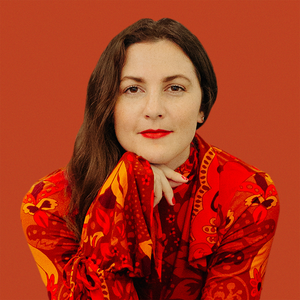
Attention, Relationships, and Life-Changing Tips with Kathlyn Hendricks
In this episode, CEO and Publisher Kristen McGuiness and CMO Lauren Porté Schwarzfeld sit down with Kathlyn Hendricks to talk about cowriting with her husband, the attention economy, and being intentional. This episode will give you tips you’ll carry through your writing and your life.


Automatically Transcribed Transcript
From the ladies of Rise Literary, welcome to Write the Good Fight. This episode of Write the Good Fight is hosted by publisher and CEO Kristen McGuiness and Chief Marketing Officer Lauren Porté Schwarzfeld. We are thrilled to invite Kathlyn Hendricks to the podcast.
Kathlyn Hendricks PhD is an evolutionary catalyst and freelance mentor whose work promotes creative expression in service of a direct experience of wholeness and evolutionary collaboration. She is the co-author of 12 books including the best-selling Conscious Loving, At the Speed of Life and Conscious Loving Ever After, How to Create Thriving Relationship at Midlife and Beyond. She co-founded the Spiritual Cinema Circle and the Virtual Body Intelligence Summit.
She has appeared on over 500 radio and television programs and traveled well over 1 million air miles as the ambassador for the work that she and her husband, Gay Hendricks, have developed. And Katie, we are so excited to have you here today.
Oh, I'm thrilled to be here with you.
Lauren and I are both big fans personally and as just in the audience fan girls. So, I know this is really meaningful for both of us to chat with you. And actually, I would love to, you know, we were all speaking right before we began a bit about co-authorship.
And I mean, I know you and Gay work a lot together and you also work a lot on your own. But I think that that idea of co-authorship is so, I mean, it's such a special way to collaborate with another person and such a great metaphor for how we co-partner everything in our lives. So, I would love to hear from you how that began, how it's going.
Forty years in.
Exactly. Do you guys still love it or are you like, oh my God, give me some space, buddy?
Well, Gay, one of the things I want to just give tremendous credit to Gay who has all of his life, even before he met me, he has been a collaborator and has been in service particularly of women, being able to really share their voices fully in the world. And when we first met, he had already, in fact, we met through a book. That was what was really interesting.
He had written a book called The Centering Book. And this was way back in, I think in the 70s. And it was a revolutionary book because it brought centering techniques into the classroom.
And it was the first time really that there was a crossover between education in the traditional sense of reading and writing and arithmetic and inner education. How do I really create an environment where I can thrive, where I can learn how to regulate my own emotions? And so when I saw this book and I saw that Gay was going to be at my graduate school, I was one of the first people to sign up for it because I thought, oh, I have to meet the person who wrote this book, bringing in a sense of that children are evolving and they're not just something you pour into that part of our work with educating is to bring forth what we now call their essence.
And so when I met Gay and we, you know, immediately we had her across a crowded room. We have a wonderful meeting story, but that's a whole other thing. When we first got together, our first intention was to create a kind of seamless experience that we were both so interested in unity and in contributing to each other, that we started working together the very first summer that we lived together.
In fact, we got a contract with the Army. That was our first, that was the first thing that we did, was work with people who were in the Army, because we lived in Colorado Springs and it's surrounded by military. And so we got a chance to start using his practice of breath work.
He was one of the, you know, really one of the people on the planet who's the most skilled in breath work. And I brought my movement work together. And so we started, we actually started working together right away.
And we started talking about what would it be like to create a relationship where we experience both unity, but also our own individual supporting what each of us wanted to do creatively. And we really started that way. And our very first book that we wrote together was in the early 80s.
We wrote what then became Conscious Loving in its later iterations. We wrote a book called Centering in the Art of Intimacy, where we really started talking about these unity and individuation, and how do you communicate your feelings with each other, and how do you support each other in what you're most wanting to do in the world. So that, we've been doing that mostly like forever.
And there have been some books there where, like Gale Do The Outline, and I was thinking of it like a sports analogy. So we have the play by play and the color commentary. And he would often do the play by play.
I would fill in the color commentary because I would be looking at, oh, because our books were about, like Conscious Loving, we have principles, but then how do you put those into practice? And so I was practicing as a therapist, and I would bring in the actual, what happens when somebody considers jealousy? What happens, you know, when one person is competing with the other, what do you actually do and how do you help them resolve that?
And so I would be writing about the session and what happened in the session and how did people come through the session and then how did that apply to the principle that we were talking about, like the microscopic truth or the upper limit problem, because we started looking at the upper limit problem really, really early on. And so what I really looked at was, how can I translate a person's experience into words that other people can try on and have the same experience for themselves? And that's pretty tricky because directions, pacing, you know, what's up for somebody else may not be up for some, you know, so sequencing.
So it was really much more complicated than you might imagine. And so some of our books, we wrote one called The Moving Center, which had all of the activities that I had developed in my practice that allowed people to have more flourishing relationships. And so our books got distinguished from the very beginning that they included activities as well as concepts.
And so the play between the left brain and the right brain, the play between, you know, who gets to do the sequencing and, you know, who gets to fill in the details. So we navigated that on a number of books. And then some of them, like the book, The Conscious Heart, that we followed in the late 90s.
We followed conscious loving with the conscious heart. And that's the book that has my name first. So I consider that's my book.
And we talk about when Gay reached his 50th birthday, he got attracted to a younger woman. And that's what we wrote about in part in The Conscious Heart. And I was kind of amazed that we didn't get more, you know, because we really shared how we went through it and how we navigated it.
And I thought people are really going to want to know about this. And it was very interesting. They would talk about the book, but they wouldn't talk about the whole episode with, well, what did you do and what happened?
And how did you move through that? And I found that very interesting. Just like people have, of all of our concepts, you would think that people knowing how they can tell the truth to each other would be of interest to people.
But that was the one that caused the most uproar that people would come back with. In fact, we had somebody in one of the audiences, back then, you had to go on television to share your concept. And I remember one person from the audience, she got up and she said, I've been lying to my husband for the last 29 years, and it's preserved our relationship.
And everybody in the audience clapped like.
Yeah.
It was really stunning to us to really see how much secrets and not being transparent with each other were kind of ethic, how everybody operated. And so when we suggested that people be authentic and open with each other, people just thought that was really like we had had this major trespass on the way society is supposed to orient. Yeah.
I mean, it almost feels like people just want to skate over that part, the part where you dive into it and you move past it in this really adult and mature and honest and vulnerable way to get to something deeper and richer and in integrity. And really, if it had been this salacious, the Hendricks who have been doing this conscious loving, and suddenly their marriage explodes because of whatever, that would have been the book that people were diving into and wanting to know all about. But this really mature and deliberate and intentional book, people are like, I don't know about that.
We don't get the gossip, and then he said, and then she said, and then there was this big uproar. So we really found that people are quite attached to drama.
Indeed.
And getting their energy, I mean, one of the things that we really discovered was that people getting their fuel from adrenaline in their relationships, rather than the fuel from being authentic with each other and appreciating each other, it's really like the Hershey bar and the apple. And the people would go for the Hershey bar and get that, the adrenaline of being right, being the one that gets to be in charge. And so we've been learning about that all of these years.
But in the act of writing, the thing that's been most wonderful is the sharing of ideas and the sharing of my sense of words, you know, that words have character and have movement. And for gay, words have vision and structure and allow a concept to come into reality. But then when it's come into reality, my words bring it into the body so that people can have an experience of the concept and not just thinking about it.
And so I think one of the contributions that our work has made is that you can not only think about it and have an experience about it, but you can collaborate from the writing and have a new experience of being together rather than both being in your own silos where there's not a crossover in your experience. So I've really been loving having the opportunity to bring words to life so that people can discover, particularly in their relationships. They can have discovery rather than protecting and who gets to be right, and having conflict be a regular part of their relationships.
I love that. I mean, one of my favorite pieces in conscious loving is this concept of moving out of codependency into co-commitment, which allows for co-creativity. And I know you guys dive into this, but I can't help but always apply your work because I'm obviously in a marriage, and I always say I'm in a complicated marriage.
I'm actually in a marriage with somebody who's very open to these concepts and at the same time, is still working out a childhood trauma story that doesn't allow them to move out of codependency into co-commitment, and the way that their spirit wants for them to do. So it's interesting because you watch, in your own relationship, what your levels of consciousness are, right? And how there's the intention for consciousness, but the act of consciousness is actually such a more deeply resourced position.
So I'd love to hear, we had actually really wanted to do your couple's course last year, and then I got the flu, it was so horrible. I was like, of all the weeks to get the actual flu, like the flu, but I'd love to hear, I think that work out of codependency into co-creativity is so interesting. And how you all came up with that, and how you continue to articulate that in your own relationship too.
Yes, because we've been playing with this now for 45 years.
I know. You are real experts. These are not Instagram experts, folks.
These are real dine in the wool experts.
Well, what I would say is that we practice. Everything that we share comes from our practice. And our intention, we started with the intention to be completely open with each other.
And underlying intention was that we wanted to go all the way in relationship. Because what we had seen, and this was back, because we got together in 1980. And we knew one couple who had a wonderful relationship.
And then after we first got together, they broke up. We knew nobody. And then we had both been raised with, as I'm sure many people are, raised with very antiquated ideas about relationship.
And also based on secrecy, based on nobody really gets to have what they want, and the mythology about compromise. Have your fun now because once you get into a marriage, you have to give up things. And so some of those things have been very tenacious in holding on in the culture of that you can't really be together and have a life of your own.
And so what we started playing with from the very beginning was, there was a book we found that was called Happy All the Time. And I thought, why can't we just in relationship be happy? And that's when we started looking at what keeps us from being happy.
And that's when we started playing with the upper limit. Like we have a limit of how much good energy that we can enjoy and how much love we can exchange. And then when we top out, we started seeing that there were very familiar things that people did.
The number one was criticizing. So people, when we get, when we're feeling too good, we either criticize ourselves and blame ourselves or we criticize each other. And what both of us discovered was that we had grown up with criticism.
It was so familiar to us that we realized, I realized one day, Gay came in and he said, Oh, you cut your hair. And I went, Oh, what's wrong? And in that moment, I realized I was listening for criticism because I just got my haircut.
He noticed I had gotten my haircut. But I immediately thought that he was going to criticize me. And so we had the little moments like that where we could feel the script that we had learned opening up.
And we spent a lot of time looking at what would it take for us to be a space where Gay could be completely himself. And him being a space where I could share whatever was going on. And in that, playing with that, we began to discover that we had both what we call urges to merge and urges to individuate.
And that we began to look at, well, how would I know that I want to be close now? And how do I know I want to be separate? And that's where some of my work of what goes on in my body, how do I know what are the body signals that I want to get close?
And what are the body signals that I want to get separate? Like for me, I get just my jaw kind of... That's also because I'm very stubborn, and I don't like people telling me what to do, but there's a certain...
Like I'm a little bit overwhelmed. It's time for a little space. And how couples usually get space is by creating an argument.
And then they think that they're going to get space, but what they actually get is distance. So we began looking at very just, you know, sort of step-by-step, you know, like I'm feeling... No, I would start by like, gritchy.
Now, what is that? Oh, I was still angry about you leaving the coffee grounds in the kitchen. And I didn't say that and it went into my shoulders.
And then I said, anyway. So we just started playing with what's actually happening. What am I experiencing?
Do I want to make a request right now? Or would I like attention? And that's when I started really playing with attention, that attention is the currency of relationship and how you give and receive.
And so basically people would say to us, what do you do in your free time? Or what are your hobbies? And we'd say, well, this is it.
This is what we do. We talk about it all the time. This is what we play with all the time.
And so playing with just being in the world and starting to share with each other, we started sharing with couples in our living room. But we went from 10 couples in our living room to 10 million people on Oprah with conscious loving. And so that really allowed us to play in a much bigger arena with people.
But the concepts have really stayed. We've developed them and deepened them. But I'd say one of them is how you give and receive attention with each other.
And whether you're able to receive. One of the big surprises was that people are much better at giving than they are at receiving. And we all learned that, of course, you know, it's better to give and receive.
So actually, receiving attention was so difficult for people and, you know, and it was difficult for each of us. And that, again, played into the upper limit. So when one of us would mess up or we'd forget something or we would drop something or, you know, have a, you know, we'd been, had an agreement and one of us would just forget about doing it.
So we began to take a look at what happens to each of us when we exceed the amount of love and attention we can actually tolerate. And when we just started devising different ways that people could play with that and resolve that, and that became then our trainings and that became the couple's chorus. And then when Gay had this attraction and we wrote The Conscious Heart, before then we had really been focused on being able to finish each other's sentences, being able to go anywhere in the world.
And we did a lot of television and a lot of interviews and a lot of conferences and stuff, particularly in the 90s. And what I realized when Gay, when he turned 50, he realized that this was really about him getting rusty and that it was really his issue that he had projected onto the relationship. But what was really wonderful for me was that I got to polish away any of my personas that I had been using instead of my own authentic self.
So I had a devoted persona. I had a sort of a modified Nancy Reagan. You know, where I was kind of, Gay, is it gay?
And, you know, because I, you know, I just think he's an incredible person, but I wasn't giving that same kind of appreciation to myself. And I made a decision that I was going to be able to share work in the world myself. You know, I started going, I can do stuff too.
And that's when I started doing work in Europe and teaching our concepts in Europe. And before then, Gay had been the, you know, because Gay was famous when I met him. And I was sort of the movement lady, because I am trained as a dance movement therapist.
I also have a PhD in transpersonal psychology, but my love is movement and how people can enjoy their lives fully through and discover through movement. And so, but I discovered one day when Gay went off, we were in New York and we were teaching, and he would be like the teacher, and everybody would be sitting around taking notes and stuff. And then we'd have a movement break with the movement lady, and I would come in and do movement with him, and then we'd go back to work.
And then he went down to New York to be on a television show. And I said, well, I'll go ahead and facilitate. I think I'll just try this out.
And we discovered by the end of the day that I'm actually a genius facilitator. So I started going, oh, okay, I'm going to do more of this. And Gay was focused more on writing at that point.
And so I started facilitating and started working in Europe. And our goal for both of us was that we were able to sell tickets in different cities in the world, to come and have a, people would come to a workshop. And so I was able, over a period of time, I've sold tickets in, I've had people come to workshops in London and Berlin and Munich and Geneva and China and all over Italy and all over Canada, as well as all over the United States.
And so the other day, Gay was saying, I think you've gone the equivalent, left like 30 times around the world teaching. And I said, you know, I think I'm going to check that out. And it's actually 60.
I've traveled the equivalent of 60 times around the world teaching our work. And there was a certain kind of, the point there was, I realized that to have harmony in your relationship, you need two voices. And so we had a unity voice.
And then when I really owned my own genius and brought that to the relationship, then we were really able to create harmony. You know, so his voice and my voice in in harmony has just created the most delightful kind of dance that goes on where like he don't bother, you know, the man and then the little woman. So and what we brought to it with that I think is really lacking in a lot of relationship work is play.
You can actually play your way through because the whole ethic is you got to, you got to work hard, you know, marriage is hard. Well, I think we can make marriage hard, but I think we can also play through issues. It doesn't even mean that, oh, you're playing and now you're going to go do the work.
You can actually play through issues with, by exaggerating them, by playing with personas, by, you know, all we've developed, literally hundreds of processes for people to be able to play with. And then the writing of those, I have basically done the writing of those so that people can actually translate because this all happened before there was video, before there was the internet. So now we've translated those and we've made videos of them so people can get the information directly.
But I still think there's something about reading the words and taking the words in and making those come alive, bloom inside you, that has tremendous value. And is not the same as just watching the video and getting it that way. So the interaction that you can experience through words, I'm still, you know, I started reading when I was three.
I loved to read and I had books and books saved my life. You know, being in a very, you know, everybody also, I wanted to mention, everybody has trauma. And part of what comes up in relationship is the ability to love each other through the trauma, to find out what's the, you know, what's the original person that is still there.
And we found that for both of us, that we've been able to recover and really support the little kid inside that just wanted to play and wanted to be loved. And that never goes away. You know, people express it through addictions and through, you know, wanting something that they can't, but what they really want is to be able to express themselves and to have that received and appreciated by somebody else.
Well, and I think that that's the, you know, bringing that play into relationship allows those little kids inside to feel really safe in that experience. And not only do we know you as a friend, but you were one of our TEDx Ojai speakers last year, and hoping that you'll return to our stage this year to speak to this idea of attention. And I think we are all so distracted that like, it is that attending to one another, as well as like just attention in our lives every day.
Absolutely. And there's now more, well, attention. We have an attention economy now.
But the problem with the attention economy is that they don't want you. They just want your eyeballs. And so, you know, all of the tech stuff and all of the YouTube and TikTok, they basically want your eyeballs.
And if you're able to actually receive attention in your whole body, it's very different than just eyeball, eyeball. Because if you're receiving information and attention, but you're not moving and you're not breathing, it really bounces off. You're not, you might think you're getting it, but it's really like having a taste of something that is really delicious, but then it's dangled out in front of you.
It's like the, you know, the infinite carrot that's out there that, oh, if I just have a little bit more, a little bit more. But the only thing that's really satisfying is letting yourself receive attention, you know, in your, in your body, your breathing, receiving it in your heart. And so that's part of what I play with, what I call the loop of awareness, is really being able to shift your attention.
And it's really important in relationship because most, we don't, we get fixated. Like, if something's going on, there's a conflict, I'm either gonna go, okay, uh-oh, I gotta make sure I'm noticing, I'm not triggering you, uh-oh, he looks like he's mad. And so I have to change my behavior.
And if I'm not circulating my attention, I basically am gonna pour it all into my family or into the work that supports the family, but not really give it back to myself. And just that simple act of learning how to shift my attention when I'm with somebody else allows me to have my experience. I was just thinking, and the other person to have their experience.
Early in our relationship, when we were really sorting out, is this me or is it you? I feel something, but it looks like, if you'd stop criticizing me, I'd feel better. When we were working out all that stuff, I realized that if I'm giving all of my attention out, I'm draining myself, and then I'm gonna do something that's usually based on adrenaline, you know, kind of putting my finger in the socket to get more juice, rather than getting the juice of really exchanging and giving attention.
And we were talking about, you know, something that had gone on, and I remember Gay saying, this is my experience. I just want you to know, this is my experience. And because I thought, I'm in charge of his experience.
So if I'm doing something and he feels bad, it's because of me. And I think a lot of people have that kind of contagion kind of thing of, if my partner doesn't feel well, I can't feel happy because they don't feel good. So that that whole mix up of who's feeling what, and having Gay has his experience, and High have my experience, and as we're sharing, we get to expand our experience of being able to be with each other and be with ourselves.
And now it sounds like very first-grade-ish, but a lot of people haven't made it past that. No.
Well, and I think we tend to overcomplicate things in a way that doesn't serve anybody. I really loved what you said about how writing and the books allow us to give attention to ourselves. When you read and you take it in, you're able to take those words in, those lessons in, in a way that gives you attention.
Yeah.
And lets you take them for whatever you need them to be.
Yes. And also to feel that filling out actual space inside. Because most people, I've noticed, live from their neck up.
And when you take in words, particularly words that are a journey, any kind of a journey, whether it's a journey through your feelings or a journey through something that happened, or a journey toward a goal that you have, when you have that experience of movement, the inner movement and the inner movement of feelings and thoughts coming up, and that they're not just like ticker tape, there's the actual whole, what I call whole body thinking. And we can access that through reading and through going on the journey of the character or the characters being together, but also in, because we give lots of examples of people going through a particular, you know, they're having a particular experience like jealousy or, you know, someone feeling not appreciated or you never listen to me, the kinds of things that come up, you know, almost in every relationship. We really combine words with experience.
So the, so it's not just a concept, but it's really a felt experience that I think really makes a difference for people. And so writing in that way is something that took lots and lots of editing and lots of saying it out loud and having somebody read it and then going through the experience and going, oh, okay, that, you know, the timing was too fast there. Or, you know, so it's really like that it's more like music than it is like just the written word when you combine your body with reading.
Yeah, I mean, it feels so much more deliberate than just sort of reading like a beach read. It definitely, I mean, and I, as Kristen can attest, I have a gay and Katie Hendricks, like fan girl, similar type relationship. I quote the two of you the same way that I quote Rob Bell as I often do.
And like from, you know, I often, like I lead a networking group at the studio space that I'm part of, and I almost always read something from The Big Leap. Anytime we're doing things that like, there's just, there's things that have these like visceral hold on you.
Yes.
Because they just land in such a, in such a way. And I will say, I also love the story of the first time you and Gay met. So if you feel like sharing it with us, you absolutely can.
Because it is solidly about like what it means to be intentional and deliberate and honest in a way where, where that kind of sets forth what it is you're trying to create.
Yeah, it was really the blueprint. We created the blueprint right away. Gay came to his book, the Centering Book, and he was coming to give a workshop.
And I signed up for it right away. I was so excited to meet the person who had written this because it was such a great contribution to expanding what education is about. And then we were in a room.
My graduate school was held in a dojo. We were at a growth center. I'm not kidding, in Menlo Park.
And we met. We had all of our meetings in the dojo. And it was in the basement of this place called Valembrosa.
And we had windows where you could see the bottom part of people walking by.
Their feet.
And then we're down there. We're in the light. And there were about 50 people in the circle.
And I saw, before we started, I was about directly across from Gay. And I saw him going around the circle. And what I saw him doing was noticing people's energy.
And I knew how to do that, but I'd never seen anybody else doing that. So I was watching him watching people. And then he came around to me and went, just a couple of people passed and then came back.
And we had this recognition of each other. We had this instantaneous recognition where, first one was that he could see, that I could see, that he could see. And when we got together, it took us about six months just to unpack everything that happened in that moment of recognition.
And then he went on around the circle and then he started speaking. And first, I've always loved Gaze Voice. So when he opened his mouth and started speaking, I thought, this is the most intelligent person I've ever met, but he also was the funniest.
So I started laughing right away, and I was taking notes. In fact, I still have the notebook with my long hand of that workshop and everything he was sharing and my little notebook with my long hand with my fountain pen. And so at the break, I went up to ask him a question, and I didn't get the question out of my mouth, because the first thing that he said to me was, I'm very attracted to you.
And I went, I completely, I still never remembered the question that I wanted to ask him. But he said, you know, I'm very attracted to you and I would love to go out to, I'd like to have coffee with you. But I got to tell you that I'm only interested in relationships, he says, I'm only interested in relationships where both of us are completely honest with each other and where both of us take responsibility for ourselves and that both of us are committed to our own creativity.
And so on that basis, would you like to have a cup of coffee? And so this is the first thing, I haven't even gotten anything out of my mouth yet. And so I knew what he was saying to me was, look, I don't care what you're up to.
I'd like you to drop everything. And I'd like you to come out to Colorado with me. And I'd like you to have this adventure with me.
I don't know what's going to happen, but that's what I would like. And so that's what I heard. So I said, instead of, how about coffee?
I said, how about lunch? So the very first thing is that I upped the Andean on him. And when we got together, I made my famous deviled eggs.
And that pretty much sealed the deal.
I mean, deviled eggs will do that.
Yeah, well, my deviled eggs.
Now we're all going to want some of Katie's deviled eggs. I love that so much. Well, and I think it just shows, I mean, again, I always think of your work especially both within and on your own about this idea of consciousness.
I just think it's like this idea of how we move consciously through the world, how we really stay present to the experience of living, how we are inattention of that experience both in what we receive and what we give, and then ultimately what we write, you know. And I think you're such a conscious writer and a conscious storyteller, right? And how that ultimately, because I do think that's the piece that like when we talk about how writing connects, like if you really want your writing to meet somebody's spirit, you know, it has to have that conscious intention in the writing.
And there's a lot of, and I think that's why AI is actually, doesn't have that same experience because it doesn't have a soul, right? So it's not conscious.
It doesn't have a body. I think that the major difference in the writing that both Gay and I do is that it comes from the body. So the words really come from, you know, what's the rhythm that's wanting to be expressed?
What's the space here? You know, what's the texture of this interaction? And, you know, and what's the journey?
So that, you know, people can give themselves attention. When I was practicing as a therapist, what people would s- the most common complaint was, I don't know what I'm feeling.
No, I have this problem, but I have no idea what I'm feeling. And then the second thing people would say was, I know what I'm feeling, but I don't know what to do about it. So that whole sense that our bodies are an instrument and a vehicle, and we're supposed to just operate them like a car rather than, you know, our bodies are how we carry consciousness around from place to place.
And when just the act of giving yourself loving attention is the most powerful thing that I think anybody can do, and especially in relationship, that what people are really longing for is the generosity of attention, of being with. Because there's almost always, you know, people are distracted, they're doing two things at the same time, they're going, yeah, yeah, yeah, in a second. You know, like when kids are going, mom, mom, and you go, just a second, just a second.
So the actual turning toward and giving your attention from your whole body can solve almost all the problems in the world.
I love that, I love that so much. And on that note, we would love to, so at the end of every single one of our segments, we ask our guests to offer one writing tip.
Now it's time for Just the Tip.
Raya crafted that, lovingly, consciously, but we'd love to hear your one tip for writers.
Organize around a verb that lights you up. So verb first, verbing, and I love playing with verbs, and we have lists of verbs, and in our workshops, we give people verbs, and they organize around encountering a problem with free verbs like swirling, and savoring, and harrumping, and putting those together, and then letting yourself play with, how is that verb wanting to move? Because for me, it's the movement of the words that really carries people along in the story.
Love that. I'm not going to rank tips over the course of this podcast, but that definitely ranks high up on them. I love that idea.
I think it just immediately activates that piece of like the writer brain that is that embodiment, that is the like it's out of the like, we're just over here in a prefrontal cortex experience and really allows you to bring that into.
Very grounding.
Yeah, I love that. Well, Katie, we are so thrilled to have had this conversation with you. I mean, I just, I feel like I've got like a building.
I'm like, I think my life was changed. Can we just keep talking?
Can we just like switch over to a therapy session after this? I know.
I'm like, I'm literally was like, Wait, I have more questions.
Maybe not about writing.
Yeah, exactly. You're like off camera. I have a lot of questions.
Yeah, exactly. And we're going to put this in the chat. But where can everybody find you your work, the Hendricks Institute, all those good things?
We have two websites. We have hendricks.com where we have our seminars. You can learn about our seminars and our coaches, and we have the Foundation for consciousliving.org, which is our non-profit.
And that's where you can find literally dozens of videos to where you can explore the things that we've been talking about, how you can own that, how you can explore that for yourself, how you could take that into your own work. And I think it's particularly nurturing for writers because it's giving you more juiciness to play with and filling your own reservoir rather than giving you another intellectual, well, first you structure this and then you put things up on the board. This is much more of fueling yourself from really filling up and having your own enjoyment.
I love that.
I know. And you have such a... I've been on that site a ton of times, and it's so lovely and incredible how much you all share and how much you give.
So we thank you for all that, and we thank you for being here today.
Yeah, thank you so much. It was very fun to be with you.
This has been Write the Good Fight brought to you by the ladies of Rise Literary. Thanks for tuning in. If you enjoyed today's episode, don't forget to rate us five stars, follow the show, and leave a comment.
We'd love to hear from you. Feel free to share this episode with friends, family, or anyone who might find it helpful or fun. Be sure to follow us on Instagram at Rise Literary to stay up to date with upcoming events, courses, insider info, behind the scenes fun, and so much more.
Or you can check us out at www.riseliterary.com. We appreciate you listening, and we hope to see you next week for another great episode. Until then, remember, it's your time to Write the Good Fight.
From Write the Good Fight: Attention, Relationships, and Life-Changing Tips with Kathlyn Hendricks, Oct 9, 2025
This material may be protected by copyright.