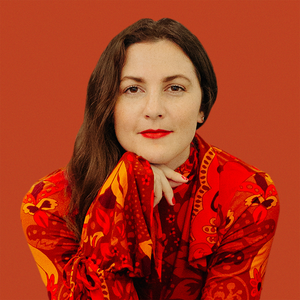
Listening to Your Characters and Dropping Bodies with Katie Sise
On this week's episode, CMO Lauren Porté Schwarzfeld and bestselling author Katie Sise sit down to chat about everything from her writing process and her latest book titled You Must Be New Here, to tennis and the importance of waiting to drop the body.


Automatically Transcribed Transcript
From the ladies of Rise Literary, welcome to Write the Good Fight.
Welcome to this week's episode with CMO Lauren Porté Schwarzfeld and author Katie Sise. Katie is a best-selling author of eight novels. Her books have been included on best of lists by Good Morning America, The New York Post, Pop Sugar, Parade Magazine and Pure Wow.
Her sixth novel The Break was a Zibby's book club pick, and her seventh novel The Vacation Rental was a News 12 book club pick. Her newest novel You Must Be New Here was published on July 8th. Katie is a former TV host and jewelry designer.
She lives outside of New York City with her husband, four children and a golden retriever who has finally calmed down. Welcome, Katie. I'm so excited to have you here and to chat.
I'm a big fan of your books.
Thank you so much. I'm so glad to be here. I'm so excited to talk to you.
And about this book.
I love this book so much. I don't actually have a copy with me right now because I'm picking it up next week at your book event. And also, I realized I don't actually know how this book ends.
So I read You Must Be New Here last year, and there were like four different endings that I read. And now I'm like, I'm now going to have to read it again to figure out how this book ends.
Yeah, this was a fun one, and it was kind of a unique experience to really reach out to my community, because I wasn't sure. I've never been less sure, I think, about an ending. And so originally, there was a very different ending for these characters.
But I went out to a group of beta readers, which is what I often do, just to kind of get their feedback and see what they think of the characters and see if there's any holes in the plot or things that people find just sort of really unbelievable. And with this one, people got to the end, and maybe about one third or even maybe a little bit less, maybe like a quarter of readers were kind of like, I just don't buy that she would do that, something that one of the main characters does. And it really, they loved the book, and then they weren't so crazy about what one character did in the epilogue, which was kind of a very drastic thing, which I'm sure you remember.
And so I went back and rewrote a separate ending, which is completely different. And I went out to maybe 20 of my really good friends, and your book club included, they were so thoughtful and amazing, and that was a very fun night in my kitchen, hopefully for you guys too. And I went out with two different endings and had people really weigh in.
It's funny because people had very strong feelings, and it was maybe even about half and half with the different endings, which kind of was freeing, because then I got to pick the one that I would say I kind of most like. And it was the second one that I wrote, but it wasn't the original. So it was fun to have that experience this time, and I always feel like the best part of any book is the moment that you go out to your friends and your family, and they get to read it.
It's just the most fun when it leaves your hands for the first time and your close friends get to read it.
I mean, that's so funny because we do a lot of non-fiction work, and so for a lot of our authors, the most terrifying part is when the book leaves their hands, and they just want to hide, and they're like, this is not the fun part.
Right, right. I know, it's almost like the moment it gets to be out in the world, it totally takes on a life of its own. When it's yours, it's just yours.
I mean, it can be terrible, and no one needs to know that it's terrible, and you're kind of working through it and fixing it. But then that first moment that someone else gets to read it, it's a totally different story. It's got somebody else's eyes on it and somebody else's opinions and someone else falling in love with the characters or hating them or bringing their own life experience to your story.
But it's also certainly one of the best parts.
Yeah, I mean, it was a really fun experience. It's funny because I run this publishing company and also I'm like the least critical reader when it comes to things. Me too, actually.
At book club, I'm the worst. I'm like a nine and a half on every book. I'm like, I love this book.
It's fantastic. Me too, absolutely. I'm completely removed from the editing stuff.
I look at the books when they're at the very end and I'm getting ready to like write the pitch letters and things like that. And I'm like, I just come in with all of the excitement. And so when you're like, here are the two endings, and I'm like, they're both fantastic.
And it's like, that's not what I'm looking for.
But helpful also. It's always good to have like that person. I would be the same if that was me in the book group.
If someone showed me two endings, I'd be like, oh my gosh, I loved them both for different reasons. Here's all the reasons I loved them both. And yeah, they would probably be like, well, can you pick one?
Yeah, I mean, at book club, everyone's like, oh, let me guess Lauren has a nine and a half reading on every single book. Either that or I don't read the book. I like start the book and I'm like, I hate this book, so I'm not going to read it.
So if I finish a book, it means I love it.
They loved it. Yeah, I agree with that. That's fair.
And it's interesting because I actually never read thrillers. I almost typically don't typically read novels. And I think the first novel that I read in a very, very long time was right before you had an event for the break.
And I read it in, I want to say, like a day and a half. And I was like, this book is amazing. We had Janelle Brown on a few weeks ago, and she was talking about how some people like love her books and hate her books because, and I think this is really the same case for you where you're such a beautiful writer that there's so many like literary elements to your books.
And also you fall in this, this like psychological thriller element. And so there's these people who are like, drop a body in the second page.
Totally.
And that's not how you write.
Right. It's always a slow burn at first. And then with the idea that once if you stuck around for those first, let's say like 40 to 80 pages and you kind of know the world, that you'll hopefully fly through the next.
But it's always, it's always a moment. You know, I want to pull readers in right away. So it's like something that I'm always thinking about and working on.
But I would say that, yeah, each time there does seem to be like a slow burn. And then like a mystery doesn't start until, you know, page 75, which I'm sure I should probably work on. Right?
We all have goals, but I don't think so.
I mean, I think if you're looking for my opinion, I think there's a way to bring people in without dropping a body. You know, I mean, I think there's like a probably a section really early in the break where like there's a sort of a hook on that main character, where you're like immediately captivated and it doesn't have to be a body.
That's true.
That's true.
And I really love how you sort of not necessarily mix the genres because it is solid, you solidly write psychological thriller, and yet you don't, it doesn't feel sensationalized. Good.
Good. I'm glad. I'm glad.
Yeah. It's always, it's always, you know, I like a book where I really feel like I understand the characters and why they do what they're going to do, but I also always write towards that twist. Like, I feel like in the genre there has to be a huge twist that that's what readers are looking for.
Like, I don't think anyone picks up these books without really expecting now that like I feel, you know, the genre has been very elevated and suddenly I feel like you better have a twist that's going to completely surprise your readers.
How did you land here? How did you land in this psychological thriller?
Well, my first writing was, I wrote a little bit of nonfiction first. I wrote, I liked writing about creativity because my background was in jewelry design and television hosting, which was very fun. But I always wanted to write ever since I was little.
I'd always been writing fiction. And I always, that was always the ultimate goal. So I started out by writing three young adult novels for HarperCollins that were like funny and hopefully funny, quirky and very character driven.
And they were a lot of fun to write. And then there was a summer that I was working on one of them. There's one that's called The Academy.
It was really fun to write and I had a big revision. And I kind of finished that revision. And my agent said to me, he said, why don't you spend this summer writing a book that you would want to read?
He said, just write the book that you would want to read this summer. And that was the best advice that I think, honestly, that was the best writing advice anyone's maybe ever given me besides the big ones like Believe in Yourself and Write Every Day and those ones. But it was such good advice because it totally freed me up to really what book would I want to pick up this summer.
And then I wrote We Were Mothers and I wrote that in six weeks because I couldn't wait to see what happened. I don't write with an outline. I love to just see what the characters are going to do, kind of throw them in the room together and see what they do.
So, I find that what I want to reach for is suspense and really the innermost lives of women that I find really interesting and what they would do under sort of extraordinary circumstances. And so that's how I fell into this space and I really enjoy it. I do sometimes think it would be really fun to try the things.
Like every once in a while, I'm like, you know what, I could do a romantic fantasy. And then I write a few paragraphs that are set in another world and I'm like, well, I guess I'm terrible at this, so I'll stick with my other thing. But I do sometimes want to write like, I don't know, almost like a funny caper type thing.
Like I have other things that I like to try, but right now this feels like the thing that wants to be written. So I'm kind of just going with that.
I love that. I love that about your process. I had heard you say that at an event that you were doing where you were, I think you described it as you were writing, you kept expecting something to happen between two of the characters.
You were like, and then it just didn't happen. And I remember being like, oh, that's a really interesting way. You're the one doing the writing, and yet you're actually just kind of seeing how the characters unfold.
Right. And following their lead, which is really sometimes easier than other times. But usually I'm always following their lead.
I remember in the break, I kept thinking the two characters that you're talking about, I was like, well, the only way for this to go is that they have an affair together, and that that's what causes everything else to unfold that unfolds in the novel. I would put them, I mean, I would have a lot of coffee and be like, okay, here we go, this is it.
It's going to happen.
You see me looking for a Starbucks in the city. I was like, this is it, it's going to happen, these guys are going to really get together, it's going to be real scandalous, and this is what's meant to happen. I kept trying, I put them in scene together all the time.
I tried to gear up for it and they just wouldn't. I realized that it's almost like then the real reason for the distance between Gabe and his wife in the break is so much. It ends up being so much deeper than it had it just been an affair or something like that, which felt very, I guess maybe would have been the more obvious choice, but I'm so glad that it didn't go that route.
So maybe sometimes they have wisdom or, I mean, I really think of them as separate people for myself, which is I'm sure not typical or maybe is, I don't know, but they were definitely doing their own thing. And it is fun to not know where it's going to go because it makes you sit down every day to write it.
Yeah, I actually don't think it's that common. I mean, I feel like more and more we're seeing this like auto fiction in novels where you're reading a novel and you're like, oh, that sounds so similar to the author. And your characters seem, I mean, aside from many of the settings where your novels take place, they seem very far removed from you personality-wise, in a really interesting way, where it does feel like you are kind of like just facilitating what these characters are actually doing.
Good. I'm glad it feels that way because that is how it feels to write. I do think also that, so I was a theater major in college and I think that having that acting training where you're constantly getting into somebody else's mind, body, words was really helpful because I don't feel like I have to make them like me.
I feel like they can be totally different and that almost like embodying them can be fun in its own way. But I remember an acting teacher always said that when a character walks into a room, they have to want something. I always think about that when I write.
I'm like, what does this person want right now? We're all kind of creatures like in a room, maybe trying to get our way or trying to get something that we need or a need met or a thing that we want. So I think about that often, like what motivates each character.
So I think that sometime it was helpful to have that theater training and be like breaking down the scenes and kind of trying to figure out like what makes people tick, which I just find endlessly fascinating.
Yeah, and I think it does make for a little bit more depth, like the characters you were just talking about, the affair would have been like the very obvious thing.
Right.
And you do, like you write about, I mean, you've said this also before. I mean, obviously I've heard you talk about your writing a lot, but you've said that you write about like very beautiful people in these very beautiful places. And then you start to like peel back a little layer and suddenly it's like, shit's real dark and twisty in a really interesting way.
Like where, I mean, I think that's sort of what life is, but also like, where does that come from?
I think that my imagination has always been very, very overactive, really overactive since I was younger. And sometimes I'm kind of like, I'm going to walk around with these thoughts in my head. Maybe I should try to make a living off of them.
And I think that my mind just always goes to like, what could be, like what could be happening in the life of like that dad at drop off or something? And not that I'm always assuming the worst about people. I mean, you know me well, you know that I'm actually always thinking the best about people.
But maybe with my characters, I'm a little tougher. I'm kind of like, okay, what's really going on here? You know, Susie, whoever it is.
But you know, what's really going on in your life when you go home and, you know, I just think it's, I don't know, I think it's really interesting. I also think that it's interesting to think about people that you might know and then what would happen if they were just placed in a really extreme circumstance. And what would we all do?
And I like thinking that, I mean, I like also entertain those questions for myself too. I'm like, well, what would I do?
Yeah, I mean, they're kind of these like extraordinary circumstances, but not terribly uncommon. They feel extraordinary in like the sort of day-to-day mundane-ness of regular life.
But not super uncommon. I agree with you. It's not like I'm writing about, you know, an alien abduction.
Like, I mean, I'm definitely writing about things that happen in just everyday life.
Where do you get your sort of inspiration from?
Well, I often will, again, like I said earlier, I don't have to know where the story is going, but I do like to know the twists. So if I can sometimes think of a really good twist, then I just get really excited to write it. Like, in The Vacation Rental, the book that came out before You Must Be New Here, it's my, that's my favorite book for twists.
Like, that book, I'm just so happy with the twist still. And like, you know, lots of times there's things you're not happy about with your writing. Of course, there's things that, like, if I went back, I would be like, oh, this should be better or whatever.
But I can, I've gotten better as I've gotten older, about, like, celebrating the things that I'm actually, like, proud of in certain books. And that one, I really, I just like the twist.
There's some good twists to that one.
There's some good twists to that one. So I'm like, once I like the twist, I can really write toward it. And that's inspiring just to kind of get there, get to that part and that reveal and like know that it will be delicious for like your readers.
I also like imagine my sister reading it or like my dad. And like, when they get to that moment, like what they're gonna think. And then I would say that if I am needing or wanting to be inspired, I love going to the movies because when I was younger, I just like, I always wanted to work creatively.
And I felt like I would do anything to get there, not anything, anything, but I wanted that so badly. And so just to be part of the conversation and like, and just to be part of stories, I always feel like stories, I really take the idea of that, like, you're really supposed to be entertaining someone with your work or at least in entertaining. I mean, at least I think my genre, I wanna be entertaining you for the five to seven hours, whatever it is that you spend in the book.
And I feel like for me, it's always longer than that to read a book. But I feel like going to the movies reminds me of kind of that beginning middle end of a story and sort of how you're following characters, you're getting involved. And I always find that really inspiring.
Yeah, I love that. I love also the way you write about motherhood in sort of an unexpected way. Also in that same vein of you're writing about these very beautiful people, these very beautiful places, but it's also a slightly darker side.
You're writing a lot about female characters, about motherhood. And also, there's a little bit of an edge to it.
Yeah. And I think that I hope or think that certainly in the break, there's a lot about postpartum illness there, and those are the things that I always want to do right. And I do kind of always feel like the more we talk about things, and you're very open, I feel like the more we talk about things, the more it's just better for all of us.
But yeah, there's always this very intense, I think, love between mothers and children in my book. Like I have yet to write something where the mother is maybe either apathetic about her child, or, you know, oh my gosh, but there's some really good fiction that goes there. I feel like I haven't done that or tried that, but I really like, I would say most of my mothers are like pretty obsessed with their offspring, for whatever reason.
But you're definitely right that there's like, there's all these internal thoughts also right.
There's like a complexity.
Good, I'm glad. That's great to hear. That's great to hear.
I mean, I assume it's intentional. You're making like mothers like more complex people.
Yeah. And I think like there's all kinds of like, you just change so much when you have a child. You just don't even, like I was looking at pictures the other day.
I was showing my kids pictures of a shark dive that I did. And my sister was working in South Africa, and I went down to visit her. And like, I'm in a shark dive.
I mean, I would no sooner do a shark dive tomorrow than, I don't even know. So it's like, you know, you just change. It was pre-kids.
I travel a ton. I was like really adventurous and would have done like, and then I became a much more careful human.
Yeah. I mean, I think our kids see us as the mothers that we are. They see, I was literally just about to say something about you and tennis.
And I was like, maybe we'll make it to the end of this without talking about tennis.
And you brought it up.
And I brought it up first. But I think our kids see us as like these singular dimensioned people. And I love even in You Must Be New Here, there's a scene where the mom is at, it's like a school dance or something.
And she's like, is she one of the chaperones? Or it's like a parent dance, a parent's night out, and she and the friend are dancing. And it's such an interesting scene of the other mom sort of giving side eye to these two women.
Because they're dancing so freely, and they just let loose. And I just imagine this scene where they're just sweaty and dancing and having the time of their lives, and they've kicked their shoes off or whatever they're doing. And it's just a little bit off, right?
It's not even off, it's not off. But it comes off to the other people that are there as just a little different than the behavior that they've seen.
Yeah.
And they can't really wrap their, you know, minds around it, and they get, like you said, they get a little side eye, and it's just kind of, you know. It's almost like how perfect we've all become that we can't, and by perfect, I certainly mean that in quotations, that we can't just kind of let it rip a little bit.
Yeah, it's all of these things where it's, you know, there's like that complexity of it of, yes, she is still the airquote perfect mom, and also she's at like the Parents Night Out dance.
Right. Having some, a real good time.
Yeah.
Right.
I also like having strong female relationships in the books. So like my books, and by the way, I love all kinds of books and all the things that writers write about, like you, I'm a 9.5, I'm pretty much anything I read, I love it, generally speaking. But I will say that I try to, I love like a strong female friendship or strong female friendships within novels.
So I loved writing about Harper and Sloan because I just felt like in a way, the book almost took on the track of like this, this friendship that's so enlivening to both of them. And I think we've all done that, where you've met a female friend and they've totally sparked something in you and you're, I was just talking to one of my friends who I have like so many soulful conversations with. And then we were talking about our other friend who's really funny and makes us laugh all the time and you have these friendships that are just, they kind of put a pep in your step or they, and so she's found this in her neighbor and this person that she suddenly feels like she can combine and she's been so lonely and then this woman moves onto the street.
And so that was really, really fun to write about. And I didn't know as I was writing it kind of like, okay, well, what are they all up to? What is the new neighbor up to?
And she surprised me with what she was up to.
Yeah, I mean, I do the the strong female characters and like the way these these relationships sort of develop. It's really, it's really interesting and it's not. It's like, it's almost like one of the least sinister.
It is in fact, like the least sinister relationship in the book.
Totally.
And also when you look at it, you're like, I wonder what those two are up to and like.
Right. And meanwhile, they're just becoming good friends. Right.
Exactly.
Yep. Yep.
And that's the thing. I feel like we just all, we never know, you know.
Yeah. So what are you up to next? I say two weeks after pub date.
No, no, no. It's a great question. So I'm working on, I'm working on something that I think, I think I know where I want it to go.
And I think I also know the twist. So another, definitely another domestic suspense. But right now I like it, which is a good sign because I don't always like what I first.
I find the first part of the writing always to be the hardest. It's just, there's so many threads of a story that you're trying to figure out, is this really going to work together? And I would also say I'm critical of that first part.
I'm kind of like, is this, does this stink? You know, it's like, does this totally stink? And sometimes it does.
And I have learned, now I've just learned that the ending will go faster. So like once I can get to that kind of like murky middle part of the book, it, something takes over and it starts to go faster. So if I can just get myself to push through the first 50 to 100 pages, knowing that I can go back and fix it and make it better and show it to other readers and get opinions, then I can sort of just go forward that way.
I love that. Yeah. I mean, I remember, I remember being somewhere with you and you were like, I don't know, I like just started this book.
And then you were like, two months later, you were like, I just finished.
And I was like, I remember you and I went somewhere when I was literally like, I was really on a deadline and really hadn't been getting a lot of writing done. I think it was when you and I maybe met at that weekend.
We were in the Hamptons.
Yeah.
Right. You were like, I have 50 pages done. And then like three weeks later, you were like, oh, I finished.
I'm done.
Right.
And that's generally. I've also just like, there's things that I've accepted more as I've gotten older. Like my agent said to me recently, he was like, well, this is your process.
He maybe said it around that time when I saw you and there was only 50 pages done and it was due in like four weeks. He was like, you know what? Maybe this is your process that everything kind of crushes up.
Maybe it takes a year to write 50 pages and then it takes three weeks to write the next 200. Totally.
And so then it's sort of like, well, if that's the thing, then it's like, well, who cares?
How do you feel about the post-production part? Do you like doing book events? Do you like talking about your books?
I like seeing my friends. I like that everybody gets together to celebrate something, whether it's like a birthday party or a book or a baby. There's so many things to, you know, as we get older, like you realize the importance of actually celebrating things.
So I do like that aspect. I probably couldn't do that all the time. Like I'm sort of a secret.
I think I'm like a secret introvert because I'm chatty, but then I'm also like, oh, I have to go be, just go sit in my house with my kids and like play a game or do something quiet. I mean, our house is not quiet because there's a lot of children and everyone's, you know, making noise. But I feel like this urge to kind of get back and, you know, so I couldn't do it all the time, but I do like it.
I do like, I do like post-production time and I like the socialness of it. And I really like when people get, like I was saying before, I really like when people get to read it. So that part feels really good, like just that it's out in the world, that people's moms will read it.
And then like they tell me their cousin read it and liked it or didn't like it or whatever. I mean, they don't usually tell me if they didn't like it, but I'm grateful for that part. And I even like the part where you start getting reviews.
It used to be harder to look at reviews. And now I'm kind of like, you know what? This review means that people are reading it.
So it's fine. Even the bad ones, you know, it's kind of like, well.
I mean, I've literally never understood the motivation behind writing a bad review for a book. It just goes... I understand the motivation behind, like, leaving a bad review for a restaurant, because that feels like a big, like, time and financial commitment to go out to a restaurant.
I'm like, if the food is trash, let people know. But like, a bad review for a book just feels mean.
I'm trying to think if I've ever in my life written a bad review for anything. I'm sitting here thinking, I don't think that I have.
I've written one bad review for something, and it was a service-based thing, and it was atrocious.
And if it was just so atrocious.
It was fully deserved.
Gosh, I'm trying to think. And I think that if someone was, like, really rude or mean or something like that, I could see being, like, you know, but I don't...
Bad book reviews. Like, it's like, who are you?
And also, like, someone else might like it. Although sometimes they're really helpful, and sometimes they're also really fun and funny. Sometimes they are helpful.
If you have a ton of reviews and really truly... So, like, during We Were Mothers, for We Were Mothers, I had a bunch of people say that they couldn't keep the characters straight in the beginning. So, I really...
Is that the one where you have four characters that are telling... Yep.
So, now I literally do less characters who are telling point of view, and I don't open something... I opened that at a birthday party, and it was like this very grandiose kind of opening where it was like a birthday party, and so it was like tons of chaos and tons of people. And it was fun to start it that way, but I think going forward, I've started a little smaller.
So, just from the character perspective. So, there's sometimes, like, if you read a bunch of your reviews and you really see that people are saying the same thing about something, like, you know, you might keep that in mind the next time. So, sometimes, they're honestly...
And there's, like, the book reviews that are like, who is she to write about this? And it's like a mother writing about motherhood. Like, give me a more detailed.
Yeah, it's like, that's fine. Right, totally.
Well, this was so much fun. So, for our final segment, it's called Just the Tip, and we would love to hear your favorite writing tip.
Okay, so my favorite writing tip of all times is just to write every day, and I know it's what everybody says, but it's the biggest way to get actual words on the paper and pages, and once you have pages, you can edit. And until you have pages, you can't edit and make something better, and you can't let your friends read it. So I feel like trying to write, you know, if it's helpful for you to have a word counted, it is for me.
Some people don't like a word count, but I like having a word count, and I try for a thousand words a day. And I almost feel like it's for me, it's almost like working out, my brain feels better when I've done it. I feel like, okay, I did the thing I wanted to set out to do today and then the rest of the day feels a little bit easier.
I love that. I love that. You know, it's really funny because we ask everybody that and for some people who have been in the writing world for like 25 years, they're like the rules from like 25 years ago, of like, maybe you'll get this or maybe like, it's like the way publishing used to happen doesn't work, but if you just are consistent, just consistent, you just have to.
It's the only way to get better. You know, it's like it's the only way to get better is to just keep practicing it's like you wouldn't say that you want to be a tennis player and then not practice.
You would not talk about tennis constantly and then not play tennis every day.
You wouldn't tell your friends that all you wanted was to be good at tennis and tell them that every day and then not practice it.
And then not show up in tennis clothes every single day.
Everywhere you go.
Well, thank you so much, Katie. Tell people where we can find you.
Okay. So the book is called You Must Be New Here. It's online, it's in bookstores, it's at Bedford Books, it's in the Katona Reading Room, it's in Booksy, it's at my favorite places and I hope you'll read it.
Excellent. Thank you. We will.
I mean, I will read it again.
Well, you guys are the best. Thank you for having me.
This has been Write the Good Fight, brought to you by the ladies of Rise Literary. Thanks for tuning in. If you enjoyed today's episode, don't forget to rate us five stars, follow the show, and leave a comment.
We'd love to hear from you. Feel free to share this episode with friends, family, or anyone who might find it helpful or fun. Be sure to follow us on Instagram at Rise Literary to stay up to date with upcoming events, courses, insider info, behind the scenes fun, and so much more.
Or you can check us out at www.riseliterary.com. We appreciate you listening, and we hope to see you next week for another great episode. Until then, remember, it's your time to write the good fight.
From Write the Good Fight: Listening to Your Characters and Dropping Bodies with Katie Sise, Jul 24, 2025
This material may be protected by copyright.