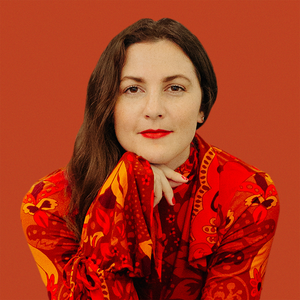
Grab a Buddy, Writing isn't a Solo Sport with Courtney Caldwell
In this episode, Publishing Manager (and multi-talented podcast producer) Raya Whittington is joined by Courtney Caldwell as they discuss their own writing journeys, creating community, the path to becoming writing buddies, and how their endless curiosity fuels their writing and their lives.


Automatically Transcribed Transcript
From the ladies of Rise Literary, welcome to Write the Good Fight.
On today's episode, Publishing Manager and Producer Raya Whittington is excited to welcome Courtney Caldwell. Courtney is a poet and essayist based in the Bay Area. She earned her bachelor's and MFA in creative writing from San Jose State, where she worked as senior poetry editor for Read Magazine, issue 158.
In her free time, she enjoys flying her dual line kite and tending to the garden she shares with her partner. Welcome Courtney to Write the Good Fight.
Thank you for having me. I'm really happy to be here, Raya.
Of course. So I have like a million questions to ask you today, but I just want to start off because I think it's fun and cutesy on how we actually became friends.
Yeah, that is one of my favorite stories and it really marks like the beginning of my life as a writer because, well, everyone's a writer. Let's get that straight. If you're texting every day, you're a writer.
I had to tell you that it's a plague and it's a curse and it follows you forever. But me deciding to become a writer and pursue that happened in community college. And my first ever creative writing class ever, ever was with a one Miss Raya Whittington.
And pretty immediately, it was during COVID, great, the great lockdown of COVID. And so everything was on Zoom. And I just kind of, it's really hard to catch a vibe over Zoom.
But I managed to see some excitement and some energy in Raya over the course of our classes. And we kind of just kept taking classes together and then started a little writing group together. And it's been what, five years?
Yeah.
And we're still going strong. So.
Yeah. We have a shared Instagram account that we try to post moderately consistently on. Yeah, it's so crazy that like, we also lived 30 minutes away from each other most of our lives, didn't even know it.
And bless our creative writing class and bless our Professor Asher for like forcing us to be friends and like hang out and talk to each other because truthfully, my forever writing buddy, and I will always say that, that like, I cannot feel confident about something I write unless I run it past you and be like, what do you think?
Right. And I think that was a big thing that I got out of that class, too, was it's not just like learning the skills and how to do them yourself. It's the collaborative nature of being a writer.
And like all of the group projects and how that class was structured really led us together. And like that's kind of a, that has developed as I've gone on in my education of like how important community is in writing. And it's really difficult to get there.
We were very lucky, you and I, to find each other when we did at the stage in our writing that we did. Because like from Jump, you know, you've seen some of my earliest drafts and they have not been great, but...
I would not say that. Courtney will constantly sell herself short. She is the most majestic author I have ever met in my entire life.
No one can put words to page the way you can. And I will always be amazed and stunned and forever jealous of you because you are magic. You are just absolutely magic.
It is mind-boggling to me.
Well, and this is why community is important, because you see things that I don't and I see things that you don't. And writing is so isolating at times, because it's communicating from the brain to page and then hoping that someone maybe reads it. But the in-between of thought to on-page, to develop, to edited, you need some hands to hold you either just like emotionally, like, oh, I really need to get this draft written, like, well, let's do it because I want to read it really bad.
And you promised it to me yesterday. But like in a friendly way of not, you know, just I'm amping you up because I want to read it. And because we need that external motivation and validation at times.
Oh, 100%. I also, I do, because we talked about community, but I do want to talk a lot about your MFA program because I've had the honor of watching you go on and go to pretty dang near the highest level you can. I mean, there's only one level after this, which would you ever consider pursuing?
Yeah, I definitely want to get my Ph.D. It's just a matter of where and when. You know, I'm 25 right now.
And so it's kind of like, do I want to just live my life, build it up, and then pursue that Ph.D. when I'm like in a comfortable position to pay for it for one and not have to work full time, which I did for my MFA, which we can get into that later. So I definitely, I'm not done learning.
I will never be done learning. My mom used to make fun of me as a kid because whenever summer break came around, I just would be kicking and screaming because I didn't want school to end because I love learning and I love being in a classroom.
Yeah, no, I love a classroom. There's something about it. There's something about homework.
There's something about having to write and someone giving you a little bit of, it's not external validation. That's what it is. I'm like encouragement of like, oh yeah, I have to do this because it's for work or for school.
But it's fun and it's encouraging. And then you also have that built-in community that when you leave school, I mean, I guess you could still have friends from those classes like you and I, but you kind of lose that large size of a community when you leave that space.
And also like a classroom is a melting pot of different perspectives and different ways of doing things. And so even if, even when I'm surrounded by people that are not, I would not say that we've crossed the threshold of friendship, but we are peers. I am learning so much from what they're doing and how they speak and how they carry themselves, and it's just really amazing to immerse oneself.
Not even in just academia, like I'm taking classes in art, in like trade, like learning a skill that you didn't know before is so, like it's really important for the brain to go from not knowing to knowing and then practicing and identifying things that we want to learn and to just push ourselves a little bit because we can get stagnant and bored and that's no fun for anyone.
Especially creatives, we need to have as much knowledge as possible because if we want to write about the world or create world, we need to know about the world.
Absolutely.
That's the only way.
Well, and knowing, like we need to be curious about the world, you know, like, I never know where I want to go until I have a question, you know, be it my writing or in my day to day. I wake up and I'm like, oh, do I have to do this? What do I want to do?
Well, I want to go get my coffee, so I have to go get my coffee and, you know, just... Yeah.
Every day is a sequence of questions that you answer.
Right. Right.
Yeah.
That's how we live. Humans are innately curious. At least they should be.
And yeah, I worry. I guess that's why I love higher education. It's not necessarily just for the degrees.
You can get a good job because we know that that's not necessarily the trajectory that college can always provide, but it is very much that you are constantly learning and constantly curious. And I really worry about people who don't have any interest in maybe higher education or in learning period after they're forced to finish high school. Because like, why wouldn't you want to learn?
Like, why wouldn't you want to be curious?
Well, and I think a lot of that has to do with, like, feelings of not knowing, you know, it can it can lie in an insecurity and maybe an educational experience was not conducted in a way that made any like a person feel good. You know, there's a lot of discomfort in not knowing or in like not being good the first time around or not having like there's a lot of discomfort. But what I was a really terrible student in high school, you know, I was fine in middle school and elementary, but like things started to kind of hit the fan in high school.
And then it came back around in community college because it was a go at your own pace and go where you're interested. And even though you're pushing through general education requirements and you're pushing through things and trying to figure out what you want to do, like those professors at our community college were really, really, really invested in helping us learn and and not letting a question go unanswered. And they could predict, you know, they see it on our faces.
And they know that we're not getting it. And so they really helped, at least for me, especially in math, you know, like they never let me get away with like not knowing or getting just a passing grade. They wanted me to excel.
And people's experience with education is different. It's different for every person. But it gave me something that I would not have had otherwise.
And, you know, I'm just very grateful that it is a space that is safe for me and it is a space that I feel that I can navigate because it also the system can be a little difficult, you know, getting the classes that you need, knowing where to apply, what to apply for, how to maintain those workloads and how to rest in between. You know, there's a lot to consider, but it is so valuable to just be with people and to flex your brain because it's a use it or lose it kind of thing.
Yeah, I can confidently say I never had a bad professor. I had a lot of bad counselors, though.
Counselor system.
That's the problem area. It's the counselors. I had the most immaculate professors and they guided me like in life genuinely.
I was originally a business major and then I had a communications professor come up to me and be like, what the hell are you doing in business? Why are you taking accounting? You hate math.
You're good at public speaking. What are you doing? And I switched my major that day.
And it's truthfully like, yeah, if it wasn't for her, I would have a degree in business sadly, but I would have not had fun. It would have been such a begrudging experience for me. And the second I switched to communications and English, I was like, this is what peace and joy and happiness looks like.
This is what they're there for. They're there to encourage you and help you find that path. I think that assuming you know what you want at 17, 18, when you're going into college is absurd, because you don't.
You don't know who you are and you have to know what you want. But in relation to you and to you going into your MFA program and figuring out starting in college of like, this is what I think I want to do, how were you so confident enough to keep going to that high level of education? Because you did make that decision in your teen years.
Right. Right. I, well, so I transferred from community college to like my bachelor program.
And, you know, that kind of opened the world to me because I had never been away from home. You know, we were still kind of on the tails of lockdown. And so I was kind of like unsure of the world that I was entering, you know, solo.
But I found a lot of solace in the courses I was taking, in the university, in the professors that I had, because it was just like right what you're feeling. Like regardless of what is going on, or no, no, no, not even regardless. Because of what is going on in the world around us daily, minute to minute, you have to catalog what that's doing to your body or find something to do with it.
You know, with that anxiety coursing through, with that adrenaline, with whatever is going through you, finding a thing, an actionable thing to do with those emotions was kind of how, or like what was driving my bachelor's degree. I didn't know what an MFA was until I was in my bachelor's program. Higher education, I'm, I think one of two cousins who have gone to university in my family, or at least one side of my family.
Neither of my parents really pursued like higher education and they never really talked about it with me. So my journey through academia was my journey alone, and it was informed on like what questions I was asking or what opportunities I was looking for or were being presented with. And so I take a poetry class.
I took a poetry class in community college, and it was fun, flirty. But then getting to bachelors and doing like a full poetry workshop, I was like, oh, this is basically another, it's the same language I've been speaking, but it's using it differently. And that just like really hooked me.
And the professor who was teaching that class, shout out J. Michael Martinez, he was also teaching the graduate poetry workshop. And so the next semester he invited me in and was like, oh, these are all MFA students.
And I was like, MFA, what does that mean? But it masters of fine arts. And it was a smaller class, a smaller handful of people, but more rigorous and more, I don't want to say demanding, but more challenging in that, like it was asking more of me.
And it was, but like, in a way that it was giving me space to talk more, to use my voice more, to craft it more, to shape it more. And also to flex my analytical side with other people's work, which is arguably, sorry, my cat is, you can't be a poet without a cat, so this is all a part of the package deal. Yeah, I didn't know, and I didn't set out to get an MFA from The Jump.
I was just kind of placed in the environment and realized, oh, I really want to be here. I really, really want to be here. And I'm very grateful for J.
Michael Martinez because he was like, you should apply. No, you're going to apply. Have you applied yet?
And so I did, and I got in, and it's a two-year program. I just graduated last May, May 21st. So it's been just over a month.
And those two years flew by. They were arguably some of my best. I met some of the most amazing people in my life, classmates, professors, and otherwise.
And I've written so much. So it doesn't feel like a lot right now because not all of it is edited. But I have so much material that came out of those two years.
And I still feel the momentum of like, oh, I need to keep going. And I know how to keep going. So it was just a blur, but one that I'm so grateful for, you know?
Yeah, do you, I mean, this is, me included, because who knows where my life will go. I'm always doing random, silly, goosey things. Do you think that it's worth it?
Would you recommend it to other people? Are there downsides to it?
So I recommend it. I don't think it's completely necessary. You can, you are a writer, regardless of what, you know, educational background you have.
There's always the expense with college, you know. I was able to get my bachelors because my dad was in the military. And so I had the GI Bill on my side.
And then for my master's program, I had scholarships and a fellowship to help me with tuition. And so I think knowing what's re- but like, then again, San Jose State's MFA program wasn't too much of a financial lift.
You know, like there are some programs out there that you can work with that feel reasonable. But I was also working full time to maintain that, which put a little bit of a strain on my sanity, but made for some great fodder for my writing. And so it's all about like what we can realistically do.
But I would say that it was financially worth it. And that like, it was time that I had to spend writing and developing my craft. It was time I wouldn't have, I don't think I would have been able to set aside for myself otherwise.
And I was exposed to so many writers that I wouldn't have otherwise, you know? And getting to make these face-to-face connections with professors, not only professors but writers that I admire so much. I think it was absolutely worth it.
But I don't know that it was 100% necessary.
Sure. I mean, I completely agree. I mean, I did go to community college that was paid for.
I went to school right out of college, right out of high school. So we had like, our county had this program that you could go to school free for two years if you went straight from high school. And I did that.
And shout out California Dream. Yes.
Thank goodness. And, you know, I went to school full time. I worked full time.
I think that it is something to consider of like, if you're going to work and go to school and you don't have a ton of financial freedom to mess around, it can be something that I don't want people to think that they can't be successful in writing without putting themselves in harm's way, like I did, because I truly thought that without my education, I wouldn't make it. I only have an associate's degree in English, and I still am working at publishing, and that's still really possible. You just have to have the eagerness and excitedness to search for positions, and luckily, mine kind of fell in my lap, but I've seen people do it without higher education, so there are two very different and two very beautiful paths you can take to get where you want to be as a writer.
Well, and don't get me wrong, I'm like, an MFA is not a guarantee to publication or a job in publishing or like your place in the writing world. It's a thing that you have to do for yourself. It's any gratification that one is chasing has to beef for the right reasons.
And I was doing this because when I was in first grade and learning how to write for the first time, I was like, oh, this is something I want to do. This is, I want to tell stories and I'm a Gemini, so I love to talk. Writing is just talking on the page and there's so much happening in my head at all times that I have to relieve that pressure somehow and I have to contextualize and make peace with some of the things that I've been through somehow.
But that is not without sacrifice. School is a thing that you have to sacrifice for. I've had friendships fall apart because I'm spending so much time with my writing and on myself.
And at times I can feel selfish, but my dreams are something I'm willing to be selfish about. I am a writer and I have always wanted to be. And so exploring what that means and how to do it, how to make it happen.
And I wouldn't say that the way that you and I go about things is always correct or healthy or recommended. The way we move is typically, you know, motivated by passion or just excitement or just pure spite. Because we know if we stop moving, then we stop moving.
I feel like I'm, well, since I've graduated, I am stopping, I'm slowing down. And for the first two weeks, I was like, what do I do with myself? You know, like there's not seven different things I need to be focusing on and stressing out about.
Which I guess is another thing I got out of my MFA was like time management, how to keep those irons in the fire. And when I, when I feel myself, you know, you're not picking up the pace, you know, you don't have anything new that you've generated in like two weeks. So like, what's the deal with that?
You should open up a document and you should start drafting something because you're constantly observing the world and you're reacting and responding to it. But you got to do that in a productive way, Courtney. Like, you have to put it on the page.
So it's like an internal thing that I feel has developed without me realizing it. And summer is really when I'm planning on exploring that and, you know, guiding it, but also letting myself chill. But like, I'm very anxiety motivated.
And so that's why I think the MFA worked for me in the way that it did. Yeah, among other things, you know, I work from home. So that allowed me a lot of wiggle room to go to my classes at night, to do my homework in the early morning, in between meetings, break up my day in a way that worked for my schedule.
But my schedule was intense for two years. It was not really sleeping in the way that I should be. I, social life kind of took a back burner for a very long time because I was working at this.
But I did it. Yeah, I did it.
No, we talk about this a lot. And actually, you and I talk about this a lot. And I even mentioned it to our CMO of Rise today because she asked me, she was like, you're doing like too many things at once.
If you're getting anxious, like drop something. It's not worth you getting anxious. I was like, I will not be productive until my heart is palpitating and my hands are shaking.
I need to be this busy to be productive. Healthy? No.
How I operate? Yes. And we talk about this a lot because I will get so down on myself when I get super busy and I don't write, and then I feel like I've failed myself and I failed my creativity, and I've failed what I'm supposed to be doing because I don't have that, I don't have school to like drive that anxiety anymore, and I have to somehow self-anxious, like self-freak out so that I create, but also maybe I don't, maybe I have to figure out how I warp my brain in a different way that I'm allowed to write without shaking and feeling like I'm on the verge of a panic attack.
But like that's not how I've ever created because creation for me since I was young has been a survival tactic. It's been how I keep from absolutely losing it in the real world and like lashing out at everyone around me. So it has been this way of like, it's always been attached to anxiety, it's always been this way of keeping me sane.
So now that it's like fun and cute and like a hobby and something that I enjoy doing, also something I do for my job and like doesn't require me to freak out. I feel like I've lost a lot of that momentum. And we discuss this all the time because I'm like, I don't feel like I'm a good writer until I'm losing it.
Yeah, you know, and I think it's, I don't think I can ever or have ever been able to induce creativity, but man, can I induce a panic attack? And man, does that open the floodgates for the things I have to say? And, you know, maybe it's just our version of Hemingway's philosophy of like, write drunk, edit sober, you know, write anxious, edit slightly less anxious.
Like, I don't know. But like I, you know, it can always go back to, I can always explain away, you know, why that behavior is the way it is. You know, it is a survival tactic.
It's a means of us, you know, creating a world that's different from the one that we are in and one where we have significantly more agency and control than we have now. But like, to be able to control that a little bit more is like, I have so many different modes with which I write, you know, on my phone, in my notes app, on, you know, scraps, scraps of paper, my sketchbook, my laptop, my journal, and I have to oscillate between them. Otherwise, I feel like I'm doing it wrong, which there's no wrong or right way.
First of all, it's just writing when I feel that urge. And if that urge is often paired with me not being able to sleep because I'm too anxious about the state of the world or about my day or about whatever, then I guess that's what it is. You know, for the last week, I've been solely writing in my notes app.
And it's less of a push and more of like collecting it, collecting those words and collecting those creative, creative, why did I say it like that? Creative, collecting those creative droplets until we eventually have enough to shape into something different. And most of all, like giving ourselves the grace because like, if I am saying to myself, oh, I haven't written in forever, like I'm such a bad writer, I'm so terrible, that's probably not going to motivate me to do much else.
And it's a when we can kind of thing. You know, we are still working, we are still human beings that need to have their social and psychological, physical needs met. We have to go outside, we have to live life before we can write about it.
We have to make those mistakes before we can write about them. And similarly, like when I've gone through traumatic things, you know, like my last year of undergrad, I was in a really bad car accident. I couldn't write about it until a year or two later.
We have to get distance from these things, but we have to give ourselves grace and give ourselves time. With the MFA, it would be, I have a short story due next week, and I haven't even thought about anything that I want to write about. So then I go, well, what have I been down a rabbit hole on with social media?
What have I been consuming? And it'll be like, oh, what's the right mouth tape? Cool, I'm going to write a story, and one of the characters uses mouth tape.
There, that's it. That's all I have right now, but I'm going to start heading in that direction, and hopefully I'll get to 3,000 words by next week. And sometimes the turnaround was not a week, it was two days, and we don't have to talk about that.
I have 4.0 though, so something's got to work.
That part.
And though we work under pressure. I think, I mean, we just, we, I've always had that with you of like, we just work really well under pressure. And you had mentioned it before, but I kind of want to jump a little bit back to it, of like, when did you really start writing?
Like, did it come from like a peaceful place, or did it come from like a necessity place?
I, writing and like reading were always my favorite subjects, you know, English and language arts, all of that good stuff. The first story I ever wrote was in first grade, and it was called Miss Rose Saves the Day. And it's about all of these kids who, like everything's fine at school, but then they go home and they need to be rescued by their teacher still, which, you know, I was six when I wrote that, so maybe we should have gotten me into therapy a little earlier, regardless.
But like as I developed as a writer, it was always, as a writer, I was 12, you know, I was a big Wattpad kid in elementary school or in middle school. And so I was writing like, oh, here's like it was basically a soap opera starring my friends, but it was hinging on the drama. It was hinging on the human interactions that I was observing and putting it into words as best I could for being 12.
And then after that, I wrote a murder mystery. After that, I wrote, you know, like it was usually dealing with like the hard emotions that I didn't know how to process. I was doing it kind of long form because I had stuff to say.
I've always, it's always a means to metabolize and digest like those yucky feelings, to put a pin in it, or not really, to understand it. You know, to understand the outlines and the boundaries and the middle matter of like, what is this really? How heavy does it actually have to be?
And what aspects of myself and my brain and my emotions is it like leeching from? Like, what is it leeching out of me? And how do I, once I can name it, I can get it back.
You know? Life is very complicated. And I think writers typically are feeling it in a way where it's like, ooh, ooh, that's staying inside of me though.
You know, like that, I have to do something with it. And like, even if I can't change the ending to the story, at least I can make the beats satisfying, or at least I can make it worth it. At least I can, I can convey that it was worth it.
Yeah, reflecting back on like being a young little writer, and what my little brain was subconsciously, yeah, subconsciously gravitating towards is interesting, because it was always like seeing something that no one else could see, or picking up on patterns that no one else could, or feeling isolated and like you needed to be rescued by something, or that something needed to be uncovered. And, you know, I think that ties in a lot with, you know, some of the things that I was dealing with growing up, like we were not allowed to talk about it, you know, outside of the house, rarely inside the house. So I was kind of always intrigued by the mystery of the human condition, intrigued by like what we tell people and what we don't, what we feel comfortable expressing and what we don't, what we lock up and never uncover.
But like I reached community college and started to realize, why am I not saying anything? Why am I not talking about these things? Because otherwise it just lives inside of me.
I think it helps that I started therapy around the same time that I started community college. But to realize like, no, like the rich inner world that I feel trapped in is, you know, it's, well, the inner world that I am trapped in is rich. And it is something that I don't have to just have.
I can do something with it. But the learning how is a little tricky. You know, before MFA and before bachelors even, I was, I know, I think during the beginning of my bachelors, I was a part of a, like, entrepreneurship where I was learning from an author from my hometown with like over Zoom, with like a group of other women from all over the world.
And we were doing many workshops and that was kind of a miniature MFA before I knew what my MFA was. You know, like our passions find a way, life finds a way. And, you know, like I for as much as I can say that like I intentionally went out and did all of these things for myself, it was more so like I was going where my heart was leading me.
I could not have planned my life up until this point, but I'm so grateful for how it turned out, like even with all of the hardships, especially with all of the hardships, I just feel so grateful for all of the writers I've been in contact with, like at any point in our journey, even like back to community college, because I still like hold that time so fondly. But just, you know, it's a journey, and I'm not just because I'm on the other end of an MFA, doesn't mean it's ending, you know, like I just, we both ended up at AWP on our own, of our own accord, you know, and like, we're like moths to it. We just keep flying and hope we'll find ourselves where we want to be.
Yeah. I know, I knew you were gonna be a writer, and a fantastic and well-awarded one at that, the moment I met you. And even talking with you now, like you saying that you wrote mysteries and things like that on Wattpad.
Well, I was writing fanfic, tells me everything I need to know. You create such tangible and escapable worlds with the way that you write. And I beg people to find your writing if they can, if it's available somewhere, because it's magical and just fantastic, just wonderful and beautiful and poetic.
And you were truly meant to be a writer. Your name says it all. I mean, you have Courtney Caldwell.
Like, hell yeah, like, that's a writer's name.
Shout out to alliteration. Come on, mom. Thank you, mother.
Thank you. That means a lot to me. It's hard to find my writing right now.
And let's not discredit fan fiction writers because they provide a valuable service. You know, some of the most... I consider myself a well-read person, but some of the best written stuff I've ever read was on ao3.com.
Let's talk about that.
You know what? They are the backbone of writers.
Backbone.
I mean that.
If you need a testament for like not everyone needs an MFA to be a writer, go to ao3.com. I beg of you. I mean, besides the point.
Wattpad is a production company. People make millions off of their like fanfics and short stories. So yeah, I mean, there's a million ways to be what you want.
Through Substack, through Patreon, there's so many options to be a writer. And being a writer does not mean you make money. Hate to break it to y'all.
If you think you're going to be rich, that is not what being a writer is. Sorry.
Well, and you make a good point too of like, you know, I'm a writer because I love the game, not because I think I can make millions out of it. I work at a tech company right now. Like, I, it's technically a job in my field, you know, with writing, but like, I do not make the money that I make with my creative pursuits.
Very few of us can, but that doesn't mean I'm not going to keep trying, not going to keep placing or like pushing to be in these spaces creatively. And like, substack, independent publishing or like solo publishing, absolutely a vital and like, valid pursuit in getting our work out there, you know, like I am just now entering this submission slash publication game. And to number one feel, which is something that I learned about in my MFA, I like, besides the craft aspect of like, it's, we're learning the business side of being a writer.
And one of the biggest tips that my professors gave was pick a day out of the year, and that's your business day. That's your day where you sit down and you submit. You submit all of your work to all of these publications.
You have a list that you build over the month and you do it in one day. And that's it. That's all you have to do.
And then you have to wait and you have to take those rejections and you have to keep going. And you have to reach a point where you feel like this draft is done just to realize it's absolutely not done. And it's harder for me with poetry because I never feel like a poem is done.
But with essays and with short stories, I kind of feel like it reaches its natural end just to realize, damn it, there's holes. There's holes everywhere. And for as smart as I can be about it, there's dozens and billions of other really intelligent people who see things that I don't or feel that is lacking something that I haven't considered yet.
And so that's why community is a big part of it too, of like I have really good readers on my side, who bring up those points before I even get it to a submission window. And then also keeping on top of submission windows and paying submission fees and knowing which journals to apply to. And blah, blah, blah, blah.
And this is where SubStat comes in because it can be a blog space, it can be a periodical, it can be a place where I just put my silly little poems and they live there forever for free. And I am now into the great unknown. My in high school, my graduation cap was I now walk into the wild from Into the Wild by, oh my gosh, John Krakauer.
I don't really know where you'll be able to find my writing, just that you'll be able to find it shortly. You know, like I, that's the other aspect of it too. Like it lives so deeply within me and my circle, my writing, that once I let it off, let it go into the world, like how do I handle that?
How do I handle people's reactions? How do I handle criticism? How do I handle praise?
Like even, you've been my friend for five years, and whenever you give me a compliment, I'm like, oh God, eww! Don't look at me! But that is something that the MFA can prepare you for, kinda, but you know, once you're there, it's, yeah, you just have to do it.
You have to take the leap. And so like MFA was a good decision for me, but it might not be the decision for you, but I suggest everyone at least try a creative writing class at either your community college or like an unaffiliated creative writing class. I've always said that I want to run a summer camp because that's, I took a summer camp creative writing class when I was like 10, and that stuck with me forever.
Like, I just, I think it is a very useful skill to have, to flex your imagination too, but also to just get into the practice of putting into words the things that have happened to us, putting into words the way that we are feeling. It's very, very healthy to communicate those things, instead of keeping them bottled up. It doesn't help anyone to just keep things bottled up.
I love you.
The feeling is very mutual.
I'm like, it's just so magical to talk to you. Before I let you go, we do have a little segment on our show called Just the Tip, and you just gave great advice, but I'm gonna need you to give more great advice. For writers, I'm gonna play the little jingle for you, see how you feel about it.
Okay. One of my biggest tips for writing, and I'm kind of stealing it from Lauren Groff because she did a wonderful talk at my university this past year, is like daydream on the page. In the beginning stages of a project, it's basically a baby, and we can't expect babies to be perfect.
You know, we're constantly fighting our inner critics, and it's important to remember why we're writing. I write because it's fun for me to play around in this little space and like build out a world. But knowing that like just if something's not working, I don't necessarily have to follow that through.
I don't have to see every single thought from beginning to end. I can let them, you know, having an organizational system that works for you. I have a document that's just, I call it my mind palace, because nothing really makes sense, but everything has a place.
Whether it just lives in here, and if it exits that document into a different document, perfect. But there's no expectations, no pressure placed on any of the things that I'm writing in this space. It's just that I'm writing and generating and playing.
You know, like I for one never have a plan. When I'm writing something, I just start and then I let it, I let the issues pile up and then I solve them. But that process is different for everyone.
And so just giving yourself a lot of grace and playing, play, dream, have fun even. That's my tip.
I love that tip. I do that as well. I have like, every time I go places, I like write bits of dialogue down where I'm like, that's great, that was so dramatic, that's so good, write it down, write it down.
Because like, yeah, you never know.
Eavesdropping is big. Eavesdropping is big for writers. Listen in on those conversations.
Don't be afraid to stare a little bit. Have a little practice in how would you describe this to someone. Often, some of my favorite things that I've written are like stories I've told a friend and just got like really hyper about because I was so excited and like, oh, I have to write that down.
So just like being open and being, I was around so many other writers that when they heard me talking about something good or I heard them talking about something good, I'm like, write that down. Open up the notes app right now and write that down exactly how you just said it because that is a draft. You just wrote a banger line.
I'm sorry. And another tip, sorry to just tip on tip on tip. I don't even remember what it was.
Oh, like speaking aloud, what you want to write is really helpful because trying to word, like it's especially dialogue. In our heads, it can sound perfectly fine. But then you say it out loud and you're like, no human person would ever say this, especially in a time when AI is really prevalent and we're kind of losing the thread on communication, critical thinking skills.
Our brain is an organ and it's fallible, you know? Exhaustion is a hell of a thing. We, you know, it may make sense in the moment, but say it out loud just to double check.
I always say you are not a good writer until you look a little crazy because the amount of times I'll be in public reading something that I wrote out loud, like in different voices to get character voices out of my head and being like, yeah, even if it's not a person wouldn't say this, if you know your characters, you'd be like, my character wouldn't say that. Like it's not even necessarily like a person. It's like that specific person wouldn't say that.
And it's so necessary to talk to your wall, to talk to your wall and to act the things you do out. Because I script write, so 90% of what I write is dialogue. And it is so necessary for me to like sit there and be like, hi, hello.
Like it's so necessary. And you look so silly and weird. And I close all my windows so my neighbors don't think I'm losing it.
But I'm like, I have to, there's no other way. Or it's gonna, I'm gonna give it to someone and be like, this is weird. This doesn't, this feels bad.
It's necessary.
Well, and this is where like taking classes in general, like taking a little community theater class is really fun to like figure out intention behind how people say things. You know, another lesson we learned in MFA was like, don't go too crazy with the she said, you know, scared. She said suspiciously, she said, he said, it becomes invisible and that's good.
We don't want to pause too heavily on like the way things are being said, because there are other ways to describe that. If the dialogue is good enough, it'll get that point across. If the scene setting is done in a way that doesn't feel like you're just forcing it into my brain, or it just feels unnatural, and that kind of is a skill that can be acquired in many ways.
It could be just like really paying attention and practicing throughout your day. How would I describe this on page? You know, I am doing this, but how would I word it?
You know, I'm going to the movies and I feel like I'm anxious. How would I show that? There are lessons to be learned in everything we do, there are prompts to be generated.
I'm a very prompt driven writer. I have to be responding to something. I think that's why I like school, because you know, it's a prompt, an assignment.
But we can create those for ourselves. I was angry the other day. What am I the most angry at?
And what would make me feel better? What could I hear that would calm me down, you know, almost instantly? And playing that little mind game.
Because that's what this is. It's playing with our thoughts and our feelings and like how we communicate.
Yeah, it's, I think one of the purest, no hate to people who do other types of art, but one of the purest arts that imitates life. It's so human and so exactly how we exist. And it is one of our oldest forms of communication.
It's how we share what it is to be human with one another in a way that when translated is universal, right? It's a lot like music and music is writing and music is poetry.
It's universal, but it's also so specific to a person. Like I went to Ocean Vuong's reading for...
Shut up.
The Emperor of Gladness in SF. It was at a Presbyterian Church. It was awesome.
But he was talking about how writing is really a gesture. You could say, I could say the word winter and what we're picturing you and I vastly different. That was something he said, I'm not taking credit for that trust.
But that it is just the suggestion of a thing and the mind does the rest. And so knowing that like there's a point that our brain has to turn off and it has to just be good enough because I don't want to put a specific winter in your brain. I can give you kind of the main, you know, bare in cold, dry.
And that's kind of it. That's what I can work with. But then populating it with people in situations and encounters and whatever, whatever, whatever.
Because I want winter to be populated by my reader's brain, winter to be populated by their associations. And so it is a handoff and it's an exchange. And I think that part of it, like bringing my work outside of my circle, and that they gave me more time with a circle to build up that circle and feel comfortable sharing with them.
But now I feel ready to like open it even wider. I want, I want to know what, you know, I don't know. I want to know where my writing will go, because I, maybe there's a 19-year-old somewhere that will feel about my poetry the way I felt about Sharon Old's poem, The Pope's Penis, you know?
Like that was like, it turned a switch in my brain, and I'm like, this is what I need to be doing. I need to be doing poetry. And so, yeah, I'm just really excited for the future of continuing to live and knowing how to do it, or knowing what to do with the unexpected.
My first line of defense is my writing, be it a panicked scribble or a panicked text, Raya.
Well, I'm so excited for you and all the things that I know you're going to accomplish. And I see a Pulitzer. I see so many things in your future.
You have no idea. I truly, if not James, I am your biggest fan and I... That's your boyfriend.
I am truly your biggest fan. And I can't wait to just watch you be fantastic because you're going to be fantastic and you are fantastic. And it's just insane.
And I'm so excited for people to be able to discover you and all the beauty that you give into the world and the comfort and peace that you provide me through your writing. I'm that 19 year old. I'm the one who's like, if Courtney can do it, I can do it.
I'm that girl. And I have been since I was 19. So I think that, yeah, I'm just I'm proud of you and I love you.
And thank you so much for talking with me today because I just love getting to talk to you about writing. It's my favorite thing.
Well, if I'm if you were inspired by me, then I am inspired by you tenfold, you know? I am so deeply uncomfortable and shy in most situations, but getting to, you know, exist with like in your circle, you know, orbiting, like I why not put yourself out there? Why not?
Why not? Mic up on a random Wednesday? Exactly.
Why not? I've learned a lot about like my confidence and self-confidence and just believing in yourself through you. And you are a testament of you don't need an MFA to make it.
And, you know, I feel like it's really amazing to see how far we've come the past five years just starting in community college. Like, to writers, writing, making it, you know?
As I should be.
However, we can. But like, more than ever, community is so important. And I'm just glad that we've been able to establish this community.
Yeah, me too. Well, we'll talk to you later. Love you lots.
Love you so much. Bye.
This has been Write the Good Fight brought to you by the ladies of Rise Literary. Thanks for tuning in. If you enjoyed today's episode, don't forget to rate us five stars, follow the show and leave a comment.
We'd love to hear from you. Feel free to share this episode with friends, family or anyone who might find it helpful or fun. Be sure to follow us on Instagram at Rise Literary to stay up to date with upcoming events, courses, insider info, behind the scenes fun and so much more.
Or you can check us out at www.riseliterary.com. We appreciate you listening and we hope to see you next week for another great episode. Until then, remember, it's your time to write the good fight.
From Write the Good Fight: Grab a Buddy, Writing isn't a Solo Sport with Courtney Caldwell, Jul 31, 2025
This material may be protected by copyright.