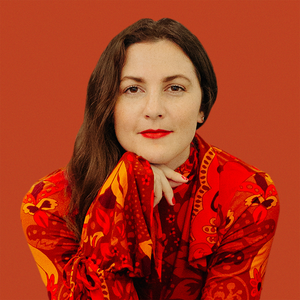
Courting Luck - From Script to Screen with Krista Vernoff
On this week's episode, CEO and Publisher Kristen McGuiness and CMO Lauren Porté Schwarzfeld sit down with award-winning screenwriter and producer Krista Vernoff to chat about everything from her time on Grey’s Anatomy and Shameless to sobriety and saving your soul from dying through expressive and embodied writing. If you want to learn how to make your dreams a reality, this is the episode for you.


Automatically Transcribed Transcript
From the ladies of Rise Literary, welcome to Write the Good Fight.
On this week's episode, publisher Kristen McGuiness and CMO Lauren Porté-Schwarzfeld are excited to welcome Krista Vernoff. Krista has written for and produced a broad variety of TV shows, including Shameless, Law and Order, Charmed, Wonderfalls, Station 19, and Rebel. She's best known for her Emmy-nominated writing and Golden Globe-winning producing for Grey's Anatomy.
In 2023, Krista won the Gracie Award for Best Showrunner. Her company, Trip the Light Productions, has several projects in development. Outside of her work in television, she's a screenwriter, a teacher, a playwright, and an essayist, and she's working on her first novel.
Krista, we're so excited to have you today. There's so many things we want to talk to you about. We've started doing these episodes as just one-on-one, and Kristen and I were like, maybe we'll flip a coin to see who gets to interview Krista.
And then we were like, no, we're actually both just going to be here because...
Yeah, you get double trouble today. So we're...
That's so nice. Thank you. I'm really excited to talk to you both too.
I'm admirers of the way you both moved through the world. And I got to come see the TED Talks in Ojai that you did. And I thought it was just extraordinary.
So...
Thank you. No, we love that day too. And we share such a special person in common with the author, Jennifer Pastiloff, whose book Proof of Life just came out last month.
So for those listening, check that out as well. But it's a really special friend to share. And I feel like we all, I feel like everybody in Jen's orbit, like we all share the same DNA of just, of I think how we move through the world, which I hope is, you know, I think for most of us, love and generosity are key pieces of that code.
So yeah, excited to have you on today. And Lauren, I'm going to leave the first question to you, because I feel like you were also fan girl number one here, though we were both fan girls.
I am solidly fan girl number one. Yeah, you know, when we started this podcast, we were really deliberate about the title, Write the Good Fight, and we, you know, we think of this idea of Writing the Good Fight in two ways as like this way of how you can put your writing out into the world to kind of impact larger conversations and also how you can write for yourself in a way that creates meaningful change within yourself. Yes.
And I can't actually think of a person who embodies both of those things more. I mean, my 13-year-old daughter right now is watching, has been watching for several years now. Grey's Anatomy start to finish, and I love it so much that she's doing that.
There's so much, I mean, the show is fantastic for so many reasons. But there's so much to it where the writing, it's like this idea that you can shape cultural conversations by creating this like water cooler conversation. So let's start there.
I mean, that's exactly, obviously with Grey's Anatomy, that was not the intention, right? Shonda created the show. I was lucky enough to be there from the, you know, I wasn't there on the pilot, but I came the first episode after the pilot, and I was there for the first seven seasons, and then I left for seven seasons, and then I came back for seven seasons, and then I left again, and the show is still going on, which is amazing.
And while the intention with the show was to entertain, I think this is why Shonda is so wildly successful, is she comes, she approaches it not from a place of, I want to shape water cooler, I want to shape the public narrative, it's from entertainment. But we always have asked the question on that show, what message are we sending with that story? At least in my years that I was running the show, the question is always, it's not like, let's send a message with a story.
It's break the story, break the best story, break the story that wants to be told, tell the story that's telling itself to you. But then once you look at it, are you sending a message that is there a better, is there a way to shape a moment or a scene where you're not inadvertently sending a message? Often the doctors would say, can we say this in a different way?
Because I'm worried that we're sending a contrary to good public health messaging message. But if we would just change this phrase this way, we're sending a better message, great. But everyone was invited to say, I find this scene and the way it's written challenging for these reasons.
But I think if we just reframed it a little or took the dialogue that the man has and gave it to the woman or whatever is the thing, it's going to change the impact of the story and what message we're sending. And that was a conversation I always welcomed and love frankly to have. I love storytelling as a medium for activism.
I love it. But if you approach it, activism first, you're preaching and people close their ears.
Yeah. I mean, I think that's what makes it so powerful is like how digestible it is and how entertaining it is, how much people want to engage with it because they don't feel like it's something that's being forced on them.
Right. Right.
Yeah. I always think of, you know, great storytelling always functions like a Trojan horse where, you know, you like, you slip, you slip it into the gates as entertainment, but then inside you have something a lot more powerful that's being said. And I think, I mean, I think that's, Grey's has done such a great job of doing that because it has all the mechanics of a soapy pulp, fun thing to watch.
And then, and then you're sort of surprised where it begs these really big questions or puts these big cultural conversations into the centerpiece. But I do think, I think it's always been so nuanced. And I love that too, about how like, who says the line?
You know, I think storytelling is filled with so many of those like nuanced decisions that can create such like major impact that like, you don't even realize it maybe even in the moment as a storyteller of like, wow, like, you know, who says this line can dramatically alter what that line means for the person watching that show.
That's so true. There are so many tiny little decisions that you make that that can radically alter the experience of the story. I wish I could just call up examples right now, but.
You'll call, you'll call them all up when we're done here.
It's been a lot of seasons.
Yeah. So as, I mean, I will say this, in another life, I would be a screenwriter, but that wasn't, that ended up not happening in this lifetime after I wrote a bunch of screenplays at one point. And then someone, a dear friend of mine was like, I keep writing.
And I was like, no, I'm not. I'm just, I'm done. I tried.
But, so I would love to hear what your trajectory has looked like and how you got into the game to begin with. Was this where, did you want to be in TV and film? Is that what brought you to the gates or was there a different path for you?
I did want to be in TV and film. It's really, it's where, it's where I started writing. I was, so I'll give you the quick trajectory.
I'll try to give you, I'm going to actually look at the time, because I can be long-winded. So I'm going to give you a quick trajectory. I was an acting major.
I was an acting major at Boston University College of Fine Arts. And I took a playwriting class my senior year of college with a professor who has since passed on named John Lipsky, who just totally changed my life. And I wrote a play and I had the experience of producing and directing a piece of something I had written and not acting in it.
And I had this very powerful experience of flow, right? Acting was hard for me. It was hard for me and I was constantly insecure and anxious.
And I think I thought because it was hard that that was the somehow more noble path. But writing was not hard for me. It was never hard for me.
And so when I when I gave myself permission to write and then to not act inside of it also, I had this experience of a liveness that I never had as an actor. And I decided I wanted to be a writer. And like I'd written this written produce this one play and this one like feminist diatribe.
I just it makes me laugh that play. But I had taken Women's Studies 101 and I was like, I'm going to say everything I have to say in this play. So I decided I want to quit acting.
And everybody, everybody I loved and everybody who loved me said, What are you crazy? Are you crazy? What are you talking about?
You've taken one you've written one thing like you're about to graduate. BU was second to Juilliard at the time. It was very, very, very hard to graduate from BU.
They had talent based cuts. Our class started with 54 students. We were graduating 16 students.
So it was a big deal that I was a senior at BU and about to graduate. And suddenly I was like, I don't want to be an actor. I want to do this.
And everyone who loved me told me that I was making that choice out of fear. And I was not yet at a place where I could believe my own voice over the voice of other people. So I stayed an actor until I was in my late 20s.
But I got sober in New York about a year out of college. Because that's, by the way, the consequence of not listening to your own voice, I believe, is that you start having to numb yourself with addictions. Now, I didn't start.
I had been numbing myself with addictions from the age of 11. But I really did bottom out because I didn't listen to my own voice. I had had such a powerful, clear message of what I wanted to do in this life or what I should be doing in this life.
And I ignored it and tried to stay in the other thing because our society is afraid of change, which is wild because it's the only thing that's constant in this life is change, right? We're born, we grow, we constantly change, we die. It's the only thing that's constantly true.
But we're afraid of it and we tell young people, well, once you've made your choice at fucking 17, I went to be you at 17, once you've made your choice, you can't change, you can't change, you can't change. I was 21. You can't change, that's a fear-based decision.
That's gonna ruin your life. Why would you throw away this degree? You must be afraid.
Don't listen to the voice inside you that's telling you to change. That's what was done. And I see it being done to young people every day right now.
If I have a soapbox, it's this. Let people change. Let people grow.
Let them emerge. Let them learn from one experience that that's not what they want. Let them change.
Let your kids change. Please, God, let them change. I have to let my kid, I want her to be an artist.
Well, she's going pre-law. I have to allow it. Good God.
So-
Don't you love when that's the rebellion?
That's the rebellion. But she's going to have a million becomeings. She's, well, God willing, she's going to have a million becomeings.
So, so I stayed, I stayed an actor, sort of. I went to New York City. I bottomed out alcoholically.
I cleaned up. I moved to Portland, Oregon. I worked as an actor.
I earned my equity card and I kept writing. I took, I took that playwriting class from John Lipski. I took a screenwriting class at the new school.
And then I bought, at the time, I could only find, there were two books. One of them was a William Goldman book and one of them was an actual instructional. There was one chapter in one book that I could find at Barnes and Noble at the time.
And there was no internet, you guys, that's how long ago this is, about how to be a TV and screenwriter. And I wanted that because I took the screenwriting class at the new school and I wrote, it was a movie writing class, and the teacher said, you think in dialogue, you should look at TV writing. Because film is a more visual medium and TV is more dialogue driven, because I'd grown up in theater, and plays like TV is like plays went, where plays went to live on screen.
So I got the one book that had a chapter on TV writing, I moved to Portland, I was working as an actor and I was practicing writing. And I wrote a lot of scripts for several years. And then I moved to LA in my late 20s, and I put my headshots in storage, I never told, I finally gave myself permission to quit acting.
I never told anyone in LA that I was an actor. I don't believe in like, I'm an actor, but also I want to be a writer. I like pick a path and get successful in that path before you expand.
So I came with a whole bunch of scripts written, and I got an agent within a year of moving here, and I have been, I'm knocking wood, really profoundly lucky is a huge part. I really am a big believer in luck, and I think you can court luck. Faith without works is dead.
You can court luck with your behavior, but luck is a big part of it, and don't listen to anyone who says it's not. I have been lucky enough to not stop working. I've been working for 20, 25, 26 years.
That's amazing. I absolutely agree that there's certain parts of luck that are just a roll of dice, right? And you can have somebody who's equally talented and equally dedicated and equally everything, who just doesn't get the same breaks.
And obviously, sometimes it's systemic issues, and sometimes it's just the luck of the draw. But I love so much what you said about like, I also think though that like the more we listen to that voice inside of us, the more just like the flow of life opens. And like the less we listen to that, the harder it is for us to be in joy, you know?
And then we're disconnected, and then addiction feeds off of that. And I mean, I know even for myself, like there was a time where I had been sort of doing, I also was, I was a D girl at one point, so I've worked, I worked for a production company, and it was not what I was meant to do. I mean, I always wanted to write, or I wanted to work in books, and I ended up back in the side of book publishing, and then I ended up in a nonprofit job that was like miserable, and I just, I drove every day to work knowing like, this isn't what I'm supposed to be doing, you know, and it was completely fear, it was fear based, right?
And like, the voice just kept getting louder and louder, and like to the point where I was sober at the time, and like, I began to feel like my sobriety was threatened, and I had a baby girl too, I had like a one year old at the time. And I was like, if I don't listen to the voice inside, I'm gonna start listening to those darker voices, right? Like if we don't listen to the voice of light, we start listening to the voice of dark, of like, you know, like, what are you doing anyway?
You're not worth blah, blah, blah, blah, blah. And then the next thing you know, escaping sounds like a really good idea. So I do think the more we're able to listen to that, like good guidance inside of ourselves, I just feel like more flow happens and more opportunities come our way and more luck gets courted.
Yes. And there's a couple of things about that. Like, I think that Courting Luck is about taking chances, right?
Taking chances, because if you're like super safe, if you go to Vegas and you're like only betting $1 over and over and over and over again, the most you're going to win on Relent anyway is like $2. But if you take bigger chances, you can reap bigger rewards. And I also think you court luck through gratitude and through presence and through awareness and through service.
So, and I want to acknowledge when you say systemic issues, like white privilege definitely plays a part in that story that I just told too. I really want to name that. I think the fact that I don't have a degree in screenwriting and that I've worked the way that I've worked is a reflection of white privilege.
I don't see a lot of the writers of color that I'm working with wandering into town with a couple of writing classes and an acting degree and getting the same opportunities that I got. And I think we have to be honest about that. And then in terms of Courting Luck, I think that's that it isn't my phrase, my amazing woman that I've learned from, Linda.
I'm not going to say her last name because she doesn't like publicity, but she that's her phrase she told me many years ago to court luck. And and that means instead of waking up every day and noticing where what's lacking in my life, I wake up every day and notice what's wonderful. That the noticing of where I've been lucky in naming it, the noticing of where I've been blessed in naming it, of where I've been connected in naming it, of where I've been happy in naming it draws more of it.
Whereas if you are, I just have known people who have extraordinary opportunities and can't take their focus off what's lacking, and I have noticed that they tend to wash out of the town. And so there is a kind of delusional optimism that I harness. I think it serves me.
I think it was born, it was born of a traumatic childhood and of having to not see reality to some degree, but it has served me in these other ways. And so, and yes, I just want to say, Kristen, that thing you just said of not, when we don't listen to our body, our bodies tell us what works for us and what doesn't. So for me, my version of like that story that you just told of like, I'm going to a job every day where my soul is dying, is when I was living in New York after college, and I got fired from my waitressing job because I was still drunk and hung over a lot of the time, and I grated the Parmesan cheese into the ice bucket that the bartender, bartender was using a bucket lined with a trash bin and had the ice in it, and I was practicing working the cheese grater, and I thought it was over the trash, it was over the ice bucket.
And then when I realized, pretended, pretended I didn't do it and that I didn't know, I got very quickly fired from my waitressing job. And so I went and I got a temp job and I sat in a temp job, I worked as a temp behind a desk for one day of my life. Because by six hours into the day of doing nothing, sitting still and answering phones once an hour, I was suicidal.
I started to have suicidal thoughts. When you say that, like, I am a high, high, low, low person, and that low came so fast and fierce, I was like, and also like the alcoholic thinking, right? Like you think, like, all the way to the end of the story is like, if this is my whole life, if I have to spend my life like this, I may as well kill myself now, was the thought.
And I was like, oh, I'm never doing this again. And I went and I got another waitressing job because I need to be, I need to be moving and I need to be talking to people and I need to be multitasking and I know that about myself. And the difference between a waitressing or bartending job and a temp job for me was the difference between life and death.
And I, that I listened to even at that age. And I think that if anyone who's listening, if there's something that's making you feel like your soul is dying, stop doing it. Stop quit, go do something else, get another job.
You know what I mean? Like if you're sitting behind a desk for $8 an hour, go work at Taco Bell for $8 an hour, there's, it will change something.
I agree. And I think it is. It's about, I mean, the closer you are to your calling, even if you can't quite be in it yet, you know?
And I think that's the thing. We don't all get to like wake up and be like, oh, and now I'm going to write for a TV show tomorrow, right? I mean, that's just not, that's not reality.
But I think the closer you get to your calling, or at least if you're walking in the direction of it, you know, the more life affirming life becomes. And, and then it does, it opens up those portals of gratitude and joy and just optimism that allow you to then get closer to it, you know, if not all the way there. And I do feel that like, if you're in the thing that's sucking the life out of you, then, then that calling just feels like you're never going to see it, you know?
And so I think it is, it's so important for people to find the thing that even if it's not the exact thing, even if it's the thing adjacent, at least if it's feeding you life, you know, and I mean, again, I'm, Lauren, I'm going to shut up now. Now it's just a story of a woman who couldn't become the screenwriter she hoped to be. But I found like storytelling comes in so many different ways.
Yeah.
I mean, it needs to be the thing that lets you at least be the person who is capable of creating that thing, right? So like when I was in college, I went from waitressing in high school, which was a job that I absolutely loved, to like working at a desk in a bank. And I was like, oh, this is weird.
Like, I mean, I literally like took up smoking so that I could leave and like go and hang out with people. And then I started working retail and I was like, oh, I'm back to being able to talk to people. Like, I thought that I was just like a person who loved to work.
And as it turns out, I was like, I'm a person who likes to talk to people. But like, it's not just any job. It's, you know, it has to be the thing that lets you be the person that you're supposed to be.
And it can look in a lot of different ways, but it has to, it has to let you be who you're supposed to be.
Yes, yes. The answer is yes. Listen to your body and make small changes that get you closer and closer and closer to the thing you want to be doing.
I really want to say to you, Kristen, like, I was just listening to Carolyn Mace, who I haven't listened to much since I was in my early 20s, but I stumbled on something on Sounds True. And she said the sentence, one of the ways life works is that people are often given a passion for something that they don't have the talent for. Now, I don't know, I don't really, I'm not sure I believe that you didn't have the talent for screenwriting, but maybe you didn't have the fortitude for the amount of rejection involved with screenwriting.
Like, maybe you were well loved in your childhood and the idea, you know what I mean? Like, here's what, here's what, here's what's going to be particular circumstances that make someone able to survive the roller coaster of Hollywood. And that thing of like, you wrote for a couple of years and then someone said keep writing and you were like, oh, I'm, I don't want to do this anymore.
Like, I don't want this level of rejection in my life is a valid thing. And you became someone who publishes other writers. So you, you found a way to take your passion and be of service to the world and to be of service to other writers.
I think it's a pretty extraordinary trajectory. And it's not that when you said, this is a story of a woman who couldn't be the screenwriter, that's not the story that I hear.
I'll also pause. Kristen also just got a very, very lovely piece of feedback on a screenplay that she wrote and submitted to a festival. So I'm going to publicly put this out there and say, perhaps Kristen is supposed to be a screenwriter.
Maybe. Listen, I just want to say that when I have taught at various times in various places, one of the things that I talk about is in, if you, when you think of like, do I want to be, do I want to go to Hollywood? Do I want to go be an artist for a living?
One of the questions you have to ask yourself is, how high is my tolerance for financial insecurity and instability? How high is my tolerance for instability? Because that's the game, and for a lot of people, the tolerance for insecurity and instability is not high enough, and that has nothing to do with talent as a writer.
These are the questions we have to ask ourselves, like, am I okay? You know, my sister is an artist for a living, and there was a time in the 90s when she was on a soap for a year, and she thought, I've made it, I've made it, and then she wasn't on the soap anymore, and then a year later, she had to go back to bartending. And it was so humbling, and she's made a life as an artist for her entire life, for her entire life.
But we were talking recently, and she brought that up because it was such a moment of like, oh man, I had this done. I thought I was done bartending. And then I was back bartending, and you have to have a willingness, a fortitude around that, that allows you to keep moving forward, because you love the art.
And sorry, the last thing I want to say on this is, I made a pilot once about dancers, about dance. It was called Grace, and I was working with world-class dancers, all these dancers from So You Think You Can Dance, astonishing people. And I turned to one of them, because they were doing the most extraordinary things I've ever seen for like eight hours a day, like leaping through the air with like, we were making it rain on them, and they were jumping seven feet in the air and landing over and over and over.
And I said to one of them, I said, Neil, how do you guys do this? And not be in like terrible pain all day long. And he just looked at me and he smiled and he goes, no, we are in terrible pain all day long.
We are in terrible pain all day long. It's just worth it.
Yes, it's worth it.
It hurts and it's worth it. So you have to decide if the pain of the life that you think you want is worth it. And for some people it isn't and they end up doing something parallel, but I'm rooting for your, I'm rooting for your movie.
Thanks. No, and I think that, well, and I think that's really true. I mean, my experience with the screen playwriting, despite the fact that I just don't think I'm great at dialogue.
So that's its own thing. I think the passion is, and what I've discovered is like, I love being a part of it. I mean, I got to be part of a book last year that we took out for Unscripted.
Now we're in scripted development. Like, I love development. I mean, I think there's a part of me that will always be a D girl.
I love that. I love that action around stuff. And I love what I like to write.
But I also think, years ago, my husband's a big surfer, and I went out surfing with him early on in our relationship. It was like, oh, are you gonna surf? And so it takes me, we surf at the Pacific, which is hard.
The Pacific Ocean is kind of a mean ocean. So then we go to Kauai, and we surf Kauai, which is a much gentler wave. They have beginner's waves there.
And I got to experience getting up on the board. And I thought, and I saw him, I said, the thing is, getting up on the board was a lot of fun. I enjoy getting up on the board, but I don't like the washing machine of the ocean.
And my dislike for the washing machine is greater than the joy I experience when I'm up on the board. So it's not for me. I get what you love about it, but the hard parts are just too hard for me.
And so I think that is true. I think with everything, that doesn't mean there isn't something that you don't love about it or something that you can't find that same joy in something else. But if the hard parts just aren't your hard parts that you like, you gotta go find the hard parts that are the fit for you.
You know, so, I mean, I love to get back to also, I mean, you've worked on so many amazing shows and Shameless sticks out for me too, speaking of addiction and recovery issues. And I'd love to hear how that has influenced your writing and the stories you tell, if at all, and what that looks like for you. Cause I know, I mean, I know for me, being sober has been such a huge part, not just of the things I write about, but how I write.
And I think for a lot of us, we grew up in the like Hemingway tradition of like, I actually tried to move to Key West multiple times when I was an alcoholic writer, because I was like, I'll just go to Key West and be drunk and write books, like, and have cats with multiple toes. But how has that influenced your writing life and the stories you tell?
Well, I'll be honest and say that I think getting sober at a young age is a huge part of why I've been successful as a writer in Hollywood for as long as I have. I think that that's what I say, like, faith without works is dead. Like, when I teach and people go, like, what's the one thing, like, if I was going to do one thing for my writing, what would you, like, what would be the one thing?
My answer is quit drinking, quit doing drugs for a year. Whether or not you're an addict or an alcoholic, because one of the number one things that people say is they don't have time, right? We all had, we've all had decades of support jobs.
I was a nanny, I was a waitress, I was a singing waitress, I was a bartender, I was a singing telegram girl. I was, I worked at a daycare center, like, we've all had our support jobs, and they're exhausting, and you don't, you feel like you don't have time for writing. Well, I quit drinking and doing drugs when I was 22 years old.
Think about how much time that frees up. That you think you don't have time for writing, but you have time for six hours of drinks with your friends. I was going home, I would go out with my friends sometimes.
I still hung out in bars, I was still a bartender in early sobriety. I didn't, like, live a hermit's life, but the amount of time that was freed up by not being drunk and not being high and not being out seeking drugs and not being hung over was a huge amount of time. And I am like, what if you just didn't drink and didn't do drugs for a year?
How much time would you have? And people are so fucking confronted by that thought. Whether or not they think they have addiction issues, the thought of it is just like, what else could I do?
And I'm like, well.
What's number two on the list?
Set an alarm for 430 in the morning. You know what I mean? Like get it, find the time.
But finding the time to cultivate your art is a huge part of creating success. And so that has been, I think that was huge for me. And, you know, so that, and how else does it inform my writing?
Well, in good and bad ways. So I will tell you one story that leaps to mind is, I wrote a movie once about divorce, and I still have a fantasy that I'm gonna bring it back to life. So I'm not gonna tell you the log line, but my friend Rob Delaney, who is an astonishing human, read it.
And I think he read it after it already hadn't gone. Like I had big talent attached, and I really thought it was gonna go, and I thought it was really good. And Rob read it, and he goes, everyone's real polite.
Everyone's so well behaved. Like it doesn't look or feel like any divorce I've ever seen. And Rob is a sober person too.
Like he's been very public about that. But I realized when he said that, that I've been in a program of recovery for my entire adult life that teaches you to apologize when you've been wrong.
It's a lot less messy.
It's a lot less messy. It teaches you like ways of moving through the world that don't create chaos. And I was like, oh God, I wrote this like a sober person thinks.
And that isn't how most of the world moves through the world. And so that is a way where I was like, oh man, I wish I had given this to Rob a year ago and gotten that note. So that's one way.
But the other way is that I've been able to build, I think really honest and effective addiction, and addiction story, addiction and recovery storylines into a lot of TV that I've written. And that has a huge impact. I've had people come up to me and tell me that they got sober because Amelia Shepard did.
So that is very moving to me, or they got sober because Lip did. That's pretty amazing. And also sometimes just depicting not the recovery, but the effect and the impact of alcohol and drugs on a life can be a wake up call for people.
Sometimes we hear things in art that we don't hear anywhere else. I went to see Cynthia Erivo in Jesus Christ Superstar at the Hollywood Bowl last night, and I had a literal religious experience. I had a religious experience last night.
In that, in that I have never, I was not raised with religion. I have never felt the story, the Christ story, the way I felt the Christ story last night. It was just fucking magical.
And she was astonishing. And so it was religious on multiple levels, because art, if I have a religion, it's art. And that combination of role and player, that combination of art and artist was astonishing.
It was astonishing. I wept. I think I was crying, like shaking, crying for 10 minutes.
It was in the middle. I mean, you're in the Hollywood Bowl. There's 16,000 people and there's no roof on the place.
You can sit and quietly cry and nobody cares. But it was like, it was, and I was not alone in that. There was a two minute standing ovation in the middle of Act Two.
It was such an electrifying performance and it was electrifying also to be a part of the audience for that performance. It felt like what I imagined church on its best days.
Yeah, the best of it. Yeah. Oh, I love that.
Well, and I think it is, there's such a, I mean, art in its best guises is a euphoric experience, right? I mean, it is where we get to touch the divine and it's like what we hope is artists to be able to like bring to people. And it's not, it's not an easy thing to achieve, you know, those like lightning in a bottle moments where you really transport the people watching or listening to have that experience.
But whether it's as artist or as viewer, like it's such an incredible, it's like the best of being human. It's like, oh, this is, I mean, we're not just brought here to tear the whole thing down. We actually serve a really kind of special purpose in the history of this place.
Art is so, so, so, so, so important. And it's one of the reasons why when like dictatorships come in, they start trying to control the artists, start trying to control the voices, because art wakes people up. It wakes people up.
And in art, we see things that we couldn't imagine before. And it changes the world.
Well, I think what we're missing right now in the world, very much, very desperately, right now, what we're missing is a lot of empathy. And the art that is being created, I think when we create art, when you get dropped into somebody else's story, you're building empathy. I mean, people have created, you've created so much empathy by these worlds that you've created between Grey's Anatomy and Station 19 and Shameless.
And you've created so much empathy within the people that are watching in ways that I don't know that you can recreate in other ways.
There is intimacy to TV because the artists, the actors come into your living room week after week. We used to say week after week after week. Now it's like people binge.
There's a huge impact of television specifically because it's in your living room.
Yes.
The intimacy of that.
Yeah. Yeah, no, I think there's such a shared narrative there.
Yeah.
And the way you're able to create it for people and then, I think, and then taking it the next step with the way that you teach workshops, which is also something I'd love to talk about, that you kind of build it within people where they're able to, I don't know, create this sort of like storytelling and embodiment for themselves of what they then want to put out into the world. I feel like it's like a really interesting kind of creating empathy through the stories that they're seeing on TV and then kind of creating them for themselves, from being in one of your workshops, but then also seeing the ones that you teach. You create this very embodied experience.
Thank you, Lauren. That's so nice. I teach really what I teach is expressive writing.
And what that means and why I think it makes us all better writers and also more embodied humans is because until we know ourselves, it's hard to know other characters. Until we've sort of faced our own shadows, it's hard to write the shadows of other people. Like it's, I just think, I just think the deeper we go on the page with ourselves, the deeper we can go on the page with our fictional characters.
And I also know that expressive writing has been studied. There was a study out of Harvard about expressive writing. They had surgical patients, pre-op patients write in their journals for 10 minutes a day.
I'm getting some of the, I'm gonna get some of the details of this wrong. It might have been for 20 minutes a day, but go look up the study, expressive writing. They had people write, they had focus groups, pre-op patients.
Let's say they were all getting gallbladder surgeries or something. And 10 of them, they had write about their feelings, about their feelings, write emotionally. What are you going through?
What are your fears? What are your angers? What are your sadnesses?
What's going on with your sister? What are you feeling about having had to put your dog to sleep? Anything that is evocative of emotion is expressive writing.
They had one group do that. They had another group not write at all. And then they had a third control group write non-expressively.
So the weather, write about the weather, write what you did today. The expressive writing group had a 50% reduction in their post-op surgical recovery time. That is an astonishing study.
That is an astonishing study. And I think in a sane world, every single doctor would be prescribing expressive writing to improve the immune system because that's what that study, that's what it did. It shows that getting your feelings out onto the page improves your fucking immune system.
And how does it improve your immune system? Well, you don't have to hold that shit in your body. You got it out.
You don't have to hold the energy of the unexpressed in your body in a way that compromises your nervous system and therefore your immune system. So the exercises that I teach are like 10-minute writing exercises that you can do daily. And then from that, you can build fictional worlds if you want to.
But I'm not going to sit, I don't sit and teach anybody how to write dialogue except this, Kristen, I'll tell you this. Just this. The way that you improve your dialogue writing is to give yourself the homework of listening very carefully.
So take yourself to a restaurant, sit and eat alone, but sit next to a table of four and listen to how everyone expresses themselves differently. And the reason you do it with strangers is because when you're with your friends, you're not going to detach and listen, you're going to engage and talk. But when you listen, everybody has a different rhythm, everybody has a different syntax, somebody stutters like that before they talk, somebody just talks endlessly like I do, somebody doesn't talk as much, but when they say one thing, it's the funniest thing, the Christina Yang thing, it's the one sentence everybody, right?
If you go just give yourself the homework of listening to strangers and noting their syntax, their rhythms, their speech, their verb choices, is there just go listen. That is what will improve the dialogue writing. That's been my experience.
It's so funny. So we do end this program with a writing tip. God, we'll make you do another writing tip if you'd like, but that's such a good writing tip.
I hate not to shine a light on it as a writing tip, and in getting us to the grand finale. Is there anything you're working on right now that you'd be open to sharing about, or what's up next for you and for Trip the Light?
You know, there are a variety of Hollywood projects that I am not going to talk about, because they're all in such moving parts. But I will say that it's wonderful and strange that you brought up surfing and Hanalei, because I left Disney a couple of years ago. I was burnt out.
I left the Shondaland shows. I needed a break, and I got a place in Hanalei.
That's so funny.
And I took up surfing. That's, that is, that thing that you said of like, it is the hard, my hard, the hard of surfing is my hard. Like that is, and partly, I think, because I grew up in Venice Beach, so I grew up being tossed in that washing machine of waves, and that part is joyful for me.
I don't feel afraid of the ocean. And so, I have been surfing and writing a novel. That's what I've been doing.
Love that.
And I also, everybody's like, oh, do you have a publisher?
Did you?
And I, no. I went to see if I could do this other kind of writing. I had never, I have only ever been a television and screenwriter, and I became an essayist, and I wrote one play, but really, a play is a TV show.
It's the same kind of writing. Returning to prose in the novel form is a thing I wasn't sure if I could do, so I didn't want to try to go sell an idea and have someone pay me. I wanted to do it on my own time and see if I could do it.
And I'm deeply in love with it, and I'm still not done. I've been working on it for well over a year, but I really want to say that, that I do continue to challenge myself in ways that scare me. I feel very vulnerable around it, and I feel like a newcomer around it, like a newcomer in sobriety.
Like when you first quit drinking, all your feelings come up. When you've been working at a high level in one writing medium for a very long time, and then you're like, let me try this completely other medium, it is so frightening. And so I just want to say that, like, I really believe that one of the things to staying alive in this life, because a lot of people go dead while still in their bodies.
I really believe one of the things to staying alive, and that staying alive is a huge part of being a vital artist, is challenging yourself in ways that make you feel afraid again. Like if I don't move on to bigger waves, the joys, the thrills of surfing stop, right? If I always stay by the pier in Hanalei, it's not the same as going further down the beach.
And I had a teacher who was like, it's time to paddle out. Like it's time to go, let's go. We're paddling down the beach.
We're riding the bigger waves. And that's fucking terrifying. It's terrifying.
That's how I feel about this, writing this novel. And so I have hopes and dreams that this novel will be published. But oh my God, it's scary and hard.
Love that. Both for the surf metaphor and writing a novel. And the connection to Hanalei is hysterical.
So you can make sure.
I just love it. Yeah.
My husband is actually from Arcadia. So he has a similar, like he grew up being tossed by the waves of the Pacific. So for him, he's like, no big deal.
And I'm like, that is terrifying. That's crazy. We are going to wrap up with our final segment, which Raya has a jingle for.
Now it's time for Just the Tip.
Wait, I'm a little bit, I'm also a little bit hard of hearing. What was that? Now it's time for what?
Just the Tip.
Well, Just the Tip. Which is, that's the writing tip, that's where we have to write.
Yeah, we would love your big writing tip for listeners. And I mean, I feel this is, you've filled us with so much, so I'm, but we'll pull one more out of you if we can.
Okay, I'm going to give you the first exercise that I teach in a workshop, which is a daily writing prompt, which is you put 10 minutes on the clock, as Ann Lamott says, 10 minutes on the clock, but in chair, pen or pencil in hand. So it's not your computer. It's a journal of some sort.
And because there's neuroscience to why, but it's 10 minutes on the clock. You start with a writing prompt. I feel blank because, and you fill in the blank.
So I feel angry because I feel sad because I feel afraid because I feel numb because I feel, I feel that I have no idea what I'm feeling because you don't have to know what you're feeling or be able to name it. I feel enraged at the world because, and you don't let your pen stop, and you don't go back and correct any punctuation. You don't go back and correct any spelling.
You write for 10 minutes with your pen in constant forward motion, and every time you want to stop to think, you return to that prompt. So I feel angry because I don't even know why I feel angry. I feel angry because my daughter didn't call me back, and I feel angry because my husband isn't, I don't know, home.
And you just keep writing until the prompt changes. And sometimes it doesn't. Sometimes you do 10 minutes on I feel angry because, or sometimes three minutes in, you started it I feel numb because, and then you suddenly feel sad.
I feel sad because, and then you're getting to what's deeper. I haven't heard back from my agent, and I'm starting to feel, it doesn't matter what it is. It's that you're writing about your feelings for 10 minutes without allowing an editing eye or an editing voice to come into it.
And this is the medicine for writer's block. This is the medicine for writer's block. Writer's block is born of the editor on overdrive.
The idea that you don't have anything worthy of putting on the page, therefore you're stuck. But when the exercise is just write about your feelings and let it be messy and let it be misspelled and let it be terrible and it's not for publication, it's not for anybody else, it moves energy through you. And you will find if you do this exercise every day for a while, that the writer's block moves and then suddenly you can write the other thing that you wanted to write.
And also this improves your immune system.
I love that.
I love that so much.
I think it does. The more we clear those blocks, the more we become attuned to that voice inside that says, this is the thing. You know, this is the thing.
And we become healthier when we're happier, you know.
So it's also just letting go of the idea that you have to say something profound every time you write. It's letting go of the idea that it kills perfectionism. It stops it in its tracks.
It's just venting. And you can, you may find that you write, I feel angry because, and then you write a diatribe that could become an essay, but that's not the point. The point is giving yourself space and permission to be a mess and put it on the page.
And then potentially move past it.
Yeah. And then the next day it could be, I feel grateful because, I feel happy because, I feel astonished because, I feel in awe because, it doesn't have to be a negative emotion. Interesting that I went to all those first though today.
Well, I mean, I think that's, I think if you're very often when you're having that sort of like writer's block and you don't know where to go, you're like hanging on to stuff that's like keeping you stuck. I love that so much. I absolutely adore you.
This was fantastic.
Amazing. Yeah.
Thank you Krista. So much.
It's a beautiful conversation.
Can you tell people where they can find you if they want to keep hearing other things you have to say?
Well, I am occasionally on Instagram at Krista Vernoff. But I have been consciously taking very long social media breaks. While I write this novel, I find myself healthier when I'm not always on social media.
So I find myself with more creative energy. I feel like we vent a lot of our creative energy on social media. So as I've had an intention and no deadline, I've needed to make different decisions.
But sometimes you can find me on Instagram. I'm Krista Vernoff and I quit. I'm not really on anything else.
That's it.
Good for you.
All right, great.
Fantastic. I keep writing from me. Every season at least, I do one workshop at the Omega Institute.
Although I don't think this is going to air before, but my workshop is next weekend.
It actually is.
Amazing. Well, I will say there's still room. There's always room at Omega.
They just, if your class grows, they just move you into a bigger space. So if you go to eomega.org, you can find my writing, my expressive writing under the full moon workshop this coming weekend. And it is, we have the best time in that class.
It's just really a joyful, it's just great. And also, I may eventually start to put some teachings on kristavernoff.com, but I haven't done it yet.
Amazing.
I'm jealous. I wish I could be at Omega this weekend. That's awesome.
I will also be outdoors doing wildernessy things, but it will be a visiting weekend at camp. Otherwise, I absolutely would have been at Omega.
Yeah, Lauren, come to my workshop.
I know. I really wanted to. It is visiting weekend at camp, which is a very special weekend.
That I understand. Yeah, I get it. All right.
But, yes, Omega.
Otherwise, we would have been howling at the moon with you and the full moon this weekend. Well, thank you, Krista. We are so thrilled to have you on and can't wait for everyone to hear this episode.
So thank you so much. I love what you're doing and I really appreciate you having me.
Thank you.
Thank you.
This has been Write the Good Fight brought to you by the ladies of Rise Literary. Thanks for tuning in. If you enjoyed today's episode, don't forget to rate us five stars, follow the show and leave a comment.
We'd love to hear from you. Feel free to share this episode with friends, family or anyone who might find it helpful or fun. Be sure to follow us on Instagram at Rise Literary to stay up to date with upcoming events, courses, insider info, behind the scenes fun, and so much more.
Or you can check us out at www.riseliterary.com. We appreciate you listening and we hope to see you next week for another great episode. Until then, remember, it's your time to Write the Good Fight.
From Write the Good Fight: Courting Luck - From Script to Screen with Krista Vernoff, Aug 7, 2025
This material may be protected by copyright.