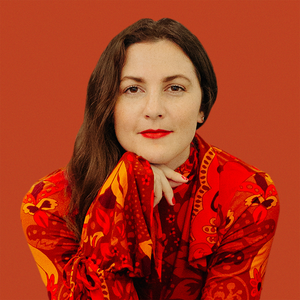
Supporting a Writing Community that Supports You with Gina Frangello
On this episode, publisher Kristen McGuiness is joined by author, editor, and book coach Gina Frangello to discuss their writing journeys and the ways writing is so much more than a profession: it’s a way to save lives. For tips and tricks for doing it all and doing it with grace, you’ll want to listen to this one! And make sure to stay till the end for a special announcement from these two!


Automatically Transcribed Transcript
From the ladies of Rise Literary, welcome to Write the Good Fight. Today's episode is with publisher and CEO Kristen McGuiness and author and editor Gina Frangello. Gina's fifth book, the memoir, Blow Your House Down, a story of family feminism and treason printed by CounterPoint, has been selected as a New York Times editor's choice.
A freelance editor for Row House and Rise Books, Gina brings more than two decades of experience as an editor, having founded both the independent press, other voices books, and the fiction section of the popular online literary community, The Nervous Breakdown. She is on the low residency MFA faculty at the University of Nevada, Reno Tahoe, and runs Circe Consulting, a full service company for writers with the writer Emily Rapp Black. I'm so excited to welcome Gina here today.
Thank you so much for being here.
Thank you for having me.
So I have so many questions for you, but I love your career as an author and an editor, and I love that you've done both, which isn't always easy. And a lot of times you find... You find...
People laugh.
Yeah. And I also, you are one of the few people, I think like me in the field, who you've done so much book editing as well. There are a lot of authors who are authors who are sort of editors, and then you have editors that are sort of authors.
I feel like I'm in that one, but you are firmly both. And I think that's just so interesting. So, because it is, it's hard to find.
It's like you and Toni Morrison.
Yeah. That's awesome company. We can stop right now.
Yeah, exactly. Exactly. Rarified company.
But, you know, where did it start for you? Did you start as an editor or did you start as an author?
No, I've been writing since I was four years old. I was kind of born writing. I was dictating books to my mother before I could actually write words.
I would draw the pictures and dictate the story. I started trying to write my, well, I did write my first novel when I was 10. It was terrible, but it was written.
I would write on butcher block paper like my mom would buy because it was cheaper, like this Brown Booker butcher block paper. Oh my God, I love that. She'd have to tear it off to try to make it all even for me.
And I would write the story and illustrate it. And I ended up writing a series of four novels about the same primary characters who were these orphans, who would often run away from their orphanage, eventually were adopted, like all these misadventures that they had. And then I went to high school and started partying and hanging out with my friends and forgot all about writing for about five years until I started studying it again at University of Madison, of Wisconsin-Madison.
And I never thought I would write professionally. I grew up below the poverty line and I knew I was going to have to take care of my parents. I was an only child.
I was in, you know, school debt, et cetera. So I majored in psychology and I got a master's in psychology and I practiced as a therapist for a while. And it wasn't until my, I was around 26 when I ended up leaving that world to, I thought, temporarily go back and get my master's in creative writing.
And then I got involved with Other Voices magazine as an editor and, you know, it all went from there. I never did go back to the world of psychology.
Wow. I had no idea that was your background. That's so interesting.
I mean, do you feel like it's informed your work as a writer though?
I get asked that a lot and certainly, I mean, obviously, the answer would be for sure, yes, my first novel is literally a contemporary retelling of a Freud case study. So obviously, there would be no way to say that it had not. But I also just think that people who would go into being therapists are very, very interested in people and in character development and psychology and why people do the things that they do, and what makes us tick and kind of how the demons of the past bear on our decisions of the present.
And all of those things were intrinsic interests of mine, whether or not I had studied psychology, it made me interested in both things.
How old were you then when you published your first book? When did that take place?
Oh, I was, I think, 37, 37.
That's awesome.
So it was a long, long road.
Yeah. No, I love that. I mean, I think it's so important for people to hear that because I think there's such a...
You know, I grew up in the generation of Zadie Smith, where it was like, oh, well, if you didn't, an infinite jest, right? And like, oh, if you didn't, if you weren't a brilliant New York Times bestselling literati star and staggering work of...
Right, a heartbreaking work of staggering genius.
A heartbreaking work of staggering genius. So like everybody was like a famous writer by the age of 23. And it felt very like, well, I guess if I haven't made it by now, by the ripe old age of 25, I should just set it aside and go pursue other interests and never look back.
And so I think it's so important for people to hear that sometimes it just takes time. And so what did that look like for you in terms of getting that first book out? And I know it was a different time, right?
Because getting a book out today, I mean, I was also, my first book came out. Yeah, in a very different time period. But nonetheless, what did that journey look like?
The 90s were a time when everything that's happening now had kind of started to steamroll, so that where we are now is kind of inevitable. You know, the corporatization of so many publishers that had at one point been independent. By the late 90s, when I finished the draft of what would become my first novel that came out at the end of 2005, we were starting to see the rise of Chick-Lit, and that became even more prominent after 9-11.
And there was just sort of this idea that people didn't want to read things that were cerebral or depressing or dark. They wanted inspirational everything. And my work was not like that.
I had come of age in the 80s and 90s. My work was, at that point, I'd say dark would be a fairer adjective. And so, while I had kind of thought I was on a particular trajectory in the 90s in terms of publishing stories and then getting a pretty good literary agent in the early aughts, when it came time to submit the book, it just didn't fly.
And so, I didn't know what to do for a while. I started writing a second book. And then, eventually, you know, my first book, My Sister's Continent, had been seen by a fair number of people in New York publishing.
So, when I ended up with a new agent and so forth, I couldn't really resubmit with that book. I was starting fresh with a new book. But Lydia Yuknowich was now, of course, a best-selling writer back then, had a small indie.
And she and I had published each other's work in our respective literary magazine. She used to run a magazine called Two Girls Review and I was running Other Boys' Magazine. And my friend Chris Mazza said, you know, why don't you send your debut novel to Lydia?
And I knew Lydia was actually familiar with the Freud-Dora case study and was also into French feminist theory and all these things that I was doing in my first novel. And I sent it to her and she took it in three days. So that was how my first book came to be published.
It was quite circuitous.
Well, and I think it typically is. I mean, especially if you're working in more literary genres and you're not writing, you know, you're not like a massive self-help person with a million followers and you're trying to do something more creative. And I mean, one of the best lines I ever was told about book publishing actually comes from our shared editor, Dan Smetanka.
He said to me, you know, the number one thing that sells a book more than talent, more than even platform, more than connections is timing. And he was like, it's always about the timing. So it is, it's like, you know, had you tried to sell that book in 1996, in the age of Fight Club, and Dark Gen X writers, it would have been totally different, right?
Yeah, so it is, it's like, I mean, and I've been in that too, where like, you write the book, and by the time you go to sell it, like, the moment has passed, you know? And you're like, well, I was writing it in the moment, you know? So I would love to chat about how, as you grew as a novelist, what brought you to wanting to write memoir, and what that journey looked like, because I've gone from memoir to fiction, but I think it is a really interesting shift to go from fiction to memoir, to be like, you know what I want to write about my life?
And then, was your fiction rooted in your own life, or were you creating fictional worlds that had nothing to do with Gina Frangello?
I mean, I would say both things were true for fiction. So I mean, I definitely believe that all fiction has components of autobiography, even if it's dystopian fantasy, you know, I mean, anything like that, because we're all bringing our own experiences into our worldview, right? But that being said, my fiction was not wildly autobiographical.
Like I said, the first book was based on a Freud case study. My third novel centers around a woman traveler who has cystic fibrosis. I do not have cystic fibrosis.
I used to live with a woman who did have it. But yet the places she traveled, often in different eras, were predominantly places I had traveled or lived, you know. So there were a lot of intersections, but it wasn't like, you know, it wasn't like the awesome famous Pam Houston quote, where she's like, you know, both my fiction and my nonfiction are about 82% true, you know?
And so that was certainly not true of me. My fiction, particularly the longer work, the book length work, you know, was predominantly fiction. And so I had no aspirations of being a memoir writer at all.
I did write essays sometimes, predominantly for The Nervous Breakdown, sometimes for The Rumpus, a few other places, but I didn't even, you know, and I was a journalist at times, but I never thought I would write a memoir. By then, I mean, my first memoir came out in 2021. So I mean, it was, you know, 16 years after my first novel, I had written four books of fiction by then, lots of stories.
And just basically what happened was I was going through a period where my father had just died. I was getting a divorce. I had just been diagnosed with breast cancer.
I had lost my dream job. My life was on fire, essentially. And I had spent my whole life very, very easily able to slip into my fictional universes.
I mean, in fact, you know, it wasn't really so much of an effort. I was just kind of born thinking that way. And I found myself completely unable to do it.
I was kind of trapped in this, you know, in this box of what was going on in my own life. And I just started writing about it, not necessarily thinking it was going to lead to a memoir, not necessarily thinking it was going to lead to a book. But eventually that is what happened kind of based on the responses of, you know, I read a selection at a reading series.
And then that response allowed me to have the nerve to show bits to my writing group. And then their response allowed me to decide maybe I'm writing a book manuscript. And it just kind of went from there.
I love that. Well, and I'd love to. I mean, again, you're you're one of my you're one of the few people out there who's like writer, editor, coach.
So it's so I mean, and I think that's such a good lesson, though. And I wonder how you help other writers to do that. But I think it's so much about building that muscle, right?
And like you begin to get some positive reinforcement on a piece, and then you're like, oh, I can share this a little bit more. Oh, maybe I should write that a little bit more. And then it just kind of begins to stack on top of each other until you get to the place where you become confident in what you're writing.
But also, and this is what I share with writers all the time, you can be really confident in what you're writing. But if you're not confident in sharing the writing, and I will say, like having published a book that I feel this way about, my last book, I wasn't comfortable in sharing the writing. I didn't get myself comfortable in that process.
And I think you're a writer who, because you've been so established in writing communities, you really have always participated in both, both doing the writing and sharing the writing. So I'd love to hear about what that experience has been for you, but also in terms of how you help other authors in that.
For sure. I mean, I think the interesting thing is, so I finished my draft of my first novel in 1998 when I was living in Amsterdam, and I had very, very recently started editing Other Voices magazine. If that book had immediately been published, I really don't know what necessarily would have happened in my editing life.
I was very lucky that the book was not immediately published. I had a quite long on ramp, and by that point, by the time My Sister's Content came out, I had already launched a book press out of Other Voices magazine. I was already publishing Todd Goldberg's debut collection, Simplify, and was positioning myself as an editor and publisher, both of a magazine and a book press.
And by the time my second book, Lullabies, came out, I was in addition to Other Voices and Other Voices books. I was also editing at the Nervous Breakdown. I had co-launched the fiction section with Alexander Chi and Shia Scanlon and Stacey Beerline.
And so, for me, the two things were always very intertwined. I never really had a period where I was able to look at my writing career as completely separate from my editing career. And what I saw right away, I mean, first of all, it was incredibly, incredibly rewarding to be able to edit and publish other writers, because writing is lonely.
And even when you write something that does eventually get published and, you know, get a certain amount of critical acclaim or whatever, it's a long on ramp. So feeling part of that community and feeling able to help other writers to get their voices out there, it all became part of the same system for me. And it always has been, I mean, there really has never been a time in my entire professional life where I wasn't also editing.
What I was editing has morphed and changed over the years. And my favorite thing is books. So I love what I'm able to do with Rise, what I've been able to do with RoeHouse after having closed other voices books in 2014.
So that's particularly exciting for me. But at this point, I've worked with thousands of writers, in terms of getting their work into print. So when I work with private clients or clients through my book publishers, that I partner with, you know, I do feel a lot of sure-footedness, often more so than I do in my own work, to be honest, because no one is their own best editor.
So it doesn't matter what you, I mean, it helps you, but it doesn't matter what you've learned. You're always going to need outside input for your own work. But that ability to kind of enter the skin of a book, I think even when I'm editing nonfiction or coaching nonfiction, my background as a fiction writer, where I was writing about people who were not me and who in many cases were not real.
And so therefore, I'm really used to being able to kind of slip into the skin of the book and really inhabit how would this character think, how would she say it? And that goes to my clients as well. And I think helps me not to just always be imposing my own agenda or my own way of how I would do it onto books.
Yeah, no, I love that. And I think there's something about bringing an author's voice to the editorial process, but at the same time, still being able to honor the author in their own process and recognize that everybody's process is different. And I'll interrupt this interview for a short commercial break, just to say, I'm super thrilled.
If anybody who's listening is in the Los Angeles area, we're actually going to be doing a live event with Rise Literary that Gina Frangello is going to be part of on Thursday, September 4th, at Iri Restaurant in West Hollywood, which is one of the most beautiful spaces, but also hysterically is right above a cannabis shop and across the way from the Pleasure Chest sex store and is in fact owned by the Pleasure Chest.
This is getting more interesting every moment.
It is. We did an event at Iri last year for our book, Fuck Boys Are Boring by Ryan Sheldon, A Gay Man's Guide to Dating for Everyone. And they have drag brunches there on Sunday.
We did this fantastic drag brunch celebration of his book. And we were trying to find a great space for an event in LA, which note to everybody is very, very hard because there really aren't a lot of them. And then if you do find a great one, it's like a billion dollars because it's LA.
And our creative designer, Vyana, was like, what about that place you did Ryan's event? And I was like, oh my God. And I can't wait for you to see this space, Gina.
It is so gorgeous. It is literally the most beautiful restaurant and it actually has breakout rooms. So our event is gonna be a series of two live Q&As.
The morning Q&A is gonna be with Gina Frangello and another story coach, Katherine Connors, where we'll be talking about editing and book coaching and what it takes to be published and what that process looks like from both a story point of view, but also a business point of view. And then we're gonna have some one-on-one book coaching afterwards in the beautiful breakout rooms. When you see the space, you'll understand why I'm harping on it, because you're gonna be like, oh my God, Kristen, you weren't kidding.
We're gonna have some one-on-one coaching, not one-on-one, but small group coaching. And then we're doing an author interview at lunchtime. And then we're having a producer's Q&A in the afternoon, talking about book to screen, both for film and TV.
Yeah, with scripted and unscripted producers. So it's going to be including Lynette Ramirez, who runs production for Angela Bassett's production company, Bassett Vance with Courtney and Angela. Joy Gorman, who is the principal at Joy Coalition.
She's amazing. She actually is doing the Little House reboot right now for Netflix, and she did 13 Reasons Why and Unprisoned with Kerry Washington, and likely a unscripted producer, Joel Chiodi. So hoping that Joel is there.
I worked with him on a book recently that we took out to studios and didn't sell, but it was a great experience. So we're hoping to, well, not hoping, we're planning to have a really beautiful day. So again, if you're in the LA area and listening, you'll get to hear Gina live, and also the chance to do a little bit of book coaching to really begin to figure out how you go from writing that story to publishing that story, which is such a journey.
So I'd love to chat a little bit about that too, in terms of how you work with people, because I know like with Rise Literary and you have Circe Consulting, and this is what I love. I was just talking to somebody about this recently. I feel like in this day and age, we could have competing companies, but there's no competition, right?
It's like, I mean, it's just like we're all in it together. Like we share clients, there's somebody who I think is better fit for Gina. Like I would send them her way vice versa.
Like there's so much collaboration. And it's just, I had lunch last week and with somebody who's just absolutely lovely. And she had worked for this woman who I had just met, who was of an older generation and just is just not nice, you know?
I mean, that's all I can say. That's the best way I could say it. Just not nice.
Like I remember for the longest time, I had wanted to meet this woman. I was like, maybe she'll be my mentor. Like I look up to her career so much.
I couldn't wait to meet her. I finally met her and I was like, no way, man. I don't want you mentoring me.
What, on how to not be nice? And I know that like, you know, I worked for Judith Regan at Harper Collins. And I do get that like women of a certain age came up in the media industry where like, niceness was such a liability for them.
And they had to be just mean ass bitches. You know, I mean, truly, like that was the only way to succeed. It was the only way not to get clobbered by all the men in the room.
And so I know they developed just this really kind of like violently thick skin, but it just doesn't work. And it feels so unfair, not just to the people they work with, but to them, because I love collaborating. So I just wanted to say that, because I think Circe is so incredible.
You and Emily are so incredible. And of course, we want everybody listening to work with Rise, but also check out Circe Consulting, because they are phenomenal. So I'd love for you to share how you help authors on their path to publishing.
Absolutely. You know, so at this point, I've been working with Roe House for a few years, and you of course were a co-founder and part of bringing me in, you know, and I've been working in doing Circe with Emily since 2019. I'm now working with Rise as well.
And I mean, I think all of these things are complimentary and also, you know, they're overlapping, but also distinct spaces, right? So both with Rise and Roe House, I work with writers predominantly, I mean, not exclusively in terms of what Rise does in terms of book coaching, but my experience thus far has been working with writers who are slotted for publication. And that is a very unique thrill that is not part of Searcy.
We are not a publisher. We don't have that ability to be like, oh, and now, you know, the book is going to be published by us, and so we're working to get the book published. We're working in a different space.
We are developmental editors, primarily. It's the bulk of what we do, where somebody brings a full-length manuscript to us prior to, say, seeking an agent or a publisher for that kind of final read, for their final revision. We also do book coaching, which Rise does as well, you know, where we're helping somebody build a book.
And that's something that I have done since way back in my days in Other Voices. I mean, I took several of my books at Other Voices Books based on a few stories and then helped the writer build the book, or in one case, had a writer send me literally every story she'd ever written and constructed a book out of it because she kept being a finalist in all these contests but never getting the book published. And I was like, okay, I think there's maybe a lack of cohesion or a lack of something going on in this book.
Like, let me look at it all. And she ended up being one of our inaugural publications. So we do that at Circe.
I do ghost writing as well. And probably other than developmental editing, and we do proposals. And then part of what we do probably more than anything other than developmental editing is we run online classes.
And so I also teach in MFA programs, and I teach, I've taught undergrad a lot. And so taking that educational component outside of academia has been really fun and exciting for me. So all of these things kind of work in tandem, but there is a particular thrill to the kind of work that I'm doing at Rise, at Row House, and when we get a client at Searcy who wants help because they've already got a book deal, there is just a very big rush in knowing that this book is going to be in the hands of people, and that it's already, you're already part of the dialogue this book is going to be in.
Whereas, of course, one of the biggest things you have to be clear about as a developmental editor, as a ghostwriter, as helping someone with a proposal, as a coach, is that you can absolutely not guarantee what the result will be, and that they are investing a certain amount of money, and you are going to, you have a lot of experience, you are yourself a published writer, you're going to do your absolute best for them, but in the end, I have a couple of books that are in the drawer. I mean, one had two different publishers that both went out of business before the book came out, and the other never got published. And so this happens to everyone, and so I always try to be very ethically clear up front about the fact that when you're doing things like developmental editing or helping someone with a proposal, you can't guarantee that end result.
We all have to be in it for the process of improving the work. Then it goes out into an increasingly unpredictable publishing industry that was already rough in the 90s and has gotten a lot rougher. Like you mentioned, for example, platforms.
I mean, that was obviously it always helped you to be famous, but most people aren't famous. There was no social media really when I was first looking to publish a book or even when my first book came out. You know, so the whole playing field has changed so much for writers, but I try really hard.
I know people who have gotten six-figure book deals who are not even on social media. And so there are sort of trends and things that are important like, grow your platform, be in the thick of that. But there are always also exceptions that I don't like the idea that somehow a writer's first and foremost job is to grow their platform.
I think that that can end up becoming a full-time job that prevents them from writing their best work. And I think, you know, platforms are important, but the work always has to be the most important thing.
You know, I always look at it this way. I remember a couple of years ago, I was talking to Cal Morgan, who was the executive editor of Versailles for a really long time. And we worked together at Judith.
We were in the trenches together. And he was saying that, like, you know, he's like, I still buy books with no platform. He's like, the only difference is I buy a lot less of them.
You know, and so we're, you know, back in the day, if there were 10 slots, maybe like four to six of them went to famous people, and four to six of them went to people who had no platform, because you're either famous or not famous, right? I mean, to a certain extent. You know, now nine of them go to people with a platform, and one of them go to somebody who doesn't.
So it just makes it all the more competitive for people who don't have a platform. And I always love, I do a lot of work with the agent Stacey Glick, and Stacey always says, she really looks at it as credentials, and it's just one form of credentials. And so it doesn't have to be the only form.
There can be other forms of credentials, especially for folks who are coming in the literary world, who have MFAs. But I think for people that are starting out that don't have that background, who don't have the context, who just have a dream of writing a book, I mean, that's where I'm always really clear with folks. I'm like, the less you bring to the table, the less likely you were going to be able to get a book deal.
And I similar in the same way, where like, I'm very transparent in that process. I say, if I had a crystal ball that would tell me what would happen with every book, that's all I would do is have people pay me to look in the crystal ball and tell them what's gonna happen to their book. I would never do anything else.
I'd just be like, and here's the crystal ball. So I do think it's so important for folks to sort of recognize, it doesn't mean you have to have a million followers, but it's also really hard if you have like nothing nowhere, you're just writing a book and that's it, you know, and that. And I do think going back, and I'd love to chat a little bit about this in terms of how you coach people and how you work with people, especially those folks.
You know, I mean, obviously there are people who come in who have big platforms or they have, you know, I mean, and I do a lot in the narrative nonfiction space, which I love working. I mean, right now we just signed a private client who was a professor of religious history for years at Yale and he sort of gave up on Ivy League Academia, just as, and it's about him giving up on Ivy League Academia and also how that resembled how he left the Christian church and that, like, there's, you know, this sort of institutionalization of what can otherwise be good things can sometimes inherently damage the good thing. But he's got, you know, it's like, okay, he doesn't have a platform, but what he has is like decades of experience in the subject matter he's writing about, right?
Right.
But what do you sort of say or how do you share with people how to begin to build that life as an author? Because I think your own life is such a great testament to that in terms of, you know, having an MFA and being part of literary communities.
I mean, way before social media existed, I had essentially the same advice for people that I do now. And that is that you can't look at the literary community. I mean, it's kind of like I'm going to, you know, make a riff on the famous Kennedy quote, but like you can't look at the literary community is what it can do for you.
You have to look at what you can do for it. You have to be part of the community that you want to embrace you, right? So now if we then take this and apply it to social media, I mean, you know, my original way of saying this was like, there are people who very much want to be writers who don't avidly read.
There are people who very much want to be writers who don't attend readings, you know, who don't have any friends who are writers, you know, who don't communicate with writers. And so, you know, it's not to say that some of them don't get lucky, but I strongly believe that you have to be an avid reader to, to, you know, write your best work. And so then we take this and start applying it to social media.
Well, if you do nothing, but get up on social media talking about like, I've got a book, every time someone friends you, you're sending them, you know, an automated link to your own book, you know, this is not, frankly, the way to become part of a community. It's a way to seem like you're just trying to game everyone to get what you can get. And I think back in the days of things like, you know, when I was working at the Rumpus, when I was working at the Nervous Breakdown, which had the most vibrant comment section in those days like that I've ever seen, just being in dialogue with other writers, sharing on social media things about other writers' work, sharing about things that you love.
If you have any free time, we don't all have any free time, but if you have any free time, offer to interview a writer, offer to review books, because these kinds of things are much easier to place than your own book or even in many cases, your own initial essays and short stories. And it can break you in while also doing important, vital things for the community. And so it really is a win-win for everybody, you know, and kind of like, you know, never enter your MFA program being like, oh, my job here is just to be the best, knock everybody's socks off and then, you know, go away, sure, I'm going to triumph, but rather to make a community for yourself because you absolutely have, first of all, you need community.
Writing is wildly lonely. But second of all, you have no idea where everyone is going to be in 10 years. Like, sort of isolationist, self-serving arrogance doesn't serve you because it's shitty, but it also doesn't serve you because it's wrong-headed.
You're not going to have a community when you need it. And so, you know, I really consider myself very lucky that because I was editing and because I love editing, like, I can't imagine my life without editing, you know. I mean, I absolutely get a lot of the same rush out of getting inside the skin of another book that I get out of writing my own.
So for me, the two things are very twinned, and they feed each other. And they, you know, the editing helps me be a better writer, the writing helps me be a better editor, and they go together. But I say to people that you have to find your way that you can be of service in this community.
And for some people, that is, like, particularly if they're adjacent to the self-help world, if they're adjacent to, like, self-improvement, or if they have a specialty book about a topic, by all means, like, building a large social media platform where you are of service in that arena that you're writing about is a great way to go about it. If you're a fiction writer, that's not necessarily always the best way to go about it is establishing yourself as an authority. Sometimes the best way to go about it is just the genuinely rewarding work of making friends and talking about other books.
I love that. I mean, I'm listening as a writer myself who, I mean, I sometimes feel, and again, I think it does come to this, like, you know, so often we get so busy having to, like, do the thing and pay the bills and do the work, and then we don't actually make space to, like, develop real relationships and be part of and show up and give and not just take. And I think it's hard because we kind of get caught up.
You know, I'm in the 12-step community and so much of that is about being of service. You know, and getting out of the self-centeredness. And I think, you know, the world of busy creates this world of self-centeredness and it doesn't really allow you to slow down enough to sort of see what a community needs and what you can actually bring to it.
And I think a lot of times, too, people lack confidence and they're like, oh, what can I actually do there? But as they find, like, the more you just sort of offer your hand, I mean, that was sort of the beauty of 12-step, like early on, right? It's like, okay, so you wash the dishes.
You just, you don't actually have to come and do anything big. You just have to just, you know, stand in line, thank the speaker, wash the dishes.
That's exactly, I mean, yes, it applies to everything, you know? I mean, in 2019, my husband and I went down and volunteered at the border in Brownsville in Matamoros, and we were brought down there because of my friendship with a pretty high-power attorney who does immigration rights. And one of the first things that she talked about was that when she first started doing that work, she'd kind of roll in, and because of her expertise, she would be looking for someone to give her something really important and high-profile to do.
And people were just in survival mode, and it was when she basically realized like, okay, is there a room where I can sort clothing into different sizes? That that was when the work began to be really rewarding and fulfilling for her is that she wasn't looking for it to be about her. She was just looking to be of service.
And the thing is, is that as a writer and as an editor, look if you're in this for money and fame, you know, if you got really lucky, you came to the right place. But that's not usually the result. Like if you're in this for money or fame, go get your MBA, go learn to be a tech god, go become a surgeon, you know, I mean, you have to be in it because you love literature.
And for most of us, what that means is that books saved our lives in some way. And so if you really look at that, how do you not want to give back when books saved your life? Like how do you not want to help other writers whose books are meaningful, gain platform, gain audience, you know, to get up there and trumpet about these books, to provide a place for them to be published.
Like those things are not lip service. They're truly rewarding. They're more important in the final analysis than any writer's one individual book.
And it doesn't mean, I mean like writing is the great passion of my life. I've been doing it my entire life, as I said, and my work is incredibly important to me. But I think at the end of the day, if I had to say, okay, like, I've had a certain number of books, now I can either just do absolutely nothing else, but focus on my own writing and think about nothing but that.
Or I can be like, I have enough books, and now I'm gonna be of service to the literary community. I know it would be the latter that I would pick, even though I very much hope and plan to write more books.
I love that. Well, and I think you are so well established in community, and that's how, even when we weren't like brought together or face to face, I had always known you just in that community, and having seen your name around, and being part of things, and being on different stages, which all comes down to just relationships, and having been a part of different worlds, and helping different authors. So I think your professional life is such a, and personal life, I'm sure, is such a testament to that.
All right, well, I wanna go ahead and wrap us up. And as we do with every interview, we like to finish with the final segment.
We're in a 70s sitcom.
Yeah, Just the Tip. And where we'd love for you to be able to leave our audience with one final tip on writing, whatever that might be.
Yeah, you know, lately I've been obsessed with Rate of Revelation. And I think like, it's one of the most common things that I see when I'm editing work is that information isn't always coming out in the right order, right? And so being very aware that a lot of us think like, oh, I have to avoid repetition.
Like we know we have to avoid like repeating the same information over and over again. But thinking strategically about like, when is the moment that the reader first needs to know that information so that, for example, we're not giving information upfront, that then a flashback becomes insignificant or redundant because we already know the punch line, right? You know, and so really thinking about timing and pacing and when we learn what is, I think, an under considered part of writing, not only in like, say, suspense fiction, but in memoir.
Yeah, I love that. As somebody who reveals everything way too soon as a writer, because that's just who I am as a person, because I like literally will sit down with somebody, I'll be like, so here's my craziest story ever. And they're like, we just met.
And I think as a writer, I do the same thing. And it's so, I think that is so important. I mean, I think it's, and I always say this, I think it, I think every page should feel like a whodunit, right?
Where you're kind of left, because that's what keeps you turning the page. And I think that's what makes a book page turning, is when you gotta know what's gonna happen, but if you're fed that too soon, then you already know. And what's the point, right?
So you lose that suspense, you lose that encouragement to keep going in the reading process. So I love that. Awesome tip.
Gina, thank you so much. I have absolutely loved, I mean, I could talk to you for hours. We didn't even get into the world of being only children writers.
I think you and I-
We need a whole show for that.
A whole show about being an only child. When you posted about that in The Need, I haven't had alone time, I think, in like a month. And last night, I had like two sweet hours, and my 10-year-old wanted to sleep in bed with me.
And I was like, Ella, I'm going to lose my mind. Like, I absolutely need to be alone right now. Like, I am going to go crazy if I don't get alone time.
I'm like, so we'll do an episode just for only children. But for today, thank you for being here. And again, anybody listening, if you're in the LA area, you can hear us do this for much longer and in more concentrated fashion on Thursday, September 4th at Ivory Restaurant across from the Pleasure Chest.
So, you know, buy your dildo, come over, get some cannabis, learn how to write a book. It's going to be a great day. And I can't wait to have you there, Gina.
Thank you so much.
Thank you. Bye.
This has been Write the Good Fight brought to you by the ladies of Rise Literary. Thanks for tuning in. If you enjoyed today's episode, don't forget to rate us five stars, follow the show, and leave a comment.
We'd love to hear from you. Feel free to share this episode with friends, family, or anyone who might find it helpful or fun. Be sure to follow us on Instagram at Rise Literary to stay up to date with upcoming events, courses, insider info, behind the scenes fun, and so much more.
Or you can check us out at www.riseliterary.com. We appreciate you listening, and we hope to see you next week for another great episode. Until then, remember, it's your time to Write the Good Fight.
From Write the Good Fight: Supporting a Writing Community that Supports You with Gina Frangello, Aug 14, 2025
This material may be protected by copyright.