Addicted to Whiteness and Why Book Titles Matter with myisha t hill
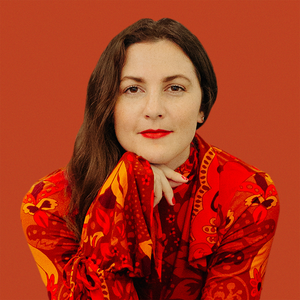
Hosted by CEO Kristen McGuiness, in this powerful episode for Juneteenth, author and activist myisha t hill discusses her journey in antiracism work from its peak in 2020 through her most recent censure by Meta, when they disabled her massive activism account, Check Your Privilege, with over 600K followers. myisha shares the heartbreaking truths behind writing about anti-Blackness but also what it truly means to be antiracist - and how it is the path of recovery for all of us.


Automatically Transcribed Transcript
From the ladies of Rise Literary, welcome to Write the Good Fight. This episode of Write the Good Fight is with CEO Kristen McGuiness, and author and activist, Myisha t. Hill.
Myisha t. Hill is a mental health activist, healer, coach, speaker, and entrepreneur, passionate about mental wellness and empowerment for all. She runs the advocacy site, Check Your Privilege, with more than 600,000 followers on Instagram, or at least she recently did, which we'll be discussing today.
Additionally, Myisha works with organizations and community groups, taking white people on a self-reflective journey to explore their relationship with power, privilege, and racism. Myisha is the author of the book, Heal Your Way Forward, and the upcoming book currently titled, Addicted to Whiteness. Myisha, I'm so happy to have you here and it's so good to see you.
Thank you. It's good to see you too and thank you for having me.
So I would love to, I want to get in to Heal Your Way Forward. I would love to talk about your writing and what's led you to, you know, certainly write your first books, but also leading into the book that you and I have been working on for what feels like a very long time now. But I feel like we should address the elephant in the room, at least at the time of this recording, which is you had built a very massive advocacy site that was just well known in all areas of activism as being such a loving and devoted practice of equity and activism, but also love.
And I think that's just the hardest part. Check Your Privilege, which was on Instagram, is on multiple platforms, but you had over 600,000 followers. I know you've had over 700 at different times.
And Meta recently took that site down. And I know it still isn't back up. So I would love to hear what happened, what that has looked like for you, both in terms of consequence and even your activism, to get it back up.
Yeah. What happened, I did a live on boundaries and human relationships, so interdependence versus co-dependence. And then some of that hit in the live.
I had a call from an operations person. And I looked at my phone and I said, oh, they just took out our Instagram. She was like, what?
I was like, I'll see your screenshot. And it was the reason is because the account is associated with another account that is against the community guidelines. So guilt by association.
And so it'll be a month in like seven days. So I sent support messages to Meta. The team, we're doing a whole campaign, like LinkedIn messages, tagging them.
Haven't heard anything. I've submitted my driver's license about 25 times. So I don't think their algorithm is reading my face as a black woman.
So another team member is going to submit their driver's license. So then we can talk about algorithmic oppression. I appealed it.
I have 180 days. It's almost been 30. So we'll just submit this other ID and see if it passes through.
And if not, sometimes chapters close and you have to start over and that's okay. I have not fought. I stopped fighting.
I think that the lesson in this is sometimes you build things up in Source, Universe, God, Buddha, whatever you believe in. It's like you're going to uplevel to something else. You know, I remember when Leila Saad wrote this article in 2017 about, I think it was like the temple I built for white women is burned down.
And a lot of people don't know behind the scenes. Right before this happened, I had a team retreat. It was like a temporal healing retreat.
And we were like, if it has to burn down, it has to burn down. If we have to start over, we have to start over. And forgetting that I'm a master generator and manifestor, I'm like, oh.
So just thinking of Leila's article and the idea of sometimes you build things with great intentions, but maybe the audience has changed or maybe the message has changed, maybe it's just a both and, it's not an either or. So just grieving and appreciating what was built up until now. And thank God I had a backup account for a podcast and just using the new account and the messaging is a little bit different and it's slow growth because what did catapult that account was someone's death.
And one thing I always say is that someone's death is what brought me life, which was George Floyd. And I don't hold that lightly and I'm grateful I was able to be on the board of directors for the George Floyd Foundation before it dissolved. So it feels very surreal, like that account brought a lot of joy and a lot of things to a lot of people.
And maybe it's just time to let it go. In the meantime, we'll just keep submitting our driver's license and just keep moving ahead. And whoever comes for the ride, great.
And if you don't come for the ride, great. Thank you for being there for the seasons that I was there.
I mean, obviously, my biggest concern in seeing it go away was, though I appreciate it for the community, I love you as a friend. So my biggest concern was just your well-being and welfare. But I do believe that whatever you build, and I think that there have been so many changes since you built Check Your Privilege, you know, that whatever you build next will be exactly what the right people need to hear.
And I don't know if the right people is the right term, but the folks that really need to be in that community, it's going to be the message that they're waiting for.
Yeah. Thank you for saying that. I mean, everyone's like, oh my gosh, what about your money and what about this?
And when you practice vulnerability and you've built community, I can reach out to people like you or Bex and be like, hey, I can't pay this bill. Can you help? No, there's a lot, people are like, oh my God, you lose, but you ask for help.
Talk to your people you love and they make sure that you have what you need. Cause they know in due time, it'll be reciprocal. So that's what's being built, right?
The value of reciprocity in this work. And the message has changed, right? I used to joke about like we had an anthology series that I'm getting ready to redo.
And the first book was Check Your Privilege, Live Into the Work. And so the joke is, you know, there's Check Your Privilege. And then we taught people how to live into the work.
And then we took them deeper to lead into their discomfort. And now they can heal your way forward for the next book, right? So it's like, we kind of joke about like the, the step ups and this, this, this final thing.
It's like the, not final, I'll write more books eventually. But this is, I think this is that one, right? And so it's like, yeah, that's gone, but that's okay.
So I'm, it's taking me like four weeks to get here, but yeah.
I mean, I feel like that has been the beauty of your messaging across the multiple platforms, is that it's all in evolution. And I also think there's something about like, to me, it wasn't even just like a new chapter in Check Your Privilege. I think it's actually really reflective of like a new chapter in terms of social media and how it's become so less integral to the conversation.
And it's not really where, I mean, I love it because I've never been particularly fluent in social media. Like, I feel like the in real life conversations and the even conversations like this, right? Like that the conversations are really coming off of social media and we're finding completely different ways to do it that one, offers more an amenity when needed, which I think is going to be really important over the next few years and activism.
But also, it just became so, I mean, I was talking to somebody day about this, like it became so commercialized, it was meaningless, right? Like, oh, I'm going to say this thing, then I'm going to put it in a canva, then I'm going to make a cute little card, and then I'm going to post it to Instagram. And then what's that's going to do something?
Right? And and not that I mean, I'm all about like the power of storytelling and the power of words to inspire and influence people. But it really got to this place where, you know, there were so much of it that all of it was meaningless even when it wasn't meaningless.
So I do think that like when I saw, I mean, one, when we all saw it come down, which was just so shocking and kind of like, what? I was like, of all spaces? I mean, you're just, I mean, you're so, you're so love embodied and your work is so love embodied that to see a site that comes from that perspective, be silenced was just shocking.
But then there was this other side of it that I was like, you know what, what is Instagram anyway? You know, I mean, what, what is this, this sort of meaningless place that ended up really having undue influence in people's lives. And though I love it for the relationships that I've built, the relationship doesn't exist on Instagram.
That's not where it makes it meaningful. It's the relationship. It's like, you know, it's like a bar closing where it's like, oh, that's sad, but I'm still friends with all the people I met in that place, you know?
So those relationships exist in much more powerful, impactful ways. And I do think that that's where like, that's the beauty of a book, right? About how, especially since the version of Check Your Privilege that existed when you wrote Heal Your Way Forward was in such a more dynamic space around social media.
And obviously it was, you know, I mean, you started writing this book just, I mean, it was less than a year after the murder of George Floyd, right? So it was very much in this just like wild time of where we actually thought a needle was moving or some of us did, maybe not all of us, but I think we all had that moment of like, oh, whoa, right? And so I think Heal Your Way Forward, I mean, I think you are, I know you to be just like a deep, a deeply hopeful person.
But how has your message, you know, one, I would love for you just to share about your message and heal your way forward. But also, how has that message evolved since the time of writing that book?
Yeah, great question. The message of Heal Your Way Forward was essentially rooted on repair. If I could go to the end, that we can repair our relationships, that that is the future.
The future is reparative. That's the last chapter, I believe. Yes.
So I took folks through what I called the co-conspirators journey, which is based on my lived experience, teaching people in white bodies, what looks like the hero's journey. Yeah, unfortunately, Joseph Campbell. It was like listening, learning, action.
And there were all little circles that interconnected to really look at shame and vulnerability and repair. And it's so intersectional, but at the heart of that journey is trusting. This is the evolution, right?
If we're going to talk about repair, we also have to talk about recovery. I was telling the team yesterday on the call, and I wish I could remember. There's body of work that I really appreciate, and it's by Bobby Harrow, who wrote a chapter of a book and a social justice textbook from the 80s.
And so Bobby Harrow has the cycle of socialization, which talks about how we're socialized, or I call it now grooming, how we're groomed into the system unconsciously by our parents, and it just keeps going and gets reinforced. And then they have the cycle of liberation. And at the center of liberation is like love and honesty and integrity.
It's such a beautiful framework. And as I think of, well, what's the new evolution? You know, there's recovery.
But the center of the Coke and Spiders journey on is recovery, which takes you now to the... It's something related to like breaking the addiction, all my work around addiction and recovery and cultism. And it takes you really on the path of liberation and love, with the love at the center and relationships.
And it's just really beautiful. And I wish I could articulate it after looking at my notes. But I think since I have stopped drinking, I start...
And I was actually teaching breaking the addiction to privilege in 2020. But then I was like, oh, wait a minute, this is not just privilege, this is whiteness. And then the more I've taught the class and wrote something, it was like, no, this is not even just whiteness.
This is the whole system, which now has taken me... I just taught a class a couple weeks ago called The Cult of Oppression, which is now this thorough line, like there's the cult-inspired assurance, like there's heal your way forward, there's this new kind of idea. But in the center, before you can even get to recover, you have to recognize that this is all cultism, right?
And it's the cult of oppression. And the reason why we're not where we want to be, why there's so much infighting, why there's so much finger-pointing and blame-shifting is we're still in a binary because we're not recognizing we're in a cult and we're even in social justice, we're duplicating the cult of oppression. Binary thinking, it has to be this way.
You don't do this, you're not really in this work. Just all of the stuff that we're seeing. And so before you even think about breaking any addiction, you have to recognize you're in a cult.
And there are five different ways that you can see your role in it. But then once you do that, then you break the addiction, and then you step on the new path, which is what we're writing about now, which is a recovery path that's rooted in love. And so a mission that came from a friendship, that was about what I was seeing as a guide or facilitator, people say teach, whatever people call me.
And now pulling out my own recovery journey, and I'm reading another book from the 80s called When Society Becomes an Addict from the 80s. I got this book from Bell Hooks. I was reading Sisters of the Yam, Black Women in Self-Recovery.
It has a chapter on addiction, recovery. And she just says this lady's name. And I'm like, let me look this lady up.
I have like bell hooks and like this lady is now number two. She has one on codependency, one on women, one on, but this is when society becomes an addict. And I'm going to do a book group about this.
And everything that I teach in this, in my like addiction recovery stuff, is in this book. And I'm like, I've never read this book. How did I know this?
But literally, it's when we start moving from living systemically into like really living in love and living in practice, not process, but practice, that's how we keep going. And so I feel like heal your way forward. And everything I'm going through in my life right now is really taking me to that next level.
And that's how I know that. Yes, I've been writing this for a very long time, but I did not have the words that I have today. When you're an addict, right?
Because in oppression, we're addicts. That's all. This is so deep.
My mind just goes, oh wow.
You don't realize who you're hurting. So a couple of things. It's like when I go back and read, you know, the last chapter of Heal Your Way Forward, I can list the people that I was hurting and how.
But it took me like a year later, right? So like, stop drinking and like really see what's going on. And it's just like, it's been like 19 months of sobriety.
You're just like, whoa. And so, you know, when you're an addict, whether it's work, a drink, a person, codependency, whatever it is, the cult of oppression, right? You don't know what's happening.
I remember being on a call with you and you're like, you're giving me the statistic like the first, whenever you first picked up the habit, it was drinking. That's how, that's your mental age, right? And so like, oh, I started drinking at 17, right?
So then I see all the ways my inner teenager, there's that conversation and becoming sober, like, oh, you're taking over my life. No, you know what I mean? And then, and then I started doing the art.
It's like, it's just been so much. It's writing this and like feeling like I'm constantly still writing because it just feels like this, this season is just like really showing, like, and then I started the artist way. And I'm like every week of the artist way just gets harder and harder.
I'm thinking like, oh, yes, I'm an artist, I'm a creative. So it's like when you read the artist way and then you're in recovery, and then you're writing a book proposal, and then like, you're looking at how your addiction impacted everybody around you and their reaction to you. Even if you're in recovery, where do you find yourself?
Then you lose your platform, then you lose relationships and friendships. You're just like, you know what? I ain't got nothing.
I got to surrender to something.
Yeah. Yeah. There's Tracy Chapman.
I think Tracy Chapman wrote the song, but All You Have Is Your Soul. I always listen to that Emily Harris version too, but I mean, both of them are so amazing. Although I think Tracy wrote it, but that's my recovery song.
It's like, we might fucking lose everything, but all we really have is our soul. And it's the deepest part of us that we just like, that's all we can claim. And the rest of it really, I mean, outside of children, I mean, that's the only things, this is the only two things that like, when the day comes, the only things I wanna keep are like my children and my soul.
And I think when you and I first started talking around the addiction metaphor or the addiction practice, right? Of both racism and white supremacy and whiteness, but even even the addiction practice and activism. And I think you just have such a thoughtful perspective on it.
And I think it's no surprise that your own personal recovery journey is like mimicking that too. So for the listeners back at home, about two years ago, Myisha and I started working on a book proposal together. Myisha is the writer, I'm a book coach, and so I was just helping her like frame it, called Addicted to Whiteness.
And when that got taken out to market, it didn't sell. And so your representation came back and was like, well, it's the title, right? It's actually not what's in the book.
It's that, it's like, it's too much. Just like, I mean, I was like, I mean, this was right around the time that our current president was elected. And it was like, really?
This is too, Addicted to Whiteness is too much in response to what we're up against. And so I do think getting to see, though, your message evolve has been really like phenomenal. But, but also I know it's really scary for you because you are stepping into new spaces that as brave as you might be, stepping into new areas can be terrifying.
And especially because I do know that the scale of the backlash is so egregious. So I'd love for you to share about that proposal and about how you've begun to sort of think about that message around Addicted to Whiteness, but also like, you know, as you were just talking, I was thinking, you know, maybe that proposal was actually the bridge to the, to the real message. And, and I'm not, I don't, I don't know yet what that message is, but I'd love to hear what you're thinking of, of what that new message is and where we go from here.
Yeah, thank you. Yeah, I remember when we first got that feedback, I was like, what? And I feel like it was kind of that period of the cycle that I'm coming out of right now.
Sometimes the things that I say, I'm always ahead, like two or three or four years. And so some things that I said, like five, six years ago, people are just now like starting to try to put into practice, which is fascinating. And I also want to say that the concept of addiction, breaking the addiction, right?
It comes from reading a lot of Bell Hooks books where she actually does write about addiction. And I always say that my job is to take the work of the ancestors and put it forth in the world through teaching and groups, and then build upon it. And so always giving reverence, reverence to Bell Hooks in anything that I do.
I wanted to say that's very important for me. But I think there's a softening happening in my life. So as someone who was ordained minister, former deacon, preacher, you can't run away from your spiritual calling.
So I think what happened in 2020, even up until recently, there was this performance that I would put on. And I've been writing about this on Substack. There's this performance to be social justice enough, calling out the white women enough, which I've never really been into.
I've always been like, why am I doing that? That's weird. My job is just to give invitations, not to be like, oh, you bad white people.
Like that, even saying that is just like, that doesn't help. Yes, I could say white folks are exhausting, but I'm exhausting. My kids are exhausting.
I'm like, I exhaust my mom. So there's so much in the messaging is about what one body of culture is doing to another. And I think this is like a spiritual upgrade where I'm no longer like a performing social justice teacher.
It's like a spiritual work. So it's like, I remember talking to my agent and she's like, you know, you're a spiritual teacher. And I was like, what?
And because the idea of spirituality, because of my experience in the church and how I was treated and how I, how I caused harm as well, I have to always say that to you. I'm not a spiritual teacher, but there has to be something spiritual about a black woman that makes space for her oppressor. There has to be something spiritual for a black woman to tell other black folks, like, hey, we do make space for them.
We don't hold it like we have to. No one's saying DanTap dance for them, but these bodies will never learn until we learn how to relate to each other and model restorative, reparative relationships. The ancestors didn't die saying, F those people.
The ancestors would want to say, okay, well, cause what I'm noticing in my lived experience is it's like, y'all keep reading Robin D'Angelo books. Shout out to Robin D'Angelo. We had a whole conversation.
You keep going to her workshops. Like we've talked about this, me and Robin, like the necessity of white folks doing this. We've had a beautiful conversation over several times.
But I'm always curious if you notice that you go to these white lit talks or events, but you don't change. But when you go to black and indigenous and South Asian and bodies of culture, you get curious and you start seeing a shift in your life. And so for me, it's a deeply spiritual work.
It's not just like, oh, we're just going to look at our trauma. We're just going to heal our trauma with our bodies. It is like it's ancestral for both of us, for black folks, for white folks, for indigenous folks.
You know, even my indigenous lineage, it's like they call them the white man, but they have never heard them say cancel them. It's just they don't want to listen. We just keep moving on our way and hopefully they come for the ride.
And I think this this evolution of this proposal really centers my belief, I have grown to believe that the people who have never received reparations, that the people who always are the blame for everything in society, specifically black people, when you center black liberation everyone will be healed. That doesn't mean go put the labor on black people, go do that, but really center black liberation, that's where the true healing comes from. And that's how we recover.
So for me in my recovery journey, it's like watching centers five times. It's learning about African traditional religions and tackling into that. It's like learning about closed African practices and practicing that.
It's how do I learn to start centering blackness in my life? And then even deeper than the word blackness, African practices in my life, teaching my children. How do I break away from a system that shames that, de-centers that, but really start to elevate it?
And the more I'm bringing those practices in my life, the softer I become, the more loving I become, the more I'm recovering. I'll never say in my lifetime I've recovered because I'm in this system. It's not of it.
However, what I can do is center what I know is true and what is true for my healing. And I believe it is the same. If Africa is the birthplace of humanity, it has to be, it has to be where the healing is.
And it doesn't mean appropriate. But between African peoples and indigenous people, people indigenous to the Americas, there is a healing there that when we center those two, we will start to see real change. And that is part of the spiritual work and the new work that I believe I am re-birthing into the world.
Oh, my God, I love you so much. I, so I, I always think of it as the like, it's not original sin. It's actually the original wound.
And then I think, and I think the original wound, like I, Ava DuVernay's origin is like, I think just such a masterpiece. And in that final scene where it's the little boy and they're laying, I will cry. It's like the little boy and there she's like in her little dreams.
She's in her dream state and she's reaching out to him. And like, it is this, I think it's what drives all abuse of humans that are loving and thoughtful and conscientious and it's why we try to destroy the best of who we are. White supremacy is such a self-hating cult of oppression.
Because actually, like, I think, and it's not even a supremacy thing, I just think that our origin is humans starts in Africa, right? So to turn so much violence on what our entire origin story of humanity and to abuse what our origin is, like that's the original wound. And I think I absolutely agree with you until that wound is healed, like all of us are sick.
And I go back to this, like I think you create such an incredible spiritual container, but you also create such an incredible intellectual container. And I think that's what dives it deeper, is that it doesn't just, there's a real easy like, oh, let's love every, let's love each other, right? Which can feel flinty, you know, like it's like, okay, I don't, I can't, I can't hold space for that really easily.
And, and I definitely am going to choose violence, but then I think you take that and you root it so deeply into these other ideas of, of addiction, but also yeah, that like greater understanding of what, what it would really mean for us to all be recovering together. And I think there's just a really beautiful utopia in that. I have loved being a part of helping to edit, heal your way forward, getting to be a part of this.
I think it is where the storytelling process really merges with the like real life activism. And I've gotten to see that in real time with you of like, how the ideas that we come up with to write the book are also the ideas that we're taking out there and we're building community and programs and networks and spaces and that there's so much reflection. There's such a reflective piece between the two.
And even when you were talking about bell hooks, I think the reverence is in the reference and your ability to consistently offer that growth for people that might start with you, but goes into so many places. So I'd love to hear from you. What does that utopia look like?
Where do you think we can get to and where do you hope to be part of getting us there?
Yeah, I think to get there, we might not see it. Our children might see it. If we lead by example, I think it's gonna start part of us as adults need to name, like we're recovering from this system.
And then we need to start thinking about relational repair. So you have to start with yourself, like what are the wounds that I need to tend to? And you have to visit your ancestors.
What were their wounds and how do I tend to them so I can tell myself? And I learned this in therapy about 14 years ago, when the therapist did a pictuagram with me and he said, it stops with you. I was like, okay, so what are my wounds?
What are my ancestors' wounds? How do I stop? And then what are my ancestral practices?
Because in whiteness, white people think that they're just white. No, your ancestors had practices before colonization, and it's happened into that as a spiritual practice. So we all do our individual work, our ancestral work, it's happened to that spiritual, like it's a very spiritual practices, come back into communities that are doing the same.
And then we learn about relation or repair, right? Like, so for me, for example, people come in and out of the community that we have, because they think people think I lead a cult of free thinkers. Whatever, I guess, because there's no hierarchy, there's no rules.
And I'm saying, you have to see me as a community member. And this is kind of a good thing of not being on social media, because now you have to trust that there's just this black way that just wants to be cool with me. I don't want to be your leader.
I don't want to be your guru. We are in community. How do we do that?
We have community agreements. How do we do that? We have relational repair.
Most white body folks skip relational repair and leave because they're in a cult. Okay, I guess. But it's relational pair.
And what that repair looks like is really centering African practices of harm reduction and community coming together, kind of what we hear in restorative justice circles, hearing both sides of the story, but restoring each other to trust and restoring each other to humanity. And it is a practice and a process that communities and people have to be willing to do. Unfortunately, we're raised in a conflict of our society, and that's why the individual work is so important so that you can stay grounded and centered through the relational practices.
So I can easily write a workbook and say how to do relational work in centering African spirituality and Black liberation, and give people the workbook to do that. But I also can write it in this book, and I can model it in my community, and I can talk about it publicly because it's possible. The danger is that because we're such a cult-like society, we pedestal people.
Some people will see relational repair and can use it to uphold abuse, to reinforce co-dependency, which is something that is a detriment to our relationships that we don't realize it. But relational recovery is interdependent. It's grounded in ancestral practice, and it requires us to really lean into the discomfort and defend ourselves, defend to repair and community building.
Some of us are practicing that. Some of us are too conflict diverse to do it, and it takes a lot of patience. So for me, it's just writing it down, like bell hooks, like how do you want to re-remember it?
You remember me, like my friend jokes with me, she's like, you are our next level bell hooks. And I'm like, I don't know about that. But in my words that I leave behind, hopefully I can start practicing it more with my children, trying to practice it with my kids, and set the precedent of this is how we repair in our family and what this means.
And maybe just speaking more publicly about it when I'm ready. I'm not really ready right now. I'm going to my own rebirth.
But I really think it's us practicing restorative and reparative relationships, because canceling each other is really centering oneself and centering your need to be right versus your need for connection.
I love that. I think as we even talk about, you know, whenever you're ready to talk about that next book in work, I do think that idea of addiction is always in response to a wound, right? It's the gabermate, why so much pain?
And I think that a lot of times we don't even acknowledge that the wound is there.
No.
And so I do think as we begin to rethink of like, okay, what is that next story to tell? Like that idea of whether it's original wound or ancestral wound, right? But that like, we have so much like it before we can even repair, before we can heal the way forward, like there is still healing the way back, you know?
And I think like, and I do think too, like in terms of reparative communication too, like there, there's so much in the practice of communication, of, you know, how and restorative communication of beginning to even, how do we have these conversations from a completely different space?
Just hearing that is like the new practice we do. We used to call it non-violent communication. And we were like, this is, no, everyone thinks it's a formula.
It got to a point that we've renamed our practice as direct compassionate communication because it's direct, it's relational, it's reparative. And so actually I would say we are in practice of it. People would just have to find the class and sign up and take it.
But we're calling everything practice group because life is practice, life is school. We don't even call them workshops anymore. We don't call this program, it's a practice.
Because I want to humanize myself because I'm also in practice with everybody else. But like this idea of like direct and compassionate communication. How do we teach each other to sit in conflict?
That's semantics actually. To learn to sit in conflict means that you're going to slow yourself down. You're going to say, hey, I can't do this right now.
You're going to walk away. Go do your semantics, whatever that is. And then you come back.
We don't, we don't talk about that because it's just, like you said, we have a bunch of, I used to joke before the platform got taken down, I'm like, this is a bunch of inner kids, like inner kids and inner teenagers. Everyone's, this is just, everyone's wounds, just bleeding all over each other, being codependent, like no one's, who's the person that's going to say, hey, hi. Yeah, this is some shadow work we need to do.
Like there's some individual stuff we need to do. And that's, for me, you know, Jamal says this all the time. Let me educate you.
Activism means to act, but like that chapter, and he'll, he'll you wait for real actions, not a performance. And it, it, it really takes the like, and I guess that's what my life is right now. It's slow and present.
There's like no urgency. I have no urgency to get on social media. Like right now, you would think the old me, that previous version with so much happening, I'd be on social media all day, every day, going live, giving advice, giving tips.
I'm at capacity in my life right now, and part of Healing Forward and Recovery is, I have to meet myself where I am, otherwise I'm performing for likes and follows and tips and signing up for classes. And I don't want to be that version of myself anymore.
Well, I've loved being a part of your evolution, and I want to go ahead and let us wrap up, but before we end, two things, I want folks to know where to find you now, out there in the world, because you're not entirely missing. And then the other piece, we're going to, we always ask our guests to offer us a final tip for other writers, but also I would add for other activists, because I think there are a lot of people that are coming up right now that are searching for the messages you're sharing. So we're going to start with the tip, and then we'll go to where to find you.
What?
Oh, man. Okay. That was pretty cool.
That was pretty cool. Allow yourself to grieve and trust that your body holds information and memory. We are 70, 80 percent water, and water holds memory.
To let go and to release what's blocking you for stepping deeper into your practice of healing and allow yourself to transmit that grief into positive reflections of who you can be, and tap into your imagination to create the world that you dream about.
Myisha, thank you. And I'm so grateful for you doing this. I know there's so much going on and I really appreciate you taking an hour to hang out with me.
And where can we find you, my friend?
You can find me at Myisha Tehoe on Substack and Instagram and TikTok. And you can find me at Heal Your Way Forward on Instagram and Check Your Privilege everywhere else. So we're kind of like, do we just change the name?
Do we wait? So we'll probably just change everything to Heal Your Way Forward, formally Check Your Privilege.
And maybe there's even a third title coming. You never know, right?
We're fluid. Everything shapes itself.
I think we might, I think it's time for another book coaching session so we can see what's next. But thank you so much for being here. For anybody who does not own a copy of Heal Your Way Forward, I'm holding it right now.
I have the hardcover. I don't have the paperback, but it is also out in paperback. It is a beautiful book.
I was so honored to get to be a part of it. I'm so honored to get to be a part of your next book. I can't wait for all the beautiful work that's yet to come.
Thank you.
Thank you.
This has been Write the Good Fight brought to you by the ladies of Rise Literary. Thanks for tuning in. If you enjoyed today's episode, don't forget to rate us five stars, follow the show, and leave a comment.
We'd love to hear from you. Feel free to share this episode with friends, family, or anyone who might find it helpful or fun. Be sure to follow us on Instagram at Rise Literary to stay up to date with upcoming events, courses, insider info, behind the scenes fun, and so much more.
Or you can check us out at www.riseliterary.com. We appreciate you listening, and we hope to see you next week for another great episode. Until then, remember, it's your time to Write the Good Fight.
From Write the Good Fight: Addicted to Whiteness and Why Book Titles Matter with myisha t hill, Jun 19, 2025
This material may be protected by copyright.