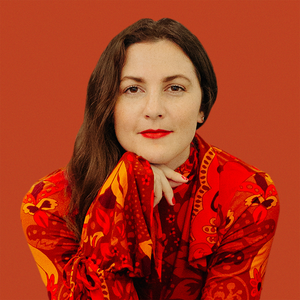
Storytelling from Book to Screen and Back Again with Lynnette Ramirez
On this episode, publisher Kristen McGuiness is joined by president of Bassett Vance Productions and long-time friend Lynnette Ramirez as they take a deep dive into the very long and winding road of TV and film development. Lynnette shares her background and how storytelling has shaped this journey. If you want to peek behind the industry curtain, you’ll want to listen to this one!


Automatically Transcribed Transcript
From the ladies of Rise Literary, welcome to Write the Good Fight. Today's episode of Write the Good Fight is with publisher and CEO Kristen McGuiness and Lynnette Ramirez. Lynnette Ramirez is the president of Bassett Vance Productions, a company dedicated to developing and producing film and television projects with a strong emphasis on inclusion, both in front of and behind the camera.
Named Multichannel News' 40 Under 40 Class, Lynnette is a visionary leader with over 20 years of experience in the entertainment industry. She has held senior creative roles across film, television and digital, successfully championing diverse voices and stories. In addition to her producer work, Lynnette is an adjunct professor in the MFA Film and Television Program at Loyola Marymount University and also leads personal storytelling workshops that empower the next generation of creators.
And I'm also so honored that Lynnette has been my friend now for a very long time. And I feel like we like we'll leave each other's lives and then always circle back. And it's just been so awesome getting to continue to work with you and watch as your career has grown and built.
So thank you for being with us today. Thank you for having me and appreciate you getting us in. You look so I wish this was all video because for those listening, Lynnette looks beautiful.
She's clearly doing a photo shoot right now that she's stepped away from. I was like, oh, you look fancy. I need to put on makeup for this thing.
I will not look like that when I come to the Bookmagic.
Lower your expectations, everybody. No, I will also say I'm I'm thrilled to share here that Lynnette is going to be one of our guests at our Bookmagic Alive event taking place in West Hollywood on Thursday, September 4th. So if you are a writer interested in learning more about the path to publishing, but also the path to adaptation, please check out our website, riseliterary.com and sign up today.
Spots are limited, but it's going to be an amazing group of book coaches and editors and producers all talking about what it takes to take your book from the page to the screen. So I'd love to start with your career because your career really is about taking your story from the page to the screen because you started out as a writer. What was your early days in Hollywood like, Lynnette?
I don't think they were quite as fun as mine, but still a lot of fun.
No, definitely not as fun, which is why we got to be better friends later.
I was partying with Dave Brown.
Yeah, and I was leaving on time.
Yeah.
So I studied screenwriting at Loyola Marymount University. I really wanted to be a writer since I was eight years old, I think, and wrote some journal diary about this character on the Mayflower and was like, oh, this is like so great. This should be published.
And I was like eight. But then I did an internship in development and creative development for Jodie Foster's company and was like, wait, I do like to talk to people. So how can I do both?
Which is really creative producing. So started my path to pursue creative producing. And I went from intern to second assistant, to first assistant, to creative executive.
I've largely worked in talent-driven companies. Sean Connery, George Lopez, worked on it at Nuvo TV with a lot of talent. My joke is I work with every Lopez, Mario Lopez, Jennifer Lopez, George Lopez.
And then I worked on Red Table Talk, again, a very much talent-led unscripted show. But you're still crafting story every episode. I was a bit behind the scenes in the AP producing of that.
And then ultimately now I run Angela Bassett and Courtney V. Vance's production company. And so my journey has been largely professionally not as a writer, although I have sold two screenplays.
And one of them was based on a pitch that was very much inspired by my journey in Hollywood. Neither had been produced. So I do consider myself still a writer, but professionally I am a creative producer, working very closely with writers and script.
I love that. And I think you're such a writers producer because of that. Having been a writer who's worked with you, I just think you're really good at seeing story and telling story.
And I know you lead storytelling workshops yourself. So I mean, I'd love to hear a little bit more about that. And what is the focus of how you work with other writers and helping them to develop their stories for the screen?
Well, yeah, the storytelling workshops they do are really focused on personal storytelling. And it's really about telling your story before you're pitching yourself or you're pitching your project. And so it's taking basically what I have, you know, kind of crafted as the top line of Hollywood screenwriting and applying it to personal storytelling.
So how do you capture the room and be as interesting as, you know, you want your, you know, you want people to buy your story, but oftentimes they're like, well, your personal story isn't that exciting. So being able to build it from like your opening image or your cold open all the way through your final image or where you're going. And you're the character in your own story and really helping with that three to five minute story you're going to tell in the room and also crafting your bio in your own voice.
So that's the personal storytelling workshops that I do outside of all the storytelling, which is always personal when you're writing screenplays. But that's the I saw a need in the market for so many people came in and they were giving you your resume. And then I'd have to dig in and be like, okay, well, but why did you write this story?
Why is this theme important to you? Because as a developer and as a producer, you want to know why someone can tell the story and the only person who can tell this story. And so I think it's really important to also be able to highlight your own story.
And oftentimes we forget about ourselves. We put ourselves last, you know? And so it's really about not, or you feel like you're being arrogant or egotistical, or you're giving the resume because you feel like that's what's going to open the door, or the accolades, or only the wins.
And I think personal storytelling, just like all storytelling, is about vulnerability and about the conflicts and about the things that you've overcome. So that's a bit about the workshops that I lead. And so sometimes it gets really touchy-filly, and it's supposed to, but you hopefully come out of it with a really wonderful way to pitch yourself that allows people to really see you.
I love that. Well, and I think it's so important, as people are beginning to think about the career they want as a writer, whether that's as an author, as a screenwriter, and especially, I think even more so today. I mean, I think writing has become a lot less of a lonely craft because of social media and because writers have to have a platform and a profile themselves.
And so there used to be more anonymity in writing. And I mean, I don't know if that's the same in screenwriting. I mean, I think even, you know, when I started out in the film industry, which I was a D girl for like two years and then left to write my own screenplays.
But during that time, I worked with Kiwi Smith and Karen Lutz, who were the screenwriters of Legally Blonde and 10 Things I Hate About You and House Bunny. And they were actually sort of rare in terms of being famous. Screenwriters, you know, they were out and about.
People knew them. They had a brand together. They were like a more branded screenwriting team.
But, you know, we also worked with like Gamel and Prowse, who had been on The Simpsons and most famously, Seinfeld, and nobody, I mean, they were just like two guys sitting in a basement somewhere, probably throwing a basketball through a hoop while they wrote, you know, and like, and nobody knew them, right? And so has that changed in the world of screenwriting, where people now have more of a brand as a screenwriter or more of a platform? Or is there still, you know, because certainly in terms of authors, that has changed a lot.
Authors now are sort of famous in their niches, and not just because of book talk, even prior to that, you know, in social media, but especially on book talk. So have you seen that change also in screenwriting and in film development?
I think that there's some of that. Some of that has changed strictly because of social media. And so everybody now, I say everybody, but lots of folks, even writers who may be shy or introverted still run like a sub stack or run social media.
And oftentimes now because of podcasting, writers are asked to go and talk about the movie, which before no one ever asked. So you might not necessarily be doing red carpets and that kind of promotion, but I do think there's more opportunities and actually more asks of you as a writer, and particularly when you're produced. And then before you're produced, especially in the Zoom world, there's more general meetings going on than ever.
And so it's also like you're pitching yourself to get the job as opposed to before. It was like, it's great writer, you go on a writer's list, and then you have a meeting about a project. Now, people are meeting you first to decide if they want to work with you.
And I think that trend has changed a bit over the 20 plus years that I've been in the business where it was like writers didn't have to worry about pitching so much. It was so much about being on the page unless you were a television comedy writer. And now it's very much both.
Yeah. No, and I think, I mean, again, I think going out of book world and into TV and film world, there's a lot of similarities, but there's also a lot of differences in terms of being a writer. I mean, it's funny.
It's like it's hard. It's hard to get a book sold, but it's actually much harder to get a TV or film project sold. So I always like let people, you know, it's like, and I always tell people, like, you just have to think about, like, how much money does it cost to make a book?
Which is like maybe around thirty thousand dollars, let's say. I mean, at the end of the day, like, all thirty to fifty thousand would be like a base price. It's like, well, how much does it cost to get a TV show made, right?
How much does it cost to get a film made? Like, and so that's why there are so many much less of them and why it is so much more competitive in that market. And yet I can't imagine a single person who doesn't, well, I mean, maybe there are some, but most writers do write their books with the idea that one day this could be a fill in the blank, right?
And I know like you and I were just speaking, and you said a lot of the projects that you guys actually have over at Bassett Vance did start as books. Is that correct?
Yes. In fact, our slate, not on purpose, not because the market demands intellectual property IP, but really we are avid readers. And so oftentimes our projects come to us as books first.
And then either the screenwriter, television writer has brought it to us or we're bringing it out to writers to adapt. I also think focusing on inclusion, which I know sounds crazy because I know in the literary world, you know, a lot of folks will say like, well, there's the same issues we face in film and television, which is like really trying to find diverse voices and elevate them. But we have found more books and more opportunities of like full three-dimensional stories when it comes to looking at things that are diverse and includes.
And I think part of it is just the medium is a longer format. And so it allows for it. And I think that may also be why at Bassett Vance, we have a lot of projects based on IP because to find an original screenplay versus a book that really highlights like the full Latinx experience or the whole full queer experience or black experience, we're finding in plays and in books as much if not more than screenplays.
That's awesome. I mean, I agree. I think that there is so much in the storytelling of a book that allows, well, one, a book sort of offers also like a hundred different versions of itself into TV and film and especially between scripted and unscripted.
And I've been on a project for the last couple of years with one of our authors, Emily Paulson. We're actually doing her next book, The Revenge Party. But I've been attached.
I say I'm like that annoying producer who's like attached to the project that every time we get set up with a company, they're like, oh, God, the friend. And I'm like, I'm really not. I kind of know what I'm doing here.
I promise I'm not just the friend. But in that, we took a take out for unscripted. And sadly, it didn't sell.
But there were so many different takes that we could have done out of that book. And now there's a potential scripted interest from a huge production company. And so we're working on that deal right now.
And it's like that version is that version is like a completely different story. Right. And it's also scripted, which can allow them to come off the book a bit more.
And so I've just seen that when you do have a book, and as I tell Emily all the time, none of this means that anything's ever going to get made. Like, I'm always, poor Emily, I'm constantly adjusting expectations. And also that it all takes forever because it is like the slowest journey.
But at the same time, like, I think that when you're writing a book, it is interesting to think about, OK, like, what are the dimensions of this that could end up being attractive in books? And I mean, I'm sorry, in TV and film. So, I mean, for you, including the diversity piece, but also what attracts you to a book that makes you say, like, hey, I can really see this, or hey, I think this is something I could sell, or attract the right people to the project.
Yeah, I mean, I think it's different for every producer. I mean, we are genre agnostic, but we largely do comedy, drama, dramedy. Would love to find that right.
Sci-fi, grounded sci-fi, horror. So, but particularly in speaking of drama or like fiction that is maybe very character based and setting based, it's really is there a story engine here? And so in Big Little Lies, you know, they're trying to figure out who committed the murder or in Little Fires Everywhere.
There's multiple story engines happening, all built out of character, but ultimately culminates in this burning of the house at the inn. So that's really what I'm looking for. And that's also determining is this going to be a film or a television project?
Now, sometimes that warps and evolves based on as, you know, a writer coming in and having a take that allows it to have a story engine that will last over multiple seasons for television. But oftentimes I have a good instinct when I read it of like, this story is what I would say one and done, which is a feature. You know, I don't need to see this continue to evolve over multiple seasons or multiple episodes or even a limited series.
This is like two hours with a very clear beginning, middle, end, act one, act two, act three. Something that feels like you're going to continue to go on, you know, it's like it's set in a high school and then it's a group of friends and you're like, oh, I could see them going to college and then seeing them getting married. And, you know, that's more of a story engine for television.
It's not nuanced, but I do think you understand as a producer, particularly how much you work in each medium, where the engine is and how far away you would have to go from the adaptation if you want to do something that is not are organically already set up inside of the book, if that makes sense.
Yeah, no, absolutely. And I mean, I've written two books now, one of which we try to produce as a TV show, which absolutely made 5150. It was episodic in its nature.
I went on a date every week for a year. That's how you and I actually, I mean, we connected through PLN and 5150.
Yes, that book is a perfect example of like, oh, this is a series, like every episode could be a date and it's like Sex and the City. And then ultimately she can get married or not get married or have breakups. Absolutely.
She did get married in the end. Spoiler alert, just not at the end of the book. But I and so and then similarly, you've been working with me in the last couple of years on my last book, Live Through This, which when I wrote it, I always saw it as film because it does have that clear beginning, middle and end, right?
And and how you begin to pitch something out like that. And so I'd love to chat a little bit. I'd love to share a little bit about my book, but only because I think it's actually kind of an interesting case study of like, OK, so and also I will say this, like, you know, for people who are writing books and people who have published books, like I had and 5150, I had a lot more energy when that book came out and it hit a bestseller list.
And I had the Today show. So I had the kind of media around it that helped to like quickly get stuff kind of percolating on it for TV and film. But then things got quiet, which they do.
I mean, unless you've got a juggernaut of a book, right? Like, ultimately, things go quiet on your book and you still have to be like producing in the dark. And so for us on 5150, which was the game changer was that we brought in Alison Brie.
And we were, I mean, we've been producing that book for like well over a year. Let's see, almost two years since the book came out, because she came in in May of 2012. I always remember because right before I got married, before season three.
So we were almost two years after that book got published, that we attached the kind of talent that then was going to drive that project into its next phase. And so we're almost two years out of Live Through This, being published. So I guess now it's time to find some hot talent.
But so what does that look like when you're a producer and sort of like trying to get a project out there? And do you find writers first or talent first? Or how do you sort of look at projects and and how do you develop them?
Well, using Live Through This is a good case study is that I think you can adapt it at least the beginning. Right. So some there's very rare times that you have an author that can actually adapt their own material into screenwriting.
Either because they've done it before or they have some sort of background or kind of knowledge of screenwriting and and you know, given your background and having been in the development and written screenplays early on in your career, produced or unproduced. So in that case, it's like, let's go get the talent. It's a bit of a chicken and egg right now, because most talent is like, well, let me read the screenplay.
They don't want to just hear a pitch, and that's changed a lot. I think the exciting times of the 2012, 13, 14, 15, you could attach talent and they would work with you on the pitch. But as we're watching the industry overall contract, people's time is about efficiency, because how are we going to get quicker to their paycheck?
Really is what it's all about. We all want to get paid. And so it's difficult, we're finding, to attract talent without the screenplay written, where they'll hear the pitch and say, that's great.
But sometimes that's enough, if they hear the pitch and say, that's great, to then be like, okay, either the writer can go back and write it on spec, or you can say, we have interest from and try and get your development money that way. Because now you have a book, you have interest from XYZ actor, and you have a take, which is, this is like how we're going to adapt the book. So, and there's no right way, there's no recipe.
There's not, if you're an author, it's not like, oh, I heard this is the way to do it. Movies and television series get put together in all kinds of different ways. I will say, stepping away from live through this, which does feel clearly like a feature, on the TV side, absolutely get, for me, I go after a showrunner, somebody who wants to create, somebody who can read, or at least is at the level of being a creator, which means you've probably earned a producer or co-producer or exact producer credit in television.
And you want to get that person to come up with the take for a TV series, because oftentimes, you're not going to write a pilot anyways until you've sold the project, and it's all about the pitching. And then once you have that pitch, if you feel like you want to attract or attach talent, then you and the showrunner slash creator go to that talent together.
I love that. And I think it's so important for people to understand that there is a process, because I have so many people that will be like, I want to turn my story into a X, Y, or Z. And I'm like, you know, it's the same thing with writing a book.
It's not like you just show up and you get the job. Like, there is a, this is an industry, this is a real business that people have been working in for years and starting out, you know, in that writer's room and growing and building. And not that they're not looking for new stories.
And I do think there is something, I think that's where IP can be valuable for folks, because it is a way to show that there's some proven success or proven interest and I think that's true. You know, years ago, I was pitching a story about my dad, which I still like, it's the project that will forever be in development for me. I'm like one day when I'm like 80 will make this story, when it's really not relevant anymore.
But nonetheless, I had written a book proposal and I took it to a producer and the producer actually sent it around to a few people. And I forget the name of the guy who created Narcos, but he was like, she should write a magazine article.
Eric Newman, who I'm working with, by the way.
Oh, that's so funny. So yeah, I think he took a look at American Narco a long time ago, and he was like, she should write. And so I did.
I wrote a Rolling Stone article and then Rolling Stone came on board to help produce. And so we began to go down that way. But I at least had that initial IP that was like, OK, so I've got something that was hot.
I had a lot of interest in its moment when it was bubbling. And again, as those things happen, they sort of blow up and then they calm down. And so you're always sort of chasing people.
But what do you say to folks? I mean, having been through that, and I think there's so much patience involved in that process. And I'm sure you've had a lot of projects that you've been incredibly patient on for years.
And so for folks that do have something in development or who have started to build, how do you keep a ball moving? How do you keep a project active and what are your best tips for writers who might not have those years of experience and connections but are getting some interest in how do they keep going with it?
I mean, I think, you know, it's what I say to everybody about every project. We just need one yes. And so, you know, it literally like you can hear 99 nos and then, you know, the 100th is a yes.
Or maybe that you can then attach talent and turn into a yes. So it's really about understanding, as you said earlier, that like setting the expectations and understanding it's really not a sprint, it's a marathon. What you want to do to make sure that the producer or the, you know, the entity, whether it's a studio or an individual producer who optioned your material, is that if you did a free option, let's say for 18 months, then like try and get paid for the next round.
Be like, let me, you know, if you did, if you went in at like 25,000 because it was a studio, then be willing to negotiate it because they might be like, look, we'll renew this and keep going, but not for 25,000. And these sound like really low numbers. This is like money for just their opportunity to shop your material.
This isn't, you know, what you're going to get paid for the for the rights to your book. That's all negotiated out in the option as well, which means like you might get 250 and 25,000 an episode, or you might get 150 and, you know, 12,000 an episode, whatever it is that's negotiated. And that's all based on your experience, if the book was a best seller, how good your lawyer is, you know, your literary agent, et cetera, et cetera.
But the point is, is like stay flexible, keep some monetary value on it, even if it's minimal after, I'd say, 12 to 18 months, so that you are assuring that there's some sort of investment on their end. And beyond that, I think, like, write your next thing, like, don't sit around waiting for that adaptation to happen, so that then your next book becomes a best seller, or everybody wants to meet with you. Like, it can take, it can be really fast, you know, you've seen YA novels sometimes, if they quickly go up the, I was going to say charts, if they quickly like become a, yeah, charts, like a best seller, they can be, you know, bought, adapted and out on Netflix in two years, or less even, because people are like, oh, that audience is growing and changing and we want to like capture them right now.
And then other times, like, I mean, the kind of famous old stories, Forrest Gump took 10 years to get turned into a movie. And so probably 12, 15 years from when it was like actually a book that people were holding in their hands, reading on vacation way before eBooks. So that's, I think just to quickly kind of summarize, like, keep some monetary value on it.
Check in, but don't be annoying. Be patient. And if you have any resources that can be helpful, then yeah, send the email.
Like if you happen to run into Joshua Jackson and he's like the right lead and he was on vacation and you saw him like, and he's like, here's my email. I'd love to read that book. Well, then yeah, pass that information along.
But if it's literally like, oh, my, you know, and if you're writing a new book, you got another book deal, pass that information along. Anything that helps the producer of the studio pitch it and make it exciting and attractive, send your articles. But, you know, little incremental updates, like you think it should be, you know, this person that you just saw on a TV show.
I mean, the producer is probably thinking that too. So you just have to figure out again, this nuance of like, what is a good push and what is kind of being annoying because it's not the process that your, the onus isn't on you to get it made. It's on whoever optioned the material.
I mean, that's one thing I always try to remind writers is we want to check in. But we also, you know, you do have to understand that this is a business that moves slow for also good reason that there's a lot of projects and it's a traffic jam of how many get made versus how many are in development. And so you just kind of have to agree to the slow and steady pace of it while also trying to find new reasons for producers to get excited and talent to get excited and writers to get excited if you're not writing it yourself.
And I know, I mean, I have to remind myself of that a lot in my own process. And obviously, like everybody, I get busy with other things. But I think that that also allows you to not sit there and watch the paint dry.
And I had a really great experience with 5150 and that we almost got it to sell. And we were really close. And like I said, it was at the end of the day, it didn't really matter.
I mean, I was super bummed when it didn't sell. But oddly enough, I always say, like, I think it was like, the day I found out that Showtime was passing was also the day that I found out I was having a girl because I was pregnant at the time. And I was kind of like, oh, whatever Showtime.
Like I had other things going on in my life at that point. You know, and so of course I wish it had happened, but I had such an incredible experience. Like there's such a thrill in getting to see your story even almost made that I would say like celebrate the small victories because like it's such a rare thing for the big one to happen in this industry.
So like I just really tried to appreciate like all the incredible experiences and the meanings that I got to have and have, you know, meeting with writers as they pitch me back my own story. And I just think there's so many wonderful experiences you can have even if something doesn't get made because it is so few and far between. But I would love to hear a little bit more about Bassett Vance and what y'all are working on right now and what you're excited about or have coming out.
And what it's like to, I will side note, I just saw Isle of Dogs this weekend and saw that Courtney was the narrator of that film. So it was the first time we'd ever seen it. My kids are now obsessed.
They've seen it like four times.
So speaking of Courtney, he has a book out right now that he narrated. That is the WEB. Du Bois book, volume one and two.
But he did volume one, which is available now. It came out Juneteenth. And he'll be recording volume two in the fall and it will come out probably around Black History Month.
So just something to note leading in to Bassett Vance is, well, we don't necessarily focus on black historical narratives because they are difficult to sell as film and television series. Like mini, there's a big trend right now. Like, you know, period doesn't work or is very expensive.
But we do find other ways to tell those stories sometimes. And this happens to be a work of nonfiction. But whether it's a work of fiction or nonfiction, if it's really beloved and something that we want to see, like maximize, there's like the podcast world, of scripted podcast, which there isn't a lot of money in that, but it can give your book a boost.
And then also, Angela and Courtney in the past have come on and narrated books that make sense for them and their brand that they're really passionate about. And for any author who's done that, you know, it's like painstaking. But even for a professional actor, but it's really, again, for our company's love of books.
And if we don't see a film and television adaptation, how else can we highlight it, whether it's a social media post or all the way to, like, where Courtney's got involved in doing some of that work. But in terms of Bassett Vance, we're excited about a lot of things. And, you know, it is a contracting time in the industry.
We had a really great 2024, in the sense that we sold material when a lot of people weren't. And so 2025 has been heavy development, but we hopefully are bringing an adaptation of Stella and got her groove back to audiences in the next couple of years. So super excited about that.
And we're working away on that. And Angela will not be in it. It's a reimagining.
So there you have a book that then became a feature film and now it's going to be a feature film slash streaming movie again. And, you know, and still updated from the original book and film. We're really excited about another book that we optioned.
I'm going to hold the title for now, but we have a really exciting screenwriter on it, Tracy Oliver, who did Girls Trip, among many other things, but that's probably the most populous little credit. And she really fell in love with it as did we first. And we brought it to a couple of writers and we're so excited about Tracy's way into the story.
And, you know, beyond that, we have some television projects that we are plugging away on. Again, as I mentioned, we love drama, you know, thrillers, dramatic thrillers, if you will. So we have two series, one that Angela is attached to star in.
Also based on a book we haven't announced yet, Set in Atlanta. And the other is a Latinx story based on a memoir, which we have announced called Monkey Boy, written by a really dynamic writing team who are currently on Murders in the Building, Ben Smith and Joshua Ellen Griffith. Joshua wrote the pilot and is creating with Ben supervising and show running.
And before that, Ben was on Barry. So even though it's a dramatic geopolitical thriller, it has this really dark wit to it that you will find in those two credits. So those are some of the things that we're working on that we're excited about.
That's just a little another book that we hope to. It's been a long one. Love Radio, which maybe some listeners will know by Ebony Liddell.
It's a YA novel. It was an Apple's top 10 books, not YA books, but top 10 books of 2022. About two black teens falling in love in Detroit.
It's very much, and I don't think the author meant this, but our adaptation is very much an homage to movies like Love and Basketball. So again, super excited about that one. It's a long road.
We've had a writer, now we have a director, then the director is working with another writer on the adaptation, really just to make it up to the moment contemporary for this evolving, you know, Gen Z and Gen Alpha audience. So that's some of the projects that we're excited about.
I love that. Well, and again, it speaks to, you know, that book to film TV adaptation pipeline that I do think is still so strong and is a reason for folks to not give up hope. So because obviously it still works and they still get sold.
And as we can see in the marketplace, they do still get produced and made. And so it's just, it is really competitive and it can be a really long road. And I'm also always happy to hear it's like, yeah, and you're producing a book that was published in 2022, right?
So it's just everything. Everything takes time.
Yeah. The Angela project that I mentioned that we haven't quite announced yet. It's been optioned, I believe, two other times by other producers.
We're the third, Heartbeat, actually, we're producing with Kevin Hart. We're like the, I believe, the third time it's been optioned. I believe it's going to get made this time.
And I think the book initially came out in 2012. So it's had a lot of fans for a long time and it has a political bent. And as we've all seen, the landscape has changed dramatically.
So part of the adaptation is working as the whole team, that's the Eric Newman project, to just make sure that we're keeping the character or what everybody loved about this book and the setting, but constantly figuring out how it can speak to the audience of, really, in adaptations tomorrow. You're projecting a little bit, especially television. So that's a journalist slash author who wrote a piece of fiction, who I think is really just like, okay, I'm going to get on again with another set of producers.
Let's see what they do. But yeah, the journey can be long. And now Angela Bassett may play the lead.
So, you know, it's going to get made, I think, at the right time, but it just takes time.
No, it is. It's definitely like a work of faith and just, yeah, the right people do come together at the right time when it's supposed to happen. And sometimes you just have to be patient while the chips fall into place.
So, well, we like to end every single one of our segments with a little bit that comes with a jingle. And then we're going to ask you to give us your one tip for writers.
So, and I would say, if you want to give one tip for screenwriters, but also just writers in general, because I know you work with people across the spectrum of what you offer with all of your years of wisdom and guidance.
We have so many tips, but I think if I distill it down to one right now, that is definitely something that I have been seeing to writers, is don't write to market. Write what you love, because as soon as you try to write to market, and I don't know if it's the same in the book world, it's going to change and flip what everybody's looking for and buying. So write what you love, you know, just because someone says Ozark is out now, but if those are the kind of shows you like to watch, like dysfunctional family drama and dark worlds, write that, because of your version of trying to write the Friday Night Lights will not be the best version of your writing.
I love that. I think it's so true. And you will have the space to give all your millions of tips at Book Magic Live on Thursday, September 4th.
So again, for anybody listening, Lynnette has so much wisdom to offer and so many great stories. I'm super excited for you to be on the panel with unscripted producer Joel Chiodi and also executive producer and founder of Joy Coalition, and Joy Gorman. So I mean, the three of you is like, I'm just thrilled.
We're going to have so much fun. But also for anybody who's attending, I mean, what a wealth of wisdom and experience and also to get the sides between scripted and unscripted in TV and film and all the different ways that things get made. So I thank you for being a part of that event.
And thanks for being here today.
Yes. Yes. And I can't wait.
Can't wait to see everyone at Book Magic. And as I get older in this industry, there's something more I love than just giving advice and not doing.
Exactly. Exactly. And I will end with this because if anybody has been listening and paying attention, we had a great episode a couple of weeks ago with the showrunner Krista Vernoff.
And I was joking to her that I'm a failed screenwriter and that this was my backup plan was to run a book publishing empire. But I wrote a screenplay that Lynnette has read called Sacred Monster, and last week it got selected for the Matera International Film Festival. So I have a laurel, Lynnette.
I have a laurel now.
I think that's amazing. And I knew it had been in competition. Now it's been selected.
I knew it was moving up the ladder, but that's awesome. And again, that's a good example of just write what you wanted to write that was personal to you. And that's where I think voice becomes really evident.
Nobody was necessarily demanding without us giving too much away, like a marital drama after marriage story. But you know what? They don't want what they want.
With talking cats. I mean, I think it's the talking cats that do it.
So nobody knows what they want until they're moved emotionally. And that's a good example of a script that moves you emotionally.
Yeah, I love that. Nobody knows what they want until they're moved emotionally. It's so true and such good wisdom for folks.
Well, thank you for being here today, Lynnette. And if people want to find you, how can they do that for your storytelling courses?
On LinkedIn is great. It's Lynnette Ramirez, L-Y-N-N-E-T-T-E and also StoryPoint L-A-L-A for Los angeles.com.
Awesome. Thank you. Have a great day.
And go enjoy your photo shoot. Thank you.
Bye.
This has been Write the Good Fight, brought to you by the ladies of Rise Literary. Thanks for tuning in. If you enjoyed today's episode, don't forget to rate us five stars, follow the show, and leave a comment.
We'd love to hear from you. Feel free to share this episode with friends, family, or anyone who might find it helpful or fun. Be sure to follow us on Instagram at Rise Literary to stay up-to-date with upcoming events, courses, insider info, behind the scenes fun, and so much more.
Or you can check us out at www.riseliterary.com. We appreciate you listening, and we hope to see you next week for another great episode. Until then, remember, it's your time to write the good fight.
From Write the Good Fight: Storytelling from Book to Screen and Back Again with Lynnette Ramirez, Aug 21, 2025
This material may be protected by copyright.