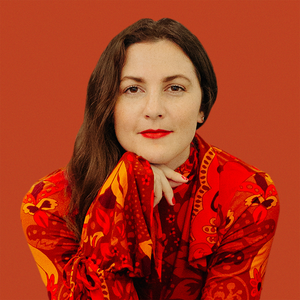
Swimmers, Storytelling, and Rough Magic with Christopher Rivas
On this episode, publisher Kristen McGuiness is joined by the first-ever Rise client, Christopher Rivas, as they dive into everything from creativity to the real James Bond, and sperm! It’s hilarious, nostalgic, insightful, and so fun. You’ll definitely want to listen to this one!


Automatically Transcribed Transcript
From the ladies of Rise Literary, welcome to Write the Good Fight. This week's episode of Write the Good Fight is with publisher Kristen McGuiness and actor and storyteller Christopher Rivas. Christopher Rivas is a storyteller, actor, bestselling author, speaker, playwright, and Rothschild social impact fellow.
He is best known for his book Brown Enough, his podcast Brown Enough in Ruby Rosa, his television work, and his solo play, The Real James Bond... was Dominican exclamation point. He is also client number one of Rise Literary, which is actually like it truly in the books.
Like I had to go back through when I was like looking at who the first people were when like I officially opened an LLC in July of 2020. And you were my first like agreement slash invoice, Chris. So you're truly like client number one.
Number one is good. Got to start somewhere.
Got to start somewhere.
I think it worked for me. So I'm happy to take the... You owe me a plaque.
Yeah, I do. I do.
A plaque or a trophy.
A little trophy. If you like a little like softball trophy. I actually have some from like the 80s laying around here.
We might have to repurpose.
Send it to me. Just etch my name in. Yeah.
With some white out. Just scratch it off. But no, I will never forget that first call with you.
I think we bonded over Big Sur and actually LA and Silverlake and all these shared spaces. And then the memoir you were writing at the time, Brown Enough, which is became a real book. And actually a real person became something.
So I mean, I would love to start there. Like what drove you? I know you're an actor, you're a storyteller.
You do so much both in terms of your writing and theatrical creativity. But what made you be like, I want to write a book with my name on it?
Yeah. I don't think it was me per se. Like I don't think I ever was like, I want to write a book.
Except for acting in my life, I'm not sure that a lot of my artistic endeavors have been, I want to do this. I think I just, time and place, and I believe, doesn't mean I'm good at it, but I believe in listening to the wind, or God, whatever you call it, wind, God, source, life, inspiration, and then following that. And I had written this play, Real James Bond was Dominican.
A scene from that got into Modern Love. That did really well. I was getting all these phone calls from all these agents saying, do you have a book?
And I did not have a book. And then I met an agent that you know, and she was really patient to think about what kind of book I might write. I had had other essays published in other publications and newspapers.
Newspapers feels weird to say. I don't think they really.
Physical newspaper. Get out the black and white.
And then we found you or she found you. She connected me with you. You knew Colleen.
And you were a real catalyst in what is this thing I write about or think about. And that was the real journey. Yeah.
And then you helped Dula it into the world. Yeah.
I mean, it was a true... I mean, I loved your book and I love the process of helping to build out that proposal for your book, but also helping to really figure out like... And I think memoir can go in so many different directions.
And yours is what we now kind of jokingly call the Messe, where it's like part memoir, part essay, you know? And I do think it had that element of like, you were telling these stories. I mean, the wildest thing is like, you were writing the stories as you were telling them too.
And we were like, like, if you remember, like, one of your stories is you going like in a whole hazmat suit onto the plane to go to Miami in the pandemic. I mean, yeah, we were writing in 2020. So like, it was just nuts.
It was like these wackadoodle stories of a global pandemic, but also these like really universal stories of like your life and childhood and the Ruby Rosa story and like integrating all these different threads into this one book with a very long subtitle, which to this day, I still love your book and love its crazy ass subtitle that we did. But I mean, for you, what was, you know, I mean, I guess, what was your one big joy from that book? Was there like a moment where you were like, this is the wind made real or how did it feel?
I think I still have those joys today. Like, you know, people are still reading it. I still get messages.
It just became curriculum in all these high schools around the country.
So cool.
That's like so cool. I did not write this with high schoolers in mind. Like, when we were working on it, never in my mind was I like, this is going to be in high school classrooms.
Did I even think it would be in college classrooms? And that's happened too, you know? And so I still have these joys of seeing how, which is the same feeling I got when I read Baldwin, or I read Eldridge Cleaver, I discovered the essay.
Like, these people were talking about themselves, but I felt myself, I felt my world, I expanded in my world. I felt more vulnerable, and none of them were saying my name, you know, or my experience. And yet it was my experience.
And so when I see that that still happens for other people, I still get really excited and really moved. And it does give you hope in an art, which I'll never lose hope in. Like, it's the thing that was here to help create the world, and it'll be here in whatever world we end up in.
I love that. And I love, I mean, one, what I did love about that book again was all those different braids and how the Ruby Rosa story showed up even in your story. And so, I mean, I know you've done so much work with the real James Bond was Dominican and the Ruby Rosa story, including, I mean, you've done the play, but you also had the podcast, right?
And I know the Ruby Rosa story is so important to you. So what, for those listening who don't, and I love this story so much, but what is the story of Ruby Rosa and his life?
Yeah, so I discovered him in a Vanity Fair article when I was in college, and I was haunted, haunted in a nice way, you know, like a gentle haunting, not like a conjuring from a horror movie. And I was obsessed. It's very easy to become obsessed.
Anyone listening, if you Google Porfirio Rubirosa, he is the supposed Dominican man that James Bond was based on. And he had this unbelievable life in a very short time. He was married five times, twice to the richest woman in the world, Barbara Hutton endorsed Duke, which made him the richest man in the world twice.
He was followed by the FBI for 30 years. He lived in Hitler's Germany as a diplomat. He lived in Fidel's Cuba.
He lived in Argentina. He lived in Paris. He was set to be a movie star when he was dating Jacques Gabor and working on Westerns.
He discovered sunken treasure off the coast of Spain. You know, it's like, it's ridiculous. He was in every tabloid and magazine.
And he was like the where's Waldo of the 20th century.
It's such a trip. You know, shot by the Gestapo, you know, in the back and survived. Flew B-52 bombers for fun.
And, you know, was a gigolo in his in the full sense of that word, you know, slept with every major heiress, princess and waitress of the 50s and 60s. And he was Dominican. And that was the big thing for me.
Like, I was like, whoa, there's this epic, epic, epic being that was Dominican. And I don't know about him. You know, why hasn't my father told me this?
Why, why isn't this movie exist? What's going on? I've seen way worse, you know, characters and boring timelines than this guy.
Where's my history? And so it changed my life. If I don't put that, it's not understated.
Like I worked forever working on this play about him, and that play opened so many doors of my artistic career and my voice. And then the rest is history, her story, as they say.
Well, no, I love, I mean, again, getting to see that story show up in your book, but also having gotten to see the stage performance once on Zoom at the height of the pandemic, and once live in Los Angeles, it really, it is one of those things where you're like, why hasn't this movie been made? And I know the real James Bond was Dominican has been such a huge part of your life, both personally and professionally. Do you think you were Ruby Rosa in a previous life?
Or do you think you were one of his lovers?
Wow. Wow. Wow.
I do believe in past lives. Many, many, many, many, many, many. And I don't think I was Ruby.
I think it's, I don't know the speed at which we go from death to rebirth, but that would be a quick turnaround. Or I was him and then I bounced and then I also had another really short life which is really sad to think about. You know what I mean?
Yeah, there might have been a pass through.
Yeah, and so I don't know that I was Ruby, but I do stand behind, this is in the book Shantaram, in this life, there always comes the opportunity where you meet someone who shows you exactly what you can become or exactly what you should avoid at all cost. And Ruby has and is both what I can become, what I was becoming, what I sometimes am, and what I need to avoid. Like he's this ultimate hero slash warning sign for me of some sort of dangerous qualities in myself, a desire to be seen, a desperation to be seen.
And also this like real, this real joyful loving being. Yeah, I've, you know, there's very few like him. And so obviously it gave me so much of my world.
Maybe I was one of his lovers. That could be right too. Still a quick turnaround between, you know, like living in the 50s and 60s.
Ruby Rosa was running around for a while. No, I, like I say, I think it's just such a fantastic story. And so, I mean, I'd love to know, speaking of like in terms of what has been, and you know, we talk a lot about like writing the good fight, but I think the other side of writing the good fight is struggling to write the good fight, right?
So, I mean, I know you've done a lot around that story and you've written a lot. I mean, what do you find? Why hasn't the Ruby Rosa TV show or movie been made?
And what has that look like for you? And where are you at in that process right now, too?
I'm tempted to say that the short answer, racism.
Yes, I felt that way.
It's not a white guy, you know, and we don't have many outside of Pedro Pascal, who else is green lighting anything that looks like me. It's just sad. And we don't have check signers who look like us.
And that's even more important, right? Who's signing the checks? Who's making the decisions?
Antonio Menderes was scheduled to play Ruby in so many movies. It just never got, it just never made it past the finish line. Quincy Jones had the rights to make a Ruby Rosa movie forever.
I mean, in that really epic GQ article, where Quincy sort of gave his last, you know, will and testament, all his crazy stories before he passed, he talks about meeting Ruby and how he looked up to him and there was no one like him. Yeah, I mean, so short, I have to imagine it's just, this is the industry. We don't, we rarely have heroes who look like me and are not gardeners or some sort of gangster or some sort of, you know, and whatever, he is a gangster and a thug, you know, the reason that I followed him for 30 years for a reason.
And so I don't know why the movie hasn't been made. I mean, people have tried, I'm trying. I believe in it one day, I believe in something.
I still believe there's more to his story and giving himself to the world. But I imagine he is one of many people who have had their essence stolen by sort of whiteness and Hollywood and until they learn sort of how to commodify it or make cash out of it, it lives in this very small paradigm of storytelling. And so it is both nuanced and not nuanced.
You know, that's why I gave you that quick R word.
And not wrong. Yeah. I mean, when you just hear a story like that, you can't not think like, how was this not made?
Especially with all the other bullshit that does get made, you know? And I mean, I know there's always, like there's always a combination in that cocktail that makes something seem strategically either profitable or advantageous to get made, whether or not it merits it. But that is a story that does feel like, especially like, how could this person exist?
And we don't see it, you know, on celluloid. So it is a...
And it's not cheap, right? Like, it's not the... It's not the coming to America...
That B-52 bomber's thing alone would be a cause.
It's not like this guy, this immigrant came to America and like got a job and like, now he's happy. It's like, no, it's six different countries.
Yachts are involved.
Yachts, like, you know. But also, I always think what... I mean, in this movie, you would have Kennedy, right?
He would spend time on Kennedy's yacht. You would have the entire Rat Pack. You would have these celebrities and the heiresses.
I still believe it's good. And I also believe that I will make something amazing out of it. And am actively.
I believe that. So in terms of... I mean, you were a storyteller across so many different genres and mediums.
Do you feel like you're more actor these days, more author, more storyteller, more everything in the kitchen sink? Or where's your focus been lately?
My focus has been peace. Like I have a more peaceful life when I'm not thinking I should be acting more, I should be writing more, or I should be authoring more. That is sort of my great fight.
You know, you say, write the great fight, like I'm just sort of peace the great fight, like liberation the great fight. I do not like when I am attempting to define myself by my accomplishment. I'm less happy when I'm in that mode.
I'm more happy when I'm in my life, and actually in my life and present in my life, because no TV show is lasting as far as like peace and you know, I've been a series regular and you think it will change your life and you still have the same demons when you wake up in the morning and go to bed in the morning. And then I've been on a billboard in Times Square and you still have the same demons when you wake up. You know, you're like, why did the billboard run for two days?
Why didn't it run for five? You know, like, it's always still grasping, you know. A lot of humans have read my book, and I think to myself, why haven't millions, you know?
It's always more. It's always something. And so I still make art because I love it.
Like, I actually love, you know, I'm working on something right now, you know, rough magic, and I love thinking about it. And I love tweaking it. And I love that.
So I still get joy from that. But if I need it to be made or seen or purchased, then I'm constantly in this sort of desperation. And I like to live from abundance, not deficit.
So peace is my good fight right now.
That's a good fight. Yeah. I mean, I hear that, as I was saying before we got started, like, entrepreneurship feels very similar.
And that's been like my latest creativity. And it is the like, we're going to have an event this week that we're going to now do in February, because I think August was just a really tough month. People weren't paying attention.
And like, as I say, like, once I start, and I say this about everything in entrepreneurship, if you feel like you're inviting people to a party, it's fun and amazing. If you feel like you're busking on the street, it becomes less fun. So like, once the hardship shows up in an endeavor, it just, you know, once the like, the lack shows up or the space between what you want and what you're getting, like, then you know, like we don't need to do that.
I want to be at a party. I don't want to busk on the street. Like, it's cool.
I've done that in so many ways.
My homie put me on to a term that I've been loving so much, which is effortless bounty. And it just feels, it feels right. It feels right in my mouth.
It feels right in my body, in my spirit. Effortless bounty. Like, I have planted many seeds and let them, like, actually enjoy the tomato.
Enjoy, like, enjoy them as they come up your crop and trust that they will feed you and nourish you. Like, effortless bounty.
I love effortless bounty. Yeah. And speaking of effortless bounty, so I also had the great joy and privilege of working on your most recent work, Rough Magic, which was so much fun.
I just have to say from, like, I don't even edit anymore. Like, I don't take on private clients rarely, but obviously for you, it was different. And so getting to work on that was just such a joy.
I got to, like, be back and, like, and it was also, like, you know, a lot of times when I work on books, it might be, like, more, like, self-help or personal development of these very, like... So getting to work on, like, a purely, like, creative, just passion project, and I so related, I connected to it personally. But I love for you to share about what that project is and also what drove you to write it, because it does not feel...
It feels, it felt like the kind of project that, like, obviously you wanted to sell, you wanted to go and do great things in the world, but even if it didn't, it did its job, you know?
Yeah, I love that piece. I... So the way I...
I often end up doing more work than I have to in this life, or just the right amount of work that I have to do, but I wrote a piece of theater called How to Get Free. And the first act of that piece is someone who can't get over a relationship, so they recount the memories of a relationship over and over. After I performed that in New York, someone came up to me and they said, I want to meet that person.
And I was like, I can do that. So I went home and I wrote this other play where you meet the person, where it's just these two people. And then I performed the play in Boston.
I called my friend at ArtsEmerson and I said, will you produce this? And they were like, yeah, I'll produce this. So I flew the whole team out and we did this play in Boston, and the play went really, really well.
And someone lovely, I won't say his name, saw it. And they were like, I want to turn this into a movie. And I was like, sick.
And so we were making this movie. And when I was writing the movie, they said to me, I don't want to see a play on screen. I want a movie.
And I was like, oh, you want a movie. Okay. So what does that mean?
And so I needed to learn more about these people. And the way I decided to learn more about these people was to write a book. I was like, oh, this is how I will learn who these people are.
Because I can give them history. And so I start writing the book. And that's what you read.
And I start reading fiction, which I don't read a lot of fiction. And so I'm enjoying this process of meeting them. It made the movie so much better.
It actually made a movie. It made the play so much better. Because they had more life outside of just the memory of what came from this solo show, How to Get Free.
And so that's the piece. It's about two people and their time together. But really, it's a piece about this thing we do with other people, where we come together.
And it's based off of one quote. And it's a contemporary of Darwin who says, the goal of every living thing is to exhaust itself. And so to die of heart failure is to actually die of heart success.
I love that. Well, and I think that that story is about how, I mean, again, it's also this thing of like, when a relationship burns so bright, it almost dies out faster, right? Because it just flares so deeply and so big, and it's hard to sustain that flare between two people sometimes.
And I felt like when you were in that book, like there was just such a rhythm to the storytelling. Oddly enough, I did not know that background at all, until I participated in adding it. I'm like, did he tell me this?
And I forgot, but I'm awesome. But I love that you decided that you needed to write a whole book for the background to the movie. But I also think that like, I mean, I can't imagine that it didn't also help though, because I think that in writing of that book, like there was so much about how the dance of relationships are.
I know at one point I sent you All Too Well, the 10 minute version. But I was like, dude, this is what you're doing. I mean, because it is though, I mean, the reason why All Too Well is considered like this, like number one, like one of the most best written songs or whatever, which like we can have all of our opinions on Taylor Swift.
But like mechanically, that is a well crafted song in terms of like being able to give these very specific details of a relationship that feel absolutely universal for anybody who has been in that type of relationship, which is a rough magic relationship, right? It's a relationship to like when two people fall madly in love and can't, and don't know how to sustain that and these specifics of that, and that's the plot, right? The specifics of how that relationship evolves and devolves and what it shows about these two people that has ultimately brought them together, but also makes it really impossible for it to continue, also makes it impossible to leave it behind, you know?
And I think that that's what I loved about rough magic was that like, that's something that everybody's had that, like everybody's had their all too well rough magic relationship that like is absolutely, it still lives within us. And I think that's what made that book so beautiful. Like it brought it all back up for me, like in my rough magic relationship from 20 years ago, you know?
So yeah, I think it's like a classic tale that you wrote. And what's going on with it now? What's happening with rough magic out in the world?
I got a book agent for it, which was, you know, a beautiful, fun-
Yeah, not an easy task.
Not an easy task. Lot of emails, lots of emails. And of course, the thing that did it was a DM, just like an Instagram DM.
And this wonderful, incredible agent said, Yeah, send it to me. And then they read it, and they said, This is really cool. I want this.
And barely, barely changed it. They were like, I'll do the first round of edits. And now they're shopping it around.
Yay. And that feels amazing. And, you know, it's this whole process again, where some people read it.
Some of the editors she's sending it to and publishers, you know, will say like, damn, this is really dope. But it's like, I don't know how to, you know, because it's different. You know, it's different.
It's like, it's non-traditional. And they'll be like, this is really dope, but I don't know what to do with it. And my agent is amazing.
And she's like, I would never have you change anything because this is, you know, the one person who decides to see outside the box will be like, yeah, that's what this is.
Yeah. Yeah. No, it is.
It's just finding the right person for it. And just getting, I mean, I think you'll find, you'll find the home for it. Are you still working on the screenplay?
Is there still movement on that edge?
So the screenplay is a wrap, thank God. So we found this, we found it, got it to this place that's really beautiful. And I really thank the book for that.
The book taught me a lot. The editing with my, with the book agent taught me a lot actually. And I, because we sort of wanted them to be in the same world.
Now the book is a character in the movie, which is really cool.
Oh, cool.
So the movie takes place after the book comes out.
I love that. And I love that. Oh my God, I just got like the sizzles.
Yeah. So it's really, it's really cool how it evolved. And so now everyone's really happy with the script and now we're making offers to directors.
Are you going to be in it? Is that part of the plan?
Me and Annie are going to be in it. Yeah. So Annie, Annie was in the play as well.
Annie Gonzalez, brilliant actress. So it's going to be Annie and I in it.
Oh my god, I'm super excited. Such a great story. And you, I want to mention, because people are listening to me like, does this guy sleep?
I mean, seriously, Chris, in the middle of all this, you also published a children's book.
I did, yeah.
So you want to share about the children's book that I don't even own. Can someone get me a copy of that?
I can't believe it.
I don't have this book. I need to like read it to my kids.
You do. It's about sperm, but you do.
Yeah, I do. I just had the talk with my daughter, like a month ago. Yeah.
See, I could have used your book.
You're a good swimmer. It's, I, look, I don't really want to take much. I wrote it in college, you know, like I wrote, I just had this download that if you've been born, you've won the biggest race of your life, you know?
Yeah.
Like that just getting here is kind of epic. And the myriad of ways that it can have in, for it to actually come to like completion is epic. And that felt like something I wanted to share with people, but I didn't know how to make a kids book.
And then, you know, many, many, many moons later, I get this opportunity to make it and I reach out. And this is where I said, I don't want to take credit because Ariel Boroff, the ridiculously talented illustrator, brought it to life and did unreal work. It's stunning.
It is so pretty and aesthetically pleasing. And it couldn't have been done without her. So yeah.
So I want to shout out Ariel Boroff for that. But yeah, you're a good swimmer. It's really beautiful.
I think it should be on everyone's coffee table. You know, like the highest compliment I get is, sure, I'll get the occasional like, my kid loves your book, but more I'll get like an adult being like, I really, that really made me cry. I really needed that reminder.
Oh my God. I love that. Yeah, I do need copies.
I mean, both for my children, but also for me, I was actually, I was with a friend last night who's a medical doctor, and we were talking, our daughters are both 10 years old. So we were talking about the different ways you can have that conversation, you know, because there's so many different versions of what is sex, right? And so many different versions of like, from a creationist standpoint of like, you know, the miracle of creation to a like, a, you know, the penis goes in the vagina version to and like, I went straight consent on mine.
I was like, since the beginning of time, this act has been used against women by force. And my daughter's like, what the fuck are you talking about? I'm like, so we must learn.
And she's like, I don't even know.
And the conversation started was like, November, December, 2026. So you've got a lot going on in different places. What's happening?
I just started, I'm ASU's Artist in Residence for the next three years. So they, which is really amazing, I go out four times a year to teach master classes, give talks, and they will develop two shows. So my first show is How to Get Free.
So that will premiere in November. And then we will start working on it, and then that'll start touring after November. And How to Get Free is a three act piece, exactly what the title is about, How to Get Free.
I call it Three Songs of Liberation. And it's sick. It's amazing.
The team is amazing. It's highly technical, directed by this genius named Matt Hill. And I feel so lucky.
It's the coolest thing I've ever made. It's so different. So cool.
And then we'll start working on the punch line, which will begin in December with City Theatre and a couple of other organizations. And the punch line is formally called A Year to Live. I put 60 minutes on the clock.
I give us all a year to live, and then we all die together and see if we change our lives. Or see if we come to love our lives more.
Yeah.
And that piece is really, really special to me in this, in this world right now where I think we're forgetting the importance of kindness. I think we're forgetting about enjoying our life because of the narrative of accomplishment, because of the narrative of, like, the world is going to shit, because of a lot of social media. You know, like, we're forgetting who we are, our neighbors, our families, the simple things, dinner with friends.
And so I want to see what happens. You know, if you got a year to live, what would you change? Yeah.
And so that's that piece.
Yeah. I mean, when you mentioned it before, I love that. And I think it, yeah, I mean, as somebody who's in the accomplishment race recently, it definitely has felt like I got to remind myself, like, if I, all I would really want to do is lay around in bed with my children.
Like, all I want to do is like kiss toes for a living, like, and snuggle the nape of necks, you know? It's like, so it is just, and what a privilege to get to do that. I wake up every day in the grief of mothers that are not getting to snuggle the nape of their children's necks, and honoring that I am a privileged person that I get to have that.
And that shouldn't be a privilege because that should just be, it should not be a question on this planet of the safety of our children. Nonetheless, it's like, it is that interesting time where I think it is hard to balance, like, the grief of the world and the joy of life, you know? And it's almost like you want to avoid the joy of life because there's so much grief, you almost feel guilty to do the joy too.
And so there is this real, I think we're in a real unique place where we're being, we're being fed so much trauma right now, we aren't sure how to adjust day to day living, you know, against global trauma.
I think it's deep engagement. And this is how I make art. Like, this is why art exists for me, so I can deeply engage with the world and deeply engage with how I move and experience the world.
And so it's not about like, happy today or sad today. I think it's both deeply engaged in each moment with what's here. Like, you get to be in the nape of your child's neck and someone is hungry outside.
Yeah. Both can and are true. And they don't take from the other and they don't give to, they just are.
It's just, it is. And I believe that if we all engage in this way, we start to have more of an appreciation for what is and a sorrow for what isn't. And that gives us a fuller life.
Like, our vessel starts to expand.
Yeah. And I think it's a real consequence of, like, supremacy and, like, that values have to compete when they don't. A value can just be a value without any relationship to another value and that there's not a finite pool of value in which two different experiences have to actually vie in any way, you know?
Well, it's so tough because right now, everyone wants to... Like, if I'm an influencer, right, if I'm a content creator about politics, I have to pick my side and it has to be, like, that's my identity. We come up with some sort of identity.
I'm mad at these people or I'm happy with these people, you know, or I'm reporting this atrocity. I would like to imagine, and this does deeply relate to Brown Enough and just how I want to live my life, that there is this middle space that is much more freeing than just angry all the time or happy all the time or they suck or they're good or right or wrong, that there is this middle space that is far more profound and far more powerful and creative, if you know, like, for the people listening, because I'm sure there's many creators, your dream sort of story is in that middle space, not in the left or right.
Mm-hmm, yeah. Yeah, and being able to create that, like, spiritual globe where you actually move outside of, like, this earthly experience, you know? Like, we are, we're all just sperm swimming in this cosmic sea of, like, who the fuck knows what's next and who knows what came before?
And, like, I do think there's, like, a whole other realm we get to participate in where creativity comes from and, and babies come from and all that good stuff.
I am so sorry to interject. I never do this. I try to strictly stay the producer.
For the listeners, I'm Raya, the content director and producer for Rise, but as we're winding down, I would be doing myself a huge disservice if I didn't ask about Call Me Cat, which you are on, because I'm a huge fan of the show Miranda and then Miranda Hart, who is the lead in that show, executive produced Call Me Cat, and I fell in love with that. And it has one of my favorite actors in it, which is the incredible Leslie Jordan, who has sadly since passed. But I mean, what was your experience like on that set?
Yeah, you know, Leslie was a national treasure, and that was, was and still is sad. Also, the thing that's not sad that I always return to, because I drive by both where the accident happened and where we worked together for years, Leslie was on his way to do something he loved, something he made sacrifices to do. He was love.
He was like a ball of love and a ball of, like, Leslie embodied to me a lot of what I, I think, aspire to be. Like, what's the point if you're not enjoying it? And Leslie enjoyed the process, like, he enjoyed, I mean, who the hell?
This dude walked into his most, to his fame in his late 60s. Yeah. You know, like, talk about being in it and not being broken because it's not, it wasn't about the fame.
It wasn't about hosting Ellen. It wasn't about, you know, the millions of followers on IG. It was, it was joy always from day one, when he was in New York doing these solo shows, making people laugh.
Like, he embodied joy. That's what kept him, that's what kept him young in spirit. And it's what kept him going.
And, and I remember these conversations we used to have. And, and so that's, that's the fondest thing about Call Me Cat. No shade to anyone else.
But you know, like, the fondest thing is we were a family and everyone was amazing. And we had such a good time. We laughed a lot.
Like we just enjoyed each other's company, which helps when you spend a lot of hours together. But Leslie was, I really was blessed to be in the company of something as loving as that. And I hope to be loving like that and kind like that for others the way I received it.
I love that. Thanks for that, Raya. And I love the Leslie Jordan prod.
You know, it's one of those people who's passed away that like you almost forget that they passed because it doesn't seem right or fair. Like, it's kind of like, what? How did that happen?
Chris knows the story, but years ago I was in San Antonio for a book release party. Actually, was it Leslie's? Was I there for Leslie's book release party?
Maybe I was. We shared an agent. Leslie and I had the same literary agent.
And I think maybe I was there for Leslie's book. And Leslie rolled into town with these two twinks that like, I don't know where from. And they were like from the south.
Like I was like, did you just like roll through town and bring them with you? And so then that night, Leslie wanted to go out and he was sober and I'm sober. And my first sponsor, Sue B, was there.
She's also sober. And the party that we were, the release party kind of started getting less sober. So Leslie, my sponsor, me and these two twinks all pile in my Honda Civic.
And we go to a gay bar in San Antonio. And we get there and there's like this young kid and he starts voguing and I start voguing. And we have a dance off.
And the whole time, I'm super excited because Leslie is there. And I'm like, Leslie is watching this and he is so impressed with my skills right now. Because I can dance sometimes.
And so me and this guy are just like in it. And literally, we finish, we hug it out. And I look over and Leslie hasn't even seen, not even a split second of it.
He didn't even know what was going on. And I was so sad. It's one of the true regrets of my life that Leslie Jordan did not get to see me dance.
But it was such a hysterical night of Leslie Jordan, me, Subi and these two twinks at this club. So all sober in San Antonio. So, but he was, yeah, I got to spend a lot of time with him during that tour.
And it was really sad and still shocking, honestly. It's just one of those people that you're like, wait, what? How did that, why?
How does that happen? Right? Like, life, man, you know?
Magical, magical vibes.
Magical wild dance.
Yeah.
So Chris, we finish all of these with the same request, which is your one writing tip, except for it comes with a jingle. So I'm going to let Raya step back in to bring in our jingle.
I have to sing it?
No, you can just listen to the jingle and then you offer.
Yeah.
I mean, you might sing it afterwards because you're going to be like, that was a catchy jingle. But Raya is responsible for the jingle.
Cool.
Now it's time for Just the Tip.
That is a great jingle.
Is it not?
Raya, you sing it too?
I did not, no, but I did write it.
Oh, it's so good. Okay, my one writing tip post jingle.
Post jingle.
My one writing tip today, post jingle is try and enjoy it. It's really life is too short for us to not enjoy the act of creation. Yeah, try and enjoy it.
I love that. It's the best part. I mean, the creating is the best part, really.
Well, I've enjoyed co-creating with you on a number of occasions. I can't wait for more. I really want to see you live again, so keep me posted.
I wish I was going to be in any of your hotspots, but I will definitely keep an eye out for maybe some rough magic in 2026. And I can't wait to hear more about the book, and I have no doubt it's going to find a home.
So James, yeah, so grateful for both of you. Thanks.
Yeah.
Thanks for being here.
Ciao.
This has been Write the Good Fight brought to you by the ladies of Rise Literary. Thanks for tuning in. If you enjoyed today's episode, don't forget to rate us 5 stars, follow the show, and leave a comment.
We'd love to hear from you. Feel free to share this episode with friends, family, or anyone who might find it helpful or fun. Be sure to follow us on Instagram, at Rise Literary, to stay up to date with upcoming events, courses, insider info, behind the scenes fun, and so much more.
Or, you can check us out at www.riseliterary.com. We appreciate you listening, and we hope to see you next week for another great episode. Until then, remember, it's your time to Write the Good Fight.
From Write the Good Fight: Swimmers, Storytelling, and Rough Magic with Christopher Rivas, Sep 4, 2025
This material may be protected by copyright.