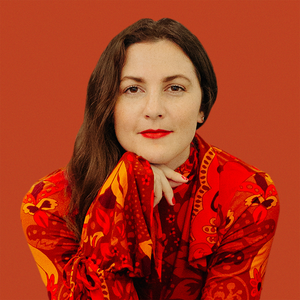
Season One Wrap with Kristen McGuiness
On this season finale episode, Publisher and CEO Kristen McGuiness sits down and reflects on the year Rise Literary and Write the Good Fight has had. She teases what’s to come and all you can expect in the coming year. If you want some insider information, this is the episode for you!


Automatically Transcribed Transcript
From the ladies of Rise Literary, welcome to Write the Good Fight. Hello, and welcome to Write the Good Fight. Today's episode is a special one because it is our last one of Season One of Write the Good Fight, and it's hosted by Moa, CEO and Publisher of Rise Literary, or Publisher and CEO of Rise Literary, which I usually prefer, Kristen McGuiness.
And I won't do an about bio because I feel like I've done that enough times on this program. But if you are listening for the first time, I can just say I'm a lifelong book publishing professional. Been in the game for over 25,000 years, as we joke.
First as a traditional publishing book editor, then as a bestselling author, and then as a ghostwriter, book coach, and now book publisher. And CEO of Rise Literary, a global storytelling literary house. Is that it?
We're still figuring it out, folks. Our creative director just came up with a great new way to position ourselves, but I have not memorized that yet. So that's who I am, and that's who we are.
And I really want to wrap up this season by saying, one, thank you to anyone who's been listening, but most importantly, thank you to our wonderful team at Rise Literary who have come together to make this season possible, who have helped us to figure out what are the stories that we want to tell on this podcast, where do we want it to go, and what happens next. We are so excited to launch Season Two at the end of January. We did an episode recently where we were actually like, we did our podcast meeting live to decide, like, are we changing the name?
What does that look like? And we actually decided we want to keep it Write the Good Fight because I do believe that's what we're doing and ultimately the stories that we are trying to tell and want to tell, which is really about how is storytelling ultimately a vehicle for systemic and revolutionary change? And I don't use any of those terms lightly.
I think that our stories have the ability to change the world in really big ways, like if you're publishing the Communist Manifesto, and in really small ways in the way that our stories ultimately can change not only other people's minds, but offer really nuanced ways to shift behavior and just how we evolve and participate in life. So we intend to do more of that this year with Rise Literary, and I am super excited to share that we've got a whole bunch of new programs, and events, and retreats coming up in 2026 that we're going to be talking about more of very soon. But before the advertisements begin, I have Raya over here silently, so it's so funny, Raya, because I keep on feeling like I should be talking to you, but you're not here.
But instead, I'm just alone here in podcast land. So yeah, giggle every once in a while, then I know I'm not alone. It's so sad.
But yeah, I will say, you know, I started this podcast not because I wanted to, but because my team wanted to. We decided at the beginning that it was going to be a joint venture because I hate podcasts. I don't mean that to demean other podcasts.
I understand, like, my husband loves talk radio, like Lives and Dies by KPFK, the only independent radio station, by the way, folks, if you didn't know that. They don't take any corporate dollars and are a fantastic source of progressive news and politics out in the world. Go KPFK, Democracy Now, Amy Goodman Forever.
I love KPFK and I cannot listen to it. I love everybody on KPFK, and as soon as it turns on, it's just like ma-ma-ma-ma-ma in the background. And I think it's an audio processing issue, but it means that I can't listen to podcasts, which is really funny when you host your own.
And so I get really bored of podcasts and it's really hard for me to be like, was that good? I don't know, because I wouldn't listen to it anyway. So it was really hard for me to be like, okay, I guess a podcast, but it was so beautiful because it really aligned with us building this company.
And so that's why I said I wanted to do this final podcast because I wanted to talk a lot about what it means to be an entrepreneur in 2025 and how fucking hard it is. And also that the way through is always with community. And like I said at the beginning, I've worked in book publishing for a really long time.
I started out at St. Martin's Press in publicity, and then I was at Simon & Schuster. And at Simon, I was only an assistant editor. It's not like I had some big grandiose career at Simon & Schuster, but I just happened to be working for an executive editor at the time who had no desire to edit books at all.
Like all I wanted to do was lay on the couch and throw a football into the air and catch it. That's where he was in his career. And he was like the second in command at the imprint, and I love him to death, Dominic Amfuso forever.
But he was just done. He'd been doing it for so long, he was over it, and he basically handed the keys to the kingdom to me. It was like, here, you do it.
So I ended up editing Dr. Phil that year, and Stephen Crabby, and Tony Robbins, briefly, just small stuff on Tony's. Cheryl Richardson, Stedman Graham, all these really big self-help authors of 2001, it was that era. But I learned so much, you know, and I really became a book editor.
I was editing 24 titles a year, and out of that, then I moved to LA because I was also a drug addict, which is part of my story. And that became hard to do both at the same time, though I was doing a lot of it at the same time. And I moved out to California, attempting to do less drugs.
That didn't happen. I ended up in Hollywood, working in the film industry as a drug addict, and then that stopped working, too. Although it was better, definitely more accepted in the film industry than in book publishing, to roll in hard.
And I ended up leaving both for a bit, writing a bunch of scripts for a year. And then I went back into book publishing, working for the very notorious book publisher, Judith Regan, which, you know, I was only there for six months, and I learned more there than I learned anywhere else. Judith was notoriously mercurial, but also incredibly brilliant.
And I learned a lot about what it means to be a book publisher from her, in good ways and bad. But I will say, sometimes I look at some of my own bad habits as a book publisher, and I'm like, hmm, also learned that from Judith. That's why book designers hate me.
Cover designers hate me. Always in the end, I'm sorry to every cover designer, but I just learned to be really picky with cover design from her. And so I think by the time we got around to opening this company, which started as a book coaching company, I really had grown a lot in book publishing, both from the perspective of what it means to put a book out there, but also from the perspective of being a writer myself and what it means to have a book out there in the world.
And I was recently just talking to folks about this idea of, we use this term matriarchal business a lot when we're talking about Rise. But I also think it's about matriarchal book publishing. And coming from traditional book publishing, that is not matriarchal at all.
It's very patriarchal. It's very much about like, you write the book. It's very transactional.
It's interesting because it's transactional, and yet the author gets paid up front, but then never sees any money basically ever again. So we were talking a lot about like book math and this idea of like, okay, what do you actually make as an author in book publishing? And the answer is, for most people, not a lot, you know?
And then it's just a churn and burn because book publishing is really based on gambling, that like one or two books will make it, and that's where they're going to invest all their time, effort in marketing. And then the rest of them are just going to be like fair to middling. I never know if it's fair to middling or fair to middling, but I think it's supposed to be fair to middling, and then people say fair to middling, which is just Midland, Texas.
It makes no sense, but it's a idiom that has never made sense to me. But in most book publishing, you know, so maybe you get this like nominal advance at the front end, and then you get no support, and then your book comes out, and it's just all hella disappointing. And so we really wanted to craft something different for authors, and that's where Rise Literary was born.
We started out as a traditional publisher with Sales and Distribution with Simon and Schuster, and Raya was along for that version, which meant we could never get paid. It was super fun. Everybody send an invoice, and good luck to you.
And as you can imagine, vendors love that too. Everybody loves a business that works that way. And we're, you know, we're eking our way out of there.
I wouldn't say we're like, we said we're like ending this year in the black. It's, but it's really just a very deep maroon, a very deep maroon. But it's so close that I'm like, hey, it was on fire red at the end of 2024 when we were coming out of being a traditional publisher and had just signed like our first hybrid author, actually.
So, you know, where we are now is so different and in a much more exciting and abundant space, despite the hellfire that happens outside of our little world at Rise Literary every day. And, you know, I do believe the politics is personal. And so I don't ever see a world of building a business that ignores what's happening systemically and across all communities, not just the ones that we might have the privilege to exist in.
But all that said, you know, it was wild to see a 2025 that felt much better for us as a business, even as we live in a town in which we've had ice raids in our town, and my husband saw someone kidnap live, and that is the crazy and diametrically opposed. Raya, diametrically opposed? Paradoxical.
I could keep going. Yeah, the paradox, I think is what I was looking for, the paradox of the modern times. Good shit can still happen inside four walls while horrible shit is happening outside of them.
And so we began to build a hybrid publisher that really allows us to craft, I think, the book publishing experience that I've always wanted to have as a writer, and, you know, I was the first author at Rise. Oh, look at me, I'm using Live Through This as a book stand. And I experienced the, like, exact opposite of that, where, like, my book came out and we had no money for anything.
I didn't even have money for Amazon ads for my own book. That's how sad that was, you know? And so it was like, well, how do you sell a book when you have no resources behind it?
And, like, social media is not my first language, or I should have been out there promoting every day on socials, but I was also trying to run a business, and I have two children, and, and, and, right? And so, you know, it was like, okay, so how do we craft something that's actually really supportive of the creative process from, like, the moment that someone has a book idea all the way through to this moment where the book gets published and they're out there doing publicity, and they're the ones that have to be out there on social media. And maybe that also is not a first language for them.
And so I feel like we really have spent the last year crafting these incredibly interesting publishing experiences for authors. And I wish I need to have it, like, much closer to be, but one of our authors, Gertrude Lyons, whose book is under mine? Oh, my God, Raya, I did not even plan this.
This was just the books I used to stack my microphone today. Rewrite the Mother Code by Dr. Gertrude Lyons. But, you know, Gertrude had recently sent me this thank you note, and it said, like, you know, thanking you is my publisher is actually falls short of the relationship and the experience that I had with you all, because this process really helped me to, like, let go of old beliefs I had around value and worth and really allowed me to believe in myself in ways that I never even knew I could.
And I, like, I mean, I cried when I read the letter because I was like, as my husband said, he was like, and that's why you're doing it, you know? But also it was this reminder of what books do, not just out there in the world. And like I say, I think they have absolutely so much power to change the world, but also what a book does for the author themselves.
And that it's really this evidence of our wisdom. And that's so important because most of us go through life, like dropping our wisdom nuggets, I think especially women dropping our wisdom nuggets, like gold, all day long. We're very rarely reciprocated for it, whether that's financially or just even emotionally.
You know, we're out here guiding everybody. We're giving guidance to our friends. We're giving guidance to our children.
We're giving guidance to our spouses or partners or parents. And I know I've played therapist in my family, like since I was seven. And yet those nuggets just get scattered all over the world.
But when we write a book, we actually pull all of that together. And it's the value of that wisdom is priceless. But when we put it into a book and we share it with the world, it really allows us to see how valuable we are as humans and as storytellers and as guides.
And so I think as we continue in our journey as publishers, like that's my goal, is for other authors to have that experience and to really find their own self value in the process of writing and publishing a book. And that's what I hope that we continue to offer. Like, that's the magic of what we do here and the magic of what we're creating and offering to authors that, you know, want to see their books out there.
And so it's been a really exciting year, I will say, as an entrepreneur. We ended last year with a call in which I had the whole team, and I was like, well, guys, we might not make it. Happy New Year!
We might not be here next year at this time. Good luck! Everybody go get a full-time job you hate!
I know this, I mean, as I, like my, the way I would gain employees was to tell them, I don't have a lot of money, but I have a lot of fun. And that was basically what I was offering them. It was like, I might be able to pay you, but you will have a good time, okay?
Guaranteed good time had. But then I was like, maybe not even that. And we all agreed, we were about to produce the TEDx Ohai in February of 2025.
And I was like, well, let's see what happens. In January launched and we signed our first two authors that are going to be authors that are coming out in 2026. I'm so excited.
Lauren Duke. I can actually say this because Lauren posted it today. So Lauren Duke, her book, This Walk Will Change You is coming in November of 2026.
So she signed in January and Azure Antoinette, another incredible influencer and activist signed with us for her book, I Too Am America, which is coming in 2027. And I was like, Oh my God, I think we're still going to be alive. Like we're doing this.
And then we did the TEDx OHI at the beginning of February. And it was so amazing and phenomenal. And as Lauren Porte-Schwarzfeld, our chief marketing officer said, it was like we stepped off that stage and into a different company.
And from there, we were able to go out. We got two incredible investments in the spring of 25. That is why we were able to launch a podcast and really begin to expand our marketing and grow as a business and begin to look forward to, okay, what do we want this to be?
You know, and here's the thing. I mean, I worked in nonprofits for years and outside of book publishing. So in 2006, I left Judith Regan, I relapsed.
That was fun. I got sober again. And I was like, I don't want to go back into film and TV.
I don't want to move to New York and do books. I got a job. I started temping while I was figuring out what the fuck I was going to do.
And I got a job working for a nonprofit, Pato Los Niños. That was amazing. It was life changing.
And what I saw during that time is that, you know, everybody's really cool for people to make a lot of money when they're out there causing cancer, but they want you to be poor if you're curing it. And I feel like it's true for the arts too. You know, there's really this idea that like, oh, well, you know, you're in book publishing, so like you shouldn't be getting investments, you know, or like you shouldn't be.
I mean, maybe that's my self-shame too. You know, we all come to this work with our own money, our own fucked up money stories. But I do feel like there's this thing of like, okay, well, how does that even, you know, how do you do that?
And what does that look like? And in order to make money, you need money. And I'm super anti-capitalist.
I am truly a card-carrying member of the Communist Party. But that doesn't mean that we don't all get to have private business, right? This is really, I mean, that's the idea of having like a strong federal state, is that our utilities, our public utilities, our public needs and goods are run by the government and not by private.
You know, there should be no for-profit health care or for-profit transportation. But there can be private profit book publishing. And that's where the arts are needed.
That's where I do believe that there is space for fundraising and philanthropy. Everything else should just be managed by the government, you know. And so even as an anti-capitalist, do believe in investing.
I believe in investing in creativity. I believe in investing in companies. And we were in dire need of investment.
And through that investment, we were actually able to expand and grow and bring a team together that has now solidified and is part of, Write the Good Fight and all the wonderful work that we're doing and all the areas in which we are growing as a company and continuing to publish amazing stories and also begin to see all the ways in which we can continue to tell stories, both on the page and off. And so we're really excited to, in the next year, to be launching our own live stage. And more of that's going to be coming at the end of January.
We are moving in to TV and film, and we just hired a massive and incredible TV and film producer who is an expert in book to film adaptation, and she's going to be joining us. We'll be making that announcement in mid-January. We have our first two-day retreat that is coming in June of next year in Paris, which we are very excited about.
And we're going to be announcing that also in January. Jesus Christ, and lots of different ways to publish with us at Rise, whether it's through hardcover, e-book, audiobook. We are really excited to be building these incredible publishing packages for writers who are ready to become celebrated and established authors, both through their hardcover book or through e-book, audiobook, on the stage, on screen, through foreign rights, and all these different ways that we can support authors out there in the world to really begin to see their value and to bring those golden nuggets of wisdom into one space, but also to be seeing the book as a platform for all these different ways in which we can tell our stories and change the world.
So again, I'm really excited about the work we're doing. I'm really excited to have this team that together we are building a truly matriarchal business and that's not only in the books that we publish, the stories we tell, but also how we run our business. We also had a really, as one does with growth, we had a challenging year too.
I just want to say as an entrepreneur, I was in two positions this year where I let go of people that I was personally friends with or change our work situation. They were both contractors, but at the same time, not continue working because it wasn't a fit. And that's really hard, and it's really hard to make those decisions just like an investment, right?
It's really hard to, okay, how do we guide ourselves through love and generosity and still have a business to run that we have to make decisions that feel right to us? And I think that's not always easy when we've been so conditioned by capitalist systems and by patriarchy that everything has to be a transaction and everything has to look a certain way. How do you even navigate and negotiate human resources in an area that you want to create safe space and still make hard decisions, and honor that sometimes things don't always go right, and sometimes people don't always agree?
That means a lot of discomfort, and being okay with discomfort. And I think the idea of doing it the same old way is that that's comfortable and you can fall back on, well, this is just the standard operating procedure here, or this is just the industry standards or practices, and when you're trying to redesign how a company is run while also redesigning what that company does while also redesigning the cultural systems that make it easy for us to go into the well-worn grooves of modern capitalism, post-capitalism, it can make it hard, and it does create stumbling blocks. But I also am really looking forward to the opportunities that it also creates on how do we do this differently, how do we cultivate a culture that just allows everybody to do their best work, make space for everybody's lives and passions, like Ray's line dancing.
And I got to giggle for that one. Ray and her line dancing man and hockey. I was saying, it's so great when you're young because you have hobbies.
And then as you get older, the hobbies just become you like, uh, I don't know, I wish I had a hobby. One day, I'll have hobbies again. You get hobbies when you're in your 20s and hobbies when you're in your 60s.
And your 30s, 40s, and 50s are very hobby-less, unless you're not building a business, maybe. But I do feel like there's a lot of fun things that are happening both in front of the scenes that are, you know, the books we're publishing, the stories we're telling, the retreats we're gonna be offering, the events we're gonna be producing, hopefully the TV and film and stage and all the cool things that we're creating. But also, as we continue with Write the Good Fight as a podcast, there's this behind the scenes piece that we're really excited about, which is this is the business we're building and creating.
And how are we doing that? And culturally, what are the decisions we're making that sets us apart, not just as a book publisher, not just as a storytelling company, but as a form of matriarchal business. So I know that next year, we're hoping to get an office over here in Ojai, California.
And I think that'll be my final piece, is just to say that like, I built this business in this little small town, an hour and a half north of LA, called Ojai. And I don't see it as ever being divorced from that piece. We are an Ojai-based business, just as much as we are a femme-led, femme-founded business.
And being a part of the Ojai community is so important. And I know for myself, it's a piece that's been really hard for me to like get out there in the world, but I'm making this my live New Year's resolution to go to a lot more stuff in Ojai, because there's so many wonderful things that are going on in our little town. And we did our TEDx at the Ojai Playhouse, which is an incredible movie theater that opened up here last year, after years and years of renovation and investment in time, love, sweat and tears and blood of David Berger, the owner of Ojai Playhouse.
So shout out to David. And I do think we're beginning to create some really cultural conversations that are happening here in Ojai that are just really exciting. And it's such a special place to be doing it.
And we're building this business here, and we're planning to have an office here. And one day, hopefully, a workshop space and bookstore here, that'll be years off from now, but it will come one day. And the funny thing about Ojai, and I was talking to a fellow entrepreneur, we have a little group called Entrepreneurs Anonymous, Zina Muzika.
She owns Magic Hour Tea Shop here in Ojai, which I love and buy all of my gifts there. I had stopped by yesterday, and I was saying, you know, the funny thing about living in this town is that if it likes you, it is a really super manifestation town. And I'm not, you know, I hesitate around the word manifest because I recognize there's a lot of privilege that gets steeped alongside the edges of manifestation.
But I do think there are some spaces, and this is true for all of our lives, there are just some spaces where the window for manifestation gets bigger. And this is a town where when it likes you, the manifestation window can get quite large, where like you just say some stupid shit and then it happens. And that's what I've discovered for myself since I moved here.
I mean, and I would do it for other people. I'd be like, you should live here. And then the next thing I know, the person was buying a house here, Jen Pasteloff.
And so I know that the same is true with us building this business here and creating more storytelling. Opportunities and conversations and books and stages and studios and all the things that we will likely be creating in the coming years. But it's really getting rooted in this podcast and the way that we're building it and just being entrepreneurs out there doing matriarchal business and matriarchal storytelling and matriarchal business book publishing in a way that I don't think has ever been done before.
So, I am excited to invite everybody on that journey with us. And I'm so thrilled to have the team that we do that are all coming to the table with how do we do this? How do we tell these stories?
And how do we do it differently? And I think that's at the heart of Writing the Good Fight. And we continue to do that.
So, just the tip.
I love Just the Tip. I love Just the Tip, because what Just the Tip does for us is when we've been interviewing guests, I know how much I like them at the end by their response to Just the Tip. No judgment, but always judgment.
So, I'm like, oh, they get the joke. Oh, I love anybody with a dirty mind. It is generational though.
Sometimes when we interview folks of an older generation, I can tell it's like completely over their head. I'm like, you obviously weren't raised in my generation. Just the tip.
It's not cheating. But we decided to make that our grand finale for every podcast where we ask our interviewees of their one writing tip. And mine is, write at hotels.
Truly. You don't have to stay the night. You don't have to have the money to stay the night.
But the one thing I find about hotels is it feels like an escape. It feels really exciting. And now I have a budget where I can actually go stay at them.
Everybody knows Kristen's got stuff with hotels. But prior to that, I would just go to fancy hotels and I would work at the restaurant there. And one, they don't care if you work there all day because guess what?
Usually they have people staying there that are doing the same thing. Two, you can go to a hotel that like fits your vibe, right? It's like, oh, this fits the vibe of the thing you're writing on.
And so you can find like a cultural match for what you're working on with the hotel you choose. But it also gives you something to look forward to. Even if you're just drinking coffee there all day, it gives like, I think there's just like that Pavlovian energy around a hotel of like, oh, I'm on vacation.
I'm doing something special for myself. And it's a little bit of a treat just built in. And then this is what I found is that that's what I started doing at hotels.
And then lo and behold, my budget like started to broaden that I could stay at one every once in a while. So I began to do that. And then it was like, oh, how luxurious is that?
And I would never turn on the TV. I literally have stayed in the same hotels for years, that I don't even know where the remote control is or how to turn on the television. I just go there to work, to think, to brainstorm, to be creative.
It takes me out of my home space. Obviously, if you have kids, which I do, it's really important for me to be able to disconnect and just vacate creatively in a space that is not my own. That feels really in alignment with who I am and the stories that I want to create.
So that's just the tip. Go to hotels. And I guess with that, we have officially wrapped Season One of Write the Good Fight.
I just want to say a special thank you to my incredible team and our incredible team here at Rise Literary, our Chief Marketing Officer, Lauren Porte Schwarzfeld, our Chief Operating Officer, Elena Azoni, our Content Director and Podcast Producer, Raya Whittington, our Chief Creative Officer, Vyana Novus, and our Publishing Manager, Sienna Nguyen, and to everybody else who's worked with us this year, our wonderful authors and clients and publicity and marketing teams. And we so truly appreciate everything you have done to make Rise Literary and Write the Good Fight such an incredible success this year, and can't wait to bring in the next one with you soon. Thank you everybody, and see you for Season Two.
We're clear.
This has been Write the Good Fight, brought to you by the ladies of Rise Literary. Thanks for tuning in. If you enjoyed today's episode, don't forget to rate us five stars, follow the show, and leave a comment.
We'd love to hear from you. Feel free to share this episode with friends, family, or anyone who might find it helpful or fun. Be sure to follow us on Instagram at Rise Literary to stay up to date with upcoming events, courses, insider info, behind-the-scenes fun, and so much more.
Or you can check us out at www.riseliterary.com. We appreciate you listening, and we hope to see you next week for another great episode. Until then, remember, it's your time to Write the Good Fight.
From Write the Good Fight: Season One Wrap with Kristen McGuiness, Dec 18, 2025
This material may be protected by copyright.