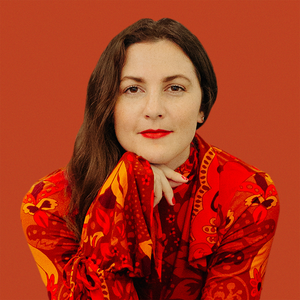
Matriarchal Design and Storytelling with Vyana Novus
In this episode, Chief Creative Officer, Vyana Novus, sits down to reveal how embracing matriarchal design can transform your creative practice and deeply connect you to your audience. If you are looking to unlock the secret to storytelling that leaves a lasting legacy, this is the episode for you!


Automatically Transcribed Transcript
Welcome to Write Now, a podcast from Rise Literary about what it takes to write the good fight.
Ciao, ciao. Hello, everyone. I am Vyana Novus.
Welcome to Write Now. This week, we are going to talk about matriarchal design and storytelling. Some of you may be familiar with me, many of you are probably not.
So let me tell you a little bit about who I am and what I'm doing here, because it is quite a shift from what I've been up to. I am now taking a position as the Chief Creative Officer at Rise and going to be doing a little mini segment here, if you will, on the podcast. And as we get into that, my perspective is really going to be more focused on the visual side of storytelling.
But of course, given that this is a podcast for writers, we're always going to find a touch point back to writing. So we're going to journey a little when I'm on the show into a side of things that may not be directly applicable to your writing practice. But trust, I will loop it back, and we are going to find the connective tissue because they're very interconnected.
And as writers, I myself am also a writer. As somebody who writes regularly, I find a lot of connective tissue between the visual world and what shows up on the page in written word. And I think the relationship between language and visuals is very interesting.
So even though my segment is going to be more focused on design and visual storytelling, there is a beautiful relationship that we're going to explore between how we bring that into our writing practice. My background is varied, and always a surprise, I would say, in the room. Kristin is often laughing at hearing my history of experience, as I say, oh yeah, when I was working as a baker, when I was doing this, when I was doing that.
My history is varied, but the core of what informs what I do now is a study of many different creative mediums, color theory, earth pigment paintmaking, painting, sculpting, fiber art, many things like that. Creative direction is really what I've been doing a lot of over the last decade working freelance, doing creative direction and strategy and design work and illustration. But I've also studied trauma integration frameworks and the kind of core perspective, I would say, in my facilitation.
And also, just how I show up as a person in the world is through a program I did called PCA, Person Centered Approach, and that is work that is rooted in Carl Rogers' psychology work, but adapted for a non-clinical setting. So, though I do have a lot of the visual creative, I bring a lot of somatics and trauma work and psychology, and really the underbelly of who we are as people and how we show up in the world based on the decisions that we're making. And taking this position as Chief Creative Officer at Rise, a lot of what I have been focused on is looking at bringing matriarchal design into what we're doing.
And today, we're going to talk about that. Coming into the ecosystem that Kristin has already designed, there's so much synthesis between her vision and my vision and what we're both up to in the world, which is why I have taken this position. I'm not somebody who ever—I never saw working for somebody else in my career.
I love doing freelance because I love getting to pop into people's worlds and do what I do, and then ultimately lead and move towards my own vision. But I have chosen to come take this position at Rise because what we're doing is so aligned, and the bigger vision is really rooted in something that goes beyond the tangible task of what we do and roots into something that is much more about culture and systems and the world that we want to live in. So matriarchal design is a huge part of that.
Patriarchy is designed to silo us off from ourselves, from our communities, our culture, our creativity, and it is designed to have us function for the service of a system that doesn't benefit us. Matriarchy is not about hierarchy. It's not about putting women at the top.
It's about people being exactly who they are, and they're being space for difference. Ultimately, I see that as the biggest difference between patriarchy and matriarchy. Patriarchy is about removing difference so that we can slot into the hierarchy of judgment that this system is founded on.
Matriarchy is a circle of difference. We all come in as we are, as whole people, with all of the difference that makes us us, and there is room in that circle for all of the difference to exist and the circle to still exist. It is not a requirement of being together for us to be the same in matriarchal design.
It's not just being different and being contrarian to what's being done in the world. It's much more intimate than that. It requires us to understand who we are as people.
So when we show up into the room, we're not showing up just with an idea of how we want to push against what's going on. We're showing up with a deep relationship to our culture, our history, the legacy we want to create, an intergenerational continuation of story. We all come from a place, and we are all part of a story that's much bigger than us.
And matriarchal design makes space for that difference. It invites us to bring all of the bits that make us who we are into the room, and to converse and to relate from that difference. If matriarchy is about showing up as our whole selves, what that looks like in practice as creators, as storytellers, whether you're writing or you're designing, it means that we bring the entirety of our history with us, of our vision with us.
We, as people, are holding time in our bodies, in our thoughts, in our actions. We are everything that has come before us that made us this, and we are the culmination of all the vision we're moving towards. That's shaping the decisions we're making now.
In the most ideal scenario, we're conscious enough to be making decisions that move us towards the bigger vision we want to create. Time is an essential component of matriarchal design, and it can be quite covert and subversive. When looking at visual storytelling, there is something that I come to often, which is this feeling of people don't even know.
People don't even know what I got cooking up in here, or what we're working on behind the scenes. A lot of the clients that I've worked with, there is a slow steep that happens with the ecosystems we build out. It's not something you can just jump into and make overnight.
Leading with your whole self, that requires time because it requires intimacy. Intimacy is not something that we can build quickly. It's not something that happens in a couple of months.
The kind of intimacy that matriarchal design invites is something that happens over years. And we live in a culture that doesn't offer us that kind of time. It wants things to be fast, viral, quick.
Set it on fire with lighter fluid, make it huge immediately. And that's a way to grow. That is absolutely a way to build something.
But when, you know, what we're doing behind the scenes is rooted in something deeper, in a bigger vision for the world we want to create, it's not something that happens overnight. It's a slow burn. It's the little spark of kindling in the fire that slowly builds and burns the larger logs.
It's not going to ignite instantly into a huge flame. And I think that as writers, especially as creatives in any medium, giving ourselves the permission to move slowly with time, to let the story develop, to let ourselves live the story in a way that allows us to build intimacy, inevitably a feedback loop is created. We learn more about ourselves.
We learn more about what we're creating, and everything gets richer in the process. What we put out as it starts to reflect the intimacy we have with ourselves lands differently for the people receiving it. It becomes more of a somatic experience than just a mental experience.
We can get that quick mental hit of dopamine off of a lot of things. But the stuff that actually has steeped in a rich, healthy soil, that lands in a way that you can't speed past the development. It's the difference of walking on dirt or walking on cobblestone, walking on something that has time baked into it, versus walking over asphalt that's brand new.
There's a conversation that happens differently. One is nearly imperceptible, right? You walk along a fresh sidewalk, oh, maybe it's nice, because it's flat, it's easy.
Your steps are effortless. If you're a person who moves like that, my steps are never effortless, but that's because I have a disability, that's a different conversation. If you're walking on that, though, there's not really much feedback loop.
You're just in your experience. You don't perceive the obstacles beneath your feet, because there really aren't any. It's frictionless.
And that's kind of like moving through this culture. When you play by the rules, you just glide. The friction exists because the structure that we're moving through is not designed for our well-being as people.
But if you play the game, you can just kind of zone out and go along with it. But when you're walking on something like cobblestone or earth, raw earth, you have to be in relationship with your environment differently. You have to pay attention differently.
You have to consider your steps in a way that you don't have to if you're walking on a completely flat, fresh surface. There is a different tension in moving with time. And that's an ongoing conversation as people who are choosing to move in this way, that we have to encounter coming up against the edge of what society wants of us, what society tells us is the correct way.
And being able to internally push against the subtle ways that that pops up in the, I'm not doing enough, I'm not going fast enough, I haven't been successful enough, whatever the story is, you know, fill in the blank. It certainly pops up even for those of us who are well practiced in the conversation. It doesn't go away because it's what shaped us.
And it requires a real fortification to be able to counter that impulse in the quiet corners of our own mind. When you sit down to tell a story, whether you're writing or you're painting or you're doing photography, whatever medium you're working in, if it's in your mind that time is a tool at your disposal to work with, not something that is a constraint. This is something that you have as an opportunity, not a requirement.
That is a very different way of approaching your story. So the first thing I would say, if you're wanting to bring more matriarchal perspective into your storytelling, let time be a tool in your toolkit, not an obstacle that's pushing you, not something that is forcing you to move in an unnatural way. I learned about my own self over the last decade, really, that I am somebody who moves very slow.
I didn't know that because I talk fast, I move, if you encounter me in the world, I bring the flavor of my culture, and I bring the kind of like loudness, and I take up space, and I'm not shy, but I am private and slow. And those things, for a long time, created an internal friction that I was very confused by. I didn't understand why I always felt out of rhythm, and always felt misunderstood, and like I could never quite get what was inside of me out of me.
It was like there was always this invisible hurdle, and nothing felt like it was a full congruent expression of who I actually am. And coming to understand, oh, I move slow, and I'm private. My internal desire for privacy is deeply connected to how I move with time.
To open up the parts of me that I keep quiet requires time. That's something that happens over time. I'm much more interested in letting my character speak, which is to say that the character of who I am is something that is built through pattern over time.
And I hold that as a juxtaposition against something like integrity, which can be always restored in the present moment. Integrity is right here, right now. And it's also nobody else's business.
Integrity is me to me. It's a combination of my congruence in the moment, the alignment of what I'm doing with how I perceive myself, and then my commitments in life, which are few and far between and very intimate. So I may be making a decision that regards my own experience, and I may look like I'm out of integrity, and somebody can accuse me of being out of integrity.
But ultimately, I may be sitting real good with myself in that moment. I'm making a decision that's deeply aligned to myself. Now, to understand my character, that requires time.
You see the pattern build, that's what makes up character. So to me, as a creator, as a storyteller, I like to let my character lead, which I think is a fun play on words as writers. Like, we write characters in our stories.
Regardless of what genre you're working in, character is a huge part of how we build out the world we're writing stories about. And that starts quietly in your own self. The decision to lead with character is really a personal one.
That may look different for you. Ultimately, I really encourage you to get curious about how time informs your practice of storytelling. That is the first step in moving towards matriarchy in the intimacy of our practices.
A more matriarchal world is not something that's going to start systems down. We're not going to suddenly see the government or the structure of our culture shift into matriarchy. That's not how this is going to happen.
It starts with us as individual people starting to embody these ideals and lead in our relationships, in our homes, in our work. And that's how the change is going to happen. So, if living in a world that centers people that make space for difference, that is equitable and focused on regard and reciprocity, if that is a world you want to live in, then making space for these practices in your own life is how we get there.
It's each of us individually taking time to invest in understanding how to hold. What seems to be very simple on the surface, but in practice is very, very difficult. The practice of congruence, for example.
This is one of those skills that I think if we all learned it, it would change the world. If you know me in real life, you have absolutely heard me talk about congruence. I talk about it all the time, because I'm a little bit obsessed with what it could do for us collectively.
Congruence is a practice of alignment. It's this is the person I've chosen to be, and so this is the action I'm taking. It's always in the present moment.
And in practice, it is I plus a verb. This is a really good starting place. Like in this moment, I think, I talk, I consider.
That's what I'm doing right now. That's my congruence in this moment. But it's also a little bit deeper than that.
And it took me quite a long time of practicing congruence to understand this part. There are moments when I find in conflict or in creation, if I'm designing something, I'm strategizing about something where I'll be thinking about how to get around something. Like, I don't know how to quite say this thing, and I'm trying to figure it out.
And the congruence there is to actually just name, I don't know how to say this. If I acknowledge that I'm struggling to say the thing, if I acknowledge directly, I don't know how to get through this. That is the congruent expression.
The more we practice this in subtle places, baby, let me tell you, it is life-changing. It is life-changing to sit in a moment of conflict internally or in relationship with another person, and actually look for your congruence. What am I doing right now?
When I'm in moments where I'm a little dysregulated or confused, I immediately look for the I-plus-a-verb. Where am I right now? Okay?
I feel. I cry. I'm always amazed when I cry because I didn't do that for a long time.
Every time it happens, I feel a little excited. So then, oh, I cry? Mm, I delight.
Oh, that's interesting. I worry. I grapple.
I wonder. Okay, now I'm getting a sense of where I am. It's very grounding.
And I find when I actually speak that into the space, for some people it can be really overwhelming because congruence might seem like a request. Hey, I'm not asking you to do anything with this. I'm just telling you where I, as a person, am.
And I, as a person, am different than you. So you might be somewhere different right now. But I'm going to let you know in this moment of conflict, in this moment of struggle, I'm going to let you know exactly where I am right now.
And it's grounding for me. And it can be grounding for the space or it can cause disruption. It really depends on the shape of the relationship, who you're interacting with and what's going on.
And then from that place, if I am able to let myself acknowledge where I am confused, where I don't have the answers, where I'm not totally sure, where I might need time, if I actually give myself the room to be a person, I don't have to figure out the perfect way to say something. I don't have to figure out exactly what happened that's causing me discomfort in this moment. I don't have to explain it perfectly.
I just have to acknowledge I'm uncomfortable. I don't totally know why. I bet if I have a little bit of time, I'm going to figure it out.
But in this moment, all I have awareness of is that I'm uncomfortable. That's enough. The more we start to practice this stuff in our own selves, in our intimate relationships, in our creative practices, which is really such a low stakes environment for us to be pushing on these edges, the more opportunity we have collectively to hold a new way of being in community, a new way of functioning together.
And it will take time. That's why time is the first directive, if you will, of how I perceive matriarchal design. Difference is the next.
For those of you who are not familiar with me, I'm autistic. Oh, I've got a whole mandala of neurodivergence. In fact, I'm synesthetic, which means all sensory input in my brain.
And the wires get a little crossed. So sometimes sound has a flavor. Usually words are colors, and it's more than just a color.
It's often like a whole picture landscape. It's a, it is a movie in my mind. I struggle deeply with language, actually.
It is a regular practice for me to find the words that match what's going on in my head. And quite interestingly, I've never had a conversation in my native tongue, if you will, because how my brain is processing information is never on offer for me to communicate with another person. Creates a very interesting dynamic, I would say, between me as an individual person and the world that I exist in.
So I'm always looking for a system. I'm always looking to organize. I want things to make sense.
That's like the motto of autism. If you're not familiar, make it make sense. Oh, we love when things make sense.
But I have also the ADHD that brings a little chaos gremlin into the room. And that's really fun, too. So that's always a frame in how I function.
And when I'm thinking about this episode and what I want to offer to you today, I really do see it as kind of a bullet pointed list. It's not that it's in this sequential order or there's a right way or a wrong way, but it's more a bullet pointed concept map that you can maybe write and put in your studio or at your desk and just have it in your mind as a little touch point as you move through your creative practice. So if our first bullet point is time, it's the invitation to move with time in a way that aligns with your essence.
I love the phrase from Katie Hendrix, Essence Pace. You invite yourself to find that pace that works for the intimate version of you that you want to be in the world. The second bullet point is difference.
It is the invitation to move as you are congruently and to give space for the way that you're different in the world. It is precisely those things that make design and storytelling intriguing and hook us in, because actually what happens, and this is something I talk about a lot with my strategy clients, is that if you lead with the person outside of you, if you're branding something and you're thinking about your ideal customer, you miss the opportunity to be in the room, and that is actually what magnetizes the right people to you. If you lead with your congruence, if you show up in the fullness of who you are as an individual, now there's something for people to move towards or away from.
I'm not for everybody. I know that. I know that very clearly.
The way that I move is, for some people, very overwhelming, and for other people, it is a deep invitation. That's none of my business. It's none of my business.
How somebody responds to me? I mean, sometimes it's nice to hear. Sure, I love praise.
Oh, give me the compliments. Yes, I love them. That's lovely.
And also, I'm gonna hold it off to the side, because I cannot let that sway me in my creative practice and in the decisions that I make as a person. If how somebody reacts to me manipulates how I show up, they're never actually reacting to me. I gotta keep showing up as the person that I'm choosing to be in order for anything of value to be in the room.
So as storytellers, difference is an invitation for us to discern who we are, what story we want to tell, and to really double down on our perspective, on our praxis, on what makes us us. Being a writer is such an intimate offering. In a lot of ways, I think it can be way more intimate than being a painter or a photographer because we're much quicker to meet each other in thought.
There's a lot more ambiguity in visual media. There's a lot more room for interpretation, and it's not always explicit what we're saying. Sometimes it is, but there's a lot more room for people to be unclear of the statement that we're really making, and there's usually a lot more under what is perceived.
This is making me think about Kristen and I, and for those who may be coming from my world and aren't familiar, Kristen is the CEO of Rise, the company that I'm now working for. We just took our kids up to San Francisco last weekend, and we got stuck in brutal traffic on the way back. A six-hour car ride turned into ten hours in the car with two seven-year-olds in the back seat, and it was a lot.
And the last, like, two hours of the drive, we just blasted Ani DeFranco the entire time. I grew up in Buffalo, New York, and Ani is a Buffalo girl. Righteous Bay Records was based there.
She and what she built shaped a lot of how I grew as a teen, and I was so enriched by her music, but really her thought, what she put on the page in Word. At a time where my brain is really figuring out, who am I? How am I different from my family of origin?
A key point of differentiating, right, is in that like early teen year period when we are pushing against what world we grew up in intimately to figure out who we are as individuals. And Kristen and I were talking so much in these two hours, as we're singing and crying and listening to songs that we hadn't listened to in decades, but we're singing along to perfectly because everything is recorded so deeply in us. And the thing that really struck me about what Ani does and what she has done since the early 90s is that she leads with regard and trust.
And it starts with her own experience. What she has done for decades in her music is show us, reveal to us, her relationship with her own self, her willingness to be exactly who she is. Singing in the 90s about being queer and showing up to a town where she's pretty sure they want to kill her and they definitely hate her.
And she makes it into this beautiful melody that you want to scream along to in the car with your friends. As a teen, I understood, but not really. I got it, but not really.
It radicalized a part of me. I felt seen in ways that were really nourishing, but now listening back decades later to those same words, they land differently. I hear them differently.
I see the way her art, her storytelling, shepherded me through a relationship with my own self that has allowed me to become the person that I am. And it's because she led first and foremost with her relationship to her own self. She started with what was true for her at a time when there was a lot less space for that.
And sure, it's not like she was on mainstream media, you know, singing to millions and millions of people. But for the part of the bell curve that she did reach, she reached us deeply in a way that absolutely changed the fabric of who we ultimately became in the world. Ani, to me, is a perfect example of matriarchal storytelling and design.
She didn't let the idea of success dampen or manipulate the story she wanted to tell. She showed up in her difference with the world and with the systems that she was interfacing with, and she told us about it, and she never dumbed it down. Her lyrics, when I was in high school and I would listen to her lyrics, I was always in awe of the way she used language.
And now as an adult, I see that same line, same lyric, and I hear it differently because I've lived into it. She is a beautiful example of what it looks like to work with time in storytelling, to say something and, you know, hey, people might not get this right now. That's okay.
It's true for me. I'm showing up to the me here, and I'm going to put it out, and y'all can relate to it as you do. And it has legacy.
It holds up over time. What I understand now as this version of myself who's studied what I've studied, who has practiced what I've practiced, I see her trust and regard for her experience, her willingness to speak into the world at a time where they might not hear it, they might not understand it, and to trust that the people receiving it, they'll get what they get from it. That's not my business.
Whatever the takeaway is is not for me to know in my creative practice. Intimately in myself, I can say that I am different because of the way that she allowed herself to be different and the way that she showed up congruent to her creative practice. It's only in this moment of my life that I feel like I'm even really articulating how impactful of an artist she has been in my life.
And as storytellers, as creators, that to me is some of the most interesting success. To think about creating something that facilitates another person deepening their understanding of their own selves and the way that they make decisions in the world, come on, I mean, no analytic metric about conversion and whatever could reach that. That is actual impact.
That is actual legacy. My child will know Ani, not just because they know the music, because they know the stories of how that music shaped me as a teenager, as a 20-something, as a 30-year-old, as a mother, as all of the different intersections of identity that I hold. They will know her storytelling because of the impact it had on my life and how it shaped me.
That kind of legacy is a very different success. It's the metaphor I gave earlier of fire. It is not pouring lighter fluid onto wood and seeing it burst up in flames immediately.
It is a slow burn. It takes decades actually to understand the story being told. How beautiful, how interesting.
This is where I think we have an opportunity as creatives to shape culture. This is why I think artists are always at the front of shaping culture. If we're doing it in alignment with ourselves and we're actually showing up to the way that we are different in the world, the invitation it creates has a legacy inherently because it will land in people's world and in their reality very differently than something that is just easy to digest.
That smooth sidewalk that you just walk over without thought, you can autopilot over top of it. When you're doing something like this, it creates tension and friction that forces you to encounter yourself. What can happen with our storytelling if we lean into that deeper?
Okay, so, matriarchal design, first bullet point, time. Second bullet point, difference. Third bullet point, sensuality.
I am not talking about eroticism when I say sensuality. I am speaking about a full-bodied sensory experience. I am talking about the sensuality of our somatic reality.
And when we bring that into our design, our storytelling, our writing, everything gets more interesting. We see it in writing very easily. The difference between she took a sip of her coffee versus the smooth ceramic hit her skin with a warmth that reminded her of crawling into bed the night before.
As the steam rose up over her face, she was reminded of, blah, blah, blah, blah. Okay, right? Like, that's a very different experience.
I'm with you in one of those, and I'm on autopilot in another. In design, there's a very different approach to that when we're talking about visual storytelling. To me, it's the equivalent of leaving your pencil marks in a painting.
It's the little imperfection. It's the little sketch moment. It's showing your work, I think.
There is an invitation into the grit of our humanity when an artist trusts themselves enough to leave their fingerprint. We're not looking for perfection. We're not looking for the perfectly smooth ceramic.
Give me the one that shows the thumb print. I want to see the hand of the creator. I have these beautiful vintage ceramic plates from Mexico, and on the bottom of many of the plates, you see these three or four dots.
And when you look at it and you map it, you're like, that's somebody's hand. They were holding this plate, and it's like this little bit of glaze that was on their fingertips that made these marks. When I use these plates, it's so hard for me to not flip them upside down on the table so people can see those marks because it's so much more interesting to me than the beautiful design that's on the surface.
And the design is gorgeous, and I love that too. But those moments, that story, three little dots on the bottom of a plate, that story is so much more interesting to me because now I'm thinking of the movement of somebody's body. I'm thinking about that person.
Who were they? What were they doing? What were they thinking when they dipped this plate in glaze and they were moving about this practice that, I have a set of eight.
This is clearly, there was some level of production happening. It's not like they were laboring over one individual plate. What were they thinking about?
What was their life like? I want to know more now because I saw these three little dots on the bottom side of the plate. When we're creating with sensual embodiment in our storytelling, that intrigue is present and not everybody is going to get it.
I mean, I think this is also a really important part of the idea of matriarchal design is understanding that it's not the center of the bell curve. If you want to be viral and, you know, widely beloved by a culture that's rooted in the antithesis of these ideas, pursuing this is not going to be the path to get you there. And I don't have judgment on what is right or wrong here.
If you want that kind of viral fame and that kind of like mainstream digestibility, don't listen to what I'm saying. This is not for you. This is counter to that.
And so, when you double down on your beliefs and your praxis, you are creating a filter. Not everybody is going to want what you do. I know that not everybody wants what I do.
And I don't just mean what I create, but also what I do as a person, how I move through the world. Not everybody is going to want to relate to me intimately, because I might be a very confronting person. I'm okay with that.
Because it just becomes a level of discernment that brings exactly what I do want into my life. If something is not aligned to the way that I operate when I am congruent, that's not for me, baby. And when it comes to art, which is such an intimate experience, writing is so intimate, and I'm gonna loop back to what I was talking about with the intimacy of our words.
There is a real revealing of who we are in that. And to be able to know, this is not for everybody. Not everybody is gonna understand it.
Not everybody who understands it wants it. Already, we've set ourselves up for a different type of success. Because when we meet those moments of friction, where there's feedback, pushback, conflict, when we get notes, like critical feedback on making our work better, we can decide what notes are valuable and which ones are not.
Which one actually furthers the story that I'm trying to tell, and which one is pushing me away from what I'm actually doing. In all ways, it's going to help refine the overall direction, because critical feedback is fantastic if it's actually moving me towards my vision. But if the person who's giving me the feedback doesn't even understand what I'm doing, no amount of feedback from them is going to be of value for me.
That's the moment that I can just sit in, and, oh, we have difference. I have a different idea than you on that. I have a different opinion.
I have a different thought. We're moving in different directions. If our visions aren't aligned, if you don't understand what I'm doing down in the soil here, whatever you have to say, whatever guidance you bring me about what I'm creating isn't going to help me get where I'm trying to go.
So that's a great piece of discernment. Looping back to the intimacy of words, why I think language is a more intimate display of ourselves in an artistic medium. There's less room for interpretation because we are giving it to them directly.
We're meeting them in the mind. So if we're meeting people in their minds, first we're interfacing a lot quicker with their mental judgments, and then we have more work to actually get down into the somatic experience. Whereas a visual display of story telling is a bit more of a somatic punch immediately.
And we're working against different obstacles. We're working against somatic reactions, history that shows up as triggers or curiosity, but we're always at the whim of our somatic experience. So that creates a different challenge, a different point of opportunity really in our storytelling.
But with words, we're meeting people in the mind first, which means we're meeting their judgments, their mental judgments first. And then we have to figure out how we get down into the body. There's a lot of opportunity in that to get clever and disobedient in what story we tell and how we tell that story.
And the sensuality I think as a key point of matriarchal design is where we have a lot of opportunity to do that. Because when you build your world out senses first, we are meeting in the mind, but there is an invitation for people to close their eyes and drop into that moment, to smell the coffee that's wafting up, to feel the feeling of sliding into bed at the end of a long day. You're bringing people into their lives.
And the people who are gonna be your people, the people on the part of the bell curve that want this different way of moving, are gonna receive your words very differently. That is where we get the, like, ony level of legacy in our storytelling. Because we're speaking to this moment, but we're speaking intimately into people's bodies, into their lives, and there's an invitation to them.
To show up more honestly in who they are. To be more contrarian to the world around them, because they know who they are. And ultimately, to let themselves be moved and shaped by the art that you create.
All right, there's a lot more I could say. That's what I'm gonna be talking about on this whole little segment of the Write Now podcast. We're gonna be talking about matriarchal design a lot with different guests and different ideas, different perspectives and mediums in art, and of course, always bringing it back to writing.
So, Rhea, let me have that Just the Tip, please.
My tip this week is to get curious and figure out how to tell the story that you want to tell. I'm thinking of advice that came from my high school writing teacher. He said, a good writer always writes the story they want regardless of the prompt.
And I have held that with me through my entire career. And even when I am not writing at all, it is a guiding light for me. Whatever medium I'm working in, however I'm telling the story, whatever the prompt is, whoever my client is, whatever the objective is, what is the story that I want to tell?
And how do I make space for it in this room? I will tell you, it will give a lot of courage to push against the places where you're supposed to do something one way and in fact want to do it a different way. I can't wait to get into more on matriarchal design and storytelling with you all, and I look forward to seeing you next month.
Okay?
Ciao! This has been Write Now, brought to you by Rise Literary. Thanks for tuning in.
If you enjoyed today's episode, don't forget to rate us 5 stars, follow the show, and leave a comment. We'd love to hear from you. Feel free to share this episode with friends, family, or anyone who might find it helpful or enjoyable.
Be sure to follow us on Instagram at Rise Literary to stay up to date with upcoming events, courses, insider info, behind the scenes fun, and so much more. Or, you could check us out at www.riseliterary.com. We appreciate you listening, and we hope to see you next week for another great episode.
Until then, remember, it's your time to write now.
From Write Now.: Matriarchal Design and Storytelling with Vyana Novus, Mar 13, 2026
This material may be protected by copyright.