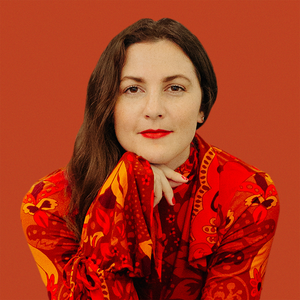
In a TIZZY with Elena Azzoni
On this week’s episode, Chief Marketing Officer Lauren Porté Schwarzfeld sits down with author and Rise Chief Operating Officer Elena Azzoni to explore her journey as a RiseEA author! They dive into the world of writing, marketing, and self-love and discovery. If you're interested in hearing more about Elena’s book, Tizzy, and what it looks like to make a memoir fictional, this is the episode for you!


Automatically Transcribed Transcript
Welcome to Write Now, a podcast from Rise Literary about what it takes to write the good fight.
Welcome to this week's episode of Right Now with Rise Literary. Today, you get me, Lauren Porté Schwarzfeld, the Chief Marketing Officer, and I am joined by Elena Azzoni, who also happens to be our Chief Operating Officer. Elena is also an Italian-American writer whose work explores identity, desire, and the long road back to the body.
She's the author of the memoir A Year Straight and an essay in feminist anthology, We Don't Need Another Wave, both published by Seal Press. She holds an MFA in Creative Inquiry from New College of California and is currently training in somatic therapy. Elena's debut novel, Tizzy, published by Rise Literary, is now available.
Welcome to the podcast, Elena. Not your first time here.
Thank you, Lauren. I know.
So, super happy to have you back. I know. So fun.
I love when we get to do this. And it's so funny, last time we were on the podcast together, we talked about finance, and today we are not doing that.
It seems a world away, honestly, in the best way.
Yeah. Yeah, this feels better.
Yes.
So, yeah, let's talk about writing this new book.
Yes.
So, you wrote a novel, but tell me about this Tizzy character. Might she have been inspired by somebody we know?
So, secretly and not so secretly, I initially wrote this as a memoir. It's actually had a long, windy road, and I sent it to my agent, who was my agent at the time, I guess last year at some time, and she told me that memoirs aren't really selling as well these days unless you're Christina Applegate. So, she recommended I write it as a novel, and so I did, and in doing so, it is based on my true story, but it really opened so many doors for characters to become compressed, you know, composite characters of like, oh, she saw an energy healer and an acupuncturist and a Rolfer.
Let's just make it one person instead of having the book be 500 pages because I'm a lazy writer, so that was helpful. And then just, yeah, while it's based on my true story, being able to work with some creative license there was nice.
Yeah, I think it's also really interesting writing our true stories in ways where we get to kind of look at them from the outside. It gives you a little bit of space where you can dive into them from almost like a different angle, where you can, I don't know, sometimes the space gives a little bit of clarity, makes it not as scary to like jump in in a way where you're like, I'm not telling my story, I'm just writing this. I don't know who this Tizzy girl is, but like this shit that she's been through is kind of wild.
And you can like swim through these waters that maybe if, if you were writing it as your own story, it might have felt different.
Yeah, it feels a lot lighter writing it as a novel. And I remember the moment when it shifted for me and how I thought about the book, I was actually talking to my mom and I started saying, she, you know, she went to the co-op, she went to the grotto. And my mom said, oh, you're saying she.
And it was really the switch from when it was me. And then it became this character. And then I found myself falling in love with this character.
You know, she's 19 years old, she kind of falls apart and is figuring out how to put herself back together. And it was also a way to kind of fall in love with those parts of myself.
I mean, I love that so much.
Yeah, me too. That sounded really good.
What a powerful healing modality. I mean, I think often memoir writing can be really healing. And I guess the same is true for what we would, I guess, term this book as auto fiction.
How long have you been writing this book?
I wrote this book in a mere 30 years.
Want to tell us about it?
Yeah. I started journaling at 19 when I started going through this experience of not being able to hold up the facade anymore. And I remember a friend of mine in college, I told her, you know, I feel like writing, but I never know how to start.
And I was like, I have all these nice fancy journals, people have gifted me. And she said, oh, no, no, no, you need to get the 59 cent memo book, the composition book from the pharmacy, so you don't feel so much pressure. And I have bins and bins of those composition books filled with writing from that time, really all through my twenties.
And so this book really started 30 years ago and has taken many iterations and forms. And yeah, I would never have guessed it would end up as a novel, but I really love what it's become.
I love what it's become. I love the nostalgia around it. I mean, I think right now everything, it's so funny that like the 90s is nostalgia.
Yeah. When I say 30 years, I'm like, really? Yep.
Yeah. All things 90s are cool again, which I see when I look at my teenagers and the clothing they're wearing. But yeah, what's it like to go through and do the edits on something that is so personal?
And you can fictionalize it, which almost makes it even more interesting, right? So you're not necessarily going back and editing to see like, is this accurate, but you're kind of like, can I make this more fun?
Yeah, for sure. I think initially it was so much fun. And the world opened up to me, you know, anything is possible in fiction.
And then I was like, okay, now we need to rein it in because I had her doing all sorts of wild stuff that wasn't really going to track on the plot line. And then, I did this manuscript intensive a few years ago, and the director said, you know, sometimes there's value in staying true to the story. And I was like, okay, oof, let's go back.
And the fictionalized parts are more like scenes that maybe didn't really happen at that time or exactly in sequence, but that help tell the story and the relationship between the characters. So the main story line stays the same, the ideas and the feelings. But it was fun to fictionalize some of those scenes to tell the story.
So in your bio, we mentioned you in school for somatics. There's a part of the story where you're working with a therapist who I found fascinating. Is there some kind of connection there that you want to tell us about?
Well, it just so happens, yes. There's definitely connection because my therapist at the time, and still is a somatic experiencing practitioner. And I found that there was deep opportunity incorporating the body in healing because why wouldn't we, right?
But for so long, psychology did not. And I experienced that powerful aspect of it myself. And so in writing the book, you know, it's funny you mentioned the finance podcast earlier.
I was working in finance while writing this book. And every time I would talk about somatics with people and talk about what the book was about, I would light up. And I just started to notice that about myself.
I was like, wait a second, I really am passionate about this. And so it was through writing the book that I actually ended up leaving the tech world and entering this master's program for somatic therapy because I realized how much I care about it and how much I want to help others through that same modality that helped me so much.
I love that so much and I love that in reading the book and knowing who you are, there were so many things that really just grab on to like who you are as a person and I could picture you from 30 years ago, but also the things that are still so true to who you are now.
I love that.
In ways where I can imagine that story you just told of talking about things from the book, the different parts of it that would light you up and sort of make you realize like, why aren't I doing that? You hear about people who like talk about things that they did in the past and it's sort of like, why aren't I still that same person? Why aren't I still doing that thing?
And I love that you, you know, that the process of writing this book was almost the thing that reminded you and pushed you into this new direction.
Yes. Be careful what you write about.
Be careful what you write about. Let's also talk about your publisher.
My amazing publisher, Rise Literary.
This book is coming out in ebook and audiobook. It has this fantastic cover that we love so much. You have some really fantastic events coming up.
You just did a really cool event in Massachusetts. But you decided you wanted this book out in the world, and you are putting it out in a way that got it out kind of quickly, that got it out with the people you wanted it out with, and tell me about that experience.
Yeah. So it's funny because I remember saying to you one time, maybe a year ago, as you were talking about Rise Literary, I was like, oh, you're making it sound really appealing. You were like, well, I know someone you could talk to.
And so I had an agent, traditional literary agent for years. Amazing. I love her so much.
And when I was done with the first draft of this manuscript, I sent it to her. She passed it on to someone at her agency who then six weeks later passed on it with good feedback, you know, positive feedback. And also campus novels are hard to sell these days because the book does take place on a college campus.
And she was, you know, welcoming me to send revisions, different drafts. And then I handed it to an agent I know here in Brooklyn. Same thing.
Six weeks later, she sent it back with lots of loving words and really liked the book, but it needed a bigger plot and higher stakes. And I know this world from having been traditionally published with a year straight. And I understand who is at the helm of these big five traditional publishing houses.
And so it wasn't that I disagreed with these two agents. I know what they're up against to sell books to these big publishers. And I knew what it would take to get my book into the condition where they could feel it was sellable.
And I think partially knowing about Rise Literary and this kind of alternative path let me let go of that ideal a little bit easier. But I was like, I don't want to do that. I knew that it would probably take me up to a year to get a new agent who wanted to represent the book.
They would have revisions. If we get it sold, the publisher will have, the editor will have revisions. And it wouldn't be the book that I even set out to write in the first place.
And I think it's important to think about why you want a book in the world, you know? I am at a point in my life where I don't want a book in the world for the same reasons I did 15 years ago. I want this book in the world because I want to be having conversations around this topic and I want other people who've experienced what I've experienced to not feel alone.
So that's a very different path and very freeing in a way because I felt less attached to swimming upstream, going the traditional route and it was funny because I had just said to my partner, probably the day before Kristen called me last fall and I was like, you know, I don't want to do this. I know it's going to take forever. I want the book out now.
I feel this urgency when it's taken you 30 years to write a book. You don't want to wait another three. And he was like, you know, babe, why don't you just give it away for free then?
And I just lit up and I was like, I'm going to do a sub stack and just give the book away for free because that's how strongly I feel I want it in the world. And I kid you not, like, could be because Kristen and I, you know, she's witchy, called me the next day.
Careful what you ask for.
Yes, exactly. I'm a little witchy too, as it turns out. You know, and she told me about RiseEA and we're going to launch this new offering, which is ebook, audiobook only.
And guess what? That's a five month wait to have it out in the world versus two years or three years, whatever it could be. So the timing felt meant to be, I had those little sparkly fairy dust feeling.
And to be honest, I couldn't be happier because I feel part of a community, which I know you don't get with the traditional publishing route. And so, yeah, that's how it all unfolded.
Be careful what you ask for. And then also make sure you ask for what you want, because there was a book cover designer who you had your eye on. And we were like, we'll see.
Maybe it'll work. And we reached out to her and she was like, oh, I have some time in my schedule. And we now have, so for anybody who has read the book Heart the Lover or seen that amazing cover, we were able to contract out, am I allowed to say this?
Amanda Hudson.
Yeah, I think so. Okay, great. Fantastic.
We love our cover designer. We reached out to Amanda Hudson, who was the cover designer for the book Heart the Lover, which has this like amazing cover, which actually like I'm in a bookstore that a friend of my owns constantly, and I'm always sending Kristen and Raya book covers being like, I love this. I love this.
I love this. Just my camera roll is filled with book covers that I love, and probably the one of us that it's like, spends the most amount of time in bookstores. And that was one of them.
And Kristen happened to call me, and she was like, oh, I think we're getting this book cover designer. She did Heart the Lover. And I was like, oh, this one?
And I literally sent her the picture of it. She was like, how do you have that on your camera roll so fast? And I was like, it's one of the ones I took a picture of.
So yeah, things work out when you trust your instincts, when you follow what you're supposed to be doing.
I was just going to say that I feel the way Rise Literary is doing things, and the way I've decided to do things is very 90s. Like, we didn't have as many cut and paste offerings. Actually, there were really none.
So you had to carve your own way. And I feel like traditional publishing is a little behind in this regard. There's so much gatekeeping.
And this is, it just feels much more 90s to be like, you know what, we're going to do this new thing. No one's really doing. And how often do we get to do that nowadays?
Because everybody's doing everything. But to do an EA offering, you know, each time I mention that, people are really, like, ears perked up. Wait, wait, tell me more about that.
Because finding new ways to do things is very creative and very freeing, like you worded it earlier.
Yeah, I mean, it's so interesting because everything else in the world seems to be moving so much faster. Every other type of content seems to be coming out so much quicker and so much more digitally. I don't think that's actually a word.
But I mean, I don't know, Taylor Swift somehow wrote and recorded an album in the 15 months that she was also on tour in a thousand cities. I don't understand how things like this happen. And yet, it still takes two and a half years to publish a book.
And that is just sort of like hands in the air, like, oh well, this is how it goes. And yet, everything else is so much more of an instant gratification, and things on demand, and we're kind of like, you can do it. So much about book publishing and the way people think things are supposed to be, is a lot about ego.
And I think if you can set your ego aside and be like, what I want is so much bigger than that. And I think that's really, if you want to distill down what you were talking about before is really what you want out of this experience is so much bigger than your ego, than walking through a Barnes and Noble and being like, there's my book on the shelf. It's like having these conversations, being in community, being part of this larger thing.
There's also something in the accessibility of this.
Yeah, when I was saying that I want to give it away for free, I was like, I don't want there to be any barrier to this story. And so, audiobook and ebook are lower priced and they're accessible anywhere. You know, my friend in Germany was like, asking me if the book will be sold in stores in Germany.
I was like, well, actually, you can download it.
Yeah.
From where you are. Yeah. The accessibility is important to me.
Yeah. I love that so much. All right.
So, Elena, let's wrap this up. Obviously, we'll have our last, final, fun little question for you. But before we get to that, I want to hear a little bit about what you're doing for this book tour, because even though it might not be coming out in a traditional hardcover book, you are still doing all of the very fun things that one might do, including all of the stressful, overwhelming things that come with putting together a book tour, which is why I am coming to you from, if you hear background noise, I'm sitting at the Hotel Chelsea where it is very noisy outside, and I've been running around doing a million things today while we're recording this.
You are in between several events. So tell us about your book tour.
Well, having an EA book opens a lot of doors, similarly to writing a novel or auto fiction based on your true story, because I don't need to have my events in bookstores. Bookstores, you have to book out, as you know, months in advance.
Don't I know that?
Since it's not a physical book, I was thinking about the tour and I was like, oh, this can be at a friend's restaurant and a friend's cafe and at my writing studio. So I think it's going to be a lot of fun. And the nice thing is people have really come out to support me and invited me to events.
So the one I just did in Massachusetts, I was invited to this reading series. And I have one in Brooklyn this week. And the others I have coming up are at like I mentioned, the writing studio, there's another one at a restaurant.
And there I am having one in Bend where our book cover designer lives and where I have a lot of friends in Oregon. And I'm going to be in Portland for a couple of days. So I thought, oh, I should have an event here, but I didn't want to put the pressure on myself of filling a room or a space that I've paid to rent out.
So I found a cool open mic night that I'm going to. So I want to invite friends to come hear me read a little bit from the book there at the open mic and to read their own stuff, too, which feels very 90s, just like grassroots, like my marketing campaign, which is me putting my postcards with the QR code to buy the book in those free mailboxes that we have. You know, the little mailbox is full of books, the free books.
So it's all a little bit, yeah, being creative with it.
I love that so much. I love anything that sort of gets us back to figuring out what we want from an experience and then running with it. I mean, that's where Rise came from, right?
Is that we're creating these like bespoke experiences that don't need to fit into any kind of specific box. They don't have to be one size fits all. They don't have to live up to some like grand vision of like what it's supposed to be.
This is supposed to be your experience and you're creating it for exactly what you want it to be. And a little off the beaten path is kind of what it's supposed to be. A little like rebellion, drinking your black coffee.
No, drinking your tea.
So you did read the book.
Obviously. And I spent a lot of time with you. I know you drink tea.
All right. So we're going to wrap things up. And we've already done these from the last episodes we've done, which I love that you brought back the comment about your composition notebooks, because I also tell people that all the time.
And I just had this conversation with somebody talking about the composition notebooks, saying, don't be so precious about what you're writing in, because it has such an impact on, I think what you end up throwing in those journals. I don't know, go back to season one and listen to our finance girls tell you to not be so precious episode, whatever it's called. But what is your, now as a novelist, Elena Azzoni, what is your one writing tip?
Now it's time for just the tip.
I already said earlier, you know, that you can think about why you want a book in the world. And to tie in to that, a friend of mine recently asked me how I write the way I speak. Because she said every time she sits down to write, she thinks she has to sound like a writer and it's a real block for her.
And I realized that isn't something that is as easy as it sounds to just write as you speak. But it is my big tip. You're welcome.
So your big tip is do this thing that's actually really hard. Well done.
There you go. Simple as can be. Write as you speak.
Love it.
Don't try to sound like someone else or someone, you know, some old school writer or something like that. Whatever we think a writer means, everyone's a writer.
That's pretty 90s girl of you, like just do you, you be you.
Exactly.
Well, thank you for joining us. I'm so excited for your book to be out in the world. Tizzy comes out on Thursday, March 26th.
You can get it on ebook and audiobook. Enjoy the cover. It's fantastic.
And we'll see you next time.
This has been Write Now, brought to you by Rise Literary. Thanks for tuning in. If you enjoyed today's episode, don't forget to rate us five stars, follow the show, and leave a comment.
We'd love to hear from you. Feel free to share this episode with friends, family, or anyone who might find it helpful or enjoyable. Be sure to follow us on Instagram at Rise Literary to stay up to date with upcoming events, courses, insider info, behind the scenes fun, and so much more.
Or you could check us out at www.riseliterary.com.
From Write Now.: In a TIZZY with Elena Azzoni, Mar 26, 2026
This material may be protected by copyright.